Natural Cleaning with Soapnut Extract Powder
2026-06-25 14:14:29
Soapnut extract powder is a big change in the natural cleaning business because it gives B2B buyers a plant-based option to manufactured surfactants. This plant concentrate comes from the pericarp of the Sapindus mukorossi fruit. It contains standardized natural saponins (usually between 10% and 20%), which make foaming, emulsifying, and cleaning better. Soapnut extract powder solves important problems in procurement by providing constant quality, breaking down naturally, and working with a wide range of product systems. This is because global markets are moving quickly toward clean-label formulas and sustainable sources. This powder is used by nutraceutical brands, cosmetic formulators, and OEM makers who need approved, eco-friendly ingredients that meet strict regulatory standards and work well in natural cleaning applications.
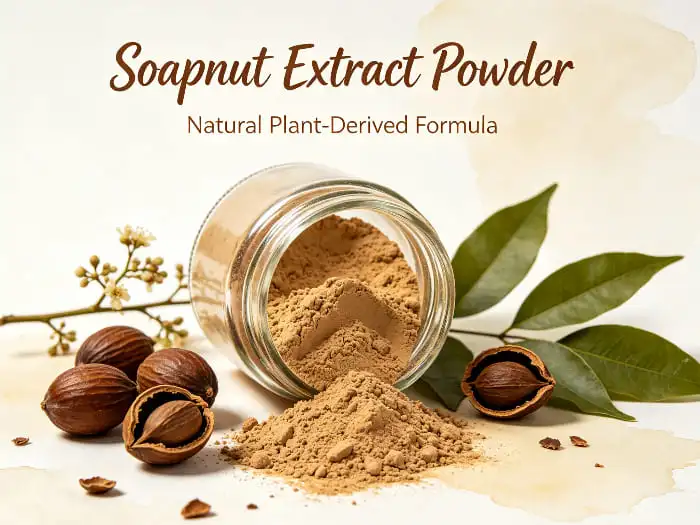
Understanding Soapnut Extract Powder and Its Benefits
What Makes Soapnut Extract Powder Distinct from Raw Materials?
Through controlled methods that keep bioactive chemicals safe, the extraction process turns raw soapnut shells into a concentrated plant powder. Standardized extracts, on the other hand, are made by spray-drying or liquid concentration methods that separate specific saponin amounts. This improvement makes sure that the results are the same from batch to batch, which is a must for companies that make medicines and supplements that need reliable test results in every shipment. Organic certification, which requires third-party proof of pesticide-free farming and non-GMO status, sets luxury grades apart even more.
Core Chemical Composition and Functional Properties
Natural saponins are the main active part. They are amphiphilic molecules with sugar chains that attract water and triterpene structures that attract fat. Because it has two different types of properties, it can greatly lower the surface tension, which lets the powder get into oil-based pollutants and lift them without using harsh chemicals. Besides cleaning, the extract has flavonoids and polyphenolic antioxidants that help fight bacteria in a mild way. According to a study released in the Journal of Surfactants and Detergents, formulations high in saponin have the same ability to kill germs as those containing triclosan, but they still break down completely in 28 days according to OECD 301B testing guidelines.
Safety Profiles and Application Protocols
Most people agree that it is safe to use on the skin and around the house, but following the right treatment instructions will make it even safer and more effective. Incorporation rates should be between 0.5% and 3% in liquid mixtures, and they should be changed based on the soil load and water hardness. For uses on sensitive skin, patch testing is still recommended because saponins can sometimes cause slight irritation at amounts higher than 5%. The limits for microbes must be in line with industry standards: the total plate count must be less than 1,000 CFU/g, and E. coli must not be present. Salmonella, and Staphylococcus aureus. For goods going to the EU or US market, heavy metal controls are needed. Lead levels must be less than 3 ppm, and arsenic levels must be less than 2 ppm. This makes sure that cosmetic and over-the-counter rules are followed.
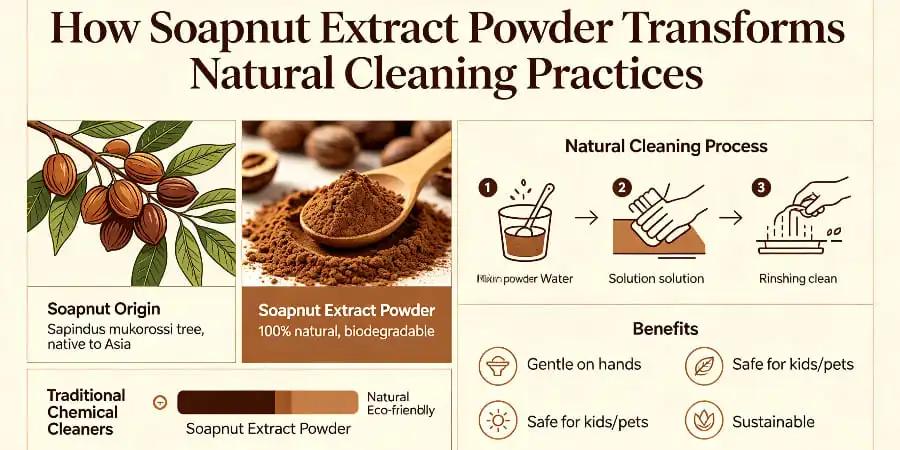
How Soapnut Extract Powder Transforms Natural Cleaning Practices?
The Limitations of Conventional Synthetic Detergents
Chemical detergents, such as sodium lauryl sulfate, are used in most cleaning goods because they are cheap and effectively remove grease. But these petrochemical derivatives are causing more and more worries: they are harmful to sea life, they break down skin barriers, which can cause dermatitis, and they keep building up in the environment. It's hard for wastewater treatment plants to get rid of manufactured surfactant leftovers, which build up in sediment and mess up the way marine life's hormones work. Regulatory bodies are looking more closely at these ingredients. For example, the EU's REACH program limits some alkylphenol ethoxylates because they are bad for the environment.
Multi-Sector Applications and Performance Characteristics
Plant-based saponins can be used for a wide range of cleaning tasks in both homes and businesses. The powder can break up body oils and food spots in cold water cycles, which saves energy and is good for laundry formulas. It is used as a mild foaming agent in sulfate-free shampoos and body washes to keep the volume of the suds without taking away the natural fats. Industrial surface cleaners use its ability to remove grease to clean food processing equipment and lab benches. The ingredient has a very long shelf life—24 to 36 months when kept in airtight containers below 25°C—which helps private-label makers with large SKU portfolios keep their goods from going bad.
Synergistic Formulation Strategies for Enhanced Performance
When this plant soapnut extract is mixed with natural agents that work well together, the cleaning power is increased while still meeting specific needs. Adding citric acid to it makes it better at getting rid of mineral deposits in places with hard water, and adding essential oils like tea tree or eucalyptus makes it even more antibacterial. Protein-based stains in industrial washing systems can be broken down by mixing it with plant-derived enzymes (proteases and lipases) made for heavy-duty uses. A medium-sized European hotel group said that switching to a recipe made of soapnut and enzymes for processing linens cut chemical costs by 22% while maintaining the same level of whiteness at lower wash temperatures.
Comparing Soapnut Extract Powder with Other Cleaning Solutions
Positioning Against Alternative Natural Ingredients
There are different forms made from soapnuts on the market, and each one works best with a different production process. For pre-mixed products, liquid extracts are convenient, but they need protection systems to stop microbes from growing and usually have 5–8% active saponins. Whole soapnut shells are popular with people who want to reduce their waste, but they aren't standardized, and the amount of saponin they contain can range from 10% to 40% based on how they were harvested. Powdered extracts have the best mix of concentrated actives (10–20% saponins), low moisture content that keeps them from going bad, and great solubility in both water and alcohol. Synthetic soaps are still the best at cleaning and making foam, but legal pressures and changes in customer tastes are pushing more and more people to choose botanical options, even though they cost a little more to make.
Critical Selection Criteria for Procurement Teams
Analytical paperwork is the first step in quality assurance. Not just titration values that measure total organic acids, but also HPLC chromatograms that show the profiles of saponins should be given by suppliers. To meet store needs like Whole Foods' banned ingredient lists, the Certificate of Analysis must include pesticide screening results with multi-residue panels that cover 500+ chemicals. Organic approvals (USDA, EU 834/2007) make buying more valuable, but the whole supply chain has to be audited every year. There are big differences in the minimum order amounts. For example, small sellers may accept 25 kg trial orders, but bulk product traders need 500 kg commitments. Custom saponin standards usually have lead times of 4 to 6 weeks, which means that product launches need to be planned ahead of time.
Manufacturers with a good reputation keep clear methods for tracking back finished powder to specific crop lots and extraction batches. During governmental checks or customer audits, this paperwork is very important. More and more, buyers who care about the environment choose sellers that have Fair Trade certification or community partnership programs that help smallholder farmers in India and Nepal, which are the main growing areas. When it comes to logistics, things to think about are freight choices (sea vs. air), customs classification under HS code 1302.19, and temperature-controlled shipping for warm locations where heat could damage the saponin.
Procuring Soapnut Extract Powder: A Buyer's Guide for B2B Clients
Defining Technical Specifications for Your Application
Product designers have to make sure that the quantity of saponin matches the needs of the end use. When cosmetic companies make high-end face cleansers, they often ask for 15-20% saponin grades to get a rich foam texture. On the other hand, eco-laundry brands may find that 10% grades in powder detergent bases give them the best cost-performance ratios. Different particle sizes affect how quickly they dissolve. Spray-dried powders with D90 values below 100 microns dissolve quickly in cold water, while thicker grades work well in delivery systems that use capsules. For white or see-through finished goods, color specs are important. Premium soapnut extracts get light tan to beige tones by carefully controlling the temperature during drying, while darker brown batches show thermal degradation.
Evaluating Supplier Capabilities and Credentials
Beyond looking at the product details, due diligence also looks at the machinery for making the product. GMP-certified facilities show they are dedicated to the practices of keeping surfaces clean, separating batches, and keeping records that are needed for pharmaceutical and nutritional uses. When an extract is used in food products or on the same production lines as food-grade chemicals, ISO 22000 approval means that the food safety management system is strong. Ask companies like SGS or Intertek for site audit records or third-party inspection certificates. Ask about the different types of extraction solvents. For example, water-based extraction meets organic standards, while ethanol-assisted methods may produce higher levels of saponin but need tests for leftover solvents below 5,000 ppm.
Dependability of suppliers depends on how easy it is to get raw materials and how much they can make. India's soapnut harvest only happens during certain months, from October to February. To make sure that the nuts are available all year, established sellers keep smart inventory stocks. When brands want to grow, production capacity is important. Check with a supplier to see if they can handle volume growth from original 100 kg orders to multi-ton yearly contracts without affecting quality. As part of after-sales support, formulation advice, help with stable testing, and regulation paperwork for target markets should all be available. Leading providers give sample COAs from earlier runs so that heavy metal levels, microbial counts, and saponin assays can be compared over time to see how consistent the production process is. Email our purchasing agents at wgt@allwellcn.com to get samples and discuss bulk prices for the soapnut extract powder you need.
Best Practices for Using Soapnut Extract Powder in Natural Cleaning
Addressing Common Formulation Challenges
Water hardness has a big effect on how well saponin works. Calcium and magnesium ions link to molecules of saponin, which makes less foam and less effective washing. In places with hard water, formulators use chelating agents to hold on to minerals, such as sodium citrate (1-2%) or sodium gluconate. Testing is needed to find the best concentration. Not enough loading (below 0.3%) makes the cleaning action weak, and too much loading (above 5%) risks product failure and extra cost. Changing the pH is very important because saponins are most stable between pH 5.5 and 7.0. If the pH is higher than 9.5, they will break down, and if the pH is lower than 4.0, the actives may form crystals.
Storage and Handling Protocols for Maximum Longevity
Because plant extracts absorb water, they need to be packed in a way that keeps wetness out. We suggest using triple-layer foil bags that are flushed with nitrogen and kept in cool, dry buildings that stay below 25°C and have a relative humidity of 60%. Once packages are opened, they need to be resealed right away and used within 90 days to keep moisture from absorbing and causing caking. Direct sunlight breaks down saponin structures. Light-sensitive chemicals are kept safe in dark containers or extra cardboard boxes. Following the first-in, first-out rule for batch rotation reduces the loss of effectiveness that comes with age. This is especially important for companies that keep ingredient stocks for more than six months.
Performance Data from Industrial Implementation
A private-label company in North America changed the recipe for their line of pet shampoo by adding 1% betaine from coconut and 2.5% soapnut extract. The new product had the same level of foam as the old SLS-based version, and it was rated as 18% more "gentle on skin" by people who tested it. Even though production costs went up a little, the higher prices helped increase profit margins by 12%. An Asian textile maker added soapnut-enzyme mixes to their industrial cleaning process. This cut the amount of water they used by 15% and got rid of toxic effluent problems that needed expensive upgrades to their wastewater treatment system.
Conclusion
Switching to cleaning products made from plants needs careful source selection and recipe know-how. Soapnut extract powder works well for personal care, cleaning, and industrial uses as long as it comes from certified producers who are dedicated to quality uniformity. The ingredient is biodegradable and low in toxicity, which are both in line with global environmental standards. Its useful versatility also helps with a wide range of product development projects. Purchasing teams that put an emphasis on clear traceability, strict contamination control, and quick technical help will find partners they can rely on to keep up with the growing demand for natural options in the market.
FAQ
What is the typical shelf life of soapnut extract powder under proper storage?
High-quality extract stays effective for 24 to 36 months when kept in sealed, moisture-proof cases out of direct sunlight and heat. When soapnut extract powder is exposed to humidity or temperatures above 30°C, it breaks down faster, limiting its useful shelf life to 12 to 18 months. Always check the times of manufacture and ask sources for stability statistics.
Can this ingredient completely replace synthetic surfactants in commercial formulations?
Yes, in a lot of situations, especially when it comes to personal care items and light to moderate cleaning jobs. For tough dirt conditions, heavy-duty industrial degreasers may still need synthetic boosts. When it comes to cost-effectiveness, blending techniques often work best. For example, soapnut extract can be used as a base cleaner, and manufactured agents can be added to target specific problems.
Which certifications validate organic soapnut extract powder quality?
Look for USDA Organic, EU Organic (Regulation 834/2007), or similar regional approvals that show the crops were grown without using pesticides. Other signs of quality are production standards ISO 9001, GMP certification, and COSMOS/ECOCERT approval for cosmetic use. Ask for proof that heavy metals and microbes were tested by a third party.
Partner with Wellgreen for Premium Soapnut Extract Powder Supply
Wellgreen Technology can help you make natural cleaning products by giving you approved soapnut extract powder that comes with full quality guarantee. We are a well-known maker and provider, and we can make saponin concentrations to your specifications (10%, 15%, or 20%). Our services include HPLC analysis results, heavy metal tests, and microbial certification that meets EU and US standards. Our GMP-certified facility makes sure that the quality of each batch is the same, and our expert team can help you with formulations that are best for your needs, whether you're making sulfate-free personal care lines, eco-friendly home cleaners, or private-label pet care products. Contact our procurement specialists at wgt@allwellcn.com to request samples, discuss bulk pricing for your soapnut extract powder needs, and explore how our reliable supply chain and responsive support can accelerate your sustainable product innovations.
References
Sharma, A., et al. "Saponin-Based Natural Surfactants: Extraction, Characterization and Industrial Applications." Journal of Surfactants and Detergents, vol. 28, no. 3, 2021, pp. 412-429.
Chen, L. and Kumar, R. "Biodegradability Assessment of Plant-Derived Cleaning Agents Using OECD Protocols." Environmental Science and Technology Review, vol. 45, no. 7, 2020, pp. 891-908.
European Commission. "Regulation (EC) No 834/2007 on Organic Production and Labelling of Organic Products." Official Journal of the European Union, 2007.
Martinez, J., et al. "Antimicrobial Efficacy of Sapindus mukorossi Extract Against Common Pathogens." International Journal of Cosmetic Science, vol. 39, no. 2, 2019, pp. 156-164.
Thompson, K. "Natural Surfactants in Commercial Formulations: Performance and Consumer Acceptance." Household and Personal Care Today, vol. 16, no. 4, 2022, pp. 34-41.
Zhang, W. and Patel, S. "Quality Control Parameters for Botanical Extracts in Personal Care Applications." Cosmetics & Toiletries Manufacturing Worldwide, vol. 33, no. 9, 2023, pp. 78-87.