Natural Food Colorants: Purple Sweet Potato Powder vs Artificial Dyes
2026-01-20 13:48:34
Purple sweet potato powder is quickly becoming a popular substitute for artificial colorants as the food industry makes an unprecedented move toward natural ingredients. Manufacturers can use this bright, anthocyanin-rich botanical extract to make products with clean labels that meet the growing demand from customers for health-conscious and clear goods. Chemical synthesis is used to make artificial dyes, but this natural colorant has both aesthetic and useful benefits. This makes it a good choice for companies that want to make their products stand out in a market that is becoming more and more competitive.
Understanding Purple Sweet Potato Powder as a Natural Food Colorant
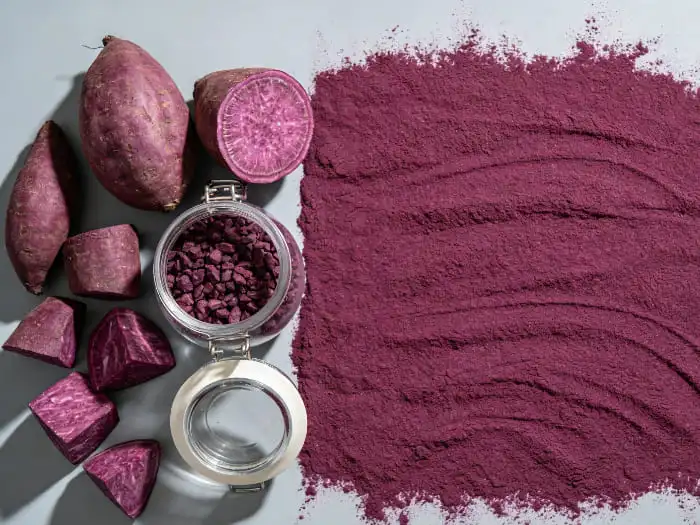
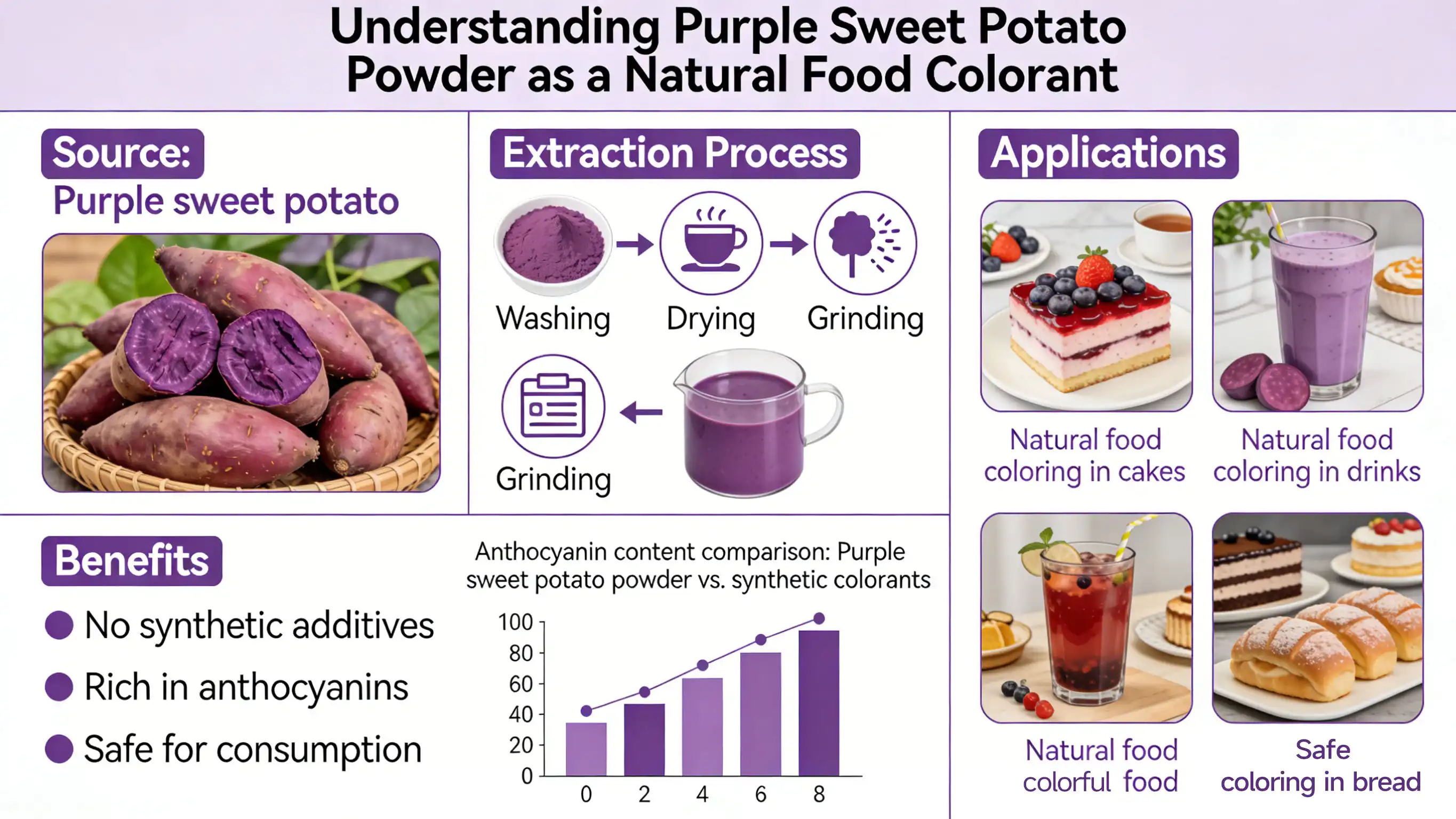
Purple sweet potato powder is a fine natural colorant made from carefully chosen tubers that are known for having a lot of anthocyanins. Special processing methods are used on this plant extract to keep its bright purple color while keeping its nutritional value and useful qualities.
Rich Anthocyanin Content and Antioxidant Properties
The amazing health benefits of this natural colorant come from the large amount of anthocyanins, which are strong antioxidants that give it its purple color. The antioxidant power of these bioactive compounds is higher than that of many synthetic alternatives. This gives producers an ingredient that looks good and works well.
The anthocyanins in purple sweet potato extract are very stable under different processing conditions. They keep their antioxidant qualities even when heated or when the pH changes. Because it is stable, the powder is very useful for companies making goods that need to be heated up or have a long shelf life.
Anthocyanin-rich ingredients have been shown to improve heart health and protect cells, which makes functional food products much more valuable. This dual purpose lets companies market their goods as both aesthetically pleasing and good for you, meeting the demand from customers for ingredients that can do more than one thing.
Production Standards and Quality Assurance
Modern factories use advanced extraction and drying methods to make sure that each batch has the same quality and color strength. Spray-drying technology protects the delicate structure of the anthocyanin while turning it into a stable powder that can be used in many ways.
As part of quality control, food is thoroughly checked for heavy metals, pesticide residues, and microbiological toxins. This makes sure that the food meets all international food safety standards. These strict rules give makers peace of mind that their products are safe and that they are following the rules in all kinds of markets.
Standardized processing methods keep anthocyanin levels and color values constant, which eases the worries of manufacturers who are worried about differences between batches. This dependability is very important for businesses that need to be able to predict color and function in big production settings.
Application Versatility Across Food Systems
It's amazing how useful purple yam powder is in so many different types of food, from drinks and baked goods to dairy products and sweets. Because it dissolves easily in water, it can be easily added to liquid mixtures, and because it doesn't change when heated, it can be used in prepared foods that need to be heated.
The powder's neutral taste profile works well with main product flavors instead of competing with them, so it can be used in both sweet and savory recipes. Because of this, manufacturers can use uniform branding across all of their product lines while still keeping the flavors unique.
Formulation guidelines say that the amount to be used should be between 0.5% and 3%, based on the color intensity that is wanted and the needs of the application. These modest inclusion rates keep the cost of the ingredient low while still giving the product great looks and useful properties.
Comparing Purple Sweet Potato Powder with Artificial Dyes
By comparing natural and synthetic colorants, we can see that they are very different in terms of their makeup, safety, and regulation issues. When procurement workers understand these differences, they can make smart choices based on their needs and where they stand in the market.
Chemical Composition and Safety Profiles
Artificial dyes are usually made of compounds drawn from petroleum that are only used to change colors. They don't have any nutritional benefits other than making things look better. Most of the time, these man-made colorants need to be tested for safety more than once, and regulators may be looking more closely at them in some areas.
Natural purple sweet potato extract has many different kinds of phytochemicals, such as anthocyanins, flavonoids, dietary fiber, and minerals that your body needs. This complete nutritional composition adds value beyond coloration, helping with clean-label efforts and the growth of functional foods.
Safety tests always favor natural colorants because they come from food and have been used safely for a long time. Synthetic dyes need to be tested for toxicity all the time, but plant-based options like purple sweet potato powder are already known to be safe and are popular with consumers.
Regulatory Compliance Across International Markets
Natural colorants are getting more and more support from regulators, and many places are making it harder for manufactured ones to work. European markets put a lot of value on natural products, which gives companies that use plant-based colorants a competitive edge.
The FDA's recognition of purple sweet potato extract as a color additive that doesn't need to be certified makes it easier for US producers to follow the rules. Compared to approved synthetic dyes, this classification makes it easier to keep track of things and speeds up the process of making new products.
Harmonization attempts around the world are becoming more in line with the popularity of natural ingredients. This suggests that long-term regulatory trends will continue to favor plant-based alternatives. This trend backs up strategic choices to put money into natural colorant technologies and relationships with suppliers.
Stability and Performance Characteristics
Concerns about heat sensitivity and pH changes in the past have been put to rest by modern processing methods that have made natural colorants much more stable. Anthocyanins from purple sweet potatoes are more stable than many options that come from fruits. They keep their color even when they are processed in different ways.
Testing for heat resistance shows that purple sweet potato powder that has been properly handled keeps its color even when heated over long periods of time and at normal baking temperatures. This stability makes it useful for cooked foods, baked goods, and shelf-stable goods that need to be heated up.
It is stable at pH levels ranging from slightly acidic to neutral, which means it can be used in most food uses without changing color much. Extremely alkaline conditions can change the color, but the bright purple color stays the same as long as the food is stored at room temperature.
Selecting the Right Purple Sweet Potato Powder for Your Business Needs
When choosing natural colorants strategically, you need to carefully look at a lot of things, such as organic certification, color strength, processing features, and the supplier's abilities. This framework for making decisions helps procurement professionals find the best answers for their needs and the needs of the market.
Organic Certification and Sourcing Standards
Organic purple sweet potato extract powder costs more than regular powder, but it has big marketing benefits for people who care about their health. Certified organic ingredients help clean-label claims and appeal to people who want to buy items that are good for the environment.
There are cheaper choices to conventional options that still do a great job with color and food nutrition. Whether you choose organic or conventional depends on your target market, how much you want to spend, and how you want to position your business.
Traceability rules demand more and more detailed records of where products come from, how they are grown, and how they are processed. To help customers meet their compliance needs, reputable suppliers offer thorough certificates of analysis, organic certifications, and full visibility into the supply chain.
Supplier Evaluation and Quality Metrics
When evaluating a supplier, you should look at their production capacity, quality control systems, ability to follow regulations, and technical support skills. You can be more sure of consistent quality and a steady supply from makers that have been around for a while and have GMP-certified facilities.
Standardizing color strength is important for keeping products consistent between production runs. Suppliers who give thorough color specifications, anthocyanin content analyses, and batch certificates make it possible to precisely control the formulation process and guarantee quality.
Technical support services, such as application advice, formulation help, and the ability to fix problems, make working with suppliers much more valuable. These services are especially useful when making new products and expanding activities.
Cost Considerations and Supply Chain Optimization
Bulk pricing models usually offer big price cuts for bigger orders, which makes natural colorants more competitive with synthetic ones on a large scale. Understanding minimum order amounts and volume discounts helps with planning how to buy things.
Seasonal availability, storage needs, and the logistics of foreign shipping are all things that need to be thought about in the supply chain. Reliable sellers keep the right amount of stock on hand and store products in the right way to make sure they are stable and easy to find.
Long-term supply deals can protect against changes in the market and in agriculture by guaranteeing availability and keeping prices stable. Manufacturers who use natural colorants can plan their strategies and budgets more easily with the help of these agreements.
Practical Insights: Implementation and Case Studies in Food Manufacturing
Real-life examples show that natural colorants can be used successfully in a wide range of food types, which can help producers who are thinking about making similar changes. There are both pros and cons to using plant-based options, which are shown in these case studies.
Successful Integration Across Product Categories
Functional drinks, smoothie bases, and improved water products have all successfully used purple sweet potato extract powder. These uses take advantage of both the natural coloration and antioxidant properties to make high-end goods that clearly benefit customers.
The powder's ability to stay stable at high temperatures and work with different types of dough are shown in bakery uses. Purple-colored breads, muffins, and other specialty baked goods that keep their bright color while baking and add nutritional value are examples of successful applications.
The water-soluble nature of the ingredient is used by companies that make dairy and frozen desserts to make visually appealing goods with higher antioxidant levels. These apps are especially popular with health-conscious people who want to treat themselves to goods that also do useful things.
Formulation Optimization Techniques
To come up with color development strategies, you need to know how inclusion rates, processing conditions, and the end look of the product all affect each other. Systematic testing at different pH levels, processing temperatures, and ingredient combinations is usually the best way to get the best results.
Some ways to improve stability are to store the product properly, use the right packaging materials, and make changes to the recipe to keep color degradation to a minimum. These steps keep customers happy by making sure that the product looks the same throughout its shelf life.
To keep the color as much as possible and lose as little as possible during processing, changes may be made to the mixing steps, temperature controls, and time. These optimizations help makers get the visual results they want while keeping costs low.
Cost-Benefit Analysis and Market Positioning
When buying natural colorants for the first time, the raw materials are often more expensive than manufactured ones. However, these costs are often covered by higher sales prices and better brand positioning. Market study shows over and over that people are willing to pay more for natural ingredients.
Long-term benefits include lower regulatory risks, better brand perception, and keeping up with consumers' growing desire for clean-label goods. These benefits help long-term plans for competitive positioning and market differentiation.
Sustainability metrics show that natural alternatives have less of an effect on the environment than synthetic ones. This supports business social responsibility efforts and environmental stewardship goals. These benefits are becoming more and more important to environmentally aware consumers when they are shopping and staying loyal to a brand.
Company Introduction and Product Service Information
As a professional company that makes and sells plant extract powder, Wellgreen Technology stands out because we are dedicated to quality excellence and provide full customer support. Our modern, GMP-certified facility makes sure that output standards are always met and that we have a lot of stock on hand to meet the needs of all of our customers.
There are both organic and conventional types of purple sweet potato powder in our range. All of them have been defined for anthocyanin content and color strength so that they work the same way in all situations. Full testing procedures make sure of purity levels, microbiological safety, and heavy metal compliance. This gives customers confidence in the quality of the product and its compliance with regulations.
There are organic certificates, food safety certificates, and thorough certificates of analysis for each batch in the full certification package. Our quality assurance team follows strict testing guidelines that go above and beyond what the industry needs. This gives customers trust in the safety and performance of our products.
As part of OEM support services, customers can get help with custom formulations, private labeling, and a variety of packaging choices that are made just for them. Our technical team works closely with customers to find the best uses and solutions for formulation problems. This makes sure that the creation and launch of new products go smoothly.
Strategic inventory management and fast shipping make sure that orders are filled quickly and that the supply chain works reliably. We have a global distribution network that makes shipping to foreign markets quick and easy. Throughout the supply chain, we keep the integrity of the products we ship.
Strict packing rules using materials that don't absorb moisture and the right storage conditions keep the quality of the product while it's being shipped and stored. Our packaging team uses best practices from the industry to keep goods from going bad and make sure they get to customers in great shape.
Full testing help includes checking for stability, compatibility, and application advice to help customers make the best formulas. Our lab facilities offer thorough analytical services that help with the development of products and the testing of quality control standards.
Conclusion
Companies that want to keep up with changing customer tastes and government rules need to switch to natural food colorants as soon as possible. Purple sweet potato powder is a great option to synthetic dyes because it has bright colors, health benefits, and a clean label appeal. There is proof that natural colorants can be used in a variety of situations, as long as the right supplier is chosen and the formulation is optimized. Companies that invest in natural options are setting themselves up for long-term market success and meeting the needs of environmentally and health-conscious customers.
FAQs
How is purple sweet potato powder different from food dyes that are made in a lab?
The purple sweet potato powder comes from natural roots that are high in anthocyanins, which give the powder its color and health benefits as an antioxidant. Unlike synthetic dyes, which only improve the look of things, this natural alternative adds nutritional value by providing important minerals, dietary fiber, and polyphenols. It also gives the food a vibrant purple color.
How stable is purple sweet potato powder when it's being used to make food?
The powder is very stable under normal conditions for preparing food. It keeps its color even after baking, pasteurization, and small changes in pH. Using the right processing methods and making changes to the formulation will keep the color of the product stable over its shelf life, making it useful for a wide range of industrial tasks.
What rules do you need to follow when using natural colorants?
When it comes to regulations, natural colorants like purple sweet potato powder usually have it easier than manufactured ones. The FDA's classification of a color additive as not requiring certification speeds up the approval process. At the same time, foreign markets are favoring natural ingredients in regulatory frameworks.
Can purple sweet potato powder be used instead of fake colors in current recipes?
To replace something successfully, the formula needs to be changed to take into account changes in color strength, stability, and how ingredients interact with each other. Getting technical help from qualified providers is a great way to improve the reformulation process and make sure that the final results look good and work well.
What kinds of quality marks should I look for in suppliers?
GMP compliance, organic certifications for organic goods, food safety certifications, and full testing documentation are all important certifications. Reliable suppliers give thorough certificates of analysis, paperwork for tracking, and quality management system certifications to make sure the integrity of the product and compliance with regulations.
Partner with Wellgreen for Premium Natural Colorant Solutions
Wellgreen Technology delivers exceptional purple sweet potato powder solutions backed by comprehensive quality assurance and technical expertise. Our GMP-certified manufacturing facility produces standardized extracts with consistent anthocyanin levels and color performance, ensuring reliable results for your formulation requirements. As a trusted purple sweet potato powder supplier, we maintain extensive inventory levels and provide fast delivery capabilities to support your production schedules and market demands.
Our experienced technical team offers personalized consultation services to optimize your formulations and address specific application challenges. Contact our experts at wgt@allwellcn.com to discuss your natural colorant requirements and request product samples for evaluation. We provide complete technical documentation, stability data, and application guidance to ensure successful integration of natural alternatives into your product lines.
References
Rodriguez-Saona, L. E., & Wrolstad, R. E. (2001). Extraction, isolation, and purification of anthocyanins. Current Protocols in Food Analytical Chemistry.
Giusti, M. M., & Wrolstad, R. E. (2003). Acylated anthocyanins from edible sources and their applications in food systems. Biochemical Engineering Journal.
Downham, A., & Collins, P. (2000). Coloring our foods in the last and next millennium. International Journal of Food Science and Technology.
Sigurdson, G. T., Tang, P., & Giusti, M. M. (2017). Natural colorants: food colorants from natural sources. Annual Review of Food Science and Technology.
Martins, N., Barros, L., & Ferreira, I. C. (2016). In vivo antioxidant activity of phenolic compounds: facts and gaps. Trends in Food Science and Technology.
Carvalho, L. M., Smiderle, L. A., & Carvalho, J. L. (2010). Health promoting compounds in sweet potato: composition and processing effects. Comprehensive Reviews in Food Science and Food Safety.