Peppermint Extract Powder: Benefits, Uses, Safety & Specs
2026-07-28 14:18:23
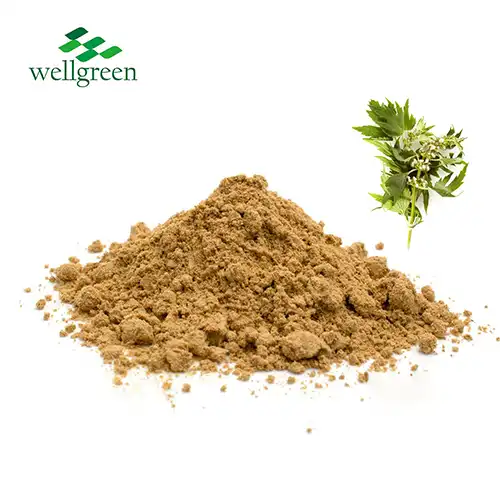
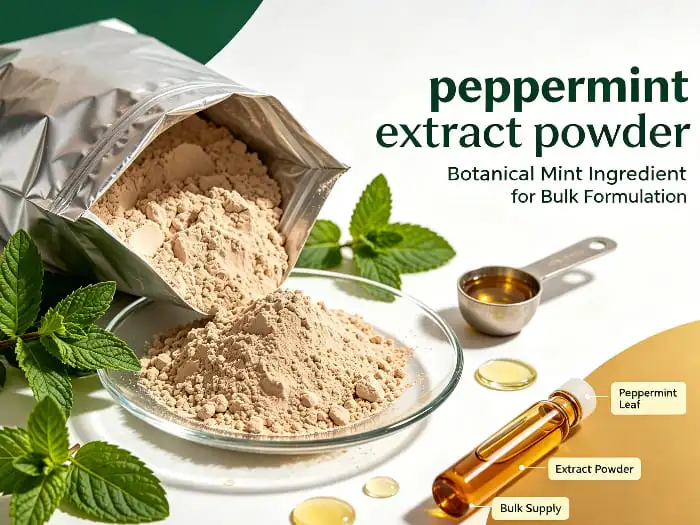
Peppermint extract powder is a concentrated botanical ingredient derived from the leaves of Mentha piperita, valued for its high menthol and menthone content. Processed through water extraction or low-temperature methods and then dried, this powder delivers a naturally cooling sensation and fresh aromatic profile. It serves food manufacturers, pharmaceutical developers, cosmetics innovators, and nutraceutical brands across global markets. As a standardized ingredient, it addresses critical needs for clean-label flavoring, digestive support formulations, and oral care products while providing consistent potency essential for industrial-scale production.
Understanding Peppermint Extract Powder: Composition and Benefits
What Makes Peppermint Extract Powder Unique?
Peppermint extract powder is a stabilised, shelf-stable form that is better for many manufacturing uses than raw peppermint leaves or peppermint oil, which can change quickly. The powder has a lot of menthol in it; it is usually standardised to have at least 40% menthol in it. This makes sure that the flavour strength and healing effects are expected. Standardisation solves a big problem with buying things: raw materials aren't always the same. The extraction process combines active compounds like menthone, eucalyptol, and other volatile aromatic components. It also gets rid of extra water and fibres that make formulation work harder.
The powder comes from Mentha piperita and is extracted with either water or supercritical CO2, depending on how pure it needs to be and what it will be used for. Food-grade safety guidelines are met by water-based extraction, while supercritical methods produce higher amounts of bioactive chemicals. This two-way processing feature lets sellers make products that meet the specific needs of different industries, such as beverage makers who need water-soluble forms and pharmaceutical companies that need highly pure actives.
Core Health and Functional Benefits
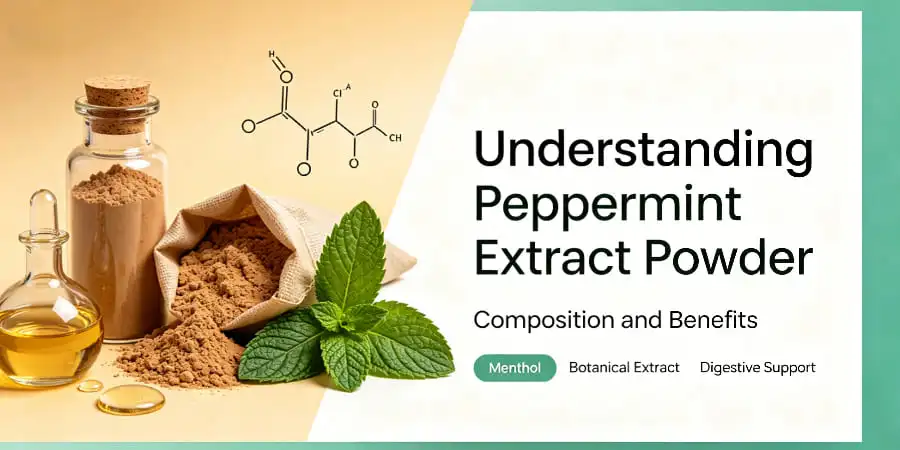
Menthol's natural cooling effect works on TRPM8 receptors to make you feel cool without changing your body temperature. Because of this, the powder is great for making mouth care products, useful drinks, and skin treatments. In addition to being nice to look at, scientific study supports its role in digestive health. Menthol relaxes smooth muscle in the digestive tract, which can help with pain and bloating. This makes the ingredient a useful part of digestive enzyme pills and mixes for gut health.
Antimicrobial activity and flavour masking properties are what give mouth fresheners their power. The compound stops the growth of bacteria that cause bad breath and gives breath a clean taste that people associate with being fresh. Because it does two things, it is a popular ingredient in toothpaste, mouthwash, and breath spray. Aromatherapy uses menthol's ability to make people more mentally aware and ease tension headaches, which means the ingredient can be used in more brain support supplements and health goods.
Quality Indicators and Specifications
When looking for this item, people who work in procurement have to look at a number of important factors. Menthol content is the main indicator of quality, and standards usually range from 40% to 98%, based on the needs of the application. GC-MS testing gives a thorough breakdown of the substance's components, confirming the presence and concentration of important active ingredients while also finding possible contaminants. EU and US food-grade guidelines set strict limits on the amount of heavy metals, chemical residues, and microbes that can be found in food.
Organic certificates are useful for brands that want to sell clean labels, but they need to be able to prove that the product was grown and then shipped to the customer. The conditions of storage have a big effect on how long potency lasts. The powder should be kept in containers that don't let air in and are out of the way of light and heat. The best temperature for storage is between 15°C and 25°C. Good storage methods stop oxidation and volatile compound loss, so the flavour stays strong for the whole product's shelf life, which is usually 24 months if kept properly.
Practical Applications and Usage of Peppermint Extract Powder
Food and Beverage Formulations
This part is naturally added to functional drinks, energy drinks, and health teas to make them taste better. Its forms that dissolve in water work well with liquids and don't make them cloudy or separate, which can happen with oil-based flavourings. Developers of drinks like the clean taste that doesn't need any artificial masking agents, which is in line with what customers want: clear ingredient lists. In candy uses, the peppermint extract powder offers constant cooling intensity across production batches, which gets rid of the differences that come with using essential oils.
Protein blend makers use it to make their products taste better and come up with new, refreshing flavours. Because it makes you think of something as naturally sweet, less sugar can be used without affecting the taste. Cold brew tea blends are better because it can go well with botanical notes and add claims of digestive support. These uses show how the item solves two problems at the same time: improving flavour and adding useful benefits.
Nutraceutical and Pharmaceutical Applications
Standardised amounts of menthol are used in digestive health products to make sure they work as promised. Enteric-coated pills with the powder are designed to release the medicine only in certain parts of the intestines, which makes them more effective at treating irritable bowel syndrome. Because the potency can be predicted, precise dosing protocols can be used for clinical purposes and the development of over-the-counter (OTC) products. R&D teams like that the ingredient works well with other plant extracts, which lets them make complicated mixtures that help with a lot of different health issues.
High-purity grades are used by pharmaceutical companies to make topical painkillers and respiratory health products. The compound's ability to turn on cooling receptors helps with pain without using drugs, which meets the growing need for natural alternatives to synthetic actives. Simple analytical methods make it easy for quality control labs to check for standardisation, which helps with regulatory compliance and meeting batch-to-batch consistency requirements.
Cosmetics and Personal Care Integration
The powder is used by beauty makers to make masks for the face, cooling gels, and treatments for the hair. Its soothing properties keep skin from getting irritated and give you a new physical experience that makes you think more highly of the product. Cosmetic scientists like that the element is stable in emulsion systems and works with a number of different preservative packages. Menthol's stimulating effect on scalp circulation is used in hair care products to back up claims about hair follicle health and growth support.
People who want plant options to synthetic cooling agents like WS-3 or WS-23 like the natural origin. This positioning strengthens brand stories about being environmentally friendly and being open about what ingredients are used. Private label companies can set their products apart by highlighting the natural peppermint content, which can help them get a premium position in markets that are already very competitive.
Choosing the Right Peppermint Extract Powder for Your Business
Natural Versus Synthetic Considerations
Natural extraction keeps all of the aromatic chemicals that are in peppermint leaves, which gives it a richness that man-made menthol can't match. This level of complexity is important for high-end formulas where flavour depth affects how customers feel and how often they buy again. But synthetic alternatives are cheaper and have steady supply chains that aren't affected by changes in agriculture. It depends on how to position the product for the target market and how sensitive the price is.
Synthetic grades are often needed in pharmaceutical uses because they are more pure and don't contain any farming contaminants. To meet clean label standards and keep up with health trends, food and supplement brands are choosing natural sources more and more. When choosing between these choices, procurement teams have to think about how to meet regulatory standards, meet customer needs, and stay within their budgets.
Evaluating Supplier Capabilities
Suppliers you can trust show a few important traits. They give a lot of proof, like Certificates of Analysis, allergen statements, and stable studies that back up promises about shelf life. Flexible minimum order numbers work for both new names and well-known makers, and custom standardisation services let you make your own specs. Suppliers with their own research and development departments can help with formulation problems by improving solubility or changing the size of particles.
Certification portfolios should have ISO, GMP, and any other food safety qualifications that are important to your market, and for mentha piperita extract, traceability systems that follow ingredients from where they come from in plants to where they are packaged at the end boost trust in the supply chain, and customer service teams that are responsive and know about technology needs and regulatory landscapes add a lot of value that goes beyond just low prices. Traceability systems that follow ingredients from where they come from in plants to where they are packaged at the end boost trust in the supply chain. Customer service teams that are responsive and know about technology needs and regulatory landscapes add a lot of value that goes beyond just low prices.
Bulk Procurement Strategies
Buying peppermint extract powder in bulk lowers the cost per unit, but you need to be very careful about how much space you have for storage and how quickly you can move your inventory. Setting up long-term supply deals with qualified sellers keeps prices stable and makes sure that supplies are distributed during times of high demand. Incoming inspection processes should be part of quality assurance routines. These should make sure that specifications match purchase orders and stop substitution or alteration.
Diversifying your supplier relationships lowers the risk of being dependent on a single source while still keeping key ties with companies that understand your needs. Regular supplier audits, whether they happen online or in person, set higher standards for quality and find ways to make things better. By doing these things, supply chains become more stable and can keep up with regular production schedules.
Safety, Storage, and Quality Assurance for Peppermint Extract Powder
Understanding Potential Safety Concerns
Even though menthol is usually thought to be safe, sensitive people can have bad reactions to it. For people who are sensitive, high concentrations may cause heartburn or make gastro-oesophageal reflux worse. Product designers have to set the right dose limits based on the product's intended use and the people who will be buying it. During formula creation, allergy screening finds possible cross-reactivity with other plants, which keeps the market from having problems.
Patch tests are needed to see if the skin is sensitive to topical treatments, especially for leave-on cosmetics. To keep workers from getting respiratory discomfort when they breathe in concentrated powder during production, peppermint extract powder requires proper air systems and personal safety equipment. These safety rules keep both end users and production staff safe.
Storage Best Practices for Bulk Quantities
For industrial amounts, climate-controlled warehouses with temperature monitoring tools are needed. Light-resistant packaging keeps volatile chemicals from breaking down, and nitrogen flushing during packing keeps oxidation to a minimum. Following the first-in, first-out rule for inventory movement makes sure that older stock is used up before it goes bad.
Regular stability testing during storage proves that the product's effectiveness is still there and shows any degrading trends. Documentation systems keep track of the working conditions and methods used, making audit trails that back up claims of quality. By doing these things, you can keep food fresh longer and throw away less food that has gone bad.
Certification and Compliance Requirements
To get an organic certification, you have to show that you follow certain farming and processing rules. Verification by a third party, like the USDA or the EU, gives the market credibility and lets you reach higher price points. People are worried about genetic modification, so non-GMO certification helps ease their minds. However, peppermint rarely uses GMO cultivars.
Kosher and Halal licenses allow businesses to reach new groups of customers, but they require that ingredients and processing facilities meet certain standards. These credentials show that you are committed to quality standards above and beyond what is required by law. This builds trust with both procurement professionals and end users.
Conclusion
Peppermint extract powder meets many industrial needs because it has a standard structure, can be used in a variety of ways, and is always available. It can be used in a lot of different areas, from digestive aid pills to drinks that cool you down and mouth care items. Making smart buying choices means knowing about things like composition details, quality marks, and the right way to handle them. Safety concerns and licensing requirements make sure that products are made in a way that follows the rules and meets customer standards for natural ingredients. Strategic ties with suppliers and quality control measures help make supply chains that support steady manufacturing operations. As the need for clean-label flavourings and functional ingredients grows, this extract can be a useful part of strategies for coming up with new products.
FAQ
How does peppermint extract powder differ from peppermint oil?
The peppermint extract powder form is easier to work with and add to dry mixtures like pills, tablets, and powder mixes. Using it gets rid of the problems that come with dosing volatile oils and makes storage more stable. Solid dosage forms need special packaging to keep volatile compounds inside, but oil forms concentrate them at higher levels. Powder forms work better for making food because they don't separate like oil suspensions do in water-based systems.
What certifications should I prioritize when sourcing for supplement manufacturing?
GMP approval makes sure that the ways things are made meet standards for pharmaceuticals. ISO credentials show that a company has a quality management system, and organic credentials make sure that the plants used are real. Specifications are backed up by third-party testing records from recognised labs. For US markets, products should meet FDA rules, and for European markets, they should follow Novel Foods rules if they apply.
What typical lead times should I expect for bulk orders?
Standard orders generally ship two to three weeks after the order is confirmed. Timelines are pushed back to four to six weeks for custom standardisation or private labelling. International shipping can take an extra week or two, based on where it's going and how long it takes to clear customs. Setting up safety stock levels and predicting seasonal trends in demand help keep production plans on track, even with these lead times.
Partner with Wellgreen: Your Trusted Peppermint Extract Powder Manufacturer
Wellgreen Technology is an expert at providing standardised plant extracts with full quality assurance and technical support. Custom menthol standardisation from 40% to 98% is one of the things that our peppermint extract powder maker can do. This lets us meet the exact recipe needs of nutraceutical, food, and cosmetic uses. We keep our production facilities GMP-certified and test them thoroughly for heavy metals, pesticide residues, and microbial contamination. This makes sure that we meet EU and US food-grade standards.
Our team helps you with formulation, making sure that the solubility, flavour intensity, and functional benefits are at their best for your application. We have flexible minimum order amounts and can work with you quickly on R&D, whether you need OEM production, private labelling, or large ingredient supply. Every package comes with full paperwork, such as a COA and GC-MS results, to help you meet the requirements of regulatory bodies. Email us at wgt@allwellcn.com to talk about the needs of your project, get samples, or look into making unique specs that fit your manufacturing goals.
References
1. McKay, D.L., & Blumberg, J.B. (2006). A review of the bioactivity and potential health benefits of peppermint tea (Mentha piperita L.). Phytotherapy Research, 20(8), 619-633.
2. Eccles, R. (1994). Menthol and related cooling compounds. Journal of Pharmacy and Pharmacology, 46(8), 618-630.
3. Ford, A.C., et al. (2008). Effect of fibre, antispasmodics, and peppermint oil in the treatment of irritable bowel syndrome: systematic review and meta-analysis. BMJ, 337, a2313.
4. Nair, B. (2001). Final report on the safety assessment of Mentha Piperita (peppermint) oil, Mentha Piperita leaf extract, and Mentha Piperita leaf water. International Journal of Toxicology, 20(Suppl 3), 61-73.
5. Kligler, B., & Chaudhary, S. (2007). Peppermint oil. American Family Physician, 75(7), 1027-1030.
6. Göbel, H., Schmidt, G., & Soyka, D. (1994). Effect of peppermint and eucalyptus oil preparations on neurophysiological and experimental algesimetric headache parameters. Cephalalgia, 14(3), 228-234.