Using Bulk Organic Beetroot Powder as a Natural Food Colourant
2026-07-28 14:18:20
The global shift toward clean-label products has placed bulk organic beetroot powder at the forefront of natural food colourants. Sourced from organically cultivated Beta vulgaris, this vibrant red-purple powder retains betalains, natural nitrates, dietary fiber, and essential vitamins. Beyond its stunning hue, it serves dual roles as a premium natural colorant and a functional ingredient supporting cardiovascular health and athletic performance. As regulatory pressure mounts against synthetic dyes like Allura Red AC (Red 40), procurement managers across nutraceutical, food, and beverage sectors are seeking certified organic alternatives that deliver consistent color stability, superior water solubility, and transparent supply chains.
Understanding Bulk Organic Beetroot Powder and Its Role as a Natural Food Colourant
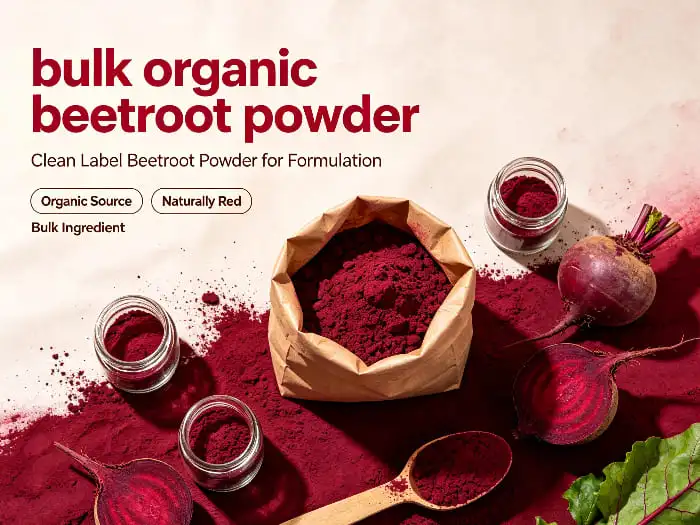
Organic beetroot powder comes from whole red beets that were grown without using synthetic fertilisers or pesticides. The beets were then harvested and processed by washing, drying, and using advanced low-temperature airflow micronization. This way of making things keeps the heat-sensitive betalain pigments, especially betacyanin and betaxanthin, which give the product its distinctive reddish-purple colour that is valued in clean-label products.
Production Process and Quality Control Measures
Our factory uses exact low-temperature drying methods to keep the betalain activity high while keeping the liquid content below 5% loss on drying. The powder is ultra-finely ground into particles that are between 80 and 120 mesh, which makes them very easy to spread in both warm and cold water systems. Instead of using high heat like most processing methods do, our steam sterilisation method gets rid of bacterial contamination without damaging active ingredients or natural colours. This method of physical sterilisation lowers the Total Plate Count (TPC) by a lot while still following all biological rules.
Organic Certification Standards and Compliance
To get organic certification from both the USDA and the EU, you have to carefully document everything from the seeds to the finished powder. During the whole growing process, chemical fertilisers and synthetic pesticides are not allowed on our controlled organic farming grounds. A third party carefully checks each production batch for pesticide residues using GC-MS/MS and LC-MS/MS, proving that over 500 banned chemicals are Non-Detected (ND). ICP-MS testing for heavy metals makes sure that amounts of Lead (Pb), Arsenic (As), Cadmium (Cd), and Mercury (Hg) stay well below the limits set by Proposition 65 and other international safety standards. With these certifications, companies that make finished products can confidently label their mixtures as organic, meeting the growing demand from customers for honesty and purity.
Betalain Content and Nutritional Profile
The amount of betalain in good organic beetroot powder varies from 0.5% to 1.5%, depending on the type of cultivar and when it was harvested. These nitrogen-based dyes are very stable between pH levels 4.0 and 7.0, which means they can be used in food systems that are slightly acidic to neutral. In addition to colour, the powder has natural inorganic nitrates that the body changes into nitric oxide, folate, which is needed for cell repair, potassium, which helps keep fluids in balance, Vitamin C, which is a strong antioxidant, and iron, which is needed for oxygen delivery. Because it has so many micronutrients, organic beetroot powder can be used as both a colourant and an extra nutritional value.
Advantages of Using Bulk Organic Beetroot Powder over Alternatives
When B2B clients in controlled markets choose organic beetroot powder over synthetic dyes or non-organic plant colourants, they get real operating and marketing benefits. Knowing these things that make them different helps buying teams make decisions about where to buy things that are in line with changing customer tastes and rules.
Purity and Clean-Label Appeal
Government agencies and consumer groups are paying more attention to synthetic colourants like Red 3 (Erythrosine) and Red 40 (Allura Red AC). Recently filed petitions to ban some synthetic dyes in the US are similar to restrictions already in place in European markets. This makes the supply chain less stable for companies that use artificial colourants. Organic beetroot powder is a safe, future-proof option that meets all the requirements for a clean label without any problems. It's even more appealing because it doesn't contain any anti-caking agents like silicon dioxide. Our unique physical wrapping and moisture-controlled packing make sure that the powder flows freely without any chemical additives, meeting standards for 100% pure ingredients.
Extended Shelf Life and Storage Efficiency
Dehydrated organic beetroot powder stays stable for 24 months when stored in foil-lined drums away from light and air, and for Beetroot Powder Bulk, this is longer than liquid beetroot juice concentrates, which need to be kept cold and have shorter stability windows; this longer shelf life makes it easier to get rid of old stock and cuts down on waste in large-scale production settings. This is longer than liquid beetroot juice concentrates, which need to be kept cold and have shorter stability windows. This longer shelf life makes it easier to get rid of old stock and cuts down on waste in large-scale production settings. The powder shape also makes transportation easier because it doesn't need to be kept cold and freight costs are lower, which are important factors to consider when buying things from other countries because shipping delays can affect the quality of the goods.
Superior Water Solubility and Formulation Flexibility
Advanced micronization methods create powder particles with a large surface area, which makes them easy to spread quickly in watery systems without settling or becoming gritty. This ability to dissolve in water is very useful for ready-to-drink (RTD) drinks, quick powder mixes, and protein shakes where a smooth taste affects how well people like the product. The powder works well in both hot and cold processing conditions, and the colour stays the same during the homogenisation, mixing, and pasteurisation steps.
Reduced Earthiness Through Processing Optimization
Geosmin, a volatile substance found naturally in raw beetroot, gives foods earthy, soil-like flavours that can overpower delicate recipes. Our processing gets rid of a lot of this off-note while keeping the active betalains and nitrates by using peeling methods that have been proven to work by science and gentle thermal treatment protocols. The powder that was made has a slightly sweet and herbal taste that doesn't need many flavouring changes. This makes the formulation process easier and lowers the cost of making consumer-ready products.
How to Use Bulk Organic Beetroot Powder Effectively as a Food Colourant?
To get the most colour impact while keeping the organoleptic quality, you need to know the specific dosage guidelines and processing variables for each application. For the application to go well, the powder concentration needs to be matched to the food matrix's properties and the conditions of production.
Dosage Recommendations Across Food Categories
In bakery uses, powder needs to be added at a weight of 0.5% to 2.0% to get pink to deep red colours in mixes, doughs, and frostings. The powder can handle short periods of mild baking temperatures up to 180°C, but long periods of heat above 200°C may make the colour less intense. Adding 1.0% to 3.0% of fruit to frozen desserts and ice cream gives them bright colours and a natural sweetness that goes well with fruit flavours. 2.0% to 4.0% dosages work well for candy like gummies and hard candies. Higher concentrations are needed in sugar systems because crystalline matrices dilute the effects of lower concentrations.
pH Sensitivity and Color Stability Considerations
Betalain pigments are most stable in pH ranges from 4.0 to 7.0, which means they work best in slightly acidic to neutral settings. Formulations with a pH below 3.5, like some fizzy soft drinks or fruit products that are high in acid, may lose their colour over time. Degradation can be slowed down by buffering systems or smart packaging choices, like dark containers that block UV light. On the other hand, formulations that are very alkaline (above pH 8.0) can change colour to yellow-brown shades because betaxanthin components are more common. Pre-formulation pH testing and accelerated stability studies under the conditions that the product will be stored in are very important for procurement teams that are looking at samples from suppliers.
Heat Processing and Pasteurization Guidelines
Betalains can handle some heat processing, but too much heat speeds up the breakdown of pigments. High-temperature short-time (HTST) pasteurisation at 72°C for 15 seconds successfully maintains colour integrity, making organic beetroot powder ideal for RTD drinks that can be kept on the shelf. Ultra-high temperature (UHT) processing at 135°C to 150°C, on the other hand, needs to be carefully optimised. Shorter exposure times and faster cooling cycles help keep colour loss to a minimum. Freeze-drying and air-drying don't put a lot of heat stress on organic beetroot powder, which makes it a great colourant for quick powder mixes and supplement capsules.
Real-World Application Case Studies
A well-known sports nutrition brand in North America changed the formula for its pre-workout powder by adding 2.2% Bulk Organic Beetroot Powder instead of synthetic Red 40. This met regulatory requirements and led to a 23% rise in consumer preference scores in blind taste tests. A European company that makes plant-based meat put 1.8% beetroot powder into burger patties to give them a blood-red colour that made them look more real and to add nitrates, which are good for your heart. This two-in-one ingredient made the higher price point worth it.
Procuring Bulk Organic Beetroot Powder: What B2B Buyers Need to Know?
To find the best providers of organic beetroot powder, you need to look at them against a number of factors that affect the stability of long-term partnerships and the quality of the product.
Verification of Organic Certifications and Traceability
There is more to legitimate organic approval than just paperwork, and for Beetroot Powder Bulk, procurement professionals should ask for full chain-of-custody records that link specific powder batches back to specific production sites, and for USDA and EU Organic certifications, farming methods, processing sites, and handling procedures must be audited every year. People who work in procurement should ask for full chain-of-custody records that link specific powder batches back to specific production sites. For USDA and EU Organic certifications, farming methods, processing sites, and handling procedures must be audited every year. Make sure that providers keep their certificates up to date with recognised certifying bodies. ISO 9001 quality management systems and GMP (Good Manufacturing Practices) compliance are two more signs that a business is mature enough to handle a big, steady supply.
Supply Chain Transparency and Batch Consistency
Colour value uniformity across production batches is a very important issue for companies that want to stick to brand standards. Reliable suppliers use spectrophotometric colour measurement protocols and include Colour Value indices in Certificates of Analysis (COA) so that shipments can be directly compared. To look for trends of variability, ask for past batch data that covers more than one production run. When comparing suppliers, those who use single-origin buying from dedicated organic farms have better batch-to-batch stability than those who combine material from different sources.
Minimum Order Quantities and Packaging Options
Minimum order quantities (MOQ) for commercial beetroot powder suppliers are usually between 25 kg and 500 kg. The MOQs depend on whether the material is in stock or needs to be processed to specific specifications. Medium-sized manufacturers and private-label developers who are testing new formulas before committing to bigger amounts can benefit from flexible MOQ policies that are flexible. Some types of packaging are vacuum-sealed polyethylene bags inside fibre drums, nitrogen-flushed foil pouches for longer stability, and food-grade bulk totes for users who need to store a lot of items.
Private Label and OEM Customization Services
Contract makers and wholesalers are looking for turnkey solutions that include help with formulation, custom mixing, and packing with their own brand on it. Suppliers that offer OEM services can create their own beetroot powder mixes by adding complementary plants like spirulina, pomegranate extract, or acai berries. This lets them make unique "superfood red" products. As well as providing raw materials, technical support during formulation development, help with stability testing, and the preparation of regulatory documentation, all add a lot of value and speed up the time it takes to get new products on the market.
Ensuring Quality and Risk Management in Bulk Organic Beetroot Powder Procurement
Proactive quality assurance processes and risk reduction strategies protect against common problems in getting botanical ingredients.
Adulteration Detection and Third-Party Testing
Adulteration for financial reasons is still a threat to the markets for natural colourants. Some dishonest sellers might mix organic beetroot powder with maltodextrin, synthetic betalain analogues, or beetroot material that isn't organic. High-Performance Liquid Chromatography (HPLC) fingerprinting finds real betalain patterns and identifies differences that could mean the sample was tampered with. Insist on third-party lab tests being done by accredited facilities that are not connected to the seller.
Microbial Control and Sterilization Validation
Root vegetables grown in soil have natural microbiological risks that need to be eliminated using proven methods. Conventional chemical fumigation goes against organic principles, so physical methods like steam treatment or controlled irradiation are needed. Make sure that the suppliers you work with have environmental tracking programs in their processing sites, regularly check the cleanliness of their equipment, and use Hazard Analysis and Critical Control Points (HACCP) frameworks. The finished powder should have a Total Plate Count of less than 10,000 CFU/g.
Regulatory Compliance Across Target Markets
Different places have very different rules about what can and can't be imported, which affects what paperwork is needed and what ingredient claims are allowed. In the US, Bulk Organic Beetroot Powder can go on sale without getting FDA approval because it is Generally Recognized as Safe (GRAS). In the EU, on the other hand, Novel Food Regulations need proof that the food has been eaten in the past. Teams that buy things to send abroad need to make sure that the certifications of suppliers meet the needs of target markets.
Strategic Supplier Audits and Long-Term Partnership Development
Moving beyond business relationships and toward strategic partnerships improves supply security and makes it possible for people to work together to make things better all the time. Do on-site surveys of your suppliers to check their growing methods, handling hygiene, lab facilities, and inventory management systems. Check the supplier's financial health to make sure they can keep running even if the prices of agricultural commodities or crop yields change. Set up business reviews every three months to talk about quality measures, market trends, and new product ideas.
Conclusion
As the move toward clean-label, organic products speeds up, Bulk Organic Beetroot Powder will become an essential ingredient for manufacturers who want to stay ahead of the curve. It meets both customer needs and government standards because it is both a bright natural colourant and a nutritional powerhouse. The success of procurement depends on carefully evaluating suppliers, checking quality thoroughly, and building smart partnerships. As restrictions on synthetic dyes grow around the world, companies that use certified organic beetroot powder early on gain a competitive edge by following the rules, earning customer trust, and making their products stand out. This plant colourant is a key ingredient in nutraceuticals, functional foods, beverages, and even cosmetics because it dissolves easily in water, has a stable betalain content, and has been certified as organic by many organisations.
FAQ
Is organic beetroot powder safe for use across all food categories?
Yes, organic beetroot powder is Generally Recognized as Safe (GRAS) in the US and is an accepted food ingredient in the EU. This means it can be used in supplements, drinks, baked goods, and dairy products. Because the powder comes from natural sources and doesn't have any man-made ingredients, it can be used in sensitive situations, like infant nutrition and organic personal care products. It can be used for a lot of different things because it has regulatory compliance paperwork and is allergen-free.
How does the cost compare to synthetic colorants on a per-batch basis?
Organic beetroot powder costs more per unit than synthetic dyes, but the total costs of making the product are often about the same when you consider the benefits of using a clean label, the lower risk of having to change the recipe because of new rules, and the fact that people are willing to pay more for products that say they are organic. Concentrated betalain content allows for effective colouration at relatively low inclusion rates. The added nutritional benefits allow products to be priced higher, which covers the costs of the ingredients.
What are typical sampling policies and minimum order quantities for trial batches?
Suppliers with a good reputation will give free samples ranging from 100 grams to 1 kilogram for initial recipe trials. This lets R&D teams test colour performance, flavour matching, and processing behaviour before committing to large quantities. For first orders, the minimum amount needed is usually around 25 kilos. Discounts for large orders are offered at 100 kilogram, 500 kilogram, and metric tonne levels. MOQ policies that are flexible can work for both new brands and contract makers who are working on multiple product development projects at the same time.
Partner with Wellgreen for Premium Bulk Organic Beetroot Powder Supply
Wellgreen Technology stands as a trusted Bulk Organic Beetroot Powder manufacturer serving nutraceutical brands, pharmaceutical companies, functional food producers, and OEM partners across North America and Europe. Our GMP-certified production facilities maintain comprehensive quality systems encompassing USDA Organic and EU Organic certifications, rigorous batch testing protocols, and full supply chain traceability from controlled cultivation bases to finished powder. We offer competitive pricing structures, flexible minimum order quantities starting at 25 kg, complimentary sampling for qualified buyers, and rapid turnaround on custom formulation requests. Our technical team provides formulation support, stability testing guidance, and regulatory documentation assistance to streamline your product development process. Extensive inventory ensures reliable, on-time delivery even during peak demand periods. Whether you're reformulating existing products to meet clean-label standards or launching innovative organic offerings, Wellgreen delivers the quality, service, and expertise your procurement team demands. Contact us today at wgt@allwellcn.com to request samples, discuss specifications, or explore private label opportunities that differentiate your brand in competitive markets.
References
1. Azeredo, H. M. C. (2009). Betalains: Properties, sources, applications, and stability—A review. International Journal of Food Science & Technology, 44(12), 2365-2376.
2. Delgado-Vargas, F., Jiménez, A. R., & Paredes-López, O. (2000). Natural pigments: Carotenoids, anthocyanins, and betalains—Characteristics, biosynthesis, processing, and stability. Critical Reviews in Food Science and Nutrition, 40(3), 173-289.
3. Stintzing, F. C., & Carle, R. (2004). Functional properties of anthocyanins and betalains in plants, food, and in human nutrition. Trends in Food Science & Technology, 15(1), 19-38.
4. Carocho, M., Barreiro, M. F., Morales, P., & Ferreira, I. C. F. R. (2014). Adding molecules to food, pros and cons: A review on synthetic and natural food additives. Comprehensive Reviews in Food Science and Food Safety, 13(4), 377-399.
5. Clifford, T., Howatson, G., West, D. J., & Stevenson, E. J. (2015). The potential benefits of red beetroot supplementation in health and disease. Nutrients, 7(4), 2801-2822.
6. Gengatharan, A., Dykes, G. A., & Choo, W. S. (2015). Betalains: Natural plant pigments with potential application in functional foods. LWT—Food Science and Technology, 64(2), 645-649.