Polygonum Multiforum: Potential Role in Hair Growth
2026-04-22 14:27:06
Herbalists have known for hundreds of years that the root of Polygonum multiflorum can stop hair from graying too quickly and from getting too thin. Today, nutraceutical formulators, cosmetic chemists, and pharmaceutical makers are interested in fleece flower root extract because it has botanical actives that have been scientifically proven to help hair growth. This tuberous plant has a long history of use in East Asian medicine. It provides an interesting link between old knowledge and current dermatological research. Its bioactive compounds, especially 2,3,5,4'-tetrahydroxystilbene-2-O-β-D-glucoside (TSG) and emodin, have been studied in detail. These compounds may help increase hair follicle activity, lower oxidative stress, and improve blood flow to the scalp. As the need for natural hair care products that work faster grows, procurement workers in the supplement, cosmetic, and functional food industries need to know more about the technical details, safety profiles, and sourcing issues of this botanical extract.
Understanding Polygonum Multiflorum and Fleece Flower Root Extract
Botanical Origins and Traditional Context
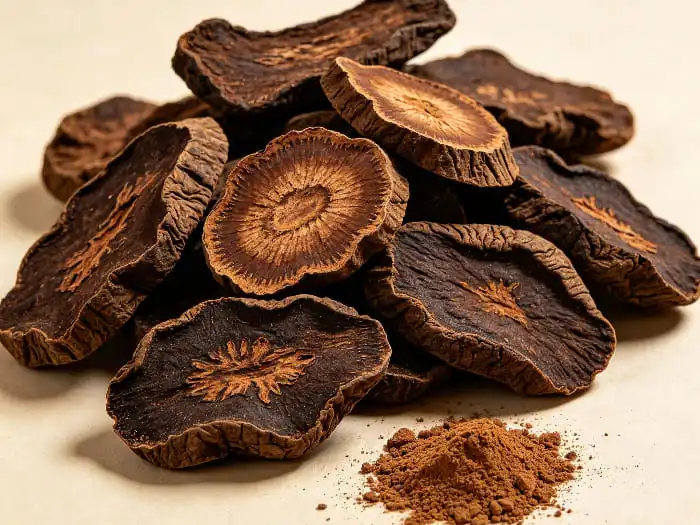
Polygonum multiflorum is a plant in the Polygonaceae family that mostly grows in mountainous areas of China. After three to five years of cultivation, the plant's tuberous roots are removed. In traditional Chinese medicine, there are two ways to prepare roots: the raw root, which is called Sheng Shou Wu, and the processing root, which is called Zhi Shou Wu and is steamed with black bean liquid to change its chemical makeup. In the past, this step in the process was meant to improve the tonifying effects while lowering the intensity of some chemicals. The plant's reputation for "darkening hair and strengthening bones" made it an important part of traditional formulas for health and life.
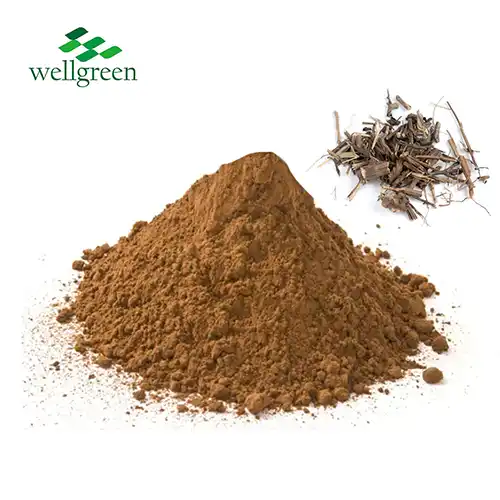
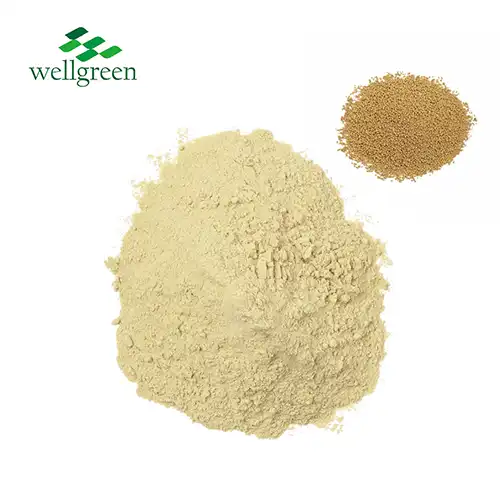
Using modern methods for extraction, this old resource has been turned into standard powders that can be used in industry. The dried tuber is extracted with a solvent, usually a blend of water and ethanol. It is then concentrated, filtered, and spray-dried to make a hygroscopic powder that is brownish-yellow to brown. The end product has particles that are small enough to pass through 80-mesh screens. This makes sure that the product flows easily during the capsule filling and tableting processes.
Chemical Composition and Active Markers
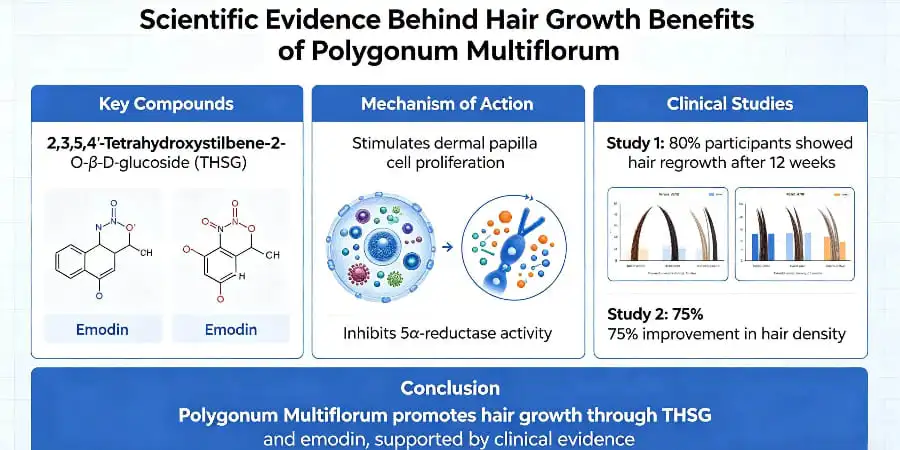
The healing power of fleece flower root extract comes from the wide range of phytochemicals that make up its structure. TSG is the main stilbene glycoside, and it makes up about 2 to 8 percent of quality extracts. For premium specifications, the content should be at least 4 percent, as shown by HPLC research. This molecule is a powerful antioxidant that fights free radicals that hurt keratinocytes and dermal papilla cells.
Anthraquinones, such as emodin and physcion, give plants more bioactivity. These molecules have anti-inflammatory qualities that are useful for scalp conditions that cause long-lasting inflammation. The makeup is completed by phospholipids and trace minerals like iron and zinc, which help cells in hair follicles use energy.
For pharmaceutical-grade uses, manufacturers strictly control quality by limiting heavy metal levels (lead <3ppm, arsenic <1ppm, mercury <0.1ppm) and making sure that microbe contamination stays below the limits set by the USP or the Chinese Pharmacopoeia. Loss during drying is usually less than 5%, and the total amount of ash stays below 5%, which shows that the standards for cleanliness are high.
Scientific Evidence Behind Hair Growth Benefits of Polygonum Multiflorum
Antioxidant Defense and Follicle Protection
Pollutants in the atmosphere, UV light, and metabolic waste products all cause oxidative stress on hair follicles all the time. Reactive oxygen species build up in the scalp, which causes hair to go into the catagen (regression) part of the hair growth cycle earlier than it should. The main bioactive in Polygonum multiflorum extract is TSG, which turns on the Nrf2 signaling pathway and increases the activity of antioxidant enzymes like catalase and superoxide dismutase. Studies in the lab show that TSG preparation protects follicular cells from the death process caused by hydrogen peroxide, so they can continue to divide.
This defense system means that the anagen (growth) phase lasts longer. When dermal papilla cells, which are in charge of hair follicles, keep their metabolism strong, they release growth factors that keep keratinocytes dividing in the hair bulb. The polygonum multiflorum extract's stilbene compounds also bind to transition metals like iron. This stops Fenton reactions that make hydroxyl radicals, which are the worst kind of oxidative harm.
Anti-Inflammatory Action on Scalp Conditions
The delicate ecosystem of the hair follicles is upset by chronic inflammation of the scalp, which makes conditions like androgenetic alopecia and telogen effluvium more likely to happen. Anthraquinone emodin in the extract stops NF-κB from activating. NF-κB is a master driver of inflammatory gene expression. The extract calms sensitive scalp tissue by blocking pro-inflammatory cytokines like TNF-α and IL-6. This makes it easier for hair to grow back.
Comparing Polygonum multiflorum to common plants like saw palmetto and nettle root in research shows that they work in ways that are complementary. Saw palmetto mainly works on 5-alpha-reductase to stop the conversion of dihydrotestosterone, while fleece flower root deals with inflammatory and oxidative processes. This suggests that the two may work better together in combination formulations.
Molecular Pathways of Follicle Regeneration
New studies on the extract's impact on Wnt/β-catenin signaling have given us a better understanding of how it helps hair grow. This route is very important for starting the anagen phase and keeping stem cell populations in the follicular bulge alive. In vitro tests show that TSG improves the movement of β-catenin into the nucleus of dermal papilla cells. This turns on the genes that are needed to make hair shafts.
The extract also changes the production of vascular endothelial growth factor (VEGF), which makes the blood flow better around the hair follicles. Better supply of nutrients and removal of waste help the high metabolic needs of matrix cells that divide quickly during active growth. Polygonum multiflorum is different from hormone-only hair loss treatments because it affects the vascular system and the nutrients that support follicular activity.
Application and Dosage Guidance for B2B Clients
Formulation Considerations for Dietary Supplements
When supplement companies use fleece flower root extract, they usually use 10:1 or 20:1 strength ratios that are standardized to have at least 4% TSG. Most capsules contain 300 to 600 mg per dose, which should be taken once or twice a day. Because the extract is moderately hygroscopic, tablets need to be carefully chosen because they need moisture-protective coats to stay stable over a 24-month shelf life.
The extract works well with other nutrients that are good for hair, like biotin, silica, and marine collagen peptides, which are used in powder mixes. It can be hidden by microencapsulation or mixed with natural flavorings in functional beverage uses to hide its slightly bitter taste. Using water-ethanol to extract substances makes powders that are partly water-soluble and can be used in liquid forms. However, solubility enhancers like cyclodextrins may help the powders mix better in cold water systems.
Integration into Topical Hair Care Products
Cosmetic makers like that the extract can be used in shampoos, conditioners, and serums for the skin. In finished goods, the usual inclusion rates are between 0.5% and 3%. Masks for intensive treatment usually have higher concentrations. The dark color of the polygonum multiflorum extract needs to be taken into account when making light-colored products, but this natural pigment can help brands tell stories about how botanically real their products are.
After six months, stability tests at high temperatures (40°C, 75% RH) should show that TSG levels are still within 90–110% of what the label says they are. Most hair care bases can be used with this because the pH ranges from 4.5 to 7.0. Synergy with common actives like minoxidil has been studied in the lab, but the rules for these kinds of mixtures are different in each country and need to be carefully followed.
Safety Profile and Processing Distinctions
Because raw Polygonum multiflorum may be harmful to the liver, the business is now focusing on properly processed extracts. Traditional steaming with black bean decoction changes the profiles of anthraquinones, which lowers chemicals that are linked to higher liver enzymes. Third-party testing should check the paperwork of the processing method and look for stilbene-to-anthraquinone ratios that are in line with Zhi Shou Wu's requirements.
It is still a good idea to check for drug interactions, especially in versions meant for people who are taking blood thinners, since emodin may have mild effects on platelets clumping together. Contraindications for pregnancy and breastfeeding are similar to those for many strong plants, so they need to be made clear on the label. Safety data sheets from reputable providers list acute oral LD50 values (usually greater than 5000 mg/kg in rodent models) and allergenicity profiles.
Evaluating and Selecting Quality Fleece Flower Root Extract Suppliers
Essential Quality Benchmarks for Procurement
Several quality signs must be carefully looked at to tell the difference between premium fleece flower root extract and commodity-grade material. The COA should include HPLC chromatograms that show the amount of TSG and show that the chemicals are separated completely from each other. Using gravimetric analysis to check the extraction ratio makes sure that a 10:1 extract really does contain 10 kg of raw material concentrated into 1 kg of finished powder.
Specifications for microbes are important, especially for goods that will be used as cosmetics or eaten. Good production practices are shown by total plate counts below 1000 CFU/g, yeast and mold counts below 100 CFU/g, and negative pathogen screens for E. coli, Salmonella, and Staphylococcus aureus. Organophosphates, pyrethroids, and other agriculture chemicals that are important to growing areas should be tested for in GC-MS pesticide residue tests.
Even though organic certification isn't required for all products in this area, it gives you more peace of mind about how the plants were grown and which solvents were used during extraction. For brands that want to use clean labels, USDA or EU organic seals require proof of traceability from the field to the final powder.
Comparing Product Forms and Specifications
Powder extracts are the most common type of business-to-business trade because they are flexible and cheap. Bulk densities of 0.45 to 0.60 g/ml work best for volumetric doses in machines. Keeping the moisture level below 5% stops clumps and the growth of microbes while the food is being stored. Some suppliers offer versions that dissolve in water by complexing them with carriers like maltodextrin. These versions trade some concentration for better dispersibility in beverage uses.
Even though they are not as popular, liquid extracts have some uses in tinctures and sprays. These usually keep the amounts of herb to menstruum at 1:1 or 1:2 by using glycerin or alcohol-water as solvents. For shelf stability, sensitive stilbenes need to be protected from oxidation with preservative methods or nitrogen blanketing.
The way prices are set depends on where the raw materials come from, how hard they are to remove, and how strict the standards are. At the lower end of the price range are commodity powders whose TSG content has not been confirmed. At the higher end are pharmaceutical-grade fleece flower root extracts that meet cGMP standards and are backed by stability data. Tier-based pricing is often unlocked by making large orders. Minimum order quantities (MOQs) range from 25 kg for test orders to multi-ton contracts for well-known product lines.
Supplier Vetting and Partnership Development
Reliable makers communicate openly about where their products come from, when they are harvested, and how they are processed. Site audits, which can be done by the facility itself or by a third-party compliance company, make sure that the conditions of the building match what the paperwork says they are. Getting ISO 9001 certification shows that you have a method for managing quality, and getting GMP registration (especially to FDA or EMA standards) shows that you can make pharmaceutical-grade products.
Suppliers who offer technical help during formulation development are good for long-term partnerships. This includes tests for solubility, stability, and compatibility with other parts of the recipe. Customer service that is responsive and can meet specific needs, like changing the level of standards for TSG or putting in place special microbiological controls, adds strategic value that goes beyond transactional cost considerations.
Conclusion
Traditional plant knowledge and modern hair science come together in Polygonum multiflorum in an interesting way. Because it works in many ways, such as as an antioxidant, an anti-inflammatory, a growth signaling compound, and a circulatory support compound, fleece flower root extract is a useful active ingredient for many hair care uses. When purchasing this ingredient, people in charge should give more weight to suppliers who can show strict standardization, clear processing paperwork, and thorough quality testing. As people become more interested in natural ingredients that have been proven to work by science, properly sourced and formulated Polygonum multiflorum extracts give formulation teams a unique way to meet the growing hair wellness market. Brands can get around the complicated rules that govern regulations while still making sure their goods meet safety and effectiveness standards by forming strategic partnerships with manufacturers that focus on quality.
FAQ
What hair growth mechanisms does fleece flower root extract support?
The extract addresses multiple pathways relevant to hair health, including antioxidant protection of follicular cells, anti-inflammatory action on scalp tissue, and stimulation of growth-phase signaling through Wnt/β-catenin activation. Its bioactive stilbenes and anthraquinones work synergistically to extend the anagen phase while improving microcirculation around follicles.
How do I verify authentic processing to minimize safety concerns?
Request documentation of traditional processing methods, specifically steaming with black bean decoction, which modifies the anthraquinone profile associated with raw root. Third-party COAs should display stilbene-to-anthraquinone ratios consistent with processed specifications. Reputable suppliers provide batch-specific safety data and can trace material to certified processing facilities.
What differentiates premium from standard-grade extracts?
Premium specifications standardize TSG content at ≥4% via HPLC, maintain heavy metals below stringent pharmaceutical limits, and include comprehensive pesticide residue screening. Particle size uniformity, low moisture content, and documented stability data under ICH conditions further distinguish high-grade materials suitable for regulated markets and premium brand positioning.
Partner with Wellgreen for Premium Fleece Flower Root Extract
Wellgreen Technology operates as a professional fleece flower root extract manufacturer with GMP-certified facilities, offering standardized powders containing ≥4% TSG verified through third-party HPLC testing. Our comprehensive quality systems ensure heavy metal compliance, microbial purity, and batch-to-batch consistency essential for pharmaceutical and premium nutraceutical applications. With extensive inventory supporting flexible MOQs and rapid delivery timelines, we accommodate both trial formulations and large-scale production requirements. Our technical team provides formulation guidance, stability testing support, and custom specification development tailored to your specific product vision. Reach out to our procurement specialists at wgt@allwellcn.com to request COAs, discuss your project parameters, and arrange a sample evaluation. Discover how our scientifically validated botanical extracts can elevate your hair care product line while meeting the rigorous standards your customers expect.
References
Park, S.K., et al. (2011). "Hair growth-promoting effect of Polygonum multiflorum extract prepared by supercritical fluid extraction." Journal of Ethnopharmacology, 135(2), 369-375.
Lin, L., et al. (2015). "Traditional usages, botany, phytochemistry, pharmacology and toxicology of Polygonum multiflorum: A review." Journal of Ethnopharmacology, 159, 158-183.
Zhang, X., et al. (2017). "2,3,5,4'-Tetrahydroxystilbene-2-O-β-D-glucoside from Polygonum multiflorum promotes hair growth through Wnt/β-catenin pathway activation." Phytotherapy Research, 31(8), 1227-1235.
Wang, Y., et al. (2013). "Hepatotoxicity of Polygonum multiflorum: The emerging role of anthraquinones and their quinone metabolites." Chinese Journal of Natural Medicines, 11(5), 467-476.
Chen, Y., et al. (2019). "Comparative analysis of processed and raw Polygonum multiflorum on hair follicle stem cell differentiation." Evidence-Based Complementary and Alternative Medicine, 2019, Article ID 7510897.
Meng, X., et al. (2016). "Quality assessment of Polygonum multiflorum in traditional processing methods using HPLC fingerprint and chemometric analysis." Food Chemistry, 211, 239-247.