Uses of Organic ACV Powder in Functional Beverages
2026-03-03 17:42:14
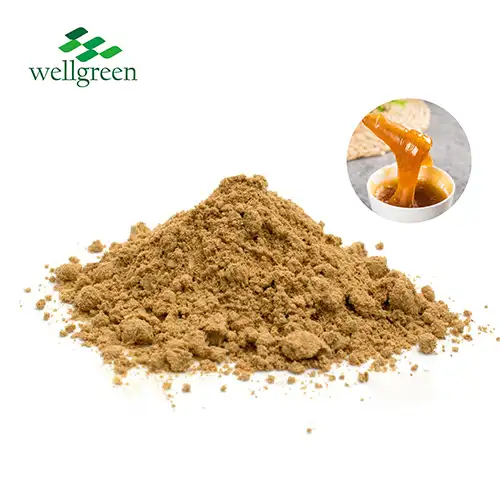
In the past few years, the functional beverage business has grown a lot. This is because health-conscious consumers are looking for products that taste good and are good for them. Organic apple cider vinegar powder stands out as a versatile and powerful addition to the new ingredients that are changing this industry. This concentrated, shelf-stable form of traditional apple cider vinegar has special benefits for making drinks. It gives manufacturers an ingredient that blends the health benefits of apple cider vinegar with the ease of use and stability needed for mass production. The powder form of vinegar is easier to ship and still contains the bioactive compounds that customers want. This makes it a great choice for functional beverage makers who want to meet the growing demand in the market.

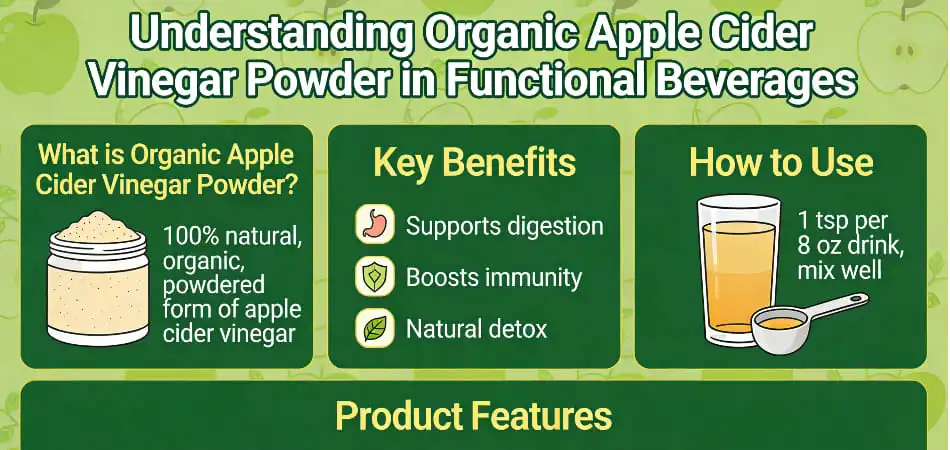
Understanding Organic Apple Cider Vinegar Powder in Functional Beverages
The ingredients in organic apple cider vinegar powder are a complex mix of science and nutrition. Manufacturers use advanced spray-drying technology to turn liquid apple cider vinegar into a concentrated powder while keeping important bioactive substances like acetic acid, polyphenols, and helpful enzymes. This process makes a standard product with a consistent amount of acetic acid, usually between 5 and 10 percent. This makes sure that the nutritional information on final drinks is accurate.
Key Nutritional Components and Their Benefits
The nutritional profile of organic apple cider vinegar powder backs up claims that it can help with digestion, speed up metabolism, and fight free radicals. Acetic acid, which is the main active ingredient, has been shown by science to help control blood sugar levels and support good weight management. Polyphenolic compounds also give the food antioxidant qualities that make it appealing to people who care about their health.
According to research published in health journals, drinking apple cider vinegar may help the body use glucose more efficiently and feel full. These results give a good scientific basis for making functional drinks that target metabolic health and weight management markets. The powder form makes sure that these helpful chemicals are always delivered, and the product stays stable throughout its shelf life.
Advantages Over Liquid Forms in Beverage Applications
In the process of making drinks, organic apple cider vinegar powder has big benefits over liquid versions. The powder form doesn't damage production equipment like liquid acid does, so upkeep costs are lower and equipment lasts longer. Powder ingredients work better with automated production lines because they don't get in the way of the machines or need special treatment. This makes manufacturing much more efficient.
Using powdered vinegar instead of liquid vinegar, which is mostly water, saves a lot of money on storage and shipping costs. The longer shelf life of 24 months compared to liquid alternatives makes it easier to handle inventory and cuts down on waste. These operational gains directly lead to higher profit margins for companies that make drinks.
Formulating Functional Beverages with Organic ACV Powder – Core Principles and Best Practices
To make a good recipe with bulk apple cider vinegar powder, you need to know how it reacts and behaves in different types of drinks. Achieving the best solubility, controlling the acidity levels, and finding the right balance between the characteristic tart taste profile and what consumers expect in terms of palatability are the main challenges.
Solubility and Stabilization Techniques
Getting the right breakdown and keeping the product clear are important things to think about when formulating. The type of carrier has a big effect on the solubility properties. For example, maltodextrin carriers have great flow properties, while organic gum acacia carriers make labels look better for high-end goods. Formulators should do a lot of tests to find the best ways to mix ingredients and find any problems that might arise with sedimentation.
Temperature and pH levels of the water affect how quickly things dissolve and how clear the end product is. Dissolution at room temperature usually takes longer to mix, but heat-sensitive chemicals are kept safe. Changing the pH may be needed to get the right mix of flavors while keeping the product stable. Formulators use buffering systems all the time to keep acidity in check and stop bad flavors from developing during storing.
Dosage Guidelines and Flavor Management
Dosage levels that are usually suggested are between 500 mg and 1000 mg per serving, but exact needs rely on health claims and personal taste preferences. Lower amounts (300–500 mg) work well in drinks with light flavors because the slight tartness improves the overall taste. Higher amounts (800–1200 mg) work well for drinks that are advertised as being strong and useful, and people expect a strong apple cider vinegar flavor.
Strategies for hiding and enhancing flavors are necessary for consumers to accept them. Organic apple cider vinegar powder is often mixed with other ingredients that work well together, like natural fruit tastes, ginger extract, or cinnamon. These mixtures not only make things taste better, but they may also be good for you in other ways. While adding vitamin C appeal, citrus tastes go well with the sour taste.
Compatibility with Other Functional Ingredients
Modern functional drinks often have more than one active ingredient, so it's important to think about how the ingredients will work together. Using the right pH levels to keep the bacteria alive, organic apple cider vinegar powder works really well with probiotics. Antioxidant ingredients, such as green tea extract or berry powders, work together to improve health while also making flavors more complicated.
The natural potassium in apple cider vinegar powder helps electrolyte formulas, which backs up claims of hydration. But formulators need to think about how acetic acid might react with some minerals, which could change how bioavailable the acid is or cause problems with precipitation. Full stable testing makes sure that all of the ingredients work well together for the whole product's shelf life.
Comparing Organic ACV Powder and Other Forms for Beverage Applications
Knowing the pros and cons of the different types of apple cider vinegar helps procurement professionals make smart choices about where to buy things. Each form requires different things to be thought about when making a drink, from how to make it to how it will taste when it's done.
Powder vs. Liquid Vinegar Performance
Because it is acidic and contains a lot of water, liquid apple cider vinegar needs to be handled with special tools. Acidic materials have to be accommodated on production lines, which increases the original capital investment and the need for ongoing maintenance. It's important to keep an eye on the temperature because liquid vinegar can go through secondary fermentation if it's not stabilized properly, which makes quality control harder.
These problems are taken care of by bulk apple cider vinegar powder, which also gives better stability from batch to batch. The consistent amount of acetic acid makes sure that flavors are consistent and allows for accurate nutrition labels. Powder ingredients can be easily added to dry blend processes without the need for separate systems for handling liquids. This makes manufacturing more flexible.
Organic vs. Non-Organic Considerations
Getting organic approval changes many parts of how a product is made and how it is marketed. Organic apple cider vinegar powder costs more, but it gives you access to more valuable customers, like natural food stores and people who are concerned about their health. The USDA Organic and EU Organic certifications set a higher standard for quality and allow for higher selling prices.
Non-organic alternatives may be cheaper, but they make it harder to get into new markets and position your business. Concerns about pesticide residue are especially high in ingredients that come from apples, which is why organic certification is important for consumer trust. Organic products must be tested by a third party, which adds to the quality assurance and helps the brand's image as a whole.
Supply Chain and Cost Analysis
Geographical factors that affect purchasing affect both the cost structure and the dependability of the supply chain. Organic apple production in the United States makes it easier to track apples, but it may limit the amount of apples that are available during times of high demand. International buying can save you money, but you need to be very careful to make sure that the certifications are the same and that shipping is easy.
Lead times are very different for organic and conventional goods. Getting organic ingredients usually takes longer because there are fewer suppliers of those ingredients. Minimum order quantities often show these supply limits, which affects how beverage makers plan their inventory and handle their cash flow.
Sourcing and Procurement Strategies for Organic ACV Powder in Bulk
To get organic apple cider vinegar powder, you need to carefully evaluate suppliers and build smart relationships with them. GMP certification is a basic condition, but there are other factors that have a big effect on the success of the supply chain and the consistency of product quality.
Supplier Qualification and Certification Requirements
Reliable suppliers have full quality control systems that go beyond just following GMP guidelines. To get USDA organic certification, you need to show proof that your ingredients are organic, have separate processing facilities, and have third-party checks done on a regular basis. EU Organic standards may add extra requirements for suppliers that sell to foreign markets, which means they need to be able to get two types of certification.
As part of the quality control paperwork, each batch should be tested for heavy metals, herbicide residues, and microbiological contamination. Standardized acetic acid level verification makes sure that all batches of a product work the same way. Suppliers should give thorough information about the particle size distribution, the amount of moisture, and how the material dissolves.
Geographic Sourcing and Market Considerations
Regional sourcing methods find a good balance between lowering costs and managing risks in the supply chain. North American suppliers may have higher base costs, but they usually have faster lead times and make it easier to follow regulations. European sources give you access to EU Organic certification and advanced processing technologies, but it's harder to plan your inventory because of the longer shipping distances.
Asian providers often have lower prices, but you need to do more research to make sure that their certifications are real and that they can keep an eye on quality. Differences in culture and language can make it harder to communicate technically, so it's important for partnerships to have clear record of what needs to be done.
Contract Terms and Risk Management
The smallest amount that can be ordered is based on how much the provider can make and should match up with how much demand is expected and how much space is available. Most MOQs are between 100 kg and 1000 kg, with 1000 kg being the standard for big manufacturers. Making a promise to buy in bulk may get you better prices, but you need to plan your demand accurately to keep your inventory from going out of date.
Changes in the prices of organic apples affect the costs of raw materials all along the supply chain. Long-term contracts with ways to change prices make costs predictable and spread market risk between the buyer and the seller. To keep deliveries on time, quality standards should include clear criteria for acceptance and ways to settle disagreements.
Future Opportunities and Trends in Functional Beverages with Organic ACV Powder
The market for functional drinks is always changing because people want more natural, science-backed products that are good for them. These trends open up more uses for cider vinegar extract and push the boundaries of what is possible in terms of formulation and delivery methods.
Clean Label and Transparency Movements
As more people look for "clean label" goods, ingredient lists and processing methods are looked at more closely. These tastes are perfectly met by organic apple cider vinegar powder, which has ingredients with clear names and not as much processing as synthetic options. Being open about where your goods come from and how they are made gives you a competitive edge, and people are willing to pay more for products that fit their values.
The "free-from" trend goes beyond organic certification and includes promises of not having any GMOs, gluten, or allergens in the product. ACV powder naturally supports these positioning tactics and offers useful benefits that make the higher price point justified. Brands that can effectively talk about these qualities get a bigger part of the clean label market.
Innovation in Delivery Systems
Novel delivery methods make it possible for organic ACV powder to be used in more than just drinks. Effervescent pills with ACV powder inside make it easy to take them with you when you're on the go. These formats are especially popular with younger people who want practical benefits without the usual supplement images.
Combination goods with more than one useful ingredient are another area of growth. Combining ACV powder with adaptogens, collagen peptides, or plant-based proteins makes health products that meet a lot of different needs at once. These new recipes bring in higher profits and help brands stand out in crowded market segments.
Market Expansion and Consumer Education
As more people learn about the health benefits of apple cider vinegar, the market is growing beyond health food stores and into regular stores. Educational marketing campaigns help people understand how to use products correctly and what benefits they should expect. This increases demand in the category, which is good for all makers who use good ingredients.
As more people around the world follow Western health trends, the international market is growing and offering big chances. Regulatory guidelines in developing markets often prefer natural ingredients to synthetic ones. This makes it easier for functional beverage manufacturers to use organic ACV powder.
Conclusion
Organic apple cider vinegar powder is a game-changing ingredient for companies that make functional drinks that want to cash in on the growing demand for natural health options. The powder form solves important problems in production while keeping the bioactive compounds that interest customers. ACV powder helps product developers make new drinks that meet both customer needs and business needs. It does this by improving stability, making operations more efficient, and giving formulators more freedom in how they make drinks. As the market for functional drinks continues to grow, companies that know how to get the best ingredients and put them together will be in the best situation to use this versatile ingredient successfully.
FAQ
What is the optimal dosage of organic ACV powder for functional beverages?
The recommended dosage typically ranges from 500mg to 1000mg per serving, depending on target health claims and flavor preferences. Lower doses (300-500mg) work well for subtle flavor enhancement, while higher concentrations (800-1200mg) suit products positioned as potent functional drinks. Formulators should consider consumer palatability alongside desired health benefits when determining final dosage levels.
How does organic ACV powder affect beverage shelf life and stability?
Organic apple cider vinegar powder significantly improves product stability compared to liquid vinegar alternatives. The powder form eliminates fermentation risks and provides extended shelf life of up to 24 months when properly stored. pH buffering may be necessary to prevent flavor development during storage, but overall stability characteristics support commercial beverage production requirements.
What quality certifications should I look for when sourcing ACV powder?
Essential certifications include USDA Organic, EU Organic (for international markets), and GMP compliance. Additional quality indicators include third-party testing for heavy metals, pesticide residues, and microbiological contamination. Suppliers should provide standardized acetic acid content verification and particle size distribution specifications to ensure consistent product performance.
Partner with Wellgreen for Premium Organic Apple Cider Vinegar Powder
Wellgreen Technology is a reliable company that makes organic apple cider vinegar powder. They have GMP-certified factories and full quality assurance systems. Our two organic certifications, from the USDA and the EU, mean that the ingredients we use are of the highest quality and meet the highest standards in the business. We provide consistent acetic acid levels and better solubility properties through modern spray-drying technology, which speeds up the process of making your drinks. Our low minimum order quantity (MOQ) choices, fast delivery times, and dedicated technical support team give you the dependability and high-quality service that your production schedules need. Get in touch with our team at wgt@allwellcn.com to talk about your needs and find out how our organic apple cider vinegar powder can help your healthy drink line.
References
Johnston, C. S., & Gaas, C. A. (2006). Vinegar: medicinal uses and antiglycemic effect. MedGenMed: Medscape General Medicine, 8(2), 61.
Kondo, T., Kishi, M., Fushimi, T., & Ugajin, S. (2009). Vinegar intake reduces body weight, body fat mass, and serum triglyceride levels in obese Japanese subjects. Bioscience, Biotechnology, and Biochemistry, 73(8), 1837-1843.
Petsiou, E. I., Mitrou, P. I., Raptis, S. A., & Dimitriadis, G. D. (2014). Effect and mechanisms of action of vinegar on glucose metabolism, lipid profile, and body weight. Nutrition Reviews, 72(10), 651-661.
Budak, N. H., Aykin, E., Seydim, A. C., Greene, A. K., & Guzel‐Seydim, Z. B. (2014). Functional properties of vinegar. Journal of Food Science, 79(5), R757-R764.
White, A. M., & Johnston, C. S. (2007). Vinegar ingestion at bedtime moderates waking glucose concentrations in adults with well-controlled type 2 diabetes. Diabetes Care, 30(11), 2814-2815.
Ostman, E., Granfeldt, Y., Persson, L., & Björck, I. (2005). Vinegar supplementation lowers glucose and insulin responses and increases satiety after a bread meal in healthy subjects. European Journal of Clinical Nutrition, 59(9), 983-988.