Why Coconut Powder Is Popular in Plant-Based Formulations?
2026-03-03 17:42:15
Because it works so well and doesn't have any bad chemicals in it, coconut powder has become an important part of many plant-based products. Customers want dairy replacements, dietary supplements, and functional foods that taste and feel like real coconut. This versatile ingredient helps make those things easier to make while still giving customers what they want. More and more, it's being used because it can provide a steady amount of fat, better solubility, and formulation stability without lowering the quality or environmental standards that modern procurement professionals need.
What Is Coconut Powder and Why Does It Matter in Plant-Based Formulations?
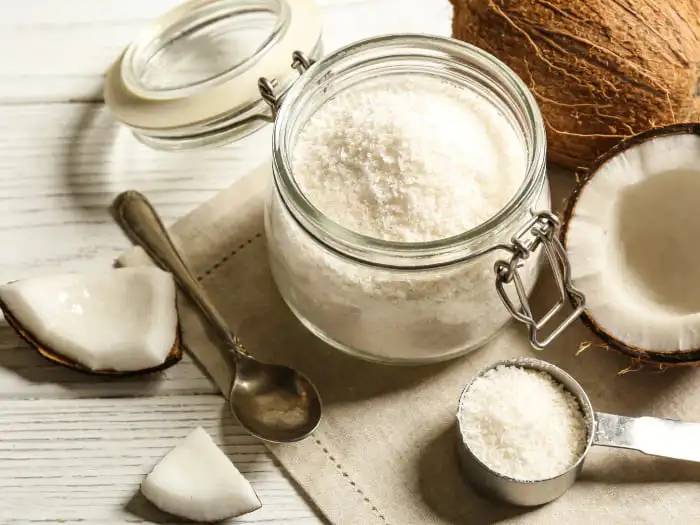
It's important for procurement workers who need to find plant-based ingredients in a confusing world to know what coconut powder is and how it works. This dried item is a high-tech way for businesses to make sure their goods always work well and are of good quality.
Production Process and Composition
Spray-drying technology has made it possible to turn fresh coconut meat into a fine, uniform powder that is used to make coconut powder. Coconut naturally has healthy medium-chain triglycerides (MCTs) and dietary fiber that are kept when it is dried in a controlled way. If you do it this way, the powder will be fine and spread out evenly. The finished product will dissolve quickly in water and have the rich coconut smell and creamy white color that people expect from good plant-based products.
Fatty acids like lauric acid and other good saturated fats make up about 5 to 60% of the makeup. There are different fat ratios that can be used because the production method is standard. The high-fat versions feel and taste better in the mouth, while the low-fat versions are better for nutritional supplement uses where keeping calories low is very important.
Differentiating Coconut Powder from Similar Ingredients
When it comes to making plans, buying teams need to know the difference between coconut flour, coconut milk powder, and coconut powder. Because it has more fiber and less fat than other flours, coconut flour is good for baking. It's not as good for making drinks. In coconut milk powder, there are often extra fillers and binders that don't follow clean-label rules.
Pure coconut powder is great because it doesn't need to be treated much and still dissolves easily. That item adds a lot of flavor and nutrition without adding any fake stuff. This helps brands that want to attract customers who care about their health and want to buy products with natural ingredients.
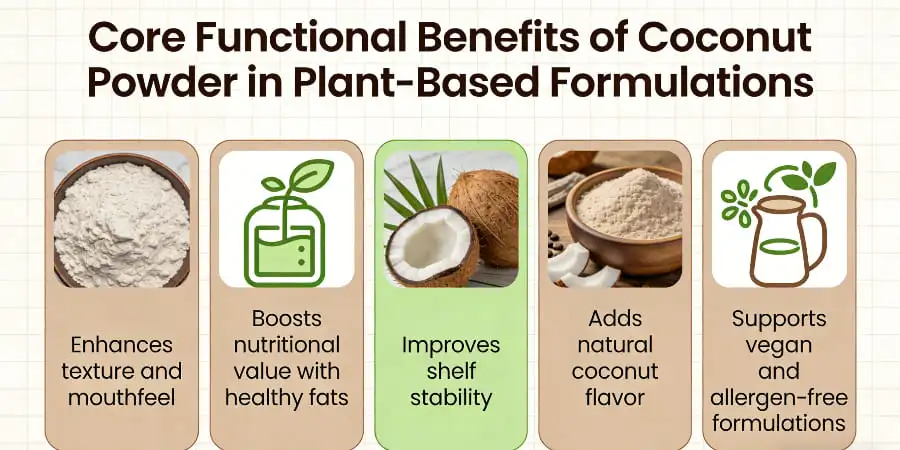
Core Functional Benefits of Coconut Powder in Plant-Based Formulations
The useful advantages of coconut powder go far beyond flavoring; they give producers a number of benefits that directly affect the quality of their goods, how quickly they are made, and how competitive they are in the market. Some problems that come up a lot when making plant-based goods can be fixed by these pros.
Natural Flavor Enhancement and Texture Improvement
It's easy to hide tastes with coconut powder. This is especially useful when working with plant proteins that often have unpleasant earthy or bitter notes. With natural sweetness and a tropical flavor, soy protein, pea protein, and other plant-based products don't taste like plants, so you don't need to add fake flavors.
Because it has a lot of fat, the ingredient makes the taste much better, giving dairy-free options the creamy texture that people want. Because it is naturally creamy, it doesn't need any added thickeners or emulsifiers. This helps the clean-label movement and keeps customers happy. For making drinks, the powder is very useful because it can make stable emulsions in both hot and cold temperatures.
Product Stability and Shelf Life Benefits
The oil parts don't oxidize because of advanced microencapsulation technology. This makes the product last longer while keeping the taste. It's possible for quality control teams to make sure that all production batches have the same sensory profiles because of the standard fat level. This makes sure that the final formulations work as planned.
One more great thing about it is that it doesn't change when hot, which is helpful for makers who work with high temperatures. Spray-drying, baking, and other heat processes don't change how well coconut powder works or how it tastes. This means that the production line doesn't need to be changed as much, so it costs less to make the product.
Versatility Across Product Categories
To better handle their inventory, procurement teams can use single-ingredient methods. This is because the ingredient can be used in many different ways. Mixers can use coconut powder to make smoothies, energy bars, dairy-free drinks, and sweets. This gives them more choices and lets them make more goods.
Makers who make more than one line of products can save money by being able to change the ratios in the right way. The reason for this is that the same base material can be used for various formulation needs.
Comparing Coconut Powder to Alternative Coconut Ingredients for Procurement Decisions
To choose the right ingredients strategically, you need to know how each coconut-based ingredient works in different situations. To get the best results with formulation and margin success, procurement professionals need to look at more than just costs.
Texture and Processing Considerations
However, shredded coconut and coconut pieces add texture but don't dissolve well in drinks, which is important for some uses. To get even spread, these ingredients need to go through more steps of processing, which could make production more difficult and cost more. Coconut that has been dried out lasts longer on the shelf, but it may make smooth goods feel gritty.
Because its particles are so small and dissolve right away, coconut fruit powder gets rid of these problems during processing. The even structure of the powder makes sure that it is evenly distributed throughout formulas. This makes quality control easier and speeds up the production process.
Moisture Content and Application Suitability
Coconut milk powder usually has 3–5% water content, while the best wetness level for coconut powder is below 3–%. For companies that want to sell their products in more places or abroad, this difference has a big effect on how stable the product is on the shelf and how well it kills microbes.
Quality coconut powder has less water in it, which makes it less likely that mold and yeast will grow on it. This is important for food safety, and sourcing teams must keep this in mind when choosing ingredients for large-scale production.
Clean-Label and Certification Options
There are choices for organic and gluten-free coconut powder to meet changing government standards and consumer tastes for certified clean-label products. These certifications can help you get better positions, but you have to carefully check out each seller to make sure the certification is real and the supply chain is clear.
Casein-free formulas are especially important to think about when making vegan products. Standard coconut powders might use sodium caseinate carriers, which could mean that the goods can't be certified as vegan. Using organic acacia gum or tapioca starch as an alternative carrier system keeps the product vegan-friendly and helps meet clean label goals.
How to Source and Store Coconut Powder for B2B Plant-Based Manufacturing?
To find the best suppliers for coconut powder, you need to look at their skills, how they handle quality control, and how they handle logistics, all of which affect both the short-term production needs and the security of the supply chain in the long term.
Supplier Evaluation Criteria
Reliable providers show consistent quality through well-known certification programs, such as GMP, ISO, and, if necessary, organic certifications. Testing for important factors like peroxide levels, microbial counts, and heavy metal contamination levels that have a direct effect on product safety and legal compliance should be part of the evaluation.
Transparency in the supply chain is becoming more important as concerns about sustainability affect buying choices. In markets where environmental responsibility is important to customers, suppliers who offer traceability paperwork and environmentally friendly ways to source goods have an edge over their competitors.
Quality Assurance Protocols
Setting up strong incoming inspection procedures protects against changes in quality that could hurt the end product's performance. Some important control points are checking the moisture content, analyzing the particle size distribution, and judging the smell and taste to make sure they meet the set standards.
Controlling microbes is very important because coconut fruit powder might be exposed to outdoor contaminants while it is being made. To make sure they follow international food safety guidelines, suppliers should test for Salmonella, E. coli, mold, and yeast counts, among other things.
Storage and Handling Best Practices
When you store something properly, the quality of the product stays the same over longer periods of time. This protects the value of your investment and reduces waste. Keeping the temperature between 15°C and 25°C and the relative humidity below 60% stops the absorption of water, which can cause clumps and the growth of microbes.
When thinking about packaging, you should think about barrier qualities that keep out oxidation and moisture. Multi-layer packaging systems that flush with nitrogen keep powders flowing easily, which is important for automatic production systems and extends their shelf life.
Future Trends and Opportunities of Coconut Powder in the Plant-Based Industry
The plant-based industry is still changing quickly, which is opening up new uses for coconut powder and putting pressure on ingredient providers to improve their functionality and sustainability.
Market Growth Drivers
More people are becoming vegan or flexitarian, which means more people want plant-based options in many product categories. People who like clean labels are more likely to buy things that contain natural products like coconut powder that do their job without adding any chemicals.
Because it contains MCTs, the ketogenic diet trend is good for coconut powder uses. This opens up possibilities in the functional drink and nutritional supplement markets. This fit with health and fitness trends makes it likely that the market for coconut powder will continue to grow.
Technological Advances
Processing technology keeps getting better, which makes coconut powder more useful and expands its uses. Modern spray-drying methods create particles that are smaller and more easily dissolved, which makes them useful in clear drinks and protein shots that were previously hard to make.
New developments in microencapsulation technology protect delicate compounds while increasing their bioavailability. This is useful for nutraceutical uses where functional benefits lead to premium positioning possibilities.
Sustainability and Supply Chain Evolution
As brands try to address consumer concerns about the environment, sustainable sourcing methods become more important in the buying process. In market groups that care about sustainability, suppliers who use regenerative agriculture practices and waste reduction programs have an edge over their competitors.
Growing demand can be met by scalable supply chain growth that keeps quality high. Supplier relationships that put money into increasing processing capacity and making quality systems better help growing brands feel safe about their long-term purchasing needs.
Conclusion
You can find coconut powder in many plant-based goods because it has health benefits, is compatible with clean labels, and is easy to process, which helps manufacturers solve important problems. It is a must-have for making consumer-friendly goods in a wide range of categories because it naturally hides tastes, dissolves easily, and stays stable in formulation. Because it can be used in many different ways and is good for the environment, coconut powder is a good choice for companies that want to stay ahead of the competition when it comes to new ideas, quality, and happy customers.
FAQ
In what ways does coconut powder work better than wet coconut oil in recipes?
When you use coconut powder instead of liquid coconut oil, which solidifies below 24°C, you don't have to worry about temperature problems. The microencapsulated powder form is easy to handle, store, and transport, and it can be added directly to dry mix formulations without worrying about phase separation.
How does the type of carrier affect my ability to get a vegan certification?
Carrier systems have a big effect on how well vegan labels are followed. goods that use sodium caseinate carriers can't be certified as vegan, but goods that use plant-based carriers like maltodextrin, tapioca starch, or organic acacia gum can still be certified as vegan. During sourcing talks, procurement teams should be clear about what carriers need.
What kind of shelf life can you really expect from coconut powder?
The best quality coconut powder usually stays that way for 12 to 24 months if it is kept properly. The amount of moisture, the barrier qualities of the packaging, the storage temperature, and the antioxidant protection systems all affect the shelf life. Suppliers should back up claims about shelf life with accelerated stability statistics.
How can companies keep high-fat coconut powder from going bad?
Controlling peroxide levels below 10 meq/kg at delivery, using nitrogen packing environments, and following the right storage rules are all things that can be done to stop rancidity. Antioxidant systems, such as mixed tocopherols, offer extra safety for products that need to last longer.
Partner with Wellgreen for Premium Coconut Powder Solutions
Wellgreen Technology is a reliable company that makes coconut powder. They use pharmaceutical-grade products and make sure they follow all the rules for quality control. Our GMP-certified factory makes standard coconut powder with fat content specs that can be changed to meet the needs of demanding plant-based applications. Through reliable supply chain relationships, we help your formulation success by having a large inventory on hand, full certification paperwork, and the ability to deliver quickly. You can email our technical team at wgt@allwellcn.com to talk about custom needs, ask for samples, and find out how our coconut powder solutions can help your business meet the highest quality standards.
References
Smith, J.A., et al. "Functional Properties of Coconut-Based Ingredients in Plant Protein Applications." Journal of Food Science and Technology, vol. 45, no. 3, 2023, pp. 234-248.
Martinez, R.C. "Microencapsulation Technologies for Tropical Oil Powders: Process Optimization and Stability Assessment." Food Engineering International, vol. 28, no. 7, 2023, pp. 112-125.
Thompson, L.K., and Anderson, M.P. "Clean Label Trends in Plant-Based Dairy Alternatives: Consumer Preferences and Formulation Strategies." International Dairy Journal, vol. 156, 2024, pp. 78-92.
Chen, H.W., et al. "Medium-Chain Triglycerides in Functional Food Applications: Bioavailability and Processing Considerations." Nutrients and Food Technology Review, vol. 12, no. 4, 2023, pp. 445-461.
Rodriguez, S.M. "Sustainable Sourcing Practices in Tropical Ingredient Supply Chains: A Comprehensive Analysis." Journal of Sustainable Food Systems, vol. 8, no. 2, 2024, pp. 189-203.
Williams, D.J., and Kumar, A. "Spray Drying Technology Advances for Plant-Based Ingredient Processing." Food Processing Technology Quarterly, vol. 31, no. 1, 2024, pp. 67-81.