What Are the Benefits of Horse Chestnut?
2026-04-27 14:55:06
Horse chestnut, which comes from the plant Aesculus hippocastanum, has many health benefits, especially when it comes to supporting blood flow and arterial health. The main bioactive chemicals, aescin escin, which are both names for the same triterpenoid saponin complex, work by making capillary walls stronger, lowering the permeability of vessels, and stopping fluid from leaking into nearby tissues. Because of this, horse chestnut seed extract is great for healing chronic vein problems like varicose veins, edema, and inflammation. These compounds are used in more than just medicine. They also improve the microcirculation in functional wellness goods and make cosmetics that target eye bags work better.
Understanding Horse Chestnut and Its Key Components
Botanical Origins and Traditional Applications
Horse chestnut trees have been grown all over Europe for hundreds of years, and their seeds have long been used to make medicines. In the past, Europeans who practiced folk medicine used bark, leaves, and seeds to treat circulation problems and swelling. These days, extraction methods only use seeds because they have high amounts of potent saponins. To make safe, uniform extracts that can be used in pharmaceutical and nutraceutical settings, the purification process gets rid of harmful substances like esculin.
Distinguishing Aescin from Escin: Nomenclature and Chemistry
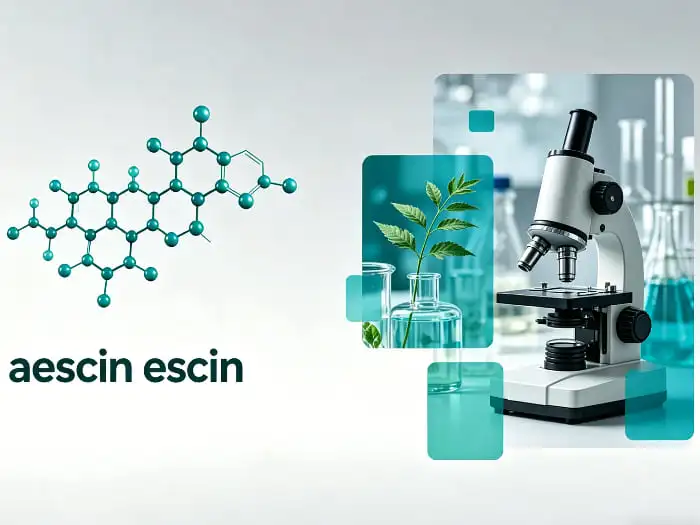
A lot of people who work in procurement get confused about terms. Escin and aescin are both names for the same group of triterpenoid saponins that are taken from horse chestnut seeds. This white to off-white powder has several types of saponins in it. Beta-aescin is the most medically active isomer. This complicated structure is described by the chemical formula C55H86O24. Quality providers offer standardized extracts with set amounts of saponin, usually between 20% and 98% purity. This makes sure that each batch is the same, which is very important for making medicines and supplements.
Mechanism of Action: How Escin Protects Vascular Health?
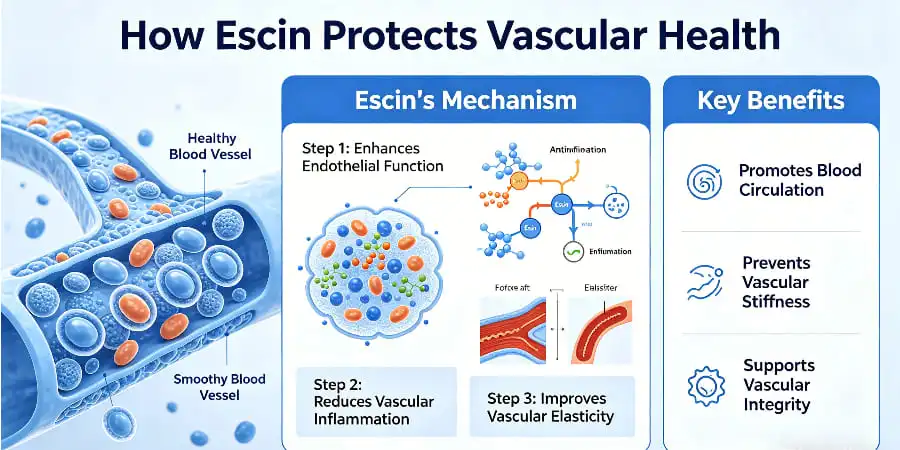
Because of its special vascular protective qualities, horse chestnut extract has medicinal value. The enzyme hyaluronidase usually breaks down proteoglycans in capillary walls, but escin stops it from doing its job. The chemical makes the capillary barrier structure stronger by stopping this breakdown. This lowers the permeability of the blood vessels, which stops electrolytes, low-molecular-weight proteins, and water from leaking into the areas between the cells. The result is less swelling, better tone in the veins, and relief from feeling like your legs are heavy. Unlike other anti-inflammatory drugs, escin works only on capillary sealing, which makes it very useful for circulatory diseases.
Key Benefits of Horse Chestnut (Aescin/Escin) for Medical and Wellness Applications
Chronic Venous Insufficiency and Varicose Vein Management
Clinical studies show that horse chestnut seed extract makes the signs of chronic venous insufficiency a lot better. After taking supplements regularly, patients say their leg pain, stiffness, and feeling heavy have gone down. The combination works by improving the return of veins and preventing blood from pooling in the lower limbs. Studies show that it works about as well as compression therapy, which makes it a good choice for supplement makers that want to improve circulatory health. Standardized escin extracts are used by drug companies to make oral and cosmetic products for treating varicose veins to work better.
Anti-Inflammatory Properties for Sports Injuries and Post-Surgical Recovery
Besides its use in blood vessels, escin in horse chestnut extract has strong anti-inflammatory properties that make it useful for healing soft tissue injuries. Athletes who use topical items based on horse chestnut extract heal faster from cuts, bruises, and muscle injuries. By stopping inflammatory mediators from making capillaries more permeable, the compound in horse chestnut extract lowers localized swelling. When used after surgery, it shows a lot of potential, as patients have less swelling and heal faster. Because of this, horse chestnut extract can be used in a lot of different ways by companies that make sports nutrition and medicines to treat inflammation.
Cosmetic Applications: Eye Care and Lymphatic Circulation
More and more, horse chestnut extract is being used in beauty products to treat dark circles and puffiness under the eyes. The compound helps microcirculation around the delicate tissues around the eyes, which keeps fluid from building up and makes lymphatic drainage better. Cosmetic scientists like how gentle it is and how well it works with other active ingredients in creams and serums. Body care items that are meant to slim and shape also use escin to improve the look of skin texture by increasing lymphatic circulation. For these uses, you need certain ratios and formulations that dissolve in water and stay stable over time.
Supporting Hemorrhoid Treatment and Anal Health
Pharmaceutical products with horse chestnut extract help people who have hemorrhoids. The vascular protective qualities lower swelling and inflammation in the anal tissues and make vein walls stronger when they are weak. Taking vitamins by mouth and putting them on the skin together help manage symptoms in a complete way. The compound has a well-known safety profile and has been clinically proven to help companies make over-the-counter hemorrhoid medicines. It is still very useful for this purpose in places where natural products are valued higher than synthetic ones.
Comparing Horse Chestnut Extract with Other Circulatory Supplements
Escin Versus Diosmin and Hesperidin
When making goods for heart health, companies often compare horse chestnut extract to flavonoids found in citrus fruits, such as diosmin and hesperidin. Both types improve venous tone, but they do so in very different ways. Diosmin mostly works by increasing lymphatic drainage and antioxidant routes, while escin seals capillary walls directly. Clinical data shows that escin relieves symptoms more quickly, but combination products may have benefits that are greater than the sum of their parts. Regulatory teams like that horse chestnut extract has clear medicinal uses that are backed up by a lot of clinical use in Europe.
Natural Extract Versus Synthetic Escin: Quality and Sourcing Considerations
Some makers aren't sure if synthetic escin alternatives are better than natural extracts. Natural horse chestnut seed extract has many different kinds of saponin isomers that may work together to make the extract more effective. Synthetic versions often separate certain isomers, which could lower their cellular activity. When looking for suppliers, natural products need to be carefully checked out to make sure the seeds are processed correctly and any toxins are removed. Third-party testing is needed to make sure everything is the same, and buyers will only buy from sellers who can show them certificates of analysis that prove the total saponin content, heavy metal levels, and microbial safety.
Rutin and Other Bioflavonoids in Vascular Health Formulations
Another plant-based substance called rutin is often found with or instead of horse chestnut extract in vascular health supplements. Rutin makes capillary walls stronger through various biochemical routes, providing extra protection. When formulating complete circulatory formulas, people often mix escin and rutin to treat more than one part of venous insufficiency. Knowing how these two systems work together helps procurement teams make goods that stand out in the market. The decision between single-ingredient and combination formulations is based on the therapeutic claims that need to be made, the regulatory environment, and what consumers want in certain markets.
How to Procure High-Quality Horse Chestnut Extract and Supplements?
Evaluating Supplier Credentials and Certifications
To find reliable suppliers of aescin powder, you need to carefully look at their quality processes and manufacturing capabilities. GMP approval means that production standards are up to pharmaceutical standards, which is very important for companies that make drugs and supplements using aescin powder. Getting an ISO license shows that you are committed to managing quality consistently throughout the supply chain. Buyers should ask for proof that the facility has been inspected, that it has been audited by a third party, and that it meets the requirements of local regulations. For regulatory submissions and quality assurance processes, suppliers of aescin powder who give full certificates of analysis for each batch, including HPLC chromatograms that prove escin content, make things clear.
Product Specifications: Matching Extract Forms to Application Requirements
Horse chestnut extract comes in a number of different types, each of which is best for a different purpose. For making capsules and tablets, raw powder extracts with a standard amount of saponin work well, but there must be clear guidelines on particle size and flow qualities. Soluble in water forms make it easier to use in drinks and functional foods, which solves formulation problems that come up with saponin solubility. For topical uses, you need extracts that work with emulsion systems and skin penetration boosters. When procurement teams know these technical needs, they can talk to suppliers more clearly about custom specifications, minimum order quantities, and wait times for production batches.
Batch Consistency and Supply Chain Stability
Pharmaceutical and supplement companies need stable quality in their raw materials to keep their products working well and following the rules set by regulators. Better batch-to-batch consistency comes from suppliers who have strong agricultural sourcing programs with controlled seed collection and processing processes. Buyers should ask about how the company manages its supplies, how it finds backup suppliers, and how it can increase production when demand goes up. Manufacturing schedules and product quality are kept safe by long-term supply deals that include performance guarantees. Being able to track ingredients back to specific seed lots gives you more peace of mind when answering questions from regulators or doing post-market monitoring.
Ensuring Safe and Effective Use: Side Effects and Precautions
Potential Adverse Reactions and Risk Mitigation
Even though horse chestnut seed extract is generally well tolerated, knowing about possible side effects helps with the responsible development of products. Oral supplements can sometimes cause stomach pain, usually when bigger doses are taken. Even though they are still rare, allergic responses can happen to people who are sensitive. When made correctly, topical treatments rarely irritate the skin. Manufacturers lower these risks by telling people the right amount to take, which is usually 300 to 600 mg per day for oral vitamins that are standardized to contain 50 mg escin. Labeling that makes it clear when something shouldn't be used, like when someone is pregnant, breastfeeding, or has kidney or liver disease, saves the end user and lowers the risk of being sued.
Regulatory Compliance Across International Markets
To get around in the world of regulations, you need to know how horse chestnut goods are classified and regulated in different places. These extracts have been sold on European markets for a long time as registered traditional plant medicines. Quality standards are set by well-known monographs. In the US, horse chestnut supplements are regulated under dietary supplement frameworks, which means they have to follow GMP rules that are special to supplements. Different Asian markets have different rules. For example, some countries need pharmaceutical approval for therapeutic claims. Working with suppliers who know about foreign regulatory requirements makes it easier to get into new markets and makes sure that products are made in a way that meets all of the rules.
Quality Control Testing and Analytical Methods
Validated analytical methods are used by strong quality assurance programs to check the identity, purity, and strength of extracts. High-performance liquid chromatography is still the usual way to measure the amount of total saponin and certain aescin escin isomers. ICP-MS testing for heavy metals like lead, cadmium, mercury, and arsenic shows that the area is safe. Microbial testing makes sure that goods meet standards for yeast, mold, total plate counts, and the lack of pathogenic organisms. When suppliers give buyers a lot of testing information, like stability studies that show how long a product will last in different storage conditions, buyers can make smart choices that protect product quality all the way through the distribution chain.
Conclusion
Horse chestnut extract, which is high in aescin and escin, has been shown in studies to improve circulatory health, reduce inflammation, and improve the look of skin. Because of the unique way it strengthens capillary walls, it is an important nutrient for nutraceutical brands, drug companies, and cosmetic companies that want to improve circulation. Partnering with suppliers who can show GMP compliance, analytical rigor, and batch consistency is key to successful buying. Procurement teams can find high-quality extracts that meet strict requirements when they know the differences between product forms, the right uses for them, and legal requirements. As more people look for natural ways to improve their vascular health, horse chestnut extract is still a scientifically proven ingredient that should be considered in product creation.
FAQ
What distinguishes horse chestnut aescin from other vein health botanical extracts?
Horse chestnut extract works through a distinct mechanism compared to other circulatory supplements. While compounds like diosmin enhance lymphatic drainage and rutin provides antioxidant protection, escin specifically inhibits hyaluronidase enzyme activity. This unique action directly seals capillary walls, preventing fluid leakage more effectively than alternatives. Clinical studies demonstrate comparable efficacy to compression therapy for chronic venous insufficiency, setting it apart from other botanical options. The extensive European clinical history provides additional validation unavailable for many emerging vein health ingredients.
How do buyers verify the authenticity and quality of horse chestnut suppliers?
Reliable supplier verification involves multiple validation steps. Request current GMP and ISO certifications, along with recent third-party audit reports. Examine certificates of analysis showing HPLC chromatograms confirming escin content, heavy metal testing results, and microbial safety data. Conduct facility audits when feasible or engage independent inspection services. Evaluate the supplier's ability to provide ingredient traceability documentation linking finished extracts to specific seed lots. Established suppliers maintain transparent communication about sourcing practices, processing methods, and quality control procedures throughout the manufacturing process.
Partner with Wellgreen for Premium Horse Chestnut Extract Supply
Wellgreen Technology stands ready to support your formulation needs with pharmaceutical-grade horse chestnut extract standardized for consistent aescin escin content. Our GMP-certified manufacturing facility processes high-purity triterpenoid saponins suitable for dietary supplements, cosmetic applications, and pharmaceutical preparations. We maintain extensive inventory ensuring rapid fulfillment, provide comprehensive third-party testing documentation, and offer flexible OEM solutions tailored to your specifications. Whether you require water-soluble powders for beverage applications or high-concentration extracts for topical formulations, our technical team delivers reliable support throughout product development. Contact our procurement specialists at wgt@allwellcn.com to discuss your requirements with a trusted horse chestnut extract supplier committed to quality, compliance, and partnership success.
References
Sirtori CR. "Aescin: Pharmacology, Pharmacokinetics and Therapeutic Profile." Pharmacological Research, 2001, 44(3): 183-193.
Pittler MH, Ernst E. "Horse Chestnut Seed Extract for Chronic Venous Insufficiency." Cochrane Database of Systematic Reviews, 2012, Issue 11.
Dudek-Makuch M, Studzińska-Sroka E. "Horse Chestnut – Efficacy and Safety in Chronic Venous Insufficiency: An Overview." Revista Brasileira de Farmacognosia, 2015, 25(5): 533-541.
Wilkinson JA, Brown AMG. "Horse Chestnut – Aesculus Hippocastanum: Potential Applications in Cosmetic Skin-care Products." International Journal of Cosmetic Science, 1999, 21(6): 437-447.
Bombardelli E, Morazzoni P, Cristoni A. "Aesculus Hippocastanum L." Fitoterapia, 1996, 67(6): 483-511.
European Medicines Agency. "Assessment Report on Aesculus Hippocastanum L., Semen." Committee on Herbal Medicinal Products, 2009.