What are the Leading Manufacturers of Natural Aescin Escin Extract?
2026-04-24 14:56:18
As the need for natural options for vascular health grows around the world, it becomes more important to find manufacturers of aescin escin extract that you can trust. Wellgreen Technology is one of the best suppliers because its building is GMP-certified, it has strict quality controls, and it manages its supply chain consistently. We focus on pharmaceutical-grade horse chestnut seed extract that has been standardized to different aescin concentrations. Our clients are in the nutraceutical, pharmaceutical, and cosmetics businesses in North America and Europe. Our dedication to thorough third-party testing, batch stability, and clear documentation helps procurement pros find high-quality botanical ingredients that meet strict regulatory requirements and encourage new formulations.
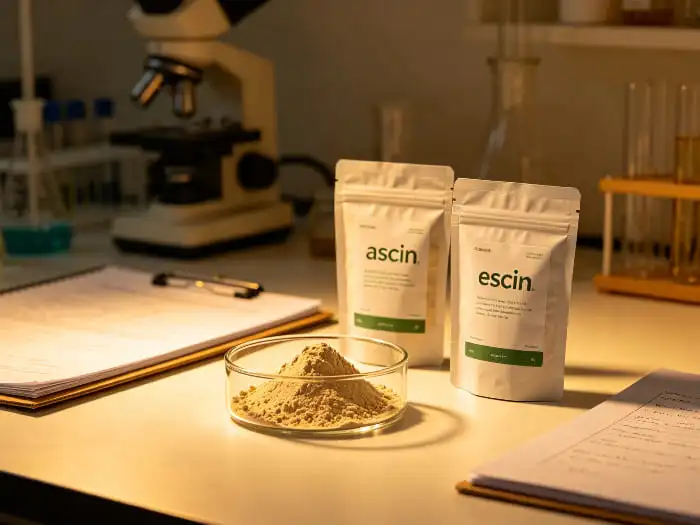
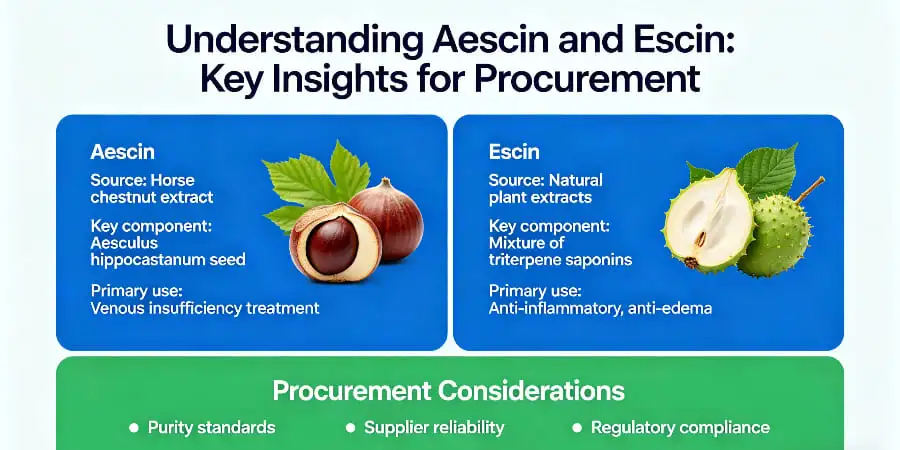
Understanding Aescin and Escin: Key Insights for Procurement
Chemical Nature and Pharmacological Properties
"Aescin" and "escin" both refer to the same bioactive substance, which is a mix of triterpene saponins mostly made up of beta-aescin and alpha-aescin isomers. This chemical is made up of the building blocks C₅₅H₈₆O₂₄, and beta-aescin is the most biologically active part. Stopping the action of the hyaluronidase enzyme stops the breakdown of proteoglycans in the capillary wall. This action makes vascular barriers stronger, lowers the permeability of capillaries, and stops fluid from leaking into interstitial areas, which is what causes edema and venous insufficiency symptoms.
Researchers have found that a standardized horse chestnut extract with 16–20% aescin content can help people with chronic venous insufficiency by making their veins stronger and reducing leg pain. The anti-inflammatory effects come from stopping the production of prostaglandins and leukotrienes. This extract is useful for more than just cardiac problems.
Natural Sources and Extract Variations
Horse chestnut seeds are still the main commercial source, but the way they are extracted has a big effect on the end product. Full-spectrum saponin profiles can be obtained through traditional water-alcohol extraction, while highly concentrated beta-aescin parts that are more than 95% pure can be obtained through modern chromatographic purification. "Total saponin content" and "beta-aescin content" are two different measurements that procurement teams should be aware of. Specifications should make it clear which measurement applies.
Solubility levels are changed by the extraction solvents used. Alcohol-soluble grades are good for topical products, while water-soluble grades are good for making drinks and supplements. At Wellgreen, we offer both types with customized specs that meet your formulation needs. This way, we can make sure that the ingredients work best in all situations.
Industrial Applications and Quality Considerations
Companies that make medicines use highly pure aescin as an active ingredient in pills, gels, and injections that are used to treat hemorrhoids, swelling after surgery, and varicose veins. Doses for medicines usually vary from 20 mg to 150 mg per day, but this depends on the purpose and type of medicine.
Standardized horse chestnut extract powder is used by nutraceutical makers to make capsules, tablets, and functional drinks that are good for your circulatory health. Clean label trends increase the need for botanicals that are not genetically modified, don't contain pesticide residues, and have clear supply chain paperwork. As a cosmetic, eye care serums that reduce dark circles and puffiness are popular, as well as body contouring items that improve lymphatic circulation. In finished cosmetics, concentrations are usually between 0.5 and 5%.
When quality controls deal with possible problems, safety profiles stay good. Esculin, a poisonous chemical found in raw horse chestnut, can be removed through proper processing. Reputable makers use HPLC testing to prove that their products are free of esculin. Testing for heavy metals, microbial limits, and pesticide residues are all important quality standards that trustworthy providers always meet.
Leading Manufacturers of Natural Aescin Escin Extract — Market Overview
Critical Criteria for Identifying Top-Tier Manufacturers
Quality assurance methods tell the difference between industry leaders and suppliers of basic goods for aescin powder. GMP certification shows a company's dedication to pharmaceutical-grade manufacturing practices, such as controlled environments, tested processes, and detailed batch paperwork. ISO 9001 certification means that the quality management system is strong, and ISO 22000 certification means that the food safety management system is strong, which is important for nutritional and functional food uses of aescin powder.
Supply chain robustness includes being able to track down raw materials, having stable relationships with suppliers, and managing supplies well. Botanical harvests that change with the seasons can cause problems with supply. This risk is lessened for manufacturers who have formed cultivation partnerships or supply chains that are vertically integrated. The ability to test is very important. In-house testing labs with HPLC, UV-Vis spectrophotometers, and microbial testing tools make it possible to quickly check the quality of a batch and release it.
Regulatory compliance includes more than just certifications. It also includes methods for keeping records that help customers submit regulatory documents. Certificate of Analysis documents, allergen statements, GMO status statements, and detailed technical data sheets make it easier for regulators to approve finished goods.
Geographic Production Hubs and Capacity
European companies have usually made most of the aescin because horse chestnuts grow well there and they have a lot of experience making medicines. There are a number of well-known suppliers in Germany, France, and Switzerland who have been making plant extracts for decades. These centers usually work on a smaller scale and charge higher prices because of the strict rules in Europe.
Asian manufacturers, especially those in China and India, have become major players in the market, giving competitive prices and a lot of production capacity. Quality changes a lot between Asian suppliers, so it's important to do your research. The biggest manufacturers in Asia have put money into modern extraction facilities, foreign certifications, and quality systems that are on par with those in the West.
At Wellgreen, our factory in China uses cutting-edge extraction technology and quality controls that meet medicinal standards. We can make more than 50 tons of standardized horse chestnut extract every year, and we can make batches of different sizes to fit the needs of both big pharmaceutical companies and smaller nutraceutical brands. We keep strategic stocks of raw materials to make sure we always have enough, even when harvests change.
Wellgreen's Manufacturing Strengths and Quality Controls
Our GMP-certified plant uses counter-current extraction technology to get the most active compounds back while leaving the least amount of solvent residue. Impurities, toxic substances, and color bodies are removed through multiple stages of filtering, leaving behind pharmaceutical-grade white to off-white powder that meets international pharmacopeia standards.
Checking the raw materials is the first step in quality control. We only buy horse chestnut seeds from reputable European suppliers, and we offer both organic and non-organic choices. Before it can be processed, each arriving lot is checked for identity using chemical fingerprinting and botanical microscopy.
Critical control points keep an eye on the extraction parameters, concentrate steps, and drying conditions while the product is being made. Finished goods go through a lot of tests, such as an HPLC test for aescin content, an ICP-MS test for heavy metals, a microbial test for limits, a pesticide residue screen, and a physical test. We keep full batch traceability from where the seeds came from to how they are packaged at the end, with methods for keeping records that help with customer audits and regulatory inquiries.
Testimonials from past clients show that we can be trusted. A big European drug company has worked with Wellgreen for five years in a row because of our consistent quality, quick technical help, and ability to adapt to specific needs. A well-known supplement brand in North America appreciates how quickly we respond to COA requests and how ready we are to provide reserve samples for their ongoing stability studies.
Procurement Guide: How to Source Natural Aescin Escin Extract Effectively?
Sourcing Strategies and Channel Selection
Direct engagement with the manufacturer is the best way to get value for well-known names with steady volume needs. Building ties with producers like Wellgreen gives you access to technical know-how, custom specifications, and better pricing. Direct sourcing gets rid of markups that happen in between, and it also sets up ways for people to talk about quality problems or get help with formulation.
Wholesale distributors work with names that need to buy in smaller amounts or are testing the market before making big purchases. Distributors keep goods on hand so that orders can be filled quickly, but they usually charge extra for the privilege. Check to see if the distributors you're considering buy from certified manufacturers and can show you all the quality paperwork.
Digital business-to-business (B2B) platforms have changed how botanical ingredients like horse chestnut extract are bought by connecting buyers with sellers around the world through searchable databases. Platforms make it easier to compare prices and get in touch with suppliers of horse chestnut extract, but they need to be carefully checked out. Ask for information about the production site, copies of certifications, and names of past customers before you place an order.
Evaluating Supplier Reliability
In addition to price, when evaluating a provider, you should look at how well they can make things, how well they handle quality, and how stable their business is. Ask the facility for details about its production capacity, types of equipment, and current certification status. Site audits, whether done by the business owner or by a third-party service, are a great way to find out how things really work and how they compare to what the business says they can do.
A thorough study of quality documentation shows that you pay attention to details and understand the rules. Full Certificates of Analysis should have test methods, specifications, results, and signatures from people who are allowed to sign them. Technical data sheets should include information about stability, the best way to store the product, and how to handle it safely. Regulatory support files with allergen statements, BSE/TSE declarations, and GMO status documents make it easier for customers to follow the rules.
Some signs of a business's stability are its past of operations, the types of customers it has, and its financial health. Suppliers who have been in business for a while and have a wide range of customers show that the market is real. Customer-centered business practices include being able to communicate professionally, help customers quickly, and offer trials.
Sample Testing and Verification Protocols
Before making an order for production, you should always ask for samples. The evaluation of a sample should include an organoleptic assessment (looking, smelling, and tasting), basic identity proof, and assay verification. Third-party labs that are not connected to the supplier can check the claims without bias. The costs of testing are a good way to protect against quality problems.
Analytical verification should check for heavy metals, microbiological quality, and typical adulterants, as well as confirm the amount of aescin present. Before making large purchases, it's a good idea to look at the analytical data against the supplier's specifications and industry standards to find any problems. At Wellgreen, we urge potential customers to test our products on their own, knowing that they will meet our standards.
Regulatory and Import Compliance Considerations
Imports into the United States must follow FDA rules about dietary supplements (DSHEA), food additives, or drug ingredients, based on what they are used for. Botanical ingredients need to meet standards for identity, purity, and power. For food uses, suppliers should show proof of Generally Recognized As Safe (GRAS) status. For drug uses, they should show links from the Drug Master File.
Food supplement guidelines or pharmaceutical requirements must be followed according to EU rules. Novel Food rules may apply to botanical ingredients that haven't been used much in the EU before 1997. Suppliers who are responsible know the rules in their area and provide paperwork to back legal imports.
Usually, business invoices, packing lists, Certificates of Analysis, phytosanitary certificates (for some plant materials), and customs declarations are part of the paperwork needed to import something. Harmonized tariff numbers put goods into groups that determine their duty rates. Getting the groups right keeps customs delays to a minimum. The export team at Wellgreen handles all the paperwork that is needed to get foreign shipments through customs without any problems.
Conclusion
Choosing the right manufacturer for natural aescin escin extract has a big effect on the quality of your product, how well it meets legal requirements, and how well it does in the market. Some of the best suppliers set themselves apart by having certified factories, strict quality controls, clear paperwork, and reliable supply lines. With our GMP-certified production, pharmaceutical-grade standards, thorough testing methods, and focus on the customer, Wellgreen Technology is a great example of these traits. Working with seasoned manufacturers guarantees consistent quality and regulatory trust, whether you need standardized extracts for pharmaceutical uses, customized specs for nutraceutical formulations, or specialized grades for new cosmetics. As technologies improve and new uses open up, the botanical extract business is always changing. This means that relationships with suppliers are more than just buying things.
FAQ
What distinguishes pharmaceutical-grade aescin from standard extracts?
Pharmaceutical-grade aescin undergoes more rigorous purification and quality verification. These products meet specific pharmacopeia monographs detailing acceptable ranges for active content, impurities, heavy metals, and microbiological quality. Manufacturing occurs in GMP-certified facilities with validated processes and comprehensive batch documentation. Standard extracts may lack this level of control and documentation, potentially creating regulatory challenges for pharmaceutical applications.
How can buyers verify manufacturer authenticity and capabilities?
Request manufacturing site details including certifications, production capacity, and equipment descriptions. Review quality documentation samples assessing comprehensiveness and professionalism. Contact reference customers experiencing the supplier's performance firsthand. Consider third-party audits providing independent facility assessments. At Wellgreen, we welcome customer audits and provide transparent facility information supporting informed decision-making.
What logistical considerations affect international importation?
Regulatory compliance documentation including Certificates of Analysis, phytosanitary certificates, and customs declarations require careful preparation. Correct tariff classification affects duty rates and clearance procedures. Temperature-sensitive materials may require climate-controlled transportation. Lead times incorporate manufacturing, quality testing, international shipping, and customs clearance. Experienced suppliers like Wellgreen manage export documentation and coordinate logistics partners, streamlining international procurement.
Partner with Wellgreen for Premium Natural Aescin Escin Extract
Wellgreen Technology invites procurement professionals, formulators, and quality managers to experience the difference that pharmaceutical-grade manufacturing excellence delivers. As an established aescin escin supplier with comprehensive certifications, advanced analytical capabilities, and proven reliability, we provide more than botanical ingredients—we offer partnership supporting your product success. Our technical team stands ready to discuss your specific requirements, provide product samples for evaluation, and prepare customized quotations matching your specifications. Contact us at wgt@allwellcn.com to explore how our high-quality horse chestnut extract powder can elevate your formulations and strengthen your supply chain.
References
Sirtori CR. "Aescin: pharmacology, pharmacokinetics and therapeutic profile." Pharmacological Research 44.3 (2001): 183-193.
Pittler MH, Ernst E. "Horse chestnut seed extract for chronic venous insufficiency." Cochrane Database of Systematic Reviews (2012).
Guillaume M, Padioleau F. "Veinotonic effect, vascular protection, anti-inflammatory and free radical scavenging properties of horse chestnut extract." Arzneimittel-Forschung 44.1 (1994): 25-35.
Dudek-Makuch M, Studzińska-Sroka E. "Horse chestnut – efficacy and safety in chronic venous insufficiency: an overview." Revista Brasileira de Farmacognosia 25.5 (2015): 533-541.
Wilkinson JA, Brown AM. "Horse chestnut – Aesculus hippocastanum: potential applications in cosmetic skin-care products." International Journal of Cosmetic Science 21.6 (1999): 437-447.
Gallelli L. "Escin: a review of its anti-edematous, anti-inflammatory, and venotonic properties." Drug Design, Development and Therapy 13 (2019): 3425-3437.