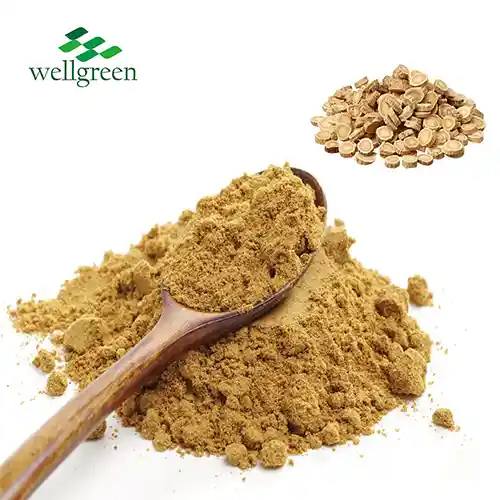
What are the Main Active Compounds in Geranium Extract Powder?
2026-03-19 13:38:43
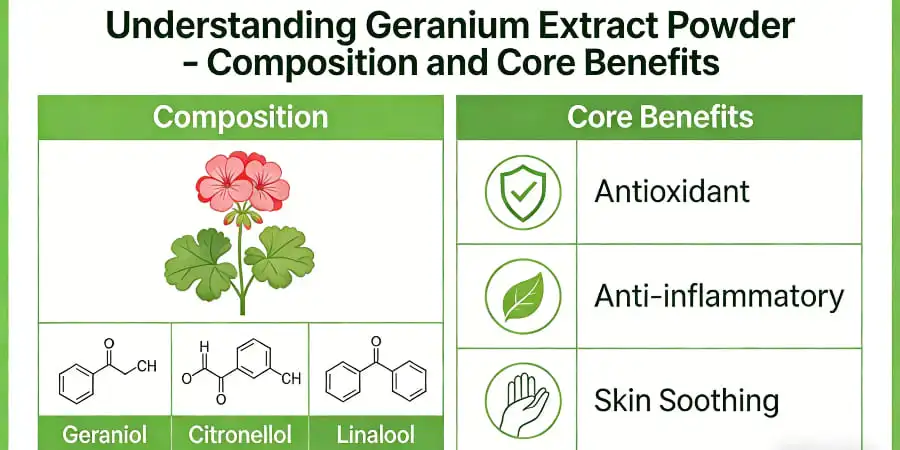
There are a number of main bioactive substances in geranium extract powder that make it useful for industry uses. Some of the most important active ingredients are linalool (8–15%), menthone (2–8%), isomenthone (3–10%), geraniol (15–30%), and citronellol (20–35%). The rose-like smell and healing qualities of the product come from these monoterpene alcohols and ketones. Additionally, the powder has flavonoids, tannins, and phenolic substances that help it fight inflammation and free radicals. This is why nutraceutical companies and makeup formulators want to use it so much.
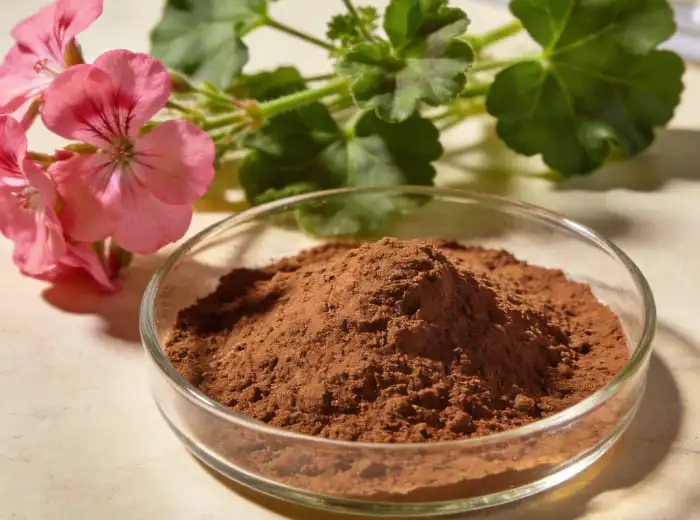
Understanding Geranium Extract Powder: Composition and Core Benefits
Primary Monoterpene Compounds
The powerful effects of geranium extract come from the large number of monoterpenes that it contains. An important ingredient in the extract is geraniol, which gives it its unique rose-like smell and kills germs naturally. This substance is very stable as a powder, and it keeps its effectiveness even when it is processed in a controlled way. Another important ingredient, citronellol, helps the extract keep bugs away and adds to the scent complexity that makes personal care products more enjoyable to use.
Linalool works well with these main chemicals because it calms and relieves stress, which makes it great for formulas that promote mental health. The presence of menthone and isomenthone makes the scent feel cooler and helps with lung health. Together, these monoterpenes have a combined effect that makes the extract even more effective as a medicine.
Secondary Bioactive Components
In addition to the main monoterpenes, geranium extract powder has useful secondary molecules that make it more marketable. Flavonoids like quercetin and kaempferol are powerful antioxidants that help fight free radicals both on the outside and inside the body. These substances are very stable when they are in powder form; they keep their bioactivity even when they are stored or processed.
Tannins in the extract give it its astringent qualities, which makes it great for skin care products that shrink pores and balance oil production. The powder form is clearly better than essential oils because it mixes easily into dry blends and doesn't cause any separation or compatibility problems. Phenolic acids make the extract's anti-inflammatory effects even stronger, which supports its use in products for stress release and sensitive skin.
Natural Energy and Focus Support Properties
Geranium extract powder has a special mix of active chemicals that boosts energy naturally without the bad side effects of manufactured stimulants. Because it helps with mental focus and sharpness, the extract is becoming more and more popular in pre-workout supplements and brain support products. Unlike man-made options, these natural chemicals work together to give you steady energy that doesn't crash or jitter.
According to research, the monoterpene profile helps keep blood flowing well and gets oxygen to cells, which leads to better physical performance and mental sharpness. This makes the substance very useful for companies that make sports nutrition and are looking for safe alternatives to standard stimulants.
Comparative Analysis: Geranium Extract Powder Versus Other Herbal Extracts
Geranium vs. Rose Extract: Aromatic and Therapeutic Distinctions
Even though geranium and rose extracts smell similar, their active chemical ratios are very different. Citronellol and geraniol are found in higher amounts in geranium extract than in rose extract. This means that geranium extract is better at killing germs and keeping the scent for longer. Rose extract powders lose their strength more quickly because they contain more delicate phenylethyl alcohol, but geranium extract powders stay stable longer on the shelf.
When it comes to buying, geranium extract is more reliable in terms of quality and availability than rose extract, which has more regular supply changes and higher price changes. The strong nature of geranium's active chemicals makes it better for large-scale manufacturing and industrial processes.
Natural vs. Synthetic Extract Considerations
For business-to-business buyers, telling the difference between natural geranium extract and man-made options, especially DMAA chemicals that may have similar energizing effects, is very important. Natural pelargonium graveolens extract has many bioactive compounds that work together to make it more effective. Synthetic options, on the other hand, usually only have a few bioactive compounds that don't work well together.
Natural extracts are put through a lot of tests to make sure they come from plants and meet government standards. The real rose-like smell of natural geranium extract is the first sign of quality, but full scientific testing is still needed to make sure the product is safe to buy. Certificates of analysis from a third party should prove that there are no manmade ingredients in the extract and that it comes from natural sources.
Quality Assurance and Purity Standards
Superior geranium extract powder keeps the same ratios of active compounds across production runs, so you can be sure that final products will work as expected. High-quality extracts dissolve well in both water and alcohol, and they don't cloud or precipitate, which could make the result less clear.
The method used for extraction has a big effect on the end chemical profile. New processing methods keep heat-sensitive parts while concentrating the most valuable bioactive parts. Reliable providers give formulators thorough analytical data that shows exact chemical concentrations and purity levels. This helps them make smart choices about dosage and application fit.
Procurement Insights: Selecting and Sourcing High-Quality Geranium Extract Powder
Essential Quality Criteria for B2B Buyers
To buy geranium extract powder professionally, you need to carefully check more than just the amount of active compounds it contains. The moisture level should stay below 5% to keep the powder stable and stop microbes from growing while it's being stored. Heavy metal tests must show amounts that are well below the allowed limits set by the government. This is especially important for lead, mercury, cadmium, and arsenic, which are used in both cosmetics and dietary supplements.
Microbiological tests should show that the levels of yeast, mold, pathogenic bacteria, and overall aerobic count are within safe ranges. These factors become even more important when the extract is used in goods that don't need many preservatives or are made for people who are sensitive. Analyzing pesticide residues makes sure that requirements for organic approval and foreign export standards are met.
Supplier Verification and Documentation
Suppliers you can trust give you detailed records that show where the extract comes from and how it is made into powder. Certificates of analysis should have full chromatographic profiles that show the concentrations of each substance, not just the total amount of active ingredients. Formulators can guess how the extract will work in certain situations and make sure that all output runs are the same with this level of detail.
Certifications for manufacturing facilities like GMP, ISO, and organic compliance show that a provider is dedicated to quality systems and following the rules. Regular checks by a third party of these sites give even more confidence in the consistency of production standards and steps to stop contamination.
Supply Chain Considerations and Risk Management
The world geranium extract market sometimes has trouble getting supplies because of bad weather in the main growth areas. For procurement plans to work, they need to build ties with a number of qualified suppliers in different parts of the world to make sure they always have supplies. Knowing how crops are harvested at different times of the year helps buyers plan their inventory so that they don't run out of items.
Price changes in the market for geranium extract are often linked to changes in agriculture and world demand. Long-term supply deals with reputable providers can keep prices stable and make sure that quality standards are always met. But these deals should include quality standards to make sure that buyers don't get things that aren't up to par because of differences in the crops.
Application Guide: Maximizing the Benefits of Geranium Extract Powder
Optimal Formulation Strategies for Different Industries
Geranium root powder offers a lot of different industries that can use it, and the best dosage rates depend a lot on the benefits you want to get and the shape of the product. In skin care products, amounts between 0.5 and 3% work well to reduce inflammation and close pores without making skin more sensitive. The powder form works well in clay masks, exfoliating scrubs, and powder makeup where oil-based extracts would make the recipe harder to work with.
Higher concentrations, between 100 and 500 mg per dose, are usually used in dietary supplements to help with stress release and hormone balance. Because good powder extracts are standardized, they make sure that the doses are always the same and that the bioavailability is always the same across different delivery forms, like pills, tablets, and powder mixes.
Safety Considerations and Allergenicity Assessment
The safety of geranium extract is good in most situations, but formulators need to be aware of some possible allergenic chemicals, like geraniol and citronellol, which are on normal lists of allergens. Products for sensitive skin should be tested on a small area of skin to make sure they are compatible, and clear labels make sure that customers are aware of these naturally common toxins.
Because there are fewer flammable components in powder form compared to essential oils, it is usually less likely to cause allergies. But full safety reviews should look at how much of the extract a person is exposed to over time when it is in a lot of different goods they use.
Formulation Compatibility and Stability Testing
The powdered geranium extract works very well with most popular ingredients in cosmetics and supplements. But some mixes might need to be tested for steadiness to make sure they work well over the course of the product's shelf life. The natural antioxidants in the extract can actually make the mixture more stable by keeping other ingredients from breaking down due to oxidation.
Studies of how sensitive the powder is to temperature show that it can keep the purity of the compound up to 80°C for short processing times. This means that it can be used in most normal industrial processes. To protect the more delicate aromatic molecules that add to the taste benefits, high temperatures should not be used for long periods of time.
Conclusion
The main chemicals in geranium extract powder make it a strong plant-based ingredient that has many uses in the nutrition, skincare, and functional food industries. The main monoterpenes—geraniol, citronellol, and linalool—work together with flavonoids and tannins to provide natural energy support, reduce inflammation, and improve the smell. By knowing these chemical profiles, you can make smart choices about what to buy that will improve the performance of your formulations while still following the rules. As extraction technologies improve and sustainability standards change, it becomes necessary to form smart relationships with suppliers in order to get regularly high-quality products that meet the needs of a market that is becoming more sophisticated.
FAQ
What concentration of active compounds should I expect in quality geranium extract powder?
The monoterpene content of high-quality geranium extract powder is usually between 60 and 80%. It includes 15 to 30% geraniol, 20 to 35 percent citronellol, and 8 to 15 percent linalool. It is thought that higher amounts mean better extraction and product quality.
How can I verify that geranium extract powder is natural and not synthetic DMAA?
Genuine natural geranium extract has a rose-like scent and different monoterpene chemicals that are present in certain amounts. Testing by a third party should prove the presence of natural chemical profiles and specifically check for the lack of synthetic DMAA.
What solubility characteristics should I expect from quality geranium extract powder?
Quality powder demonstrates good solubility in both water and ethanol without cloudiness or precipitation. Depending on the concentration and solvent system, light heating or more mixing time may be needed for complete breakdown.
Partner with Wellgreen for Premium Geranium Extract Powder Supply
Wellgreen Technology stands as your trusted geranium extract powder manufacturer, delivering consistently superior botanical extracts that meet the most demanding industry standards. Our GMP-certified facility ensures every batch maintains optimal active compound concentrations while meeting strict purity and safety requirements. With comprehensive testing protocols, complete certificates of analysis, and flexible OEM support, we provide the reliable supply chain partnership your formulations demand. Our extensive inventory and fast delivery capabilities support your production schedules, while our technical team offers formulation guidance to maximize extract performance in your specific applications. Contact us at wgt@allwellcn.com to discuss your geranium extract powder requirements and discover how our quality commitment can enhance your product development success.
References
Boukhatem, M.N., et al. "Chemical composition and biological activities of Pelargonium graveolens essential oil: A comprehensive review." Phytochemistry Reviews, vol. 15, no. 4, 2016, pp. 553-569.
Rajeswara Rao, B.R., et al. "Essential oil profiles and antimicrobial activity of geranium (Pelargonium species) from different geographic origins." Industrial Crops and Products, vol. 47, 2013, pp. 20-25.
Singh, B., et al. "Chemical composition and antimicrobial potential of essential oil and various extracts of Pelargonium graveolens." Natural Product Research, vol. 32, no. 9, 2018, pp. 1015-1019.
Kumari, S., et al. "Comparative analysis of chemical constituents and bioactivities of geranium essential oils from different extraction methods." Journal of Essential Oil Research, vol. 31, no. 2, 2019, pp. 89-98.
Dorman, H.J.D., et al. "Phenolic compounds and antioxidant activity of extracts from leaves of Pelargonium graveolens." Food Chemistry, vol. 85, no. 4, 2004, pp. 553-559.
Tzakou, O., et al. "Essential oil composition and antimicrobial activity of Pelargonium graveolens cultivated in Greece." Flavour and Fragrance Journal, vol. 16, no. 3, 2001, pp. 115-118.