What is Marigold Extract Good for?
2026-03-13 13:55:03
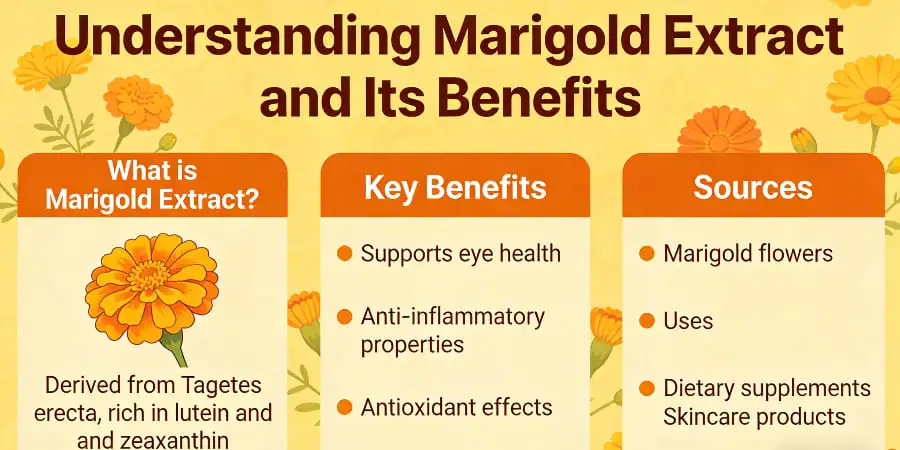
The marigold extract is very good for protecting eye health, reducing inflammation, and improving natural color. This plant extract, which comes mostly from Tagetes erecta flowers, has uniform amounts of lutein and zeaxanthin in the best 5:1 ratios. This makes it very useful for making nutraceutical products that protect against blue light and stop macular degeneration. It is important for cosmetics, dietary supplements, functional foods, and animal nutrition goods in many B2B procurement situations because it is a great antioxidant and can naturally color things.
Understanding Marigold Extract and Its Benefits
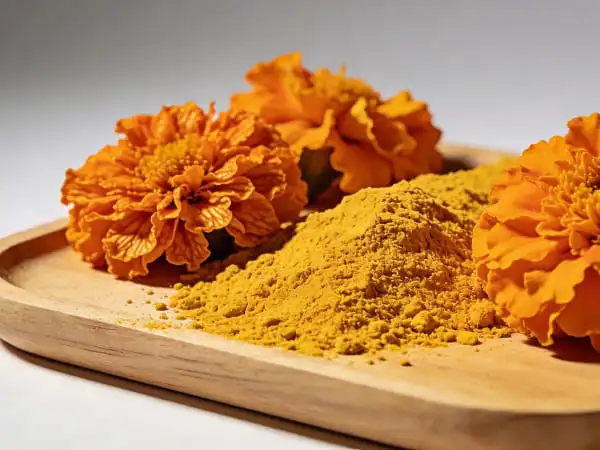
Marigold extract is a sophisticated botanical oleoresin made from Tagetes erecta petals. It is the main commercial source of xanthophyll carotenoids in the business. Advanced supercritical CO2 and liquid extraction methods are used in the extraction process to turn lutein (C40H56O2) and zeaxanthin into forms that the body can use.
Core Bioactive Components and Standardization
The pharmaceutical-grade standardization of the extract makes sure that the amounts of lutein and zeaxanthin are exact, which was proven by HPLC testing. These carotenoids work as macular pigments, naturally blocking blue light that is important for protecting the health of the eye. Clinical study shows that taking standardized lutein concentrations of 10 to 20 mg every day can slow down the progression of age-related macular degeneration by a large amount.
Natural carotenoids are hard to protect against oxidation, but new microencapsulation technology can help. The protective matrix systems keep their effectiveness throughout the manufacturing process, making sure that the finished goods are always bioavailable. Traditionally, formulation problems happened when natural colors broke down during thermal processing. This new technology fixes those problems.
Anti-Inflammatory and Antioxidant Properties
Due to its flavonoid and triterpenoid content, the extract has been shown in scientific tests to have strong anti-inflammatory effects. These chemicals have a lot of free radical scavenging power; in regulated preparations, their ORAC values are higher than 15,000 μmol TE/g. When lutein, zeaxanthin, and supporting flavonoids work together, they make the medicine work better than when the chemicals are used alone.
Researchers have found that carotenoids from marigolds build up especially in eye tissues, protecting them from photooxidative damage. Because it selectively builds up in cells, the extract is very useful for vision health products that aim to reduce digital eye pain and blue light exposure.
How to Use Marigold Extract in Various Industries?
This botanical extract can be used in a lot of different ways across many different industries. However, each one has its own formulation and scientific requirements. Procurement professionals can find the best market possibilities by understanding these different applications.
Nutraceutical and Dietary Supplement Applications
Marigold extract is a key component of AREDS2-compliant eye support supplements in the pharmaceutical industry. For softgel encapsulation, oil suspension forms are needed to keep the content from crystallizing and make sure it is all the same. For tablet versions, cold water soluble (CWS) beadlets with high compression strength are used.
Pharmaceutical-grade production standards make sure that the extract is highly bioavailable for protecting the eye from oxidative stress. Saponified lutein forms are better at being absorbed than lutein esters by two to three times, which is why they are used in higher-end supplement recipes. For quality control, limits on heavy metals below 10ppm and chemical residues that meet USP standards are some of the things that are required.
Cosmetic and Personal Care Integration
The extract is used in cosmetics because it can be used as both an active agent and a natural colorant. Standardized lutein concentrations are used in anti-aging serums to protect against UV rays, and the natural yellow-orange coloration can be used instead of manufactured dyes for clean label coloring.
Nanoemulsion technologies allow for water-dispersible formulas that can be used in skin care products. Because the extract has been shown to neutralize free radicals, it can be used in goods that protect against environmental stress and slow down the aging process.
Animal Nutrition and Feed Applications
The extract meets certain Roche Yolk Color Fan scores (RYCF 13–15) for chicken nutrition and improves the color of broiler skin. Formulations with saponified oleoresin can handle high-temperature pelleting processes without losing the purity of the carotenoids. To make sure the best rates of tissue formation, the extract must have saponification values higher than 98%.
Feed-grade specifications call for handling traits that don't produce dust and a uniform distribution of particles so that mixing is always the same. To keep food from going bad while it's being stored, quality standards include a moisture level of less than 5% and a peroxide value of less than 10 meq O2/kg.
Comparing Marigold Extract with Similar Botanicals
Comparative advantages help procurement teams make smart sourcing choices based on the needs and performance expectations of a particular application.
Marigold vs. Calendula Extract Distinctions
Even though both come from plants in the Asteraceae family, Tagetes erecta and Calendula officinalis products are very different in what they contain. The lutein content of marigold is high, ranging from 5 to 90%. On the other hand, calendula has low levels of carotenoids but high levels of triterpenes.
Marigold extract is better at keeping its color and withstanding heat, so it is used more often in processed foods. Calendula extract works great for topical uses that need anti-inflammatory properties, but it doesn't have the usual carotenoid profile that is needed for eye health formulations.
Advantages Over Turmeric and Chamomile
Compared to curcumin in turmeric, lutein in marigolds is better at building up in eye cells and staying stable under light. Unlike chamomile, which is mostly used for beauty purposes, marigold has measurable nutritional benefits that have been proven by clinical study.
The natural yellow color of the extract is more stable across a wider pH range than turmeric's coloring qualities, which change depending on pH. This advantage of stability is very important for beverage uses where color consistency over time is important.
Natural vs. Synthetic Considerations
Although natural marigold flower extract is more expensive, it is better accepted by consumers and regulators around the world. More and more rules are being put on synthetic lutein alternatives, and consumers don't like them, especially in organic and clean label goods.
Quality tests show that natural extracts have compound relationships that work better together than synthetic ones. These interactions improve bioavailability and therapeutic efficacy, which makes it okay for raw material costs to be higher because the result works better.
Procurement Guide for Marigold Extract
For procurement strategies to work, they need to carefully look at the skills, quality processes, and legal requirements of the suppliers. Supply chain management that works is based on understanding key selection factors.
Supplier Evaluation and Certification Requirements
The best providers have FSSC 22000, ISO 9001, and GMP certifications, as well as organic and kosher certifications. Complete cultivation records, harvest specs, and processing parameters should all be included in the traceability paperwork. Suppliers must show that their analytical testing techniques are consistent and that they use validated HPLC methods to check the potency.
As part of quality assurance methods, raw materials that come in should be tested, work in progress should be watched, and stability studies of finished products should be done. The paperwork that comes with the certificate of analysis needs to list the amount of lutein, the amount of moisture, the heavy metal screening, and the microbiological factors.
Global Sourcing Channels and Logistics
China, India, and Mexico are the main places where the crops come from, and each has its own benefits when it comes to growing and processing them. Chinese suppliers usually have the highest levels of standardization and the most cutting-edge processing technologies. On the other hand, Indian suppliers offer reasonable prices for materials that are used in everyday life.
When shipping, things need to be kept at a certain temperature and put in protective packaging to keep them from going bad during travel. The minimum order quantity is usually between 25 kg and 500 kg, but it depends on how complicated the specifications are and how much customization is needed.
Quality Control and Testing Protocols
Testing by a third party verifies what the seller says and makes sure that the specifications are met. HPLC potency analysis, pesticide residue screening, heavy metal analysis, and microbiological safety testing are some of the most important testing factors. Studies of stability at different temperatures and levels of humidity can be used to guess how long something will last on the shelf.
Upon arrival, inspection procedures should check the integrity of the packaging, the accuracy of the labels, and the completeness of the paperwork. Regular checks of suppliers make sure that quality standards are being met and look for ways to make things better.
Maximizing Value with Marigold Extract Products
Approaches to strategic merger get the best return on investment while keeping product quality high and market competitiveness high. Understanding best practices is important for marketing to work in a wide range of situations.
Custom Formulation and OEM Services
Leading providers can make lutein-zeaxanthin ratio formulations that are exactly what a product needs. One of the OEM services is optimizing particle size, covering technologies, and adding antioxidants to make the product more stable. These value-added services help separate products and make them more appealing to the market.
New microencapsulation technologies keep delicate carotenoids safe during processing and make them easier to disperse in water-based systems. Cold water soluble (CWS) formulations get rid of problems with precipitation in beverage uses. This makes sure that colors are spread evenly and that the products stay stable for longer on the shelf.
Storage and Handling Best Practices
Temperatures below 25°C and relative humidity below 60% are the best conditions for keeping to keep things from going bad. During storage, nitrogen blanketing lowers the risk of oxidation, and light-proof packing stops photodegradation. First-in, first-out rotation and contamination prevention measures are examples of proper handling procedures.
To protect workers and keep products safe, bulk handling tools should have dust collection systems and static electricity controls. Dedicated storage areas keep materials from getting mixed up with unsuitable ones and make it possible to track them all the way through the supply chain.
These thorough steps make sure that the extract keeps as much of its potency as possible while also reducing waste and quality changes during industrial production.
Conclusion
A lot of different businesses need marigold flower extract because it is a natural, effective way to improve eye health, treat inflammation, and make clean label colors. Its standardized lutein and zeaxanthin content, along with its advanced processing technologies, ensures stable quality and proven effectiveness in food, cosmetics, and nutraceuticals. Because the extract can be used in many different ways, is safe, and has strong scientific support, it is an important part of procurement workers' competitive product portfolios in today's health-conscious market.
FAQ
What are the primary health benefits of marigold extract for B2B products?
Marigold extract provides concentrated lutein and zeaxanthin for eye health protection, potent antioxidant activity for anti-aging formulations, and natural anti-inflammatory properties for therapeutic applications. Its standardized carotenoid content supports blue light filtering, macular degeneration prevention, and photoprotective skincare benefits.
How can procurement teams verify supplier quality and authenticity?
Verify HPLC analytical certificates showing lutein content, review third-party testing for heavy metals and pesticides, confirm GMP and ISO certifications, and conduct supplier facility audits. Request stability study data and ensure traceability documentation from cultivation through processing.
What regulatory considerations apply to global marigold extract use?
The extract maintains GRAS status in the United States, E161b approval in Europe for food coloring, and widespread acceptance in cosmetic applications. Organic certifications require verified cultivation practices, while dietary supplement applications must comply with cGMP manufacturing standards and labeling requirements.
Partner with Wellgreen for Premium Marigold Extract Solutions
Wellgreen Technology stands as your trusted marigold extract manufacturer, delivering pharmaceutical-grade botanical extracts with guaranteed potency and purity. Our GMP-certified facility ensures consistent quality through advanced HPLC testing, complete traceability, and comprehensive certifications including ISO, FSSC 22000, and organic standards. Whether you require standardized lutein ratios for nutraceutical formulations, water-soluble powders for beverage applications, or custom specifications for specialized products, our technical expertise and reliable supply chain support your success. Contact our procurement specialists at wgt@allwellcn.com to discuss your requirements and secure competitive pricing for bulk orders.
References
Abdel-Aal, E. M., Akhtar, H., Zaheer, K., & Ali, R. (2013). Dietary sources of lutein and zeaxanthin carotenoids and their role in eye health. Nutrients, 5(4), 1169-1185.
Bernstein, P. S., Li, B., Vachali, P. P., Gorusupudi, A., Shyam, R., Henriksen, B. S., & Nolan, J. M. (2016). Lutein, zeaxanthin, and meso-zeaxanthin: The basic and clinical science underlying carotenoid-based nutritional interventions against ocular disease. Progress in Retinal and Eye Research, 50, 34-66.
Hammond, B. R., Fletcher, L. M., & Elliott, J. G. (2013). Glare disability, photostress recovery, and chromatic contrast: relation to macular pigment and serum lutein and zeaxanthin. Investigative Ophthalmology & Visual Science, 54(1), 476-481.
Koushan, K., Rusovici, R., Li, W., Ferguson, L. R., & Chalam, K. V. (2013). The role of lutein in eye-related disease. Nutrients, 5(5), 1823-1839.
Ma, L., & Lin, X. M. (2010). Effects of lutein and zeaxanthin on aspects of eye health. Journal of the Science of Food and Agriculture, 90(1), 2-12.
Stringham, J. M., & Hammond, B. R. (2007). The glare hypothesis of macular pigment function. Optometry and Vision Science, 84(9), 859-864.