What is Resveratrol Powder and How Can It Benefit You?
2026-05-13 14:08:08
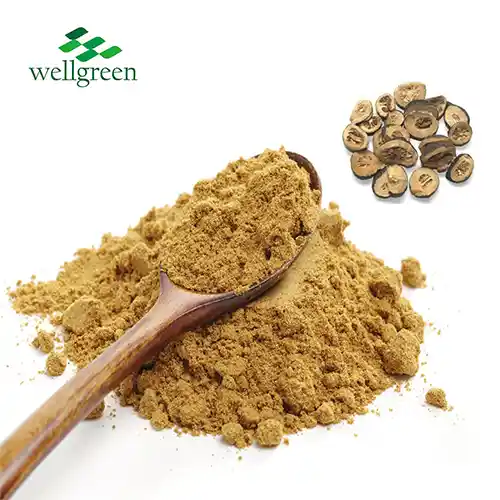
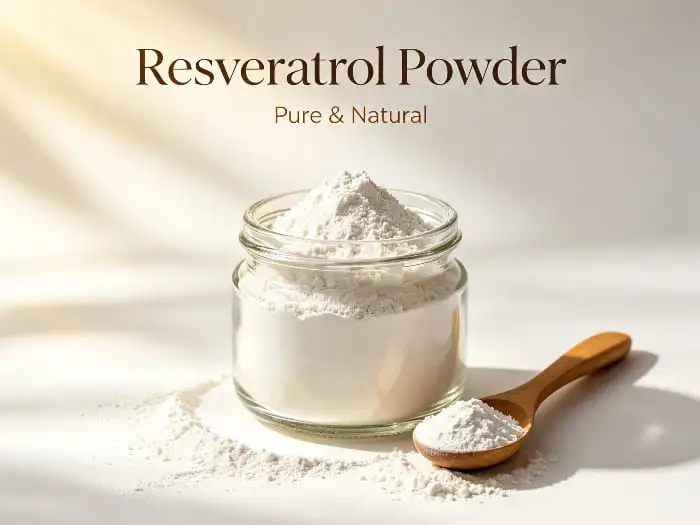
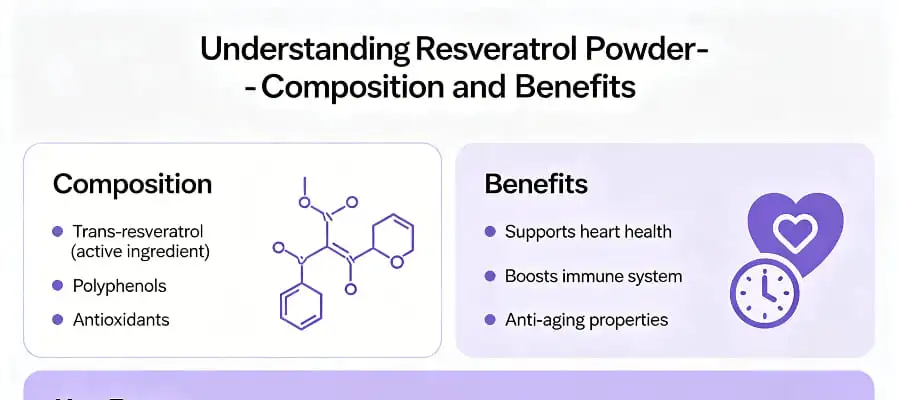
Resveratrol powder is a pure polyphenolic phytonutrient that is mostly taken from grape skins and Japanese Knotweed (Polygonum cuspidatum). This natural stilbenoid molecule is a strong antioxidant that has been shown to help cells stay healthy, keep the heart healthy, and slow down the ageing process. Businesses in the nutraceutical, medicinal, and functional food industries like this ingredient because it can be used in a wide range of formulations, from drinks and topical cosmetics to pills and gummies. This plant extract meets important market needs for clean-label, scientifically-backed active ingredients that make products work better and appeal to more people. Its purity levels are standardized and range from 50% to 98%.
Understanding Resveratrol Powder: Composition and Benefits
The compound comes in two forms, called isomers. Trans-resveratrol is more bioactive than its cis cousin. This polyphenolic stilbene works in a number of different biochemical ways, such as by activating SIRT1 proteins that are linked to studies into ageing, changing inflammatory markers like NF-κB, and getting rid of reactive oxygen species that speed up the ageing process in cells.
Chemical Structure and Extract Sources
This stilbene structure has different molecular features instead of flavonoid-based antioxidants. There are two main sources of commercial-grade material: traditional botanical extraction from Polygonum cuspidatum roots, which usually produces higher concentrations, and grape-based extraction, which produces lower amounts that are still safe for food use. Biosynthetic production is now possible thanks to modern fermentation technologies. This method ensures stable batch quality without the variability that comes with farming.
The way of extraction has a big effect on the final product's properties. When solvents are used for extraction, the leftover amounts must be carefully watched to make sure that traces of ethanol and acetone stay below the limits set by regulators. Supercritical CO2 extraction makes profiles cleaner, but it costs more to make, which procurement teams weigh against the placement they want for the product.
Antioxidant Mechanisms and Cellular Protection
The chemical works by directly removing free radicals and increasing the activity of antioxidant enzymes found naturally in the body. Researchers have shown that it can turn on cellular defence pathways, which helps keep the inflammatory response healthy and keeps lipid membranes from getting damaged by free radicals. These processes explain why it is used in so many health-related formulations.
Studies show that the trans-isomer is about 80–90% more bioactive than the cis form. To make sure the seller is qualified, isomer verification through HPLC analysis is necessary. To make sure that formulations are always the same, B2B buyers should indicate the amount of trans-resveratrol rather than the total amount of stilbenes.
Applications Across Health Categories
These ingredients are added to recipes for heart health because they help the blood flow and function of the blood vessels in a healthy way. Anti-aging supplement lines use its ability to activate SIRT1 and often mix it with NAD+ precursors like pterostilbene or nicotinamide riboside to get even better results. It is added to serums and creams for skin care that target oxidative stress factors linked to photoaging.
The resveratrol powder form gives you more control over the mixture than liquid extracts or whole plant materials. Manufacturers of drinks like it because it works with both hydrophilic and lipophilic delivery methods as long as the right solubilizers are used. It stays stable during the compression and encapsulation processes, which is good for companies that make tablets and capsules. However, light-protective packaging is still needed because of photosensitivity issues.
Comparing Resveratrol Powder to Other Forms and Extracts
When choosing an ingredient, you have to look at its delivery method, source material, purity requirements, and regulatory status. Each choice affects absorption, the ability to make the product, and how well it works in the end.
Powder Versus Capsule and Liquid Formats
Bulk powder gives producers who make a lot of different SKUs the most formulation options and the best value for money. Contract makers who work with private label clients like this format because it can be used for a variety of products. For example, the same batch of raw materials can be used to make supplement capsules, functional beverage prototypes, and cosmetic active ingredients.
Pre-encapsulated forms make handling easier, but they limit the amount that can be used and raise the cost per unit. Liquid extracts are useful in some situations, but they can be hard to standardise, keep fresh, and make sure that food-grade goods don't have too much alcohol. Spray-dried powder formulations make it easier for water to mix with the powder. This solves a common problem in beverage uses where regular powder doesn't dissolve well.
Botanical Source Comparison: Polygonum Versus Grape
Japanese Knotweed extraction gives higher concentration ranges (usually 50–98% purity) and a stable supply chain, which is why it is the best source for pharmaceutical-grade uses that need exact assay levels. Grape skin and seed extracts have lower concentrations but look good on a clean label and may contain proanthocyanidins that work well with the antioxidants in other foods, making them a good choice for marketing as functional foods.
Different sources have different regulatory concerns. Import restrictions on materials derived from grapes are usually less strict, and labelling methods like "grape polyphenol" or "wine extract" work better with what consumers want. In some areas, clear labels are needed for knotweed sources, but they offer better cost-per-milligram active ingredient ratios.
Quality Standards and Compliance Requirements
GMP-certified manufacturing makes sure that processing controls are always the same, which is very important when you're meeting strict quality agreements for pharmaceutical or nutraceutical customers. ISO certifications show that a company cares about quality management systems in more ways than just how things are done on the work floor.
Third-party testing protocols should check for trans-resveratrol using approved HPLC methods, heavy metals (such as lead, arsenic, cadmium, and mercury) against USP limits, make sure microbial loads meet cGMP standards, and measure residual solvents according to ICH recommendations. Each batch must come with a Certificate of Analysis, and samples kept for later use allow for tracking during the entire shelf life.
Practical Applications and Usage Guidelines for Resveratrol Powder
To make a good formulation, you need to know about the best dosing levels, compatibility issues, and stability factors that affect how well the product works and how long it lasts.
Dosage Recommendations Across Application Categories
Doses between 150 mg and 500 mg per day are usually used in clinical studies for resveratrol extract heart and metabolic health. Anti-aging supplements usually come in 200-250 mg doses and are often mixed with other polyphenols or sirtuins activators to make full blends that help people live longer.
Topical skin care products use concentrations of 0.5 to 1% in finished formulas, where the substance works as both an active ingredient and an antioxidant that helps the product last longer. The people who make functional drinks use smaller amounts (50–100 mg) per dose to keep costs down, keep the claims on the label true, and make sure that regular use builds up the benefits.
Formulation Compatibility and Stability Considerations
The compound's stability depends on its pH, with slightly acidic to neutral surroundings (pH 4–7) being the best for keeping it. Conditions that are alkaline speed up degradation, so some supplement materials need to be carefully buffered. Because the material is sensitive to temperature, low-heat processing methods like spray drying and direct compression work better than high-temperature granulation or extrusion.
Trans-to-cis isomerization happens quickly in the presence of light, which lowers bioactivity. Longer shelf lives are achieved with amber glass containers, opaque HDPE bottles, or UV-protective blister packing. Oxygen also lowers effectiveness, which is why nitrogen flushing and adding oxygen-scavenging packets are useful for premium products.
When making a formula, the relationships between the ingredients need to be looked at. The molecule works well with vitamins C and E, making antioxidant networks that work better together. Combining quercetin, curcumin, or green tea extract is in line with the current market move towards full polyphenol blends. Formulators should check the stability of their products with certain ingredients, especially minerals that can speed up oxidation processes.
Safety Profile and Regulatory Labeling
Toxicological studies show that widely used supplement doses are safe, and human trials at levels up to 5 grammes per day have not shown any serious side effects. High doses may cause mild stomach problems, which is why product labels include directions on how to use the drug.
Regulatory situation is different in each market. In the United States, the ingredient is GRAS for certain food uses. However, it is DSHEA-regulated for supplement uses, which means that the manufacturer is responsible for safety and label truth. In some situations, European markets consider it a new food item that needs to be approved before it can be sold. Knowing these differences can help you avoid expensive compliance problems when you go global.
Procurement Insights: How to Source High-Quality Resveratrol Powder?
When you use strategic sourcing, you have to look at a supplier's skills beyond just their price quotes. You have to focus on their technical skills to make sure stable quality and compliance with regulations.
Supplier Qualification Criteria
A review of the manufacturing equipment should make sure that the facilities are GMP-certified and have separate production areas to reduce the risk of cross-contamination. Having HPLC, GC-MS, ICP-MS, and microbial testing equipment in quality control labs shows that they have the scientific skills needed to make pharmaceutical-grade materials.
The ability to provide technical help is what sets strategic resveratrol extract partners apart from commodity suppliers. Reputable makers offer formulation advice, stability testing data, and application-specific suggestions that cut down on the time it takes to make a new product. Access to regulatory documents, such as Drug Master Files for pharmaceutical clients or kosher/halal certifications for certain market groups, is worth a lot more than just providing raw materials.
Transparency in the supply chain makes it possible to track plants from their source through the extraction and processing steps. Due diligence standards and risk management protocols are supported by documentation that can be checked and includes information on how the samples were harvested, the solvents used for extraction, and the methods used for purification.
Bulk Purchasing Dynamics and Cost Optimization
Depending on the purity requirements and the supplier's ability, the minimum order quantity is usually between 25 kg and 100 kg. Volume agreements allow for better pricing arrangements, but buyers need to weigh the costs of keeping inventory against the savings per kilogram. Setting up blanket purchase orders with planned releases keeps prices stable and helps you manage your cash flow and storage needs.
Before making big promises, you should look at a sample first. By asking for 100–500g samples, you can have the lab check the claims on the Certificate of Analysis, see if the product works with certain formulas, and see how stable it is under the conditions you plan to store it. This investment keeps expensive re-formulation or rejection from happening after bulk delivery.
Prices on the market are based on the amount of purity, the source material, and the certification requirements. Lower-purity grades (50–60%) are used in cost-effective situations where high doses make up for lower concentration. Pharmaceutical uses need products that are 98% pure or more and have full impurity profiles. These products cost more than others but meet strict quality standards.
OEM and Private Label Partnership Opportunities
Contract manufacturing relationships let brands that don't have their own production facilities get complete solutions. Expert partners take care of formula optimisation, stability testing, regulatory documentation, and packaging design, which shortens the time it takes to get the product to market and makes sure it meets local standards.
Custom specification development can work with different strategies for positioning products. When manufacturers offer 70%, 85%, or 95% purity options, brands can find a balance between cost and label claim potency. This helps brands stand out in supplement categories that are already very crowded. Microencapsulation technologies make it easier for substances to dissolve in water for use in drinks, and sustained-release matrices make it possible for supplements to work for longer periods of time when taken once a day.
Private label services include more than just manufacturing. They also design packages, help with marketing, and fulfil orders. These all-encompassing partnerships are especially helpful for new brands that want to get a foothold in the market without having to spend a lot of money on infrastructure.
Final Recommendations for B2B Clients: Making Informed Decisions
To choose the right ingredients for your business, you have to look at a lot of things at once, like how the product fits into its category, what the target market wants, the rules and regulations that apply, and how the competition is changing.
Selecting Between Organic and Conventional Sources
Organic certification costs more, but it helps with marketing in natural products channels where customers strongly prefer labels that are certified organic. When going after health food stores, where organic claims directly affect buying decisions and support higher retail prices, the extra cost is worth it.
Conventional resveratrol extract sources work well for positioning in the mass market, where low prices are what make a category successful. These materials meet the same standards for purity and safety, but they don't have to pay the extra fees that come with being organic, which may not make customers think they're worth more in regular stores.
Anticipating Industry Trends and Innovation Opportunities
Combination formulas have a lot of room to grow because people want complete solutions instead of products with just one ingredient. Combining this polyphenol with new ingredients for longevity like spermidine, urolithin A, or fisetin creates new ways for brands to stand out in supplement markets that are already mature.
Bioavailability problems found in clinical research are fixed by new delivery systems. Using technologies like phytosome complexation, nanoparticles, and liposome encapsulation to improve absorption is important, but the regulatory pathways for these new delivery systems need to be carefully navigated. When brands invest in these technologies, they get patent protection and performance benefits that make them more deserving of a higher price tag.
Market opportunities are still being shaped by changes in regulations. Structure-function claims are being looked at more closely, so strong proof is needed. Suppliers who offer full scientific dossiers and access to clinical studies are preferred. Market access problems can be avoided by keeping an eye on changes to FDA guidance and changes to international regulations.
Conclusion
Strategic ingredient sourcing requires balancing quality specifications, regulatory compliance, cost considerations, and supplier capabilities. The polyphenolic compound discussed throughout this analysis offers documented benefits across multiple health categories, creating opportunities for nutraceutical brands, pharmaceutical manufacturers, functional food developers, and cosmetic formulators. Successful procurement depends on specifying appropriate purity levels, verifying analytical testing protocols, evaluating supplier technical competencies, and ensuring regulatory alignment with target markets. Partnerships with manufacturers offering formulation support, custom specifications, and comprehensive documentation streamline product development while mitigating quality risks. As consumer demand for science-backed botanical ingredients continues expanding, establishing relationships with reliable suppliers positions brands for sustained growth in competitive wellness markets.
FAQ
What purity level should I specify for supplement applications?
Supplement formulations typically utilize 98% purity material to achieve therapeutic dosing in compact serving sizes. Lower purities (50-75%) suit cost-sensitive products where larger capsule sizes remain acceptable. Pharmaceutical applications require 98%+ with comprehensive impurity profiling.
How do I verify authentic trans-resveratrol content?
Request HPLC chromatograms demonstrating trans-isomer quantification, not just total stilbene content. Third-party laboratory verification through independent testing confirms supplier Certificate of Analysis accuracy before committing to bulk purchases.
What stability concerns should guide packaging decisions?
Light and oxygen exposure rapidly degrade potency. Specify amber glass bottles, opaque HDPE containers, or blister packaging with UV protection. Include desiccants and oxygen scavengers for extended shelf life in humid environments.
Can this ingredient be used in food-grade beverage applications?
Grape-derived sources generally suit food applications better from both regulatory and marketing perspectives. Water solubility requires solubilization technologies or microencapsulation for clear beverage systems. Cloudy formulations accommodate standard powder forms more readily.
Partner with Wellgreen for Premium Resveratrol Powder Supply
Wellgreen Technology maintains GMP-certified manufacturing facilities producing resveratrol powder across purity specifications from 50% to 98%, meeting diverse formulation requirements for supplement, pharmaceutical, functional food, and cosmetic applications. Our quality management systems ensure batch-to-batch consistency through validated HPLC testing, comprehensive impurity screening, and microbial monitoring aligned with international standards. As an experienced resveratrol powder manufacturer, we support OEM and private label partnerships with custom specifications, formulation consulting, and complete regulatory documentation. Large inventory capacity enables rapid fulfillment while our technical team provides stability data and application guidance accelerating your product development timeline. Contact our team at wgt@allwellcn.com to discuss bulk purchasing options, request samples for evaluation, or explore custom formulation opportunities that differentiate your product line in competitive wellness markets.
References
Baur, J.A., and Sinclair, D.A. (2006). Therapeutic potential of resveratrol: the in vivo evidence. Nature Reviews Drug Discovery, examining resveratrol mechanisms in metabolic health and aging pathways.
Cottart, C.H., Nivet-Antoine, V., and Beaudeux, J.L. (2014). Review of recent data on the metabolism, biological effects, and biotechnology of resveratrol. Biomedicine & Pharmacotherapy, analyzing bioavailability challenges and delivery system innovations.
Huang, J.P., Huang, S.S., Deng, J.Y., and Hung, L.M. (2012). Impairment of insulin-stimulated Akt/GLUT4 signaling is associated with cardiac contractile dysfunction and aggravates I/R injury in STZ-diabetic rats. Journal of Biomedical Science, documenting cardiovascular applications and dosing protocols.
Neves, A.R., Lucio, M., Lima, J.L., and Reis, S. (2012). Resveratrol in medicinal chemistry: a critical review of its pharmacokinetics, drug-delivery, and membrane interactions. Current Medicinal Chemistry, providing formulation strategies addressing stability concerns.
Shaito, A., Posadino, A.M., Younes, N., Hasan, H., and Halabi, S. (2020). Potential adverse effects of resveratrol: A literature review. International Journal of Molecular Sciences, establishing safety profiles for regulatory compliance.
Zhu, W., Qin, W., Zhang, K., Rottinghaus, G.E., Chen, Y.C., and Kliethermes, B. (2012). Trans-resveratrol alters mammary promoter hypermethylation in women at increased risk for breast cancer. Nutrition and Cancer, exploring clinical applications in disease prevention formulations.