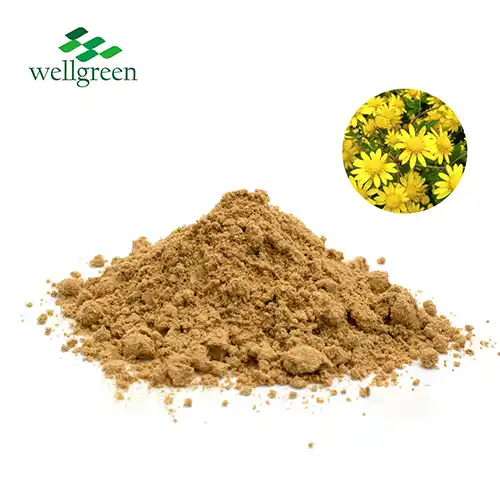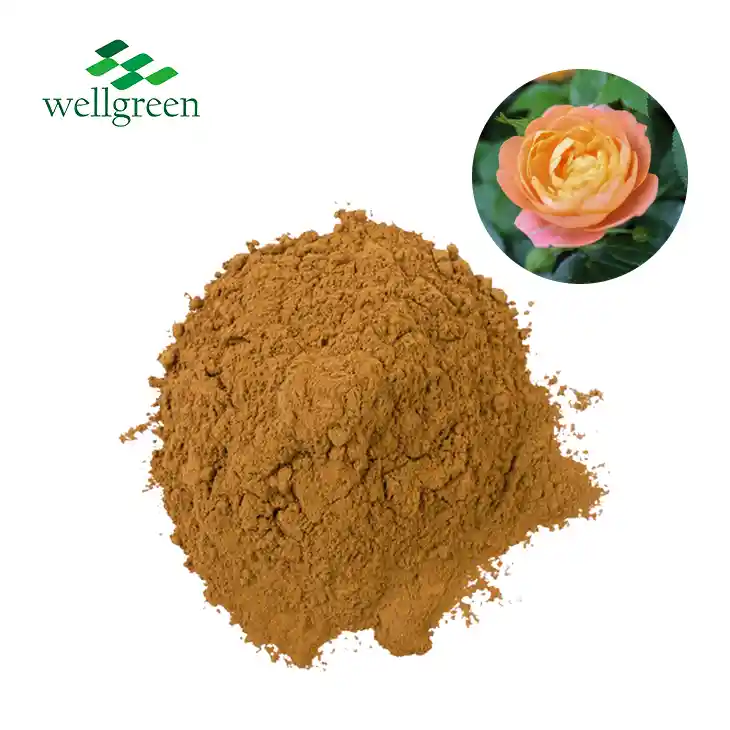
What is Saffron Extract and What is It Used For?
2026-03-31 14:00:00
Saffron extract is a concentrated botanical derivative obtained from the stigmas of Crocus sativus L., containing potent bioactive compounds including crocin, safranal, and picrocrocin. This premium ingredient serves multiple industries, from dietary supplements supporting mood regulation and eye health to functional foods utilizing its natural coloring properties. Through advanced extraction techniques, the volatile essential oils and thermolabile compounds are stabilized into powder form, delivering standardized bioactivity profiles essential for nutraceutical formulations, cosmetic applications, and pharmaceutical development across global markets.
Understanding Saffron Extract: Definition and Natural Sources
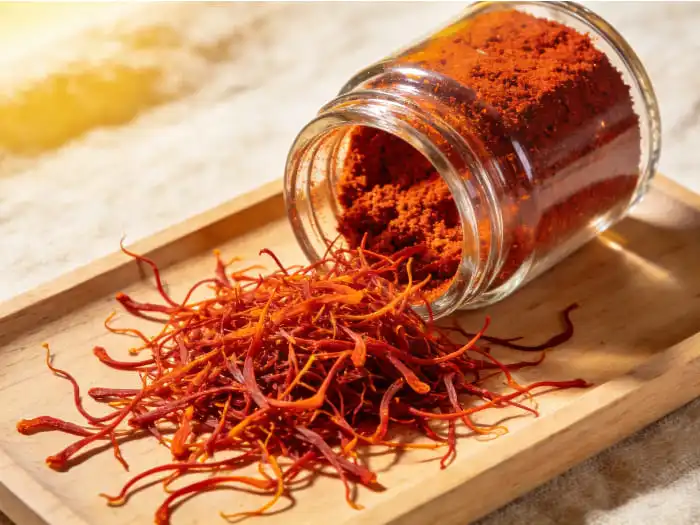
The botanical foundation of saffron extract begins with Crocus sativus, a perennial flowering plant belonging to the Iris family. Unlike common saffron spice used in culinary applications, pharmaceutical-grade saffron extract undergoes sophisticated processing to concentrate its therapeutic compounds. The extraction process typically employs water and ethanol in proprietary ratios, followed by spray-drying techniques that preserve the integrity of heat-sensitive molecules.
Chemical Profile and Bioactive Compounds
Three main apocarotenoids determine the clinical effectiveness of saffron extract, which is why it is so effective. Crocin is the water-soluble carotene that gives the fruit its red color, and tests of cells have shown that it has strong protective properties. Additionally, safranal gives the unique smell and has antioxidant qualities that help the brain work well. Picrocrocin gives it a slightly bitter taste and works as a precursor molecule. New study suggests that it may have antidepressant properties.
Standardizing saffron extract is necessary to get uniform bioactive profiles. Usually, the goal is to get the total crocin content to be between 2 and 5 percent or to reach certain safranal levels. Advanced HPLC-MS fingerprinting methods check the validity of compounds and look for signs of adulteration, which is very important when getting raw materials in a world where economic substitution is still common.
Cultivation and Harvest Considerations
To get high-quality saffron extract, farmers carefully control the conditions in which Crocus sativus plants grow. These plants need certain weather conditions and careful hand-harvesting methods. Since each flower only makes three stigmas, it takes about 150 flowers to make one gram of raw material. This process requires a lot of work, which adds to the high costs that procurement pros have to deal with when they are building reliable supply chains.
When the gathering is done has a big effect on the concentration of bioactive compounds. For example, collecting bioactive compounds early in the morning keeps their maximum volatile compound levels before heat breaks them down. Processing after harvesting within 24 hours stops enzymes from breaking down the food and keeps the chemical stability needed for medicinal uses.
Key Uses and Health Benefits of Saffron Extract
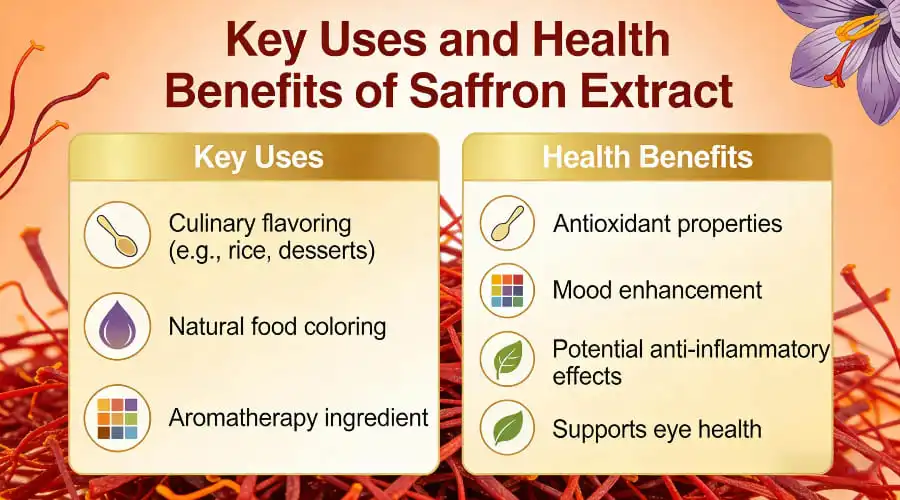
Many therapeutic uses have been proven to work by clinical study, which drives demand in many B2B sectors. Modern pharmacological studies show measured effectiveness in a wide range of areas, from supporting the nervous system to treating skin problems. This gives product makers a lot of different market possibilities.
Mental Health and Neurological Support
A lot of clinical studies have shown that crocus sativus extract can help control mood by stopping the reuptake of serotonin and dopamine. In a randomized controlled study with 60 participants, giving 30 mg daily for eight weeks led to a significant change in depression scores. The drug worked just as well as normal pharmaceutical interventions and was easier for the body to handle.
The neuroprotective effects go beyond mood problems and can also be used to improve brain function. Researchers have found that crocin chemicals help make memories and protect neural cells from oxidative stress. These results make people interested in making nootropic supplements and goods that help with age-related cognitive loss for the growing market of seniors.
Ocular Health Applications
New study shows that saffron extract may be able to help keep the retina healthy and address worries about age-related macular degeneration. Crocin chemicals protect retinal cells from oxidative damage because they have a high antioxidant capacity. Combining it with standard eye health nutrients like lutein and zeaxanthin has been shown in clinical tests to improve both visual acuity and contrast sensitivity.
This application opens the door for specialty nutraceutical formulas aimed at the growing vision health market segment, especially among older people who are exposed to more screens and environmental oxidative stress.
Dermatological and Anti-Aging Benefits
The cosmetics industry uses the antioxidant qualities of saffron extract to make high-end anti-aging products. Studies in the lab show that standardized crocin extracts improve collagen production and lower inflammatory markers in skin fibroblast cells. By working at the cellular level, these processes help keep the skin's elasticity and fight obvious signs of aging.
Specialized liposomal delivery systems get around the photosensitivity problems that come with using raw saffron compounds. This lets them be stablely added to daily skin care products without worrying about breaking down when exposed to UV light.
Safety, Dosage, and Side Effects: What Procurement Managers Need to Know
When adding saffron extract to commercial goods, it's important for companies to make sure they follow the rules and check the safety profile. Procurement teams can set up the right quality control and risk management systems when they know the dosage limits and possible side effects.
Established Dosage Guidelines
For mood support, clinical study shows that doses between 20 and 30 mg per day work best. Higher amounts up to 50 mg have been shown to be safe in controlled studies. These factors help with the creation of formulations for different types of delivery systems, such as pills, tablets, and healthy drinks.
When figuring out the best way to dose a product, the people who make it have to think about absorption factors. Carotene compounds are better absorbed when they are delivered in a fat-soluble form, while therapeutic plasma levels may need to be reached with higher amounts of immediate-release forms.
Potential Side Effects and Contraindications
In clinical studies, the suggested dosages had few side effects. The most common worry was mild stomach problems that happened once in a while. Because there isn't a lot of safety statistics on pregnant women and breastfeeding women, clear marking rules are needed for these situations.
According to the latest study, there isn't much chance of a drug interaction happening. However, people who are taking MAO inhibitors or other mood-regulating drugs may need to follow special tracking rules. These things affect how the target market is positioned and how the regulatory plan for business applications is made.
Quality Control and Contamination Prevention
The high risk of pollution that comes with high-value plant materials is dealt with by strict quality control measures. Heavy metal testing, bacteria screening, and pesticide residue analysis are all important quality controls that reliable providers must show proof of through third-party lab confirmation.
Finding adulteration with HPLC fingerprinting adds to the safety of products against cheap imitations that hurt their effectiveness and safety for customers. For these testing methods to work, suppliers must go through steps that check their analytical skills and make sure they follow the quality system.
How to Choose and Source High-Quality Saffron Extract?
When choosing a supplier, you need to look at a lot of technical and business factors that will affect the success of the partnership in the long run. Knowing how to remove things, what certifications are needed, and how prices change on the market helps you make smart purchasing choices that meet your quality, cost, and supply security goals.
Extraction Methods and Quality Assessment
New extraction methods have a big effect on the quality of crocus sativus extract end product and the safety of bioactive compounds. Thermolabile chemicals are better preserved by supercritical CO2 extraction than by traditional liquid methods. However, cost may affect the choice of method depending on the target market.
Different providers use different ways to standardize, with some focused on the total amount of apocarotenoid content and others on specific compound ratios. Professionals in procurement should compare standards methods to the uses they are meant for to make sure that formulations work well and follow the rules.
Certification and Compliance Requirements
ISO recognition, GMP facility compliance, and organic labeling are all important quality assurance systems that help with government reports and build trust with customers. These certifications show that the supplier is committed to quality control systems and methods for ongoing growth.
For useful food and drinks, food-grade licenses are important, while for over-the-counter drugs, pharmaceutical-grade standards may be needed. Knowing what the target market wants lets you set the right criteria for qualifying suppliers, which keeps you from having to deal with expensive safety issues during product development.
Pricing Strategies and Supply Chain Considerations
The unstable nature of market prices for raw saffron materials is a reflection of their farming nature. Cost structures are affected by seasonal changes and global factors. Long-term supply deals can keep prices stable and make sure that quality standards are met in all production runs.
When planning to buy in bulk, it's important to think about how stable different types of extract are in different storage situations and how much it costs to keep the product on hand. Companies that are making unique product lines for specific market groups may be able to make more money through private labeling.
Maximizing Business Value: Integrating Saffron Extract into Product Lines
Strategic product integration methods use the adaptable qualities of saffron extract in a number of different industries, opening up chances to diversify portfolios and set products apart in the market. Understanding the unique needs of an application lets you come up with the best formulation strategies that will make the most money while also solving technology problems.
Nutraceutical and Dietary Supplement Applications
The market for mental health supplements is one of the biggest growth opportunities. As more people learn about natural ways to improve their happiness, the field will grow. Combining saffron extract with other ingredients that work well together, like magnesium, B-vitamins, or adaptogenic herbs, makes products that help with stress control and mental health.
When mixed with well-known ingredients like lutein and omega-3 fatty acids, saffron extract's protective qualities help eye health products that target problems related to getting older. These multi-ingredient methods provide all-around vision support while setting supplements apart in the supplement market.
Functional Food and Beverage Development
Natural coloring applications leverage crocin compounds as clean-label alternatives to synthetic colorants in premium food products. The dual functionality as both colorant and bioactive ingredient creates value-added positioning opportunities in functional beverage formulations targeting stress relief and wellness support.
One of the technical challenges is keeping the color stable and the biological purity of the product while it is being processed and stored for a long time. These problems can be solved with microencapsulation technologies and specialty packaging systems that keep the quality of the product high throughout all of its distribution routes.
Cosmetic and Personal Care Integration
Premium skincare formulations incorporate saffron extract for its antioxidant and anti-inflammatory properties, particularly in anti-aging and brightening product categories. The luxury positioning associated with saffron ingredients supports premium pricing strategies while appealing to consumers seeking exotic, natural beauty solutions.
Researchers in hair care are looking into how saffron extract can improve scalp health and hair growth. This could lead to the development of specialized treatments for hair loss and better general follicle health.
Conclusion
Saffron extract represents a premium botanical ingredient offering significant opportunities across nutraceutical, pharmaceutical, cosmetic, and functional food sectors. Its standardized bioactive profile, supported by clinical research and traditional use history, provides compelling value propositions for product developers seeking natural, efficacious ingredients. Successful procurement strategies must balance quality parameters, regulatory compliance, and cost considerations while establishing reliable supply relationships that support long-term business growth. The growing consumer demand for natural health solutions positions saffron extract as a strategic ingredient for companies developing innovative products targeting wellness-conscious markets.
FAQ
What concentration of crocin should I look for in bulk saffron extract purchases?
Quality saffron extract should contain 2-5% total crocin content for therapeutic applications. Higher concentrations may mean better processing, but they need to be checked through HPLC analysis to be sure they are real. Standardized extracts that target specific amounts of crocin give more consistent manufacturing results than materials that aren't standardized.
How does saffron extract compare to other mood-supporting botanicals in terms of efficacy?
Clinical tests show that it works about as well as St. John's Wort for mild to moderate sadness, and it may be easier to tolerate. Unlike synthetic options, saffron extract shows minimal drug interaction potential while providing additional antioxidant benefits not found in single-compound approaches.
What storage conditions are required for maintaining saffron extract stability?
Optimal storage requires cool, dry conditions below 25°C with protection from light exposure to prevent crocin degradation. Nitrogen-flushed packaging extends shelf life by preventing oxidation, and desiccant packets keep powder stable during long storage times by controlling moisture levels.
Partner with Wellgreen for Premium Saffron Extract Supply
Wellgreen Technology stands ready to support your saffron extract procurement needs with pharmaceutical-grade materials backed by comprehensive quality documentation and regulatory compliance support. Our GMP-approved facility maintains extensive inventory of standardized saffron extract powder with verified crocin content ranging from 2-5%, supported by HPLC fingerprinting and third-party testing protocols. We offer flexible minimum order amounts, custom formulation support, and competitive pricing structures designed to optimize your supply chain efficiency while ensuring consistent product quality. As a trusted saffron extract manufacturer, we provide complete traceability documentation and regulatory support to streamline your product development processes. Contact our procurement specialists at wgt@allwellcn.com to discuss bulk supply options, private labeling opportunities, and technical specifications tailored to your specific application requirements.
References
Moshiri, E., Basti, A. A., Noorbala, A. A., Jamshidi, A. H., Hesameddin Abbasi, S., & Akhondzadeh, S. (2006). Crocus sativus L. (petal) in the treatment of mild-to-moderate depression: a double-blind, randomized and placebo-controlled trial. Phytomedicine, 13(9-10), 607-611.
Hausenblas, H. A., Saha, D., Dubyak, P. J., & Anton, S. D. (2013). Saffron (Crocus sativus L.) and major depressive disorder: a meta-analysis of randomized clinical trials. Journal of Integrative Medicine, 11(6), 377-383.
Broadhead, G. K., Grigg, J. R., Chang, A. A., & McCluskey, P. (2019). Dietary modification and supplementation for the treatment of age-related macular degeneration. Nutritional Neuroscience, 22(1), 1-12.
Christodoulou, E., Kadoglou, N. P., Kostomitsopoulos, N., & Valsami, G. (2015). Saffron: a natural product with potential pharmaceutical applications. Journal of Pharmacy and Pharmacology, 67(12), 1634-1649.
Assimopoulou, A. N., Sinakos, Z., & Papageorgiou, V. P. (2005). Radical scavenging activity of Crocus sativus L. extract and its bioactive constituents. Phytotherapy Research, 19(11), 997-1000.
Modaghegh, M. H., Shahabian, M., Esmaeili, H. A., Rajbai, O., & Hosseinzadeh, H. (2008). Safety evaluation of saffron (Crocus sativus) tablets in healthy volunteers. Phytomedicine, 15(12), 1032-1037.