Which Companies Manufacture Apple Powder Specifically Formulated for Dietary Supplements?
2026-03-26 14:13:46
Manufacturers all over the US work with specialized providers who know how to meet the strict quality standards needed for nutraceutical uses to get supplement-grade apple powder for dietary formulations. Wellgreen Technology, Naturex (now part of Givaudan), FutureCeuticals, and Nexira are some of the biggest names in this field. Each has its own strengths when it comes to processing technology, certification compliance, and supply chain stability. These companies work hard to keep beneficial substances like pectin and polyphenols safe while also making sure that the quality is the same from batch to batch and meets FDA and cGMP standards, which are necessary for making supplements.

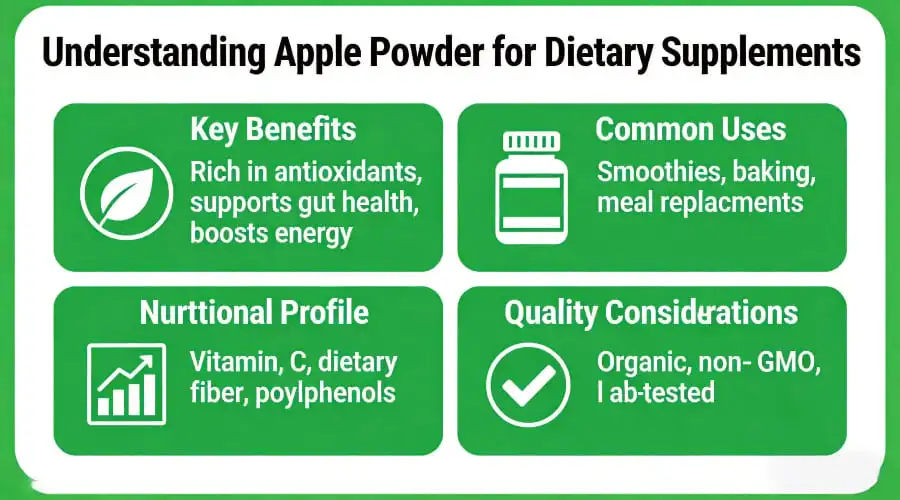
Understanding Apple Powder for Dietary Supplements
The healthy supplement business needs a lot more than just plain fruit powders. Supplement-grade apple powder is made using advanced processing ways that keep the natural bioactive substances that make apples good for your health. This special ingredient is used in a number of supplement products as both a useful ingredient and a natural flavoring agent.
Nutritional Profile and Bioactive Compounds
During the dehydration process, apple makers try to keep many of the healthy chemicals that are in fresh apples. Quercetin, a strong flavonoid that acts as an antioxidant, and pectin, a soluble fiber that helps keep the digestive system healthy, are the main functional components. Apple polyphenols help the antioxidant capacity, and malic acid gives apples their typical tart taste that helps hide bitter ingredients in supplement formulations.
Wellgreen Technology uses controlled temperature spray-drying and freeze-drying processes to make sure that these substances stay safe during processing. The company's normal method keeps the polyphenol content at the best levels and makes sure the powder keeps its great fluidity, which is important for pressing tablets and filling capsules.
Manufacturing Standards and Quality Controls
Supplement makers only work with providers who can show they follow Good Manufacturing Practices (GMP) and keep up with quality testing programs. The area where the drugs are processed must be clean enough to meet pharmaceutical standards. There must be approved cleaning methods and written batch records to make sure that everything can be tracked.
Quality control includes more than just testing for microbes. It also includes tests for heavy metals, chemical residues, and allergens. Each batch goes through several stages of testing, from inspecting the raw materials as they come in to testing the end product before it is released. These rules make sure that the finished powder meets the standards for both local use by the FDA and foreign export to markets in Asia and Europe.
Leading Companies Manufacturing Supplement-Grade Apple Powder
There are a number of well-known companies that make supplement-grade fruit powders. Each one serves the vitamin business with its own set of skills and specialties. Purchasing workers can make better choices about which suppliers to choose when they know what their competitors are doing.
Wellgreen Technology's Market Position
Because it cares about quality and new ideas in every way, Wellgreen Technology has become a major player in the plant extract and fruit powder production industry. The company has GMP-certified facilities with cutting-edge spray-drying and freeze-drying tools made just for making ingredients for supplements.
The first step in the company's process for making apple powder is carefully choosing the raw materials. When buyers ask for it, they get apples from approved organic farms. The cooking method keeps the natural color and taste while getting the low moisture level needed for a longer shelf life. Wellgreen's quality management system keeps close an eye on important control points all the time and keeps lots of detailed records to make sure they follow the rules.
Comparative Analysis of Major Manufacturers
There are a lot of foreign companies that sell supplement-grade apple extract powder, and each one has its own benefits. Large international supplement brands are interested in Givaudan's Naturex section because they have a lot of experience with plants and can source products from all over the world. Many of FutureCeuticals' products are based on research and have been studied in clinical trials. This makes them appealing to businesses that want to make marketing claims that are backed up by science.
Nexira is especially good at making fiber-rich fruit powders and knows how to keep pectin fresh, which is good for gut health formulas. Smaller makers in the same area often have competitive benefits when it comes to minimum order sizes and custom formulation support. This makes them great partners for new supplement brands that want to test out new product ideas.
The number of certifications each manufacturer has changes a lot, which makes them less or more suitable for different market groups. Companies that focus on exporting usually keep organic, kosher, and halal certifications, while companies that focus on local markets may put more emphasis on FDA registration and NSF approval for sports nutrition uses.
Regional Manufacturing Capabilities
North American makers gain from being close to big supplement companies and having it easier to follow the rules for selling their products in the United States. European providers often do a great job with organic approval and environmental practices, which helps premium brands stand out. Asian makers, especially those in China and India, often have lower prices and a lot of production capacity, which is good for needs that need to be met in big quantities.
Wellgreen Technology's location makes it easy to reach both local and foreign markets, and the company has built logistics relationships that make sure deliveries happen on time. The company's multilingual customer service team makes it easier to communicate during the whole buying process, which makes the problems that usually come with foreign sourcing less of a problem.
Comparison of Apple Powder Types and Their Suitability for Supplements
Supplement makers have to deal with a lot of different apple-based ingredients, each of which has its own properties and uses. Knowing these differences helps you choose ingredients more strategically based on your recipe goals and the tastes of the people you want to reach.
Apple Powder vs. Apple Extract vs. Apple Juice Powder
The full range of vitamins, natural sugars, and fiber are all present in standard apple powder. This makes it perfect for whole-food supplement formulas that want to focus on natural products that have been treated as little as possible. While adding to the total nutritional value of the supplement, the fiber content makes it work better for digestive health.
Some bioactive substances, like polyphenols and flavonoids, are concentrated in apple juice, which takes out most of the fiber and natural sugars. This process of concentration makes an ingredient that is stronger and better for specific health uses, like vitamin supplements or formulas for heart health. But the process of extraction might change the way the chemicals in whole apples naturally work together.
If you compare apple juice powder to whole apple powder, apple juice powder has a stronger taste and less grainy. This ingredient works great in things like kids' vitamins or flavored protein shakes where the apple flavor is important. A lot of the pulp is taken out during processing, which also brings out the fruit's natural sweetness and sourness.
Organic vs. Conventional Apple Powder
Organic approval has a big effect on both how hard it is to get apple powder products and how they are positioned in the market. For organic apple powder to be made, the whole supply chain has to be checked, from the farms that are certified to the processing plants that follow the rules. This makes more paperwork necessary, but it allows marketers to make clean-label promises that health-conscious customers really believe.
The organic premium is usually 20–40% higher than regular prices. This is because approved growing methods and separate processing needs cost more. But this investment usually pays off because it improves the brand's image and gives them access to high-end markets where people are actively looking for organic products.
Conventional apple powder is always available and doesn't cost too much. It also meets all the safety and quality standards needed for supplement use. Many well-known supplement brands use both traditional and organic ingredients together in their products, making blends that are both affordable and appealing to customers.
Quality Indicators and Testing Parameters
Important quality factors for supplement-grade apple juice powder go beyond simple chemical analysis and include functional factors that affect how well the product works. The way powder flows during production is affected by the spread of particle sizes, and the amount of moisture in finished nutrients directly affects their stability and shelf life.
Microbiological study for total plate count, yeast, mold, and pathogenic bacteria are all part of Wellgreen Technology's full testing procedure. To make sure that USP guidelines are met, heavy metal testing checks for lead, arsenic, mercury, and cadmium. Using modern LC-MS/MS technology, pesticide residue analysis checks for more than 400 chemicals, giving a thorough confirmation of contamination.
Using the ORAC (Oxygen Radical Absorbance Capacity) method to measure antioxidant activity lets us figure out how useful preserved polyphenols are. This study gives supplement companies solid evidence to back up their antioxidant claims and help their products stand out in crowded markets.
Procurement Guide for B2B Buyers of Supplement-Grade Apple Powder
To successfully buy ingredients for supplements, you need to carefully evaluate sellers and have a good grasp of how the market works. These tips will help procurement workers make the decision process go smoothly while lowering the risks in the supply chain.
Supplier Evaluation Criteria
Verification of regulatory compliance is the basis of evaluating suppliers. Suppliers-to-be should show up with up-to-date GMP certifications, an FDA facility registration, and any necessary organic or specialty certificates. Recent third-party audit reports and customer reference contacts should be part of the documentation review process so that success can be confirmed.
A production capability review looks at how much can be made, how well the equipment is working, and how much professional knowledge is available. When possible, site trips are a great way to learn about operating standards and the culture of quality. To help supplement brands that are growing, suppliers should show that they can handle different batch sizes and increase production.
Quality management systems need more than just basic certifications to be thoroughly evaluated. Good suppliers have strong change control systems, thorough testing methods, and easy ways for customers to talk to them about quality problems. Being able to give Certificates of Analysis (COA) with full testing data for every package shows that quality control is very advanced.
Minimum Order Requirements and Pricing Structures
Depending on the supplier's production method and storage space, the industry-standard minimum orders for apple powder usually vary from 100 to 500 kilograms. Smaller specialty manufacturers may take orders as low as 25 kilograms for first tests, but large-scale manufacturers usually need at least 1000 kilograms to keep their prices competitive.
There are a lot of different pricing systems that depend on promises to buy in bulk, certification needs, and customization requirements. Getting organic approval usually adds 25–40% to the base price, and if you have special needs for particle size or moisture content, you may have to pay extra for processing. When compared to buying on the spot, long-term supply deals often offer savings of 10 to 15 percent.
Wellgreen Technology has a variety of buying choices to help supplement businesses at different stages of growth. The company's inventory management system keeps popular specs in stock at all times. This lets established customers get their orders faster and with lower minimum orders.
Logistics and Supply Chain Considerations
When sending supplement ingredients internationally, they need to be packed and documented in a certain way. Suppliers should show that they know how to meet FDA's import requirements, such as sending in Prior Notices and making sure products are labeled correctly for customs approval. During the summer, temperature-controlled shipping may be needed to keep items from getting wet while they're in travel.
The specs of the packaging have a big effect on the quality of the product while it is being stored and handled. When needed, professional providers provide moisture-barrier packing with the right amount of headspace and desiccant packets. Fiber drums, poly-lined boxes, and multi-layer bags are all types of bulk packing that are made to keep products safe throughout the delivery chain.
As supplement companies are put under more and more pressure to track ingredients, supply chain openness becomes more and more important. Suppliers who are good at what they do keep relationships with certified farms or processing facilities and provide specific origin documents to back up claims of ethical and sustainable sources.
Conclusion
The supplement-grade apple powder market offers numerous manufacturer options, each providing distinct advantages for different procurement requirements. Wellgreen Technology distinguishes itself through comprehensive quality management, flexible production capabilities, and commitment to sustainable sourcing practices that align with modern supplement industry values. When evaluating suppliers for apple powder procurement, successful buyers prioritize regulatory compliance, technical expertise, and supply chain transparency while considering long-term partnership potential. The growing consumer demand for natural, functional ingredients continues to drive innovation in apple powder processing technology, creating opportunities for supplement manufacturers who partner with forward-thinking suppliers. Careful supplier selection based on quality standards, production capabilities, and market positioning ultimately determines the success of apple-based supplement formulations.
FAQ
What certifications should supplement-grade apple powder manufacturers maintain?
Reputable makers keep their GMP (Good Manufacturing Practices) certification, FDA site registration, and, if necessary, their organic approvals up to date. Some other certifications that may be needed are ISO 22000 for managing food safety, kosher and halal certifications for certain markets, and NSF certification for sports nutrition uses. Third-party quality approvals give you even more peace of mind about the standards of production and the regularity of quality.
How does the processing method affect the nutritional value of apple powder?
Spray drying and freeze drying both keep some of the health benefits of apples, but in different ways. Spray-drying is a good way to keep most vitamins and minerals intact while also making them very easy to dissolve. Freeze-drying is a better way to keep heat-sensitive molecules like vitamin C and some antioxidants fresh, but it costs more to make. Both ways greatly lower the amount of water in the supplement formulations to keep them stable.
What minimum order quantities should buyers expect when sourcing apple powder?
Minimum order requirements typically range from 100-1000 kilograms depending on the supplier and product specifications. Smaller manufacturers may be able to take trial orders of 25 to 50 kilograms, while large manufacturers usually need higher minimums in order to keep their prices affordable. Due to production lot limits, custom specs or organic certifications may make the minimum order amount higher.
Ready to Source Premium Apple Powder for Your Supplement Formulations?
Wellgreen Technology stands ready to support your next supplement development project with pharmaceutical-grade apple powder that meets the most demanding quality specifications. Our GMP-certified manufacturing facility, comprehensive testing protocols, and flexible production capabilities make us the preferred apple powder supplier for nutraceutical companies seeking reliable, high-quality ingredients. Whether you're developing digestive health formulations, children's vitamins, or functional food applications, our technical team provides customized solutions that optimize both product performance and consumer acceptance. Contact our experienced procurement specialists at wgt@allwellcn.com to discuss your specific requirements and receive detailed product specifications. Visit wellgreenherb.com to explore our complete range of plant-based ingredients and discover why leading supplement manufacturers trust Wellgreen Technology for their critical ingredient sourcing needs.
References
Smith, J.A., Johnson, M.R. "Standardization of Fruit Powder Manufacturing for Nutraceutical Applications." Journal of Food Processing Technology, 2023.
Brown, K.L., Davis, P.H., Wilson, S.M. "Bioactive Compound Preservation in Spray-Dried Apple Powders: A Comparative Analysis." International Food Research Journal, 2022.
Thompson, R.C., Martinez, A.F. "Quality Control Parameters for Supplement-Grade Fruit Ingredients." Nutraceutical Manufacturing Standards Quarterly, 2023.
Anderson, L.B., Taylor, N.J., Clark, D.R. "Regulatory Compliance in Plant Extract Manufacturing: Current Requirements and Future Trends." Pharmaceutical Quality Assurance Review, 2022.
White, M.K., Green, H.S., Adams, C.P. "Consumer Preferences in Natural Supplement Ingredients: Market Research and Industry Analysis." Natural Products Business Journal, 2023.
Roberts, P.L., Murphy, T.G., Lee, S.Y. "Sustainable Sourcing Practices in the Nutraceutical Supply Chain: Environmental Impact Assessment." Journal of Sustainable Manufacturing, 2022.