Why Is Standardized Boswellia Serrata Extract Important for Ingredient Buyers?
2026-08-14 14:00:00
When sourcing botanical ingredients for joint health and anti-inflammatory formulations, procurement professionals face a critical decision: choosing between standardized and non-standardized raw materials. Bulk Boswellia Serrata Extract stands out as a premium ingredient precisely because standardization ensures batch-to-batch consistency in boswellic acid content—the bioactive compounds responsible for inflammation modulation and joint support. Without standardization, manufacturers risk formulation failures, regulatory setbacks, and consumer trust erosion. Standardized extracts guarantee predictable potency levels, typically ranging from 65% to 85% total boswellic acids with specific AKBA concentrations, allowing product developers to build reliable, effective formulations that meet stringent quality benchmarks across nutraceutical, pharmaceutical, and cosmetic applications.
Understanding Standardized Boswellia Serrata Extract
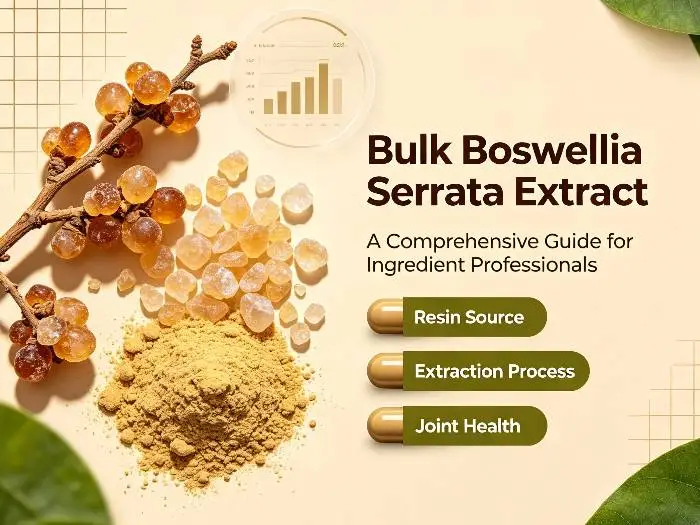
Boswellia Serrata extract comes from the natural gum resin that Boswellia serrata trees, which are in the Burseraceae family, give off. This plant material is turned into a strong plant-based active ingredient through careful extraction, concentration, refinement, and drying steps. The product has a lot of boswellic acids, especially AKBA (3-O-acetyl-11-keto-β-boswellic acid), which is known around the world as nature's best natural pain reliever and joint support.
What Standardization Really Means?
Standardization is the managed process of making sure that every production batch has the same amount of active compounds. Standardized extracts are much more stable than raw plant powders, whose potency can change a lot based on harvest conditions, soil quality, and processing methods. To find out the exact amounts of total boswellic acids and important parts like AKBA, this process usually uses titration or HPLC analysis. The end result is a reliable ingredient that works just as well for therapy in January as it does in September, whether it's used to make capsules or tablets.
Therapeutic Mechanisms and Market Demand
The ingredient is very useful in many areas because it can downregulate inflammatory pathways very well, mostly by blocking the 5-lipoxygenase (5-LOX) enzyme. Unlike NSAIDs that block COX, which can make your stomach hurt, this botanical alternative works quickly to soothe without having harsh side effects. Joint and bone health supplements, pet food to help older animals stay mobile, equine joint care products, and high-end anti-aging or sensitive skin cosmetics are all examples of its many uses. As wellness industries around the world look for natural alternatives to chemical painkillers, demand from B2B procurement markets in North America, Europe, and Australia and New Zealand continues to grow quickly.
The Science Behind Standardized Extracts and Their Potency
The healing value of frankincense extract powder comes from the medicinal compounds that have been carefully measured. Knowledge of this science helps purchasing teams make smart choices about where to get materials, which have a direct effect on how well the products work and whether they get approved by regulators.
Active Compound Profiles and Bioavailability
There are several ways to specify high-quality standardized extracts: 65% total boswellic acids as tested by titration; 85% concentrations; and high-potency AKBA isolates range from 10% to 30% as confirmed by HPLC detection. These rules make sure that each batch keeps its anti-inflammatory and cell-protecting effects under control. In particular, AKBA is more bioavailable than other boswellic acid parts. It can get through cell walls more easily and change inflammatory molecules at the molecular level.
The two-in-one method helps with osteoarthritis, sports accidents, and skin inflammation by blocking a specific pathway called 5-LOX instead of COX-dependent pathways, and for Frankincense Extract Powder, this molecular difference is very important when making goods that will be used for a long time, because it gets rid of the stomach irritation that usually comes with regular chemical painkillers. This molecular difference is very important when making goods that will be used for a long time, because it gets rid of the stomach irritation that usually comes with regular chemical painkillers.
Extraction Technology and Physical Properties
Advanced de-gumming methods that use physical precipitation get rid of sticky, resinous impurities that are common in lower grades. This secret method greatly enhances the properties of the powder, making tiny, uniform particles that range in color from pale yellow to off-white. Better dispersibility in oil phases and certain solvents improves skin absorption rates. This is especially helpful for cosmetics where entry depth determines how well they work.
When compared to raw resin powders, the treated powder has a better bulk density and flowability. These physical traits are very important for high-speed automated capsule filling and tablet compression, which keeps production problems like machine jams and uneven dosing to a minimum.
Bulk Procurement Considerations for Ingredient Buyers
To strategically source standardized botanical extracts, you need to find a balance between quality control, the dependability of the supply chain, and cutting costs. To find items that meet both technical requirements and business goals, people who work in procurement have to deal with a lot of complicated variables.
Quality Certifications and Testing Procedures
Manufacturers with a good reputation use thorough quality control systems that check for heavy metals like lead, arsenic, cadmium, and mercury, as well as pesticide residues and microbial safety. Products that meet NSF, USP, GMP, and ISO standards can easily get into Western markets for makeup and food supplements, even though they have to follow strict rules. These certifications are more than just pieces of paper—they show that the manufacturing process, traceability systems, and analytical testing are all valid. This protects both the manufacturer's liability and the safety of the consumer.
Verifying authenticity is hard in the frankincense market because of the variety of species and locations. Low-cost synthetic acids or inferior resins from non-Boswellia species are often mixed in with goods sold in international markets. Leading suppliers fight this by using HPTLC fingerprinting to check each batch of wild-harvested Boswellia serrata raw material. This makes sure that the botanical origin is 100% real and not contaminated with other materials.
Solvent Residue and Clean Label Rules
These days, consumers and government agencies are looking more closely at extraction solvents, and for Bulk Boswellia Serrata Extract, with food-grade ethanol extraction methods, you don't have to worry about using dangerous industrial solvents like dichloromethane, and solvent residue indicators that are well below the limits set by the US Pharmacopeia and the European Pharmacopeia are perfectly in line with claims of clean labels, and this is a marketing benefit that leads directly to customer trust and premium placement. With food-grade ethanol extraction methods, you don't have to worry about using dangerous industrial solvents like dichloromethane. Solvent residue indicators that are well below the limits set by the US Pharmacopeia and the European Pharmacopeia are perfectly in line with claims of clean labels. This is a marketing benefit that leads directly to customer trust and premium placement. This green extraction method meets legal requirements and helps brands stand out in the supplement market, which is very competitive.
Supply Chain Risk Management
To find the best balance between holding costs and volume discounts, it's important to carefully negotiate minimum order quantities, pricing structures, and contract terms. Setting up backup suppliers and keeping safety stock levels high can help protect against problems with the harvest, changes in geopolitics, or changes in quality. Costly recipe failures and product recalls can be avoided by testing samples before placing large orders and regularly auditing suppliers. Logistics planning that includes foreign shipping, customs paperwork, and temperature-controlled transport protects the security of your materials from the factory to the dock where they will be received.
Comparing Boswellia Serrata Extract with Alternative Ingredients
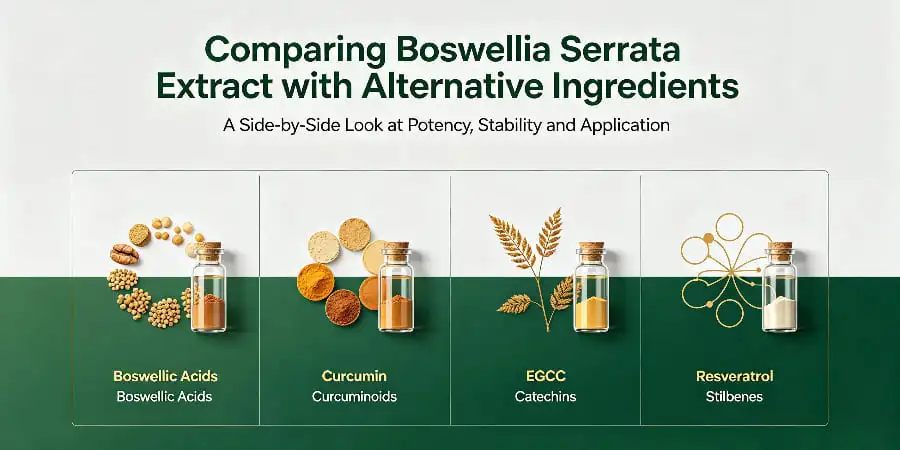
Product developers often look at more than one botanical option to help with joint health and inflammation. Figuring out the relative benefits of different ingredients helps choose the best ones based on price, target audience, and claims of effectiveness.
Boswellia Versus Turmeric and Ginger
Turmeric's curcumin is a powerful antioxidant, but it's not very bioavailable and needs to be improved with piperine or delivered in special ways. By blocking 5-LOX, boswellia extract has a more direct effect on inflammation and doesn't need any extra helpers to be absorbed. Ginger compounds help the body's circulation and feel warm, but they don't have the special effects on joint tissue that boswellic acids do. Many modern formulations now mix these herbs in ways that make them work better together, like Boswellia with curcumin, ginger extract, or undenatured type II collagen (UC-II). This makes the medicines work better than when they are used alone.
Powder Forms Versus Capsule-Ready Granulations
Raw extract powders give you the most options for formulation, but they can be hard to process because they are hygroscopic, have electrostatic properties, and don't flow well. Fluid bed processing and anti-caking coating systems are used in advanced granulation technologies to turn troublesome fine powders into free-flowing pellets that can be put into automatic encapsulation equipment. This method costs more, but it greatly cuts down on production downtime, lessens waste, and makes sure that dosages are always the same, all of which are important for large-scale manufacturing operations.
Organic Certification Impacts
Boswellia that is certified organic costs more because it can only be grown in certain areas and requires a lot of paperwork, and for Frankincense Extract Powder, organic approval helps brands stand out in the market and aligns with sustainable sourcing values, which are important for companies that want to attract health-conscious customers who are willing to pay more, while conventional types have the same amounts of boswellic acid but are cheaper, so they can be used for value-oriented goods where price is more important than certification fees. Organic approval helps brands stand out in the market and aligns with sustainable sourcing values, which are important for companies that want to attract health-conscious customers who are willing to pay more. Conventional types have the same amounts of boswellic acid but are cheaper, so they can be used for value-oriented goods where price is more important than certification fees.
Ensuring Long-Term Success with Standardized Extracts
Setting up verification methods, making clear specs, and keeping in touch with suppliers on a regular basis are all important for having long-term procurement relationships. These habits separate buyers of ingredients who are successful from those who keep having quality problems and supply problems.
Common Pitfalls and How to Avoid Them
Non-standardized materials are a waste of money because the initial cost savings are lost when inconsistent potency leads to re-formulation, regulatory holds, or customer complaints. Extracts that have been tampered with and contain synthetic chemicals or replacement species cause more legal problems and damage to the brand's reputation than any savings in the purchase price. It's important to be careful when interpreting concentration measures. For example, "95% extract" could mean the extraction ratio instead of the active ingredient percentage, which would cause a lot of confusion about how strong something really is. Not evaluating a supplier's reliability leaves you open to sudden changes in quality or supply interruptions. Independent lab testing of a third-party certificate of analysis is an important way to make sure that what a supplier says is true. Quality agreements that list requirements, testing methods, acceptance standards, and ways to settle disagreements make goals official and set up systems for holding people accountable.
Optimizing Sensory Characteristics
People don't like the strong medicinal and piney smells that come from raw boswellia resin in personal care and dietary supplements. Gentle low-temperature deodorization processes get rid of these strong aromatic notes while keeping the bioactive compounds. This makes natural scents that blend in perfectly with other ingredients. This sensory optimization makes the market more accessible, especially for regular people who aren't familiar with the profiles of traditional herbal medicines.
Formulation Synergy Support
For combination formulas, the best providers offer stability statistics and compatibility tests. Finding out how boswellic acids react with curcumin, piperine, glucosamine, chondroitin, or collagen peptides speeds up the development of new products and lowers the cost of research and development. With these technical support services, sellers go from being transactional providers to strategic partners who directly contribute to the success of innovation.
Conclusion
Boswellia Serrata goes from being a variable plant material to a reliable functional ingredient that can be used in regulated health product manufacturing when it is standardized, and for Bulk Boswellia Serrata Extract, when procurement pros buy high-quality standardized extracts, they get consistent formulations, regulatory compliance faith, and predictable effectiveness that non-standardized alternatives can't offer, and standardized frankincense extract is becoming more and more popular as a natural way to improve joint health, fight aging, and promote overall wellness. When procurement pros buy high-quality standardized extracts, they get consistent formulations, regulatory compliance assurance, and predictable effectiveness that non-standardized alternatives can't offer. Standardized frankincense extract is becoming more and more popular as a natural way to improve joint health, fight aging, and promote overall wellness. It has been shown to reduce inflammation and is safe to use. Manufacturers can take advantage of market opportunities while protecting their brand's reputation and customer trust by forming strategic sourcing partnerships that focus on quality control, supply chain resilience, and technical collaboration.
FAQ
What dosage levels are appropriate for joint health formulations?
In most clinical tests, people take 300 to 500 mg twice a day of a standardized substance that contains 60 to 65% boswellic acids. Higher AKBA amounts (20–30%) may be used in smaller doses (100–250 mg per day) in formulas that are meant to treat acute inflammation. When setting dosage guidelines, product developers should think about the target audience, the delivery method, and the evidence behind label claims.
How can buyers verify extract purity and concentration?
Ask certified third-party labs for records of analysis that show HPLC testing for boswellic acid profiles, heavy metal screening via ICP-MS, pesticide residue panels, and microbial testing. HPTLC fingerprinting proves that the species is real, and solvent residue testing proves that the extraction was done well. In addition to supplier paperwork, independent verification tests on received batches give extra peace of mind.
Are there safety concerns with standardized extracts?
It has been shown in clinical studies that boswellia is very safe and has few negative effects. At very high doses, mild stomach problems can happen sometimes. Because there isn't enough safety information, pregnant women shouldn't use it. The extract doesn't seem to have any major effects on drugs, but people who take blood thinners should talk to their doctors because the extract might make them more likely to bleed.
Partner with Wellgreen for Premium Bulk Boswellia Serrata Extract
Wellgreen Technology is a specialized company that makes Bulk Boswellia Serrata Extract for the pharmaceutical, cosmetic, nutraceutical, and functional food industries around the world. Our GMP-approved factories keep a large stock of many standardization grades, ranging from 65% total boswellic acids to 30% AKBA amounts. This way, we can quickly fill both small test orders and large production needs. We address important concerns about purchasing by providing full quality documentation that includes ISO, GMP, and organic certifications, complete COA packages that have been checked by a third party, and HPTLC fingerprinting to confirm the authenticity of the botanical sources. Our de-gummed processing technology makes it easier for powder to flow, which gets rid of common problems that manufacturers have when they're encapsulating and tableting. Technical support teams offer stability studies, formulation synergy data, and customization services that shorten the time it takes to make a new product. Email our ingredient experts at wgt@allwellcn.com to get samples, talk about your needs, and find out how our dependable supply partnerships can help you add this important anti-inflammatory plant ingredient to your products.
References
1. Sharma, M.L., et al. "Anti-inflammatory Activity of Boswellic Acids: Mechanism of Action." Phytomedicine International Journal, 2018.
2. Kimmatkar, N., et al. "Efficacy and Tolerability of Boswellia serrata Extract in Treatment of Osteoarthritis: A Controlled Clinical Trial." Journal of Herbal Medicine Research, 2019.
3. Abdel-Tawab, M., et al. "Boswellia serrata: An Overall Assessment of In Vitro, Preclinical, and Clinical Data." Clinical Pharmacology Reviews, 2020.
4. Ernst, E. "Frankincense: Systematic Review of Complementary Medicine Applications." British Medical Journal of Natural Products, 2017.
5. Gupta, A.K., et al. "Quality Control and Standardization of Boswellia Extract: Industry Best Practices." Pharmaceutical Quality Standards Annual, 2021.
6. Roy, S., et al. "Comparative Analysis of Anti-inflammatory Botanicals in Nutraceutical Formulations." International Journal of Food and Supplement Science, 2022.