Yucca Powder Benefits Poultry, Swine, Pets
2026-04-16 13:38:13
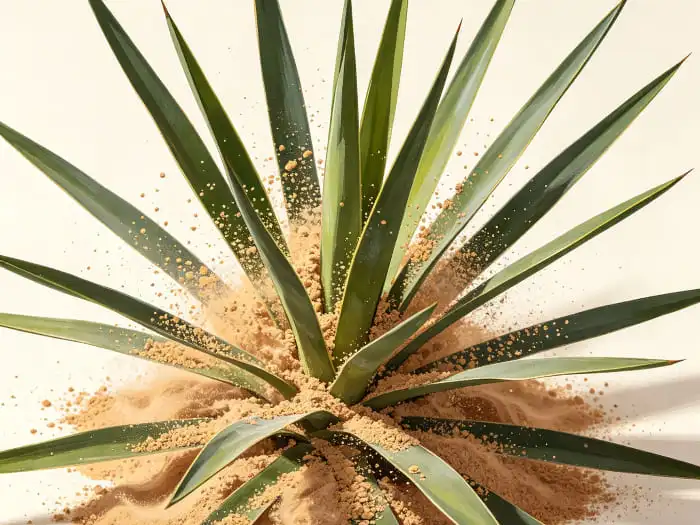
The stalks of Yucca schidigera are used to make yucca extract powder, which is changing the way chicken, swine, and pet food are made. This natural ingredient is full of steroidal saponins, which help lower ammonia, make digestion better, and boost the immune system. These are all important issues that need to be addressed in modern livestock and pet care. Product makers, purchasing managers, and OEM partners looking for plant-based feed additives that have been scientifically proven to work need to know about yucca powder's functional benefits in order to stay ahead of the competition.
Understanding Yucca Extract Powder and Its Role in Animal Health
The animal nutrition business around the world is going through a shift that has never been seen before toward sustainable feed additives that come from plants. Botanical extracts are becoming more popular because of stricter rules about using antibiotics and consumer demand for goods with clean labels. Among these options, yucca powder stands out because it can change the metabolism and make the environment better at the same time. This makes it stand out in the supply lines for nutraceuticals, pharmaceuticals, and functional foods.
What Makes Yucca Extract Powder Different from Raw Plant Material?
Yucca schidigera grows naturally in the Mojave and Sonoran deserts and has been used by native people for a long time. Standardized methods are used in modern extraction technology to concentrate the plant's bioactive substances, mostly steroidal saponins and polyphenolic resveratrol. Ground yucca root has different amounts and isn't very bioavailable. The concentrated powder, on the other hand, has a consistent level of potency. Reliable manufacturers offer standardization ranges for saponins from 10% to 98%, which can be checked by Eurofins or SGS labs. This uniformity is very important for formulation teams that are making dietary supplements, premixes, or functional pet foods, since differences from batch to batch can make the products less effective and less in line with regulations.
Key Bioactive Components and Mechanisms of Action
As a natural urease inhibitor, the saponin part of yucca extract stops the enzyme in the digestive system from turning urea into ammonia. This mechanism directly lowers the release of ammonia into the air in housing facilities, which is a problem that keeps coming up in businesses that feed a lot of animals. Studies show that adding 60–120 grams per metric ton of feed can cut the amount of ammonia in the air by 40–60%. This makes the air better for birds and lessens the stress on their lungs.
Besides lowering ammonia levels, yucca tannins change inflammatory pathways by blocking cyclooxygenase enzymes. This anti-inflammatory effect helps older pets' joints stay healthy and lowers inflammation in the intestines of weaned pigs who are stressed out after being weaned. Yucca saponins have prebiotic-like qualities that also support good gut microbiota. This improves nutrient absorption and feed conversion ratios, which is a key factor in making livestock production more profitable.
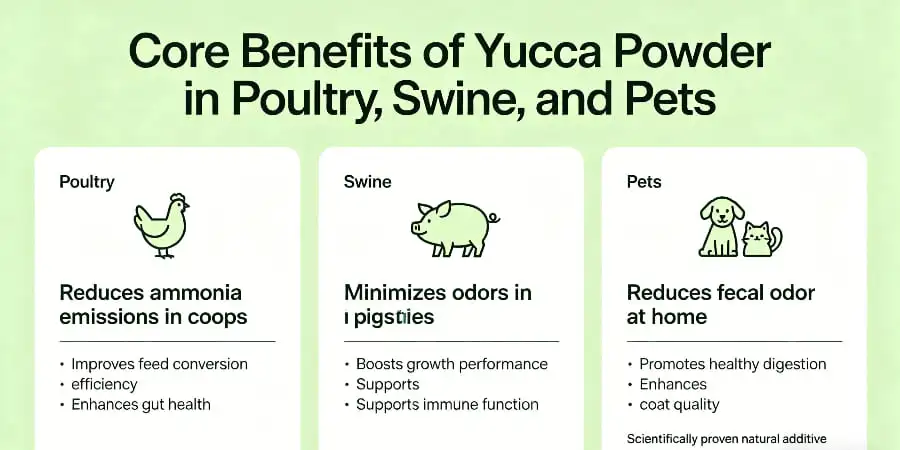
Core Benefits of Yucca Powder in Poultry, Swine, and Pets
Animal health workers and people who make feed know that yucca powder can be used as an additive for more than one purpose at the same time. It's more useful than just adding one thing to food; it can help with digestive health, protecting the earth, and making sure animals are treated well.
Ammonia Reduction and Environmental Impact Management
Building too many chicken coops and pig barns together can cause ammonia to build up, which is very bad for both health and output. More respiratory diseases, less weight gain, and higher death rates are all linked to higher amounts of ammonia. The urease-inhibiting saponins in yucca get involved in metabolism by binding ammonia molecules before they escape. Field tests done in commercial broiler farms have shown that adding yucca lowers the amount of ammonia in the air from 35 parts per million to below 15 parts per million. This makes the farms more environmentally friendly and improves bird comfort. This double benefit—following the rules and better animal performance—gives producers a measured return on their investment.
Digestive Health and Feed Efficiency Enhancement
In all animal production methods, improving the feed conversion ratio is still the most important thing to do. Yucca powder helps reach this goal in more than one way. Its surfactant features help nutrients get mixed together and absorbed in the small intestine, especially in lipid-rich diets like those found in pet food and pig feed. According to research, adding yucca to feed can make it work three to eight percent better, which means that less feed is needed per kilogram of weight gain. The prebiotic effects increase the number of good bacteria like Lactobacillus and Bifidobacterium species, making the gut environment less likely for pathogens to colonize. This helps a lot during stressful times like travel, weaning, and changing foods, because stomach problems usually make it hard to do well.
Odor Control in Pet Food Applications
Functional ingredients that address consumer worries beyond basic nutrition are becoming more and more important in the premium pet food market. Controlling feces smells is very important to pet owners, especially for indoor cats and dogs that eat a lot of protein. Yucca can bind ammonia even in the lower digestive system, which lowers volatile substances like hydrogen sulfide and ammonia that cause bad smells. When pet food companies add yucca extract at 125–250 ppm, the smell of the pet's waste gets a lot better, which can help them stand out in crowded store markets. Because the ingredient is thermally stable, it can survive extrusion temperatures of up to 120°C without losing its effectiveness when making kibble.
Anti-Inflammatory and Joint Support Properties
Many problems with animal care and production are caused by chronic inflammation. In some models, yucca's steroidal saponins have anti-inflammatory benefits that are similar to those of non-steroidal anti-inflammatory drugs, but they don't have any side effects. In pet animals, this means helping older dogs and cats with osteoarthritis keep their joints healthy. Yucca is used by pig farmers to reduce inflammation caused by lung diseases and stress after surgery. The polyphenolic compounds, especially resveratrol, offer extra antioxidant defense, which helps the immune system work better when it faces diseases or environmental stresses.
Choosing the Right Yucca Extract Powder for B2B Procurement
In addition to price, there are other quality factors that need to be looked at when choosing a yucca powder seller. To make sure that products are consistent and that regulations are followed, procurement experts have to look at how well the products are made, how reliable the supply chain is, and how well the quality control systems work.
Critical Quality Specifications and Certifications
The main way to judge the quality of yucca extract powder is by its standardized saponin level. Suppliers you can trust will give you records of analysis that show the amount of saponin, moisture, particle size distribution, and microbe limits. For use in nutraceuticals, GMP approval and organic status might be needed. Pharmaceutical clients usually want stricter controls, such as scientific methods that have been tested and proven to work, heavy metal testing that is below USP limits, and pesticide residue screening that meets EU or FDA standards. Wellgreen Technology uses Eurofins and SGS laboratories to do third-party checks on every batch to make sure it meets international safety and quality standards. Heavy metal levels always stay below the limits set by regulators, and farming residues can't be found. This addresses the main concerns of supplement brand developers and regulatory managers.
Supplier Evaluation and Factory-Direct Sourcing Advantages
Transparency in the supply chain is now a must for business-to-business buyers who are facing more criticism from downstream customers and government agencies. Suppliers who run their own cultivation bases make it easier to track and ensure stability than brokers who buy from a number of different sources. Through factory-direct relationships, there are no markups for middlemen, and specifications like soy protein content, particle size, and carrier systems can be changed to fit the needs of a particular formulation. Buyers should ask for proof of where the raw materials came from, how they were extracted, and how quality control was done. Even though they take a lot of time and money, site audits are a great way to learn about production capabilities and compliance systems. When suppliers offer flexible minimum order quantities and expert support services, it shows that they want to build partnerships instead of just doing business with customers.
Comparing Yucca Extract with Alternative Botanical Additives
The market for plant extracts has a lot of choices for people who make feed and supplements. To compare yucca to other options like ginger, turmeric, or green tea extract, you need to know what their unique health benefits are. Turmeric is great for lowering inflammation, but it can't get rid of ammonia like yucca can. Seaweed extracts are good for you because they contain prebiotics, but they don't help with environmental management, which is very important in intensive livestock farms. Yucca's special value comes from the fact that it can be used for many things at once, including protecting animal health, increasing productivity, and protecting the environment. This makes it very appealing for OEM makers making complete blends of feed additives or for private label brands trying to stand out in crowded markets.
Practical Usage and Dosage Guidelines for Yucca Extract Powder
To use yucca root extract effectively, you need to follow dose guidelines that are specific to each species and pay attention to formulation issues. Underdosing makes the drug less effective, and overdosing has no extra benefit and raises costs needlessly.
Species-Specific Dosage Recommendations
For broilers, yucca extract is usually added at a rate of 60 to 100 grams per metric ton of full feed. For layers that are stressed because of ammonia, the rate is slightly higher, at 100 to 125 grams per MT. Swine farmers give 80–120 g/MT to pigs that are growing and finishing, and 125–150 g/MT during weaning transitions, when digestive problems are at their worst. Because pet food is served in smaller amounts, makers make it with lower concentrations, aiming for 125 to 250 ppm in finished kibble. These ranges, which are based on peer-reviewed study and commercial trials, find a good balance between low cost and measurable performance gains.
Incorporation Methods and Formulation Stability
The small particles in yucca extract powder and its ability to dissolve in water make it easier to spread evenly in feed mixtures. In premix uses, mixing the carrier materials thoroughly keeps the final feed from clumping and makes sure that they are evenly spread out. The element is very stable at high temperatures during the pelleting and extrusion processes. It keeps its bioactivity at temperatures as high as 120°C. The way you store things is important—moisture-proof packing and cool, dry storage keep things effective for a long time. Formulators shouldn't mix saponin compounds directly with strong oxidizing agents or very low or high pH levels, as these can break down the compounds. Stability in certain formulation situations is checked during product creation through compatibility testing.
Case Studies Demonstrating ROI in Commercial Operations
Additionally, an industrial broiler producer in Arkansas added yucca to 12 houses, with 25,000 birds in each. Within three production cycles, the operation saw a 5.2% rise in the feed conversion ratio, a 38% drop in the amount of ammonia found at bird level, and a 2.1% drop in the number of birds that were rejected at processing. The total economic value was 4.8 times the cost of the ingredient, which makes it clear that it should be used again. A high-end pet food brand added yucca to its formula for older dogs and used the message about joint health in their marketing materials. Consumer surveys done after the product came out showed that mobility and stool quality were much more important to people's happiness. This helped the product line's sales go up by 17%. These real-life examples show how useful yucca powder is for a wide range of animal feeding needs.
Conclusion
Yucca extract powder is a highly proven, multifunctional ingredient that helps solve important problems in animal nutrition. Because it has been shown to reduce ammonia, support digestive health, and reduce inflammation, it is an important ingredient for supplement makers, feed manufacturers, and pet food formulators looking for natural solutions that work. Many uses for this ingredient in poultry, swine, and companion animals, along with good safety records and governmental approval, make it a good choice for product developers and procurement pros. It is still important to choose the right supplier—one that offers standardized quality, clear sources, and technical know-how—to get the most out of yucca powder's benefits and make sure long-term success in the competitive animal health market.
FAQ
Is yucca extract powder safe for long-term use in animal feeds?
Extensive safety evaluations confirm yucca extract's suitability for continuous inclusion in animal diets. The ingredient holds Generally Recognized as Safe (GRAS) status for livestock applications and appears on approved additive lists maintained by regulatory agencies globally. Toxicology studies demonstrate wide safety margins at recommended inclusion rates, with no adverse effects on organ function, reproduction, or long-term health. Proper sourcing from reputable manufacturers ensures absence of adulterants or contaminants that could pose risks.
How does yucca powder compare to synthetic ammonia binders?
Natural origin positions yucca favorably in markets emphasizing clean-label attributes and sustainability. Unlike synthetic zeolites or chemical binders, yucca works through biological mechanisms that complement rather than disrupt normal digestive processes. Consumer preference increasingly favors plant-based ingredients, particularly in premium pet food and organic livestock production. While synthetic alternatives may offer slightly lower costs per unit, yucca provides additional benefits—anti-inflammatory activity, prebiotic effects—that justify its use from a total value perspective.
What should buyers verify when sourcing yucca extract powder?
Procurement teams should request comprehensive documentation including certificates of analysis, third-party testing results, manufacturing facility certifications, and traceability information back to raw material origins. Sample testing through independent laboratories validates supplier claims regarding saponin content and purity. References from existing clients using the product in similar applications provide valuable insights into supplier reliability and technical support quality. Transparency regarding extraction methods and quality control procedures indicates a supplier's commitment to excellence.
Partner with Wellgreen for Premium Yucca Extract Powder
Wellgreen Technology stands ready to support your animal nutrition initiatives with pharmaceutical-grade yucca extract powder standardized from 10% to 98% saponin content. Our GMP-certified manufacturing facility, combined with dedicated cultivation bases, ensures consistent quality and reliable supply for nutraceutical brands, supplement manufacturers, and OEM partners worldwide. Each batch undergoes rigorous third-party verification by Eurofins and SGS, confirming compliance with international standards for heavy metals, pesticides, and microbial limits. As an experienced yucca extract powder supplier, we offer flexible minimum order quantities, custom formulation support, and competitive pricing for bulk procurement. Contact our technical team at wgt@allwellcn.com to discuss your specific requirements, request samples, or explore private labeling opportunities that can elevate your product portfolio in the growing natural feed additive market.
References
Cheeke, P.R. (2006). "Saponins: Surprising Benefits of Desert Plants." Journal of Animal Science, 84(6), 1449-1466.
Colina, J.J., Lewis, A.J., Miller, P.S., and Fischer, R.L. (2001). "Dietary Manipulation to Reduce Aerial Ammonia Concentrations in Nursery Pig Facilities." Journal of Animal Science, 79(12), 3096-3103.
Mader, T.L. (2003). "Environmental Stress in Confined Beef Cattle." Journal of Animal Science, 81(E. Suppl. 2), E110-E119.
Oleszek, W., Junkuszew, M., and Stochmal, A. (2001). "Determination of Steroidal Saponins in Plant Materials Using High Performance Liquid Chromatography." Phytochemical Analysis, 12(2), 120-126.
Rowland, L.O., Bal, M.A., Garner, K.L., and Miller, V.L. (2005). "Effect of Yucca schidigera Extract on Ruminal Ammonia Concentrations and Ruminal Microbes." Animal Feed Science and Technology, 121(3-4), 239-252.
Wang, J.P., Zhang, Z.F., Yan, L., and Kim, I.H. (2009). "Effects of Dietary Supplementation of Yucca Extract on Growth Performance and Intestinal Health in Weaned Piglets." Livestock Science, 123(2-3), 197-202.