Does Red Clover Extract Powder Have Antioxidant Properties?
2026-04-16 13:38:12
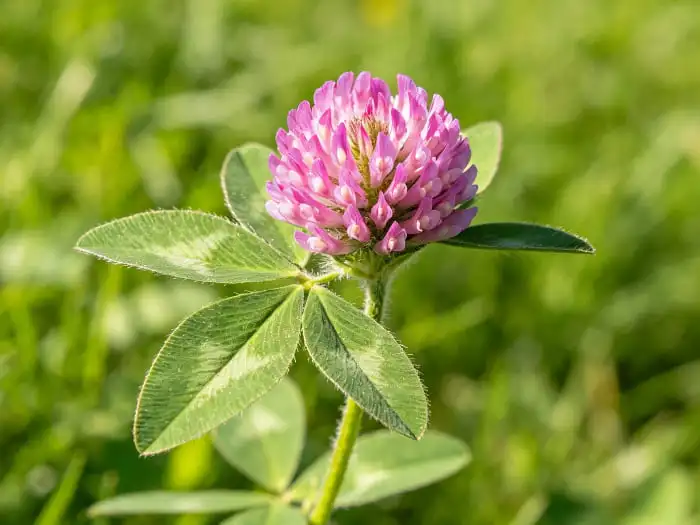
Yes, red clover extract powder does have strong antioxidant qualities, which are mostly due to its standardized isoflavone content. This plant ingredient comes from the flowering tops of Trifolium pratense. It has bioactive chemicals like Biochanin A, Formononetin, Genistein, and Daidzein that work to neutralize free radicals and lower oxidative stress. Researchers in both the lab and the clinic have confirmed that it can remove reactive oxygen species, which protects cells from damage. Because it is an antioxidant, the extract is a good choice for using in nutraceutical products that aim to slow down age, protect the heart, and keep hormones in balance.
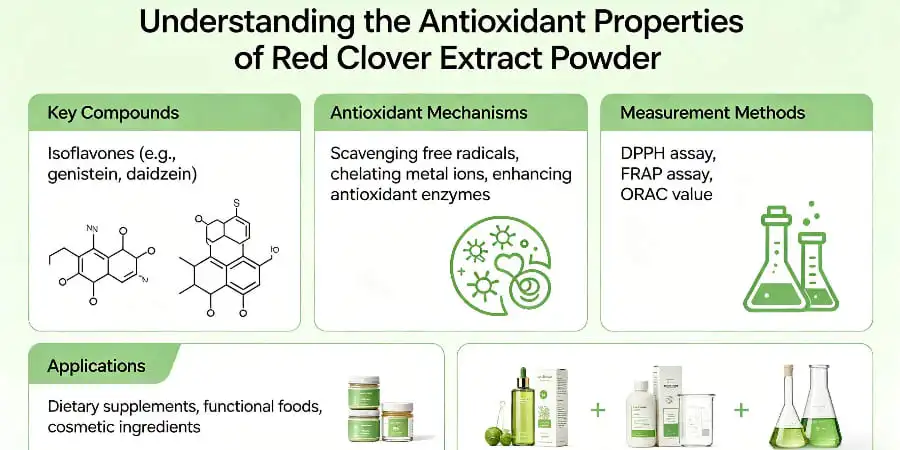
Understanding the Antioxidant Properties of Red Clover Extract Powder
In herbal remedies, antioxidants are very important because they protect cells from oxidative damage caused by unstable free radicals. When free radicals build up, they cause oxidative stress, which speeds up the aging process and makes chronic diseases worse. Knowing how botanical extracts fight these risks helps people who buy things figure out how well products work and make sure that formulations meet the needs of consumers who want to stay healthy.
The Role of Antioxidants in Herbal Supplements
When there are too many free radicals compared to the body's natural antioxidant protections, lipids, proteins, and DNA are damaged. This is called oxidative stress. This imbalance has been linked to metabolic problems, heart disease, and skin that ages too quickly. Herbal products that are high in antioxidants help to stop these reactive molecules from reacting by giving up electrons without becoming unstable themselves. Antioxidant-rich plants are very popular in both dietary supplements and beauty products because they help keep cells healthy and slow down the aging process. Standardized tests like ORAC (Oxygen Radical Absorbance Capacity) and DPPH assays can be used to measure antioxidant activity. This gives B2B buyers clear quality standards.
Bioactive Compounds Responsible for Antioxidant Activity
The isoflavone profile of red clover extract, especially the four main compounds standardized in professional-grade powders, is what gives it its antioxidant power. There are both direct and indirect ways that these phytoestrogens work as antioxidants. Biochanin A and Formononetin are very good at getting rid of free radicals, while Genistein and Daidzein change the activity of antioxidant enzymes in cells like superoxide dismutase and catalase. They can stop lipid peroxidation and protect endothelial cells from oxidative damage, according to research released in phytochemistry journals. These isoflavones are usually found in standardized extracts at levels ranging from 8% to 40%. Higher amounts are linked to better antioxidant activity. Because of this stability, formulators can make products with predictable biological activity, which solves the problem of variability that comes with using raw plant materials.
Comparing Antioxidant Potency with Other Botanical Extracts
When it comes to antioxidant power, red clover extract is on par with other well-known plant ingredients. Red clover has more Biochanin A and a wider range of phytoestrogens than soy isoflavones, which means it has more types of antioxidants. Unlike green tea extract, which relies on catechins a lot, red clover works in a different way by activating enzymes through isoflavones instead of polyphenols directly. While grape seed extract is better at quickly getting rid of free radicals, red clover's ability to change hormones protects cells over time through gene expression paths. Because it works in more than one way, the extract is especially useful in formulas that aim to slow down the loss of hormones that come with getting older, since oxidative stress and estrogen shortage are linked. This dual functionality is highly helpful for procurement teams that want to set women's health supplements apart.
How to Use Red Clover Extract Powder for Maximum Health Benefits?
To get the most health benefits from plant extracts, you need to know how much to use, when to use it, and how safe it is. The tips below help product makers use this ingredient correctly while still following the rules and making sure customers are safe.
Recommended Dosages for Menopause and Hormonal Support
Isoflavone doses of 40 to 80 milligrams per day, standardized to total isoflavone content, are usually used in clinical studies looking into how to ease the symptoms of menopause. To keep plasma levels steady, this amounts to about 200 to 500 milligrams of a 20% standardized extract per day, split into two doses. Red clover is often mixed with vitamin E or magnesium to help keep blood vessels stable in products meant to reduce hot flashes. The bulk density of the powder should be taken into account when making softgels or pills to make sure accurate dosing without making the capsules too big. To check the isoflavone composition, purchasing managers should ask for Certificates of Analysis that are special to each batch and include HPLC chromatograms. This is because the ratio between the four main compounds affects the antioxidant and estrogenic effects. This openness of the data directly answers buyer concerns about consistency and bioavailability.
Integration into Functional Foods and Cosmetic Formulations
Putting this plant-based ingredient into functional drinks and skin care products offers some unique formulation difficulties. Water-soluble versions or micronized powders keep sediment from settling in ready-to-drink uses, keeping the drink's look and making sure that everyone gets the same amount. Because high-concentration isoflavones are naturally bitter, they need to be masked by natural sweeteners or capsule technologies. To find a good mix between effectiveness and taste, beverage formulators usually limit concentrations to 0.5 to 1.5 percent. When used in anti-aging serums and creams, levels between 0.5 and 2.0% stimulate collagen production while keeping the safety of the emulsion. Together, the extract, peptides, and hyaluronic acid work to repair both oxidative harm and structural protein loss. Cosmetic scientists should test the stability of products across a range of pH levels, since isoflavone breaks down faster in acidic environments. In tropical regions, it's important to keep the medicine at the right temperature while it's being shipped.
Safety Considerations and Potential Interactions
Even though red clover extract is very safe in normal amounts, being clear about when it shouldn't be used is important for responsible formulation. Because isoflavones are phytoestrogenic, people who are sensitive to hormones should be careful with them. However, study is still being done to separate the risks of selective estrogen receptor modulation and synthetic hormone replacement. At suggested doses, long-term studies that lasted a year did not find any negative effects on breast or endometrial tissue. This makes botanical estrogens different from pharmaceutical interventions. Regulatory managers should be aware that some batches of coumarin derivatives may combine with blood thinners. Testing for coumarin levels by a third party makes sure that safety standards are met. Labels on products should say that people who are pregnant or nursing should talk to their doctors first. These proactive disclosures protect the brand's image while building consumer trust. This is especially important in markets where labeling rules are very strict.
Comparing Red Clover Extract Powder with Alternative Solutions
When you do strategic sourcing, you have to compare raw materials to other forms and botanicals. This comparison helps purchasing teams find the best cost-performance ratios and make sure that the ingredients they choose are right for the people they want to buy them.
Extract Powder Versus Capsule and Tea Formats
Compared to pre-encapsulated products or standard tea preparations, the powder format gives manufacturers a lot more freedom and lower costs. Bulk powder can be mixed with other ingredients that work well together, like Black Cohosh or Vitex, to make unique formulas that set brands apart in a crowded market. The compatibility of encapsulation equipment depends on the particle size distribution and flow qualities. Bridging can be avoided during high-speed capsule filling by using an extract that has been well-milled and has an angle of repose below 40 degrees. Compared to red clover tea, standardized extracts provide concentrated isoflavones without needing people to make several doses every day. Tea preparations usually have 10 to 30 milligrams of total isoflavones per cup, so you'd need to drink four to six cups to get the same amount of isoflavones as a pill. In North American markets, this ease of use is what makes people select capsule and tablet formats. But powder is useful for more than just supplements. It's also used by functional food companies to make women's health snack bars or protein blends, which aren't possible with pre-formed capsules.
Organic Versus Conventional Sourcing Considerations
When deciding between organically approved and conventionally grown raw materials, you have to weigh the higher cost against the benefits in terms of marketing and getting approval from regulators. Organic approval means higher prices, but it also opens up new ways to sell the product, like through stores that sell natural products and health-focused online stores where customers look for ingredients with clean labels. As a result of the approval process, pesticide residue levels stay below the levels needed to be detected. This is in line with EU rules that set strict maximum residue limits on botanical supplements. Conventional extracts that meet USP standards and the heavy metal limits set by Proposition 65 are cheaper options for groups of people who care about prices. Standardized tests show that the antioxidant potency of organic and traditional sources is the same. However, supporters of organic farming say that the health of the soil affects the production of secondary metabolites. Target market preferences should be weighed against the need to make a profit. Premium women's health brands can explain organic sourcing through stories and shared values, while mass-market formulations should focus on being affordable.
Red Clover Versus Black Cohosh and Soy Isoflavones
When making products to help with menopause, people who make them often compare red clover to Black Cohosh and isoflavones from soy. Black cohosh works in a different way because it doesn't have a lot of isoflavones. Instead, it affects mood-related symptoms by changing serotonin receptors. When you mix these two plants together, you get complete formulas that treat vasomotor instability, mood swings, and bone density issues all at the same time. Soy isoflavones, mostly Genistein and Daidzein, don't have Biochanin A and Formononetin like red clover does. This makes their phytoestrogen profile less diverse. This difference is important for formulators who want to selectively activate estrogen receptor beta, because Biochanin A binds to ERβ more strongly and has cardiovascular effects without stimulating the uterus. Red clover's non-GMO label appeals to people who are suspicious of how soy is grown, which helps with marketing. When comparing antioxidant activity, red clover's wider range of polyphenols wins out, but soy's lower cost makes it a good choice for starting out products.
Procurement Insights: Sourcing Red Clover Extract Powder for Your Business
To get around in the botanical red clover powder supply chain, you need to know about the skills of suppliers, logistics issues, and quality control rules. These insights make buying things easier while lowering the risks that come with buying things from other countries.
Critical Supplier Vetting Criteria
Checking the manufacturing credentials and quality control systems is the first step in building relationships with reliable suppliers. GMP-certified facilities show a dedication to keeping things clean, keeping track of batches, and making sure equipment is always calibrated—basic standards for pharmaceutical-grade ingredients. Ask for proof that third-party testing covers heavy metal (lead, arsenic, cadmium, and mercury) analysis, microbial contamination, and pesticide residue screens. Suppliers should give multi-batch stability data that shows how fast isoflavone breaks down in different storage situations. This will help with predicting how long finished products will last on the shelf. Each Certificate of Analysis comes with an HPLC chromatogram that shows that the amounts of Biochanin A, Formononetin, Genistein, and Daidzein stay the same from one production run to the next. This consistency addresses the main worry that product developers had about differences between batches. Supplier checks, whether they are done in-person or by a third-party certification body, show ways of making things that might not be clear from paper records. Being open about where the raw materials come from and when they are harvested shows that the supply chain is under control, which is important for keeping the organic certification.
Logistics and Inventory Management Strategies
When buying botanical extracts internationally, you have to weigh the wait times against the costs of keeping inventory. Asia-based makers usually have six- to ten-week production and shipping cycles. This means that accurate demand forecasting is needed to avoid running out of stock when new products come out. Different suppliers have different minimum order amounts. Well-known companies are more likely to be flexible and start at 25 kilograms for initial tests before increasing the minimum order amount to 500 kilograms for mass production. When shipping isoflavones through tropical areas, where humidity changes can make them less stable, temperature-controlled packages are needed. Customs delays can be avoided by knowing the Harmonized System codes and rules for importing goods. For example, plant extracts usually fall under HS code 1302, but the exact classification depends on how they are processed. It's easier to learn about phytosanitary certificates and FDA prior notice rules if you work with freight forwarders who have experience moving botanical supplements. When you buy things from other countries, using just-in-time inventory systems can be hard. To keep production going during shipping problems or busy ports, you need to figure out how much safety stock you need.
Partnering with Wellgreen for Reliable Supply
Through thorough quality control measures and services that focus on the needs of customers, Wellgreen Technology has become a reliable source for plant extracts. Our GMP-certified factory keeps strict environmental controls during the extraction and standardization processes. This makes sure that the isoflavone stays stable from the time the raw materials arrive until they are packed. We keep a large stock of several standardization levels, including 8%, 20%, and 40% total isoflavones. This lets us quickly fill sample requests and business orders. Each production batch is carefully checked by a third party for heavy metals, chemical residues, and microbial contamination. The results meet the standards of the USP, the European Pharmacopoeia, and Japan. Our expert team helps clients who are making new delivery systems by giving them advice on how to improve solubility and data on how well excipients work together. Customization options for OEMs include changing particle size, coordinating organic certification, and providing kosher or halal documents based on market needs. This way of working together turns relationships with suppliers into strategic partnerships that help with product growth cycles from the idea stage to the point where the product is sold.
Conclusion
Red clover extract powder has measured free radical scavenging and cellular protection thanks to its standardized isoflavone content. This plant ingredient meets important formulation needs in the nutraceutical, cosmetics, and functional food industries because it supports hormones and lowers oxidative stress at the same time. To make sure that quality is always high and regulations are followed, procurement workers need to know about dosage parameters, format comparisons, and supplier screening criteria. As the need for plant-based health products grows, red clover extract is a good choice for brands that want to stay ahead of the curve because it has been scientifically proven to work and can be made on a large scale.
FAQ
Is red clover extract safe for long-term use?
Research spanning up to 12 months has demonstrated safety at recommended dosages without adverse effects on hormone-sensitive tissues. Third-party testing confirming low coumarin levels and proper dosing guidance support safe long-term consumption.
How does this extract support skin health?
The isoflavones stimulate collagen synthesis and provide antioxidant protection against photoaging. Topical applications at 0.5 to 2.0 percent concentrations improve skin elasticity and reduce visible aging signs through dual mechanisms.
What differentiates red clover from soy isoflavones?
Red clover contains Biochanin A and Formononetin absent in soy, offering broader phytoestrogen activity. This composition provides enhanced antioxidant diversity and selective estrogen receptor modulation with cardiovascular benefits.
Can this ingredient be used in beverage formulations?
Water-soluble or micronized grades prevent sedimentation in liquid applications. Flavor masking and stability testing across pH ranges ensure successful integration into functional drinks and wellness beverages.
Partner with a Trusted Red Clover Extract Powder Supplier
Wellgreen Technology offers pharmaceutical-grade botanical extracts backed by comprehensive certifications and technical expertise. Our red clover extract powder features verified isoflavone standardization from 8% to 40%, supported by batch-specific HPLC analysis and third-party purity testing. We maintain substantial inventory for immediate sample shipment and commercial-scale fulfillment, accommodating both established brands and emerging formulators. Our OEM capabilities include custom standardization, particle size optimization, and documentation support for regulatory submissions across international markets. Product developers and procurement managers seeking reliable botanical extract suppliers can request technical data sheets and COA samples by contacting wgt@allwellcn.com. Visit wellgreenherb.com to explore our complete botanical extract portfolio and discover how our quality systems and responsive service support your formulation goals.
References
Booth, N. L., et al. (2006). "Clinical Studies of Red Clover Isoflavones: Antioxidant Activity and Health Benefits." Journal of Agricultural and Food Chemistry, 54(6), 1277-1283.
Kolodziejczyk-Czepas, J. (2012). "Trifolium Species: The Latest Findings on Chemical Profile, Ethnomedicinal Use and Pharmacological Properties." Journal of Pharmacy and Pharmacology, 64(12), 1663-1678.
Mu, H., Bai, Y. H., Wang, S. T., Zhu, Z. M., & Zhang, Y. W. (2009). "Research on Antioxidant Effects and Estrogenic Effect of Formononetin from Trifolium pratense." Phytomedicine, 16(4), 314-319.
Rietjens, I. M., Louisse, J., & Beekmann, K. (2017). "The Potential Health Effects of Dietary Phytoestrogens." British Journal of Pharmacology, 174(11), 1263-1280.
Sabudak, T., & Guler, N. (2009). "Trifolium L.—A Review on Its Phytochemical and Pharmacological Profile." Phytotherapy Research, 23(3), 439-446.
Tsao, R. (2010). "Chemistry and Biochemistry of Dietary Polyphenols: Emphasis on Antioxidant Properties." Nutrients, 2(12), 1231-1246.