
Broccoli Seed Extract for Functional Food Ingredient Formulation
2026-11-10 09:40:37
Most formulation briefs reach the ingredient supplier carrying a number that has already been fixed: a declared marker level per unit, a finished-unit weight, a shelf life. The engineering question behind that number is usually asked too late — can this material be weighed accurately, dispersed evenly, and held at that level inside this particular matrix? A broccoli seed extract standardized to 13.5% glucoraphanin and 1% sulforaphane is a useful case study. It arrives as a light yellow to brown powder, it can be sampled from a 1 kg minimum order quantity, and it behaves very differently in a clear beverage, a protein blend and a baked bar. This article works through the decisions that have to be settled before the first pilot batch: feed-rate arithmetic, dispersion, process stability, flavor load, matrix interactions, premix design, cost per thousand units, and the trial sequence that produces data a plant can actually use.
Two Markers, Two Very Different Feed Rates
What the declared content actually controls
The specification carries two numbers, and they are not interchangeable. Glucoraphanin at 13.5% is the bulk marker; sulforaphane at 1% sits at roughly one-thirteenth of that level. Any target expressed on the sulforaphane basis therefore pulls about thirteen times more powder into the matrix than the same target expressed on the glucoraphanin basis.
That single ratio decides whether a concept is commercially viable. Formulation teams that fix the claim first and calculate second often discover the inclusion level is physically impossible — too much powder for the unit weight, or too much sulfurous flavor for the product to pass a sensory panel. Our guidance to buyers is blunt: confirm which marker the claim rests on, then build the cost model from that marker alone.
Equally important is lot-to-lot consistency. A certificate of analysis issued per lot, with an assay value for each declared marker, is the only document that tells you what you are actually dosing. Ask for the assay method alongside the result, plus water content, ash, heavy metals, microbiological counts and particle size on the same certificate.
Converting Declared Content into a Feed Rate
The arithmetic is simple but easy to get wrong at scale, because losses occur in three places: weighing, blending and the filling line. Work in grams of extract per 100 kg of finished matrix, then apply an overage you can justify from your own yield data.
Feed (g per 100 kg) = target marker level (mg/kg) × 0.1 ÷ declared content as a decimal.
| Target marker level in finished matrix | Marker basis | Declared content used | Extract needed per 100 kg | Feed with 15% process overage | Effective inclusion |
|---|---|---|---|---|---|
| 250 mg/kg | Glucoraphanin | 13.5% | 185 g | 213 g | 0.21% |
| 400 mg/kg | Glucoraphanin | 13.5% | 296 g | 341 g | 0.34% |
| 600 mg/kg | Glucoraphanin | 13.5% | 444 g | 511 g | 0.51% |
| 100 mg/kg | Sulforaphane | 1% | 1,000 g | 1,150 g | 1.15% |
The last row is the instructive one. A modest sulforaphane-based target already demands more than 1% of the matrix by weight, which is where flavor, color and cost all become binding constraints. If your claim sits on that marker, plan for a high-load grade or a diluted premix rather than trying to force the powder into a finished unit directly. For background on how the two markers differ in practice, see this note on the sulforaphane content of broccoli seed extract.
Dispersion in Liquid Matrices
Dispersion is not dissolution
The glucosinolate fraction is water-soluble, but the material you receive is a particulate, and particulates have to wet out before anything dissolves. In practice, fines tend to float and form dry islands, and the operator compensates by adding more shear than the actives appreciate.
A workable sequence: pre-blend the extract with a small portion of the dry carrier or sugar at 1:10 before addition; add to the vortex at 40–50 °C rather than to a still tank; hold 10–15 minutes under moderate agitation; then homogenize if the matrix requires it. Record the wetting time and any residual specks, because these two observations predict filling-line behavior far better than a visual check of the bulk tank.
For ready-to-drink formats, sedimentation over shelf life is the real risk. A light yellow to brown powder will be visible against a pale background even at low inclusion, so suspension aids and a clarity check belong in the first bench trial, not in month three.
Heat, pH, and Water Activity
Sulforaphane is the fragile end of the specification. It is sensitive to heat and to pH extremes, and it is more stable when water is unavailable. Glucoraphanin tolerates thermal load better in the dry state, but once water and an active enzyme system are both present, hydrolysis chemistry starts to run in the matrix rather than in the plant.
Three practical consequences follow. First, dry blends and low-water-activity formats are the safest place to start. Second, in pasteurized or hot-filled liquids, add the extract as late in the process as the line allows, and validate the actual temperature-time exposure at the injection point rather than the nominal pasteurizer set point. Third, keep high-acid systems on the bench early; a pH below about 3.5 is worth testing explicitly before the concept moves forward.
None of these limits can be borrowed from another project. Equipment, fill volume and headspace change the answer, so regard any recommended window as a starting point for your own trial design.
The Sulfur and Bitterness Burden
Masking layers that survive a dry blend
At inclusion levels above roughly 0.1%, the sulfurous, cooked-cabbage note and a lingering bitterness become detectable in most matrices. This is not a defect — it is intrinsic to the chemistry, and it is the most common reason a technically sound concept fails a consumer panel.
Masking works in layers rather than in one step. A dairy protein base often binds part of the bitter fraction and carries the sulfur note into a fermented, cultured context where it reads as acceptable. Roasted or cocoa notes, vanilla, and brown-spice top notes cover the aroma without competing. In clear beverages, acid plus a fruit aroma system is more effective than sweetener alone, because sweetness tends to lengthen the aftertaste instead of shortening it.
Encapsulation is the structural answer when inclusion levels cannot be reduced further, and it also limits aroma transfer into packaging film — a failure mode that only shows up after a few weeks in a stored carton.
Interactions With Protein, Starch, and Hydrocolloids
Protein matrices are where analytical surprises appear. Sulfur-containing species associate with cysteine-rich proteins, which can lower the free fraction recovered by assay even when the feed rate was correct. If your release specification is based on a finished-product assay, build the method recovery study into the pilot rather than assuming the feed rate transfers one to one.
Starch systems raise a different issue. A hydroscopic powder added at 0.3–0.5% can shift moisture migration in a bar, accelerating hardening and staling. Water content on the incoming certificate matters here as much as the assay; a specification without a moisture limit is not a specification for bakery use.
Hydrocolloid choice controls suspension and mouthfeel. Xanthan and gellan at low use levels hold particles in a beverage without thickening it noticeably, while pectin systems in acidified dairy need to be checked for flocculation after the extract is added. Color is the fourth variable: measure L*a*b* in the finished matrix, because a light yellow to brown powder at 0.3% can tint a white yogurt visibly.
Premix Architecture and Blend Uniformity
Geometric dilution, then prove it
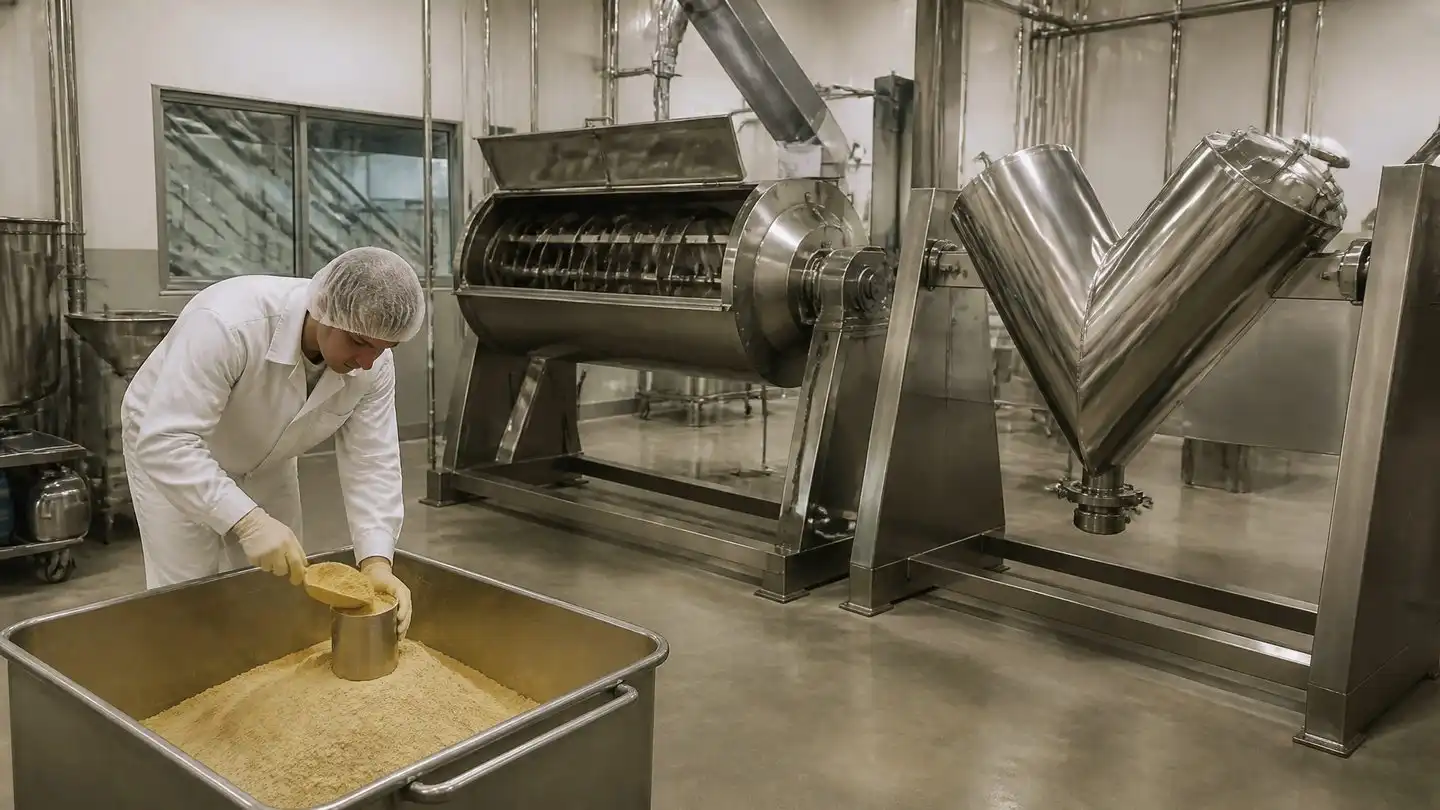
At 0.2–0.5% inclusion, the extract is a minor component in a large powder bed, and minor components segregate. A practical premix design dilutes the extract to 5–10% on a carrier such as maltodextrin, with a small amount of silicon dioxide to keep the blend free-flowing, and then uses that premix as the dosing stream.
Uniformity has to be demonstrated, not assumed. Sample at least ten locations across the blender after discharge — top, middle, bottom, and both ends — and calculate relative standard deviation for the marker. A ribbon blender typically needs the premix added early and a short post-blend, because over-blending a density-contrasted powder pair increases segregation rather than reducing it.
The same logic applies to the filling line. Verify that the premix hopper does not stratify during a shift, and check the first and last units of a run rather than only the middle.
Cost per Thousand Units, Without Guesswork
Ingredient cost per unit is decided by three numbers you control: feed rate, overage, and yield. Take a 30 g bar carrying 0.21% extract, which is 63 mg per unit. At a quoted price of X USD per kilogram, the extract cost per bar is 0.063 g × X ÷ 1,000, and the cost per thousand units is that figure multiplied by 1,000.
Run the model at both markers before committing to a claim. Because the sulforaphane route needs roughly thirteen times the mass, a target set on that basis can multiply ingredient cost by the same factor and change the packaging format as well. Overages of 10–20% are normal for dry blending; anything larger usually indicates a uniformity problem that a higher feed rate will not solve.
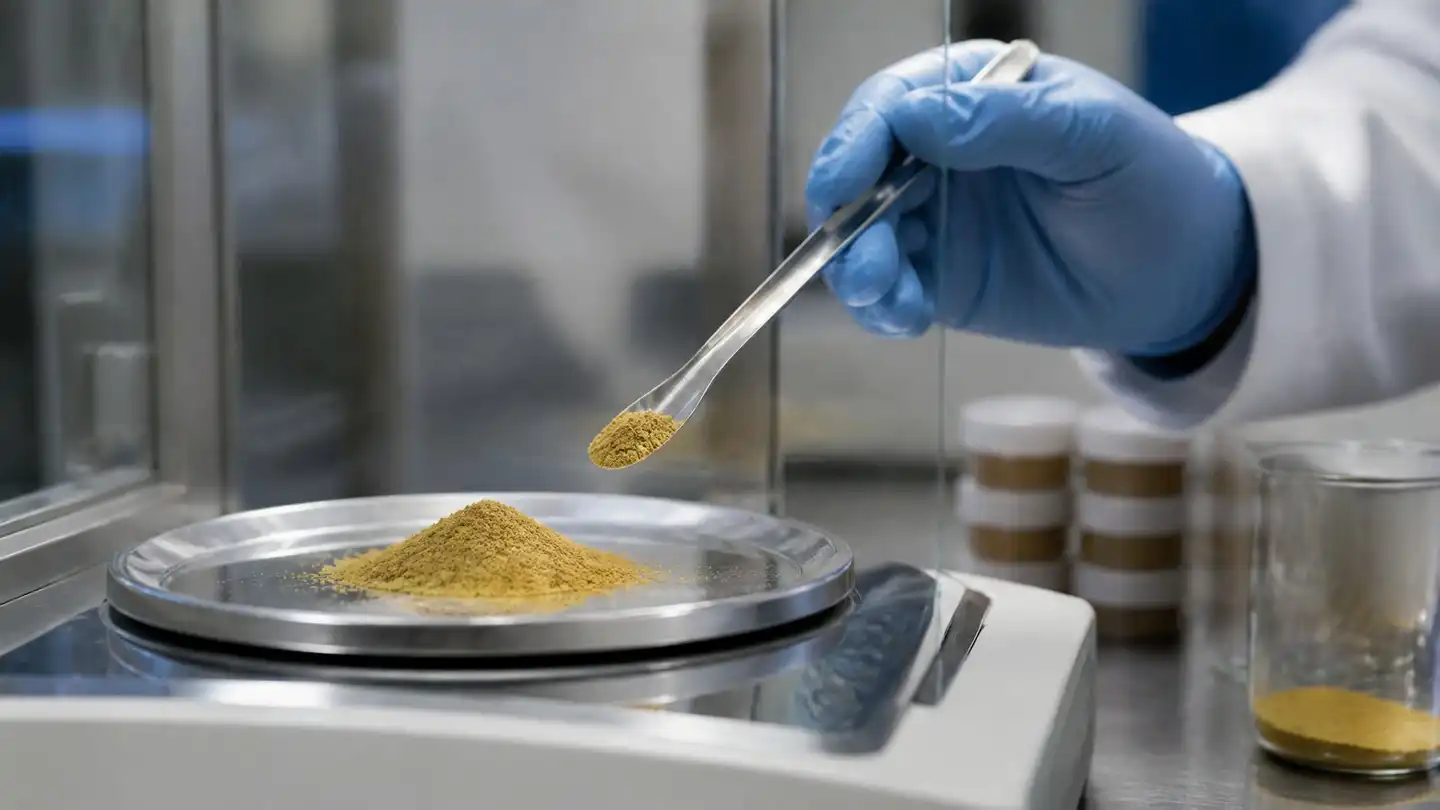
Order size also matters at the start. A 1 kg minimum keeps a first trial affordable and lets a team run two or three matrix variants before committing to a production quantity.
A Pilot Sequence That Answers Compatibility Questions
The most expensive mistakes happen when a concept jumps from a bench beaker to a production run. A staged sequence, with a documented decision at each gate, keeps the cost of finding out low.
| Matrix | Starting inclusion (w/w) | Primary risk | Bench test to run | Suggested check before scale-up |
|---|---|---|---|---|
| Clear RTD beverage | 0.05–0.2% | Haze and sediment | Disperse, hot-fill, hold 14 days at 4 °C and 30 °C | No visible sediment; turbidity stable against control |
| Protein powder blend | 0.1–0.4% | Assay recovery, aroma | Dry blend, assay finished powder, sensory screen | Marker within label tolerance; aroma acceptable to panel |
| Cereal or nut bar | 0.1–0.4% | Moisture migration, hardening | Accelerated storage, texture measurement | Hardness curve matches control; no color shift beyond target |
| Gummy | 0.05–0.2% | Thermal loss at depositing | Deposit trial with temperature logging | Marker retained within agreed loss budget |
| Fermented dairy | 0.05–0.15% | Flocculation, color | Post-fermentation addition, 21-day storage | No whey separation beyond control; L*a*b* in range |
| Instant soup or seasoning | 0.1–0.5% | Flavor carry-over | Reconstitution panel, sachet storage | Flavor profile within agreed deviation |
| Capsule or tablet premix | 0.2–1.0% | Blend uniformity | Ten-point sampling, RSD calculation | RSD below your internal limit at discharge |
Read the inclusion ranges as starting points, not recommendations; every one of them has to be re-established in your own matrix and equipment. For grade selection across these formats, the glucoraphanin-standardized range described on our glucoraphanin broccoli seed extract page is the usual entry point, while high-load formats are covered under sulforaphane powder grades.
Documents to Close Before the First Purchase Order
Technical fit is only half of a supplier qualification. The other half is a document set that a QA team can file and defend: specification sheet with assay methods, lot-specific certificate of analysis, heavy metals and microbiological results, pesticide residue statement, residual solvent statement, allergen and GMO statements, country of origin, particle size, packaging description with food-grade liner, storage conditions, retest period, and a change-control commitment.
Ask how a specification change is communicated and how long a lot is held before release. A supplier that answers these questions in writing, before the order, is a different commercial risk from one that answers them after. Our quality accreditation documentation is available for review at that stage, alongside the product-specific certificates.
Request a Specification Sheet, COA, and a Sample
Send us your target matrix, declared marker basis and unit weight, and we will return the specification sheet, a lot-specific COA and a sample quantity for bench work, together with a short note on likely inclusion levels and process points to watch. If the concept is still open, we can discuss feed-rate calculations and premix design against the broccoli seed extract specification directly. Write to wgt@allwellcn.com.
References
- U.S. Food and Drug Administration. 21 CFR Part 182 — Substances Generally Recognized as Safe. 2024.
- U.S. Food and Drug Administration. 21 CFR Part 184 — Direct Food Substances Affirmed as Generally Recognized as Safe. 2024.
- International Organization for Standardization. ISO 4833-1 — Microbiology of the food chain: Horizontal method for the enumeration of microorganisms, colony count at 30 °C. 2013.
- International Organization for Standardization. ISO 6579-1 — Microbiology of the food chain: Horizontal method for the detection, enumeration and serotyping of Salmonella. 2017.
- International Organization for Standardization. ISO 21527-1 — Microbiology of food and animal feeding stuffs: Horizontal method for the enumeration of yeasts and moulds. 2008.
This article is intended for business-to-business ingredient sourcing and formulation discussion. It does not provide medical, nutritional, or regulatory advice for any specific product or market.