Bulk Green Tea Extract for Beverage Formulation and Functional Ingredient Supply
2026-08-14 16:02:29
When sourcing high-performance ingredients for functional beverages, Bulk Green Tea Extract stands as a strategic choice for manufacturers aiming to deliver measurable health benefits alongside clean-label credibility. Derived from Camellia sinensis through water or ethanol extraction, this concentrated botanical ingredient delivers standardized levels of tea polyphenols, catechins—particularly epigallocatechin gallate (EGCG)—and L-theanine. Its antioxidant potency, metabolic support properties, and natural preservation capabilities position it as an essential functional component in ready-to-drink beverages, dietary supplements, and wellness-focused consumer products targeting the rapidly expanding North American market.
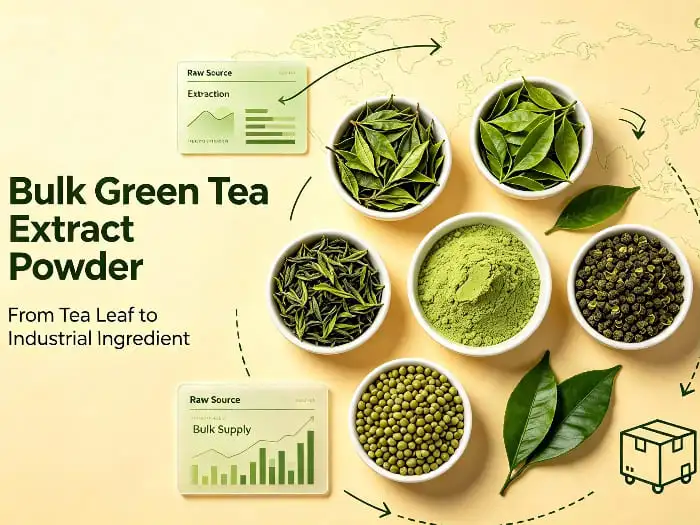
Understanding Bulk Green Tea Extract: Composition, Benefits, and Applications
Bulk Green Tea Extract is made from the unfermented leaves of the tea plant and is a very concentrated mixture of phytochemicals. Unlike matcha or loose-leaf tea leaves, this extract goes through special steps like filtering, concentration, purification, and spray-drying to separate the bioactive compounds and get rid of unwanted parts like extra tannins and volatile oils.
Standardized Active Components Define Quality
Chemical standardization is at the heart of the technical profile of good Bulk Green Tea Extract. The amount of total polyphenols is usually between 50% and 98%, and the amount of catechins is usually between 30% and 80%. The amount of EGCG—the beneficial catechin—can range from 15% to 70%, based on the grade. These standardized requirements help formulators figure out exact doses for claims of effectiveness while keeping consistency from batch to batch. Different physical properties are important. Particle size distribution (usually 80 to 100 mesh) makes sure that particles are evenly spread in liquids, and bulk density (0.3 to 0.5 g/ml) affects how supplement manufacturers figure out how much to put in a capsule.
Functional Benefits Backed by Scientific Research
Bulk Green Tea Extract is a much better antioxidant than many man-made stabilizers, as shown by its ORAC numbers. EGCG gets rid of dangerous free radicals, which lowers reactive stress in cells. Peer-reviewed nutrition journals have released research that shows how it can help heart health by maintaining good cholesterol levels and endothelial function. For beverage makers, this means better formulation benefits, such as longer shelf life, protection against lipid oxidation in fortified drinks, and a real wellness positioning that appeals to health-conscious customers.
Polyphenolic substances do more than fight free radicals; they also stop inflammation by blocking cyclooxygenase enzymes that are involved in inflammation processes. This bioactivity is what makes sports recovery drinks and metabolic wellness formulas work. The thermogenic qualities of catechins, especially when mixed with a modest amount of caffeine, help the body burn energy. Because of this, Bulk Green Tea Extract is an important ingredient in weight loss and pre-workout drinks.
Diverse Applications Across Functional Product Categories
We've seen Bulk Green Tea Extract solve specific formulation problems in a number of different fields. Manufacturers of ready-to-drink functional drinks with acidic pH levels (3 to 4) need to make sure that the drinks stay clear and stable during keeping in the fridge without forming any "tea cream" or precipitates. These technical problems can be fixed with advanced membrane filtration and enzymatic debittering methods that keep the purity of the EGCG. Granular forms of the extract make capsules and tablets for dietary supplements that are made on high-speed equipment easier to flow and compress. This stops common production problems like caps sticking or tablets sticking together when they are pressed. The extract gives you a lot of antioxidants—about 500 mg per serving—in a small package that people are used to seeing from high-end supplement brands.
Comparing Bulk Green Tea Extract Options: How to Choose the Best Fit for Your Product?
When procurement workers choose different types of Bulk Green Tea Extract, they have to make a lot of decisions that affect how well the finished product works, how well it meets regulations, and how it positions itself in the market, and for Green Tea Extract Powder, these decisions include selecting the appropriate catechin concentration, decaffeination level, and particle size to match the specific application requirements. When procurement workers choose different types of Bulk Green Tea Extract, they have to make a lot of decisions that affect how well the finished product works, how well it meets regulations, and how it positions itself in the market.
Extract Concentration Versus Powder Forms
Standard green tea powder is made from ground dried leaves that have 10% to 30% polyphenols. Bulk Green Tea Extract, on the other hand, extracts these chemicals more strongly, giving it polyphenol levels of up to 98%. Dosing costs are directly affected by this difference in concentration: much less extract powder is needed to reach the desired EGCG levels in a beverage recipe than regular tea powder, which saves money on shipping and storage. Taste profiles are also very different. Raw tea powder is very bitter and astringent because it still has some of the tannins in it. But, purified extracts go through processes that make these tastes less strong, which is important for making drinks that people will enjoy.
Organic Certification and Sourcing Standards
Synthetic pesticides, herbicides, and chemical fertilizers are not allowed in the production of organic Bulk Green Tea Extract powder that comes from farms that follow USDA or EU organic standards. This approval solves a very important quality problem: high amounts of pesticide residues are common in conventional tea farming, which can cause problems with international regulations. We follow a strict protocol for screening agricultural residues that is in line with FDA and EU import quarantine rules. Before material goes into production, it is tested for over 400 pesticide compounds. In addition to meeting legal requirements, organic certification helps a product's place in high-end stores where customers are looking for approved clean-label ingredients and are willing to pay more.
Decaffeinated Options for Targeted Formulations
Different types of consumers are very sensitive to caffeine, which is why there is a need for decaffeinated Bulk Green Tea Extract with less than 0.1% caffeine. Our own special decaffeination technology uses supercritical CO2 extraction or water-processing methods to remove caffeine while leaving polyphenols alone. These decaffeinated versions make it possible to make recovery drinks for the evening, health drinks that calm you down, and vitamins for people who are sensitive to caffeine without giving up the metabolic and antioxidant benefits that make people buy. Decaffeinated Bulk Green Tea Extract is necessary for formulation clarity for brands that help people sleep, deal with worry, or feel better in the evening.
Procurement Guide: Sourcing Bulk Green Tea Extract for Your Business Needs
Technical due diligence and strategic source review are needed to make sure you have a steady supply of pharmaceutical- or food-grade Bulk Green Tea Extract.
Identifying Credible Manufacturers and Testing Standards
Differentiating quality in the bulk extract market is based on a number of factors that can be checked. Reputable makers run GMP-certified factories with well-documented quality management systems that give each output lot a Certificate of Analysis. The COAs should include information about the amount of polyphenols, EGCG, heavy metals (like lead, arsenic, cadmium, and mercury), microbes, pesticide residue screening results, and solvent residue tests. We suggest getting third-party confirmation from reputable labs like SGS, Eurofins, or NSF. These labs can check the product's specifications and find impurities that your own testing might miss.
Check the supplier's raw material sourcing chain in addition to the documents. Higher elevations with controlled tea gardens usually produce better phytochemical profiles while lowering exposure to environmental contaminants. It is very important to know what kind of extraction solvent was used. Using food-grade ethanol or purified water to extract things keeps them safe by removing any industrial solvent residues or plasticizer contamination. Industrial-grade solvents are not used in our extraction methods. This makes sure that the amounts of residual solvents, phthalates, and polycyclic aromatic hydrocarbons are safe for medicinal use.
Minimum Order Quantities and Flexible OEM Capabilities
When planning purchases, you need to keep in mind that most suppliers have minimum order quantities of 25 kg to 100 kg for Bulk Green Tea Extract powder. However, some suppliers can work with smaller trial quantities for research and development. Instead of just looking at per-kilogram prices, when comparing pricing structures you should look at the total landed cost, which includes freight, customs duties, and storage. Long-term supply deals can unlock volume savings and priority allocation during times of limited supply, giving businesses strategic benefits in commodity markets that are always changing.
OEM and private label options set real production partners apart from providers who only sell common ingredients. We help clients make their own unique mixes by mixing Bulk Green Tea Extract with botanicals that work well together, such as Garcinia cambogia, L-carnitine, or controlled-release caffeine. Our technical team provides compatibility data that shows how green tea polyphenols interact with other actives in different pH, temperature, and light exposure situations. This information greatly speeds up product development and cuts down on the cost of reformulating.
Optimizing Beverage Formulation with Bulk Green Tea Extract
Integrating Bulk Green Tea Extract into drinks requires finding the right balance between how well it works, how well it tastes, and how stable it is over the course of the intended shelf life.
Dosing Recommendations for Efficacy and Safety
In clinical studies of green tea catechins, daily amounts of 300 mg to 800 mg total catechins are common, with EGCG making up 50 to 70% of that amount, and for Green Tea Extract Powder, this means that, based on the standardization grade, a single-serve functional drink should have between 600 mg and 1,500 mg of a 50% polyphenol Bulk Green Tea Extract per dose, and these doses provide measurable antioxidant benefits without getting close to higher intake limits that could cause stomach sensitivity in people who are more likely to get sick. In clinical studies of green tea catechins, daily amounts of 300 mg to 800 mg total catechins are common, with EGCG making up 50 to 70% of that amount. This means that, based on the standardization grade, a single-serve functional drink should have between 600 mg and 1,500 mg of a 50% polyphenol Bulk Green Tea Extract per dose. These doses provide measurable antioxidant benefits without getting close to higher intake limits that could cause stomach sensitivity in people who are more likely to get sick. To follow the rules, products must clearly list the amount of catechins they contain. This is especially important in places like Canada where health claims need to be backed up by recorded ingredient amounts.
Preserving Antioxidant Activity During Processing
Catechins, especially EGCG, are sensitive to light, heat, and pH levels that are too high. Pasteurization processes that heat drinks at 72°C for 15 seconds don't break down much when the pH stays below 5.0, but long-term heat exposure or neutral pH environments break down a lot of the bioactive content. We've found that encapsulation technologies, such as microencapsulating the extract within lipid matrices or spray-dried carriers, help keep the extract safe while it's being heated. When making cold-fill beverages, no heat is ever exposed, which makes them perfect for high-end functional drinks where keeping as many antioxidants as possible is worth the slightly higher production costs.
Chelating agents, such as citric acid or ascorbic acid, are added to formulation materials to help keep polyphenols stable by removing small metal ions that speed up oxidative degradation. The choice of packaging is also important. Light-sensitive catechins are kept safe during store show and storage by customers in amber glass or opaque PET bottles with UV-blocking additives.
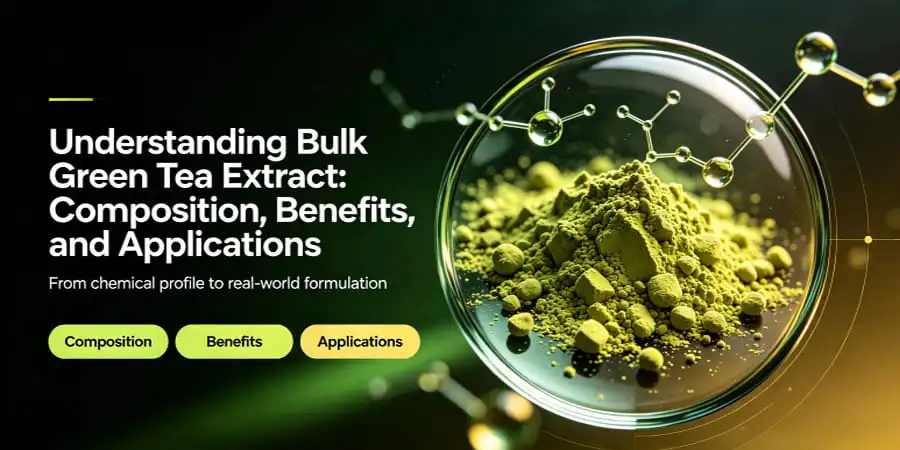
Future Trends and Market Insights for Bulk Green Tea Extract in B2B Supply Chains
The changes in the market for Bulk Green Tea Extract are a reflection of larger customer health trends and changes in the law.
Clean Label and Plant-Based Movement Drives Demand
Consumers' desire for easily recognizable plant-based ingredients keeps growing, and "clean label" marketing affects buying decisions across a wide range of age groups. North American and European governments are putting tighter limits on manufactured colors and chemical preservatives until at least 2026. As a result, Bulk Green Tea Extract is becoming more popular as a natural alternative that has health benefits and marketing benefits. As more beverage brands move away from fake ingredients, they mention organic, non-GMO, and allergen-free Bulk Green Tea Extracts that meet the requirements for clear labeling.
The plant-based health trend includes more than just vegan protein powders. It includes all kinds of useful ingredients. Bulk Green Tea Extract, which comes only from plants and doesn't use any animal-based ingredients, works well with plant-forward product designs. Because it can be used in supplements, drinks, and even cosmetics, it saves brands money on procurement costs when they have more than one product line.
Supply Chain Resilience and Sustainability Certifications
Global tea production is concentrated in a few areas, which makes the supply chain vulnerable to weather events, political unrest, and changes in quality that happen with the seasons. Strategic procurement teams spread their buying across several origin countries, mostly China, India, and Japan. They also build long-term partnerships with vertically integrated suppliers that are in charge of growing, extracting, and checking the quality of the goods. When the market is tight, these partnerships make sure there is a steady supply of materials, even if agricultural conditions change.
As requirements for corporate responsibility grow, sustainability standards like Rainforest Alliance, Fair Trade, and carbon-neutral production claims have a bigger impact on buying choices. We've put money into long-term farming partnerships and extraction technologies that use less energy and have less of an effect on the environment. These meet the standards for institutional procurement for suppliers that work with big food and drink companies.
Conclusion
To find high-quality Bulk Green Tea Extract, you have to find a balance between technical requirements, following the rules, and making sure the supply chain is reliable. The ingredient can be used in functional drinks, dietary supplements, and wellness goods, and there is strong scientific evidence that it can help with metabolism and antioxidants. This makes it an important part of formulation tactics aimed at health-conscious customers. Partnering with manufacturers that offer standard specifications, thorough testing documentation, flexible OEM capabilities, and quick technical support that speeds up product development while lowering formulation risks and regulatory challenges is key to successful procurement.
FAQ
What polyphenol concentration should I specify for beverage applications?
50% to 70% polyphenol extracts are the best mix of effectiveness and cost-effectiveness for healthy ready-to-drink drinks. When room is limited, food supplement pills need the highest active loading possible, which means higher concentrations (80% to 98%) work best. To get the EGCG levels you want, lower concentrations may need higher doses, which can change both the amount of space needed for the mixture and the cost of the ingredients.
How can I verify extract purity before committing to large orders?
Ask for full COA paperwork that includes testing for heavy metals like lead, arsenic, cadmium, and mercury, as well as testing for pesticide residues that includes testing for microbe limits and solvent residue analysis. Get samples that can be tested by a third party in certified labs, and ask the maker for facility certifications that include GMP compliance paperwork and audit reports from certification bodies that are known to be reliable.
Are there safety considerations for high-dose green tea extract formulations?
Some people may have stomach problems if they eat more than 800 mg of catechins every day, especially if they do it on an empty stomach. For daily use items, the right dosage instructions should be included, and time-release technologies or food-matrix delivery systems that slow down absorption rates should be thought about. In some places, regulatory agencies require detailed labels about the amount of caffeine and how much to drink.
Partner With Wellgreen for Reliable Bulk Green Tea Extract Supply
Wellgreen Technology is a GMP-certified Bulk Green Tea Extract maker that provides standardized formulations with anywhere from 50% to 98% polyphenols, as well as full quality paperwork to meet your legal needs. Our supply chain is vertically integrated, which means that we can source our ingredients without using pesticides, use pharmaceutical-grade extraction methods, and offer flexible OEM formulation support that can be tailored to the needs of your drink or supplement. We keep a large inventory on hand so that orders can be filled quickly. Our technical teams are also very responsive and can help with compatibility data and stability testing, which speeds up the time it takes to develop your product. Our team provides stable quality that is backed by third-party testing and full tracking, whether you need organic certifications, decaffeinated versions, or custom catechin ratios. You can email our procurement specialists at wgt@allwellcn.com to get samples, talk about your formulation needs, and get access to full technical specifications. Visit wellgreenherb.com to read detailed information about our products and find out how our production services can help you stay competitive in the market for useful ingredients.
References
1. Cabrera, C., Artacho, R., & Giménez, R. (2006). Beneficial effects of green tea—A review. Journal of the American College of Nutrition, 25(2), 79-99.
2. Lambert, J. D., & Yang, C. S. (2003). Mechanisms of cancer prevention by tea constituents. The Journal of Nutrition, 133(10), 3262S-3267S.
3. Hodgson, J. M., & Croft, K. D. (2010). Tea flavonoids and cardiovascular health. Molecular Aspects of Medicine, 31(6), 495-502.
4. Zheng, X. X., Xu, Y. L., Li, S. H., Liu, X. X., Hui, R., & Huang, X. H. (2011). Green tea intake lowers fasting serum total and LDL cholesterol in adults: a meta-analysis of 14 randomized controlled trials. The American Journal of Clinical Nutrition, 94(2), 601-610.
5. Chacko, S. M., Thambi, P. T., Kuttan, R., & Nishigaki, I. (2010). Beneficial effects of green tea: A literature review. Chinese Medicine, 5(1), 13.
6. Graham, H. N. (1992). Green tea composition, consumption, and polyphenol chemistry. Preventive Medicine, 21(3), 334-350.