Chaga Mushroom: Benefits, Compounds & How to Use It
2026-05-09 13:58:10
The chaga mushroom, whose formal name is Inonotus obliquus, has become a major ingredient in functional foods and nutraceuticals around the world. Chaga extract is a highly sought-after raw material for the development of health-focused products because it contains a wide range of bioactive compounds and grows mainly on birch trees in cold climates. This natural ingredient meets important formulation needs in dietary supplements, functional drinks, and cosmetics because it is high in polysaccharides, beta-glucans, betulinic acid, and melanin. When purchasing professionals look at botanical ingredients like chaga, they need to know about its scientific background, business uses, and sourcing standards in order to make sure the product works well and follows the rules.
Understanding Chaga Mushroom — Nutritional Facts & Key Compounds
Botanical Origins and Natural Habitat
The chaga mushroom does well in woods around the circumpolar poles, which include Siberia, Northern Canada, Alaska, and some parts of Northern Europe. Real chaga grows on living birch trees for 10 to 20 years, getting its nutrients straight from the host. This is different from cultivated mushrooms. The longer growth time concentrates bioactive compounds in the sclerotium, which is dark and looks like charcoal. When it comes to business-to-business buyers, telling the difference between wild-harvested and farmed sources changes both the compound profile and the market positioning. Because it grows with birch trees, wild chaga has more betulinic acid than farmed chaga. farmed chaga, on the other hand, has more controlled growing conditions and a steady supply.
Core Bioactive Compounds
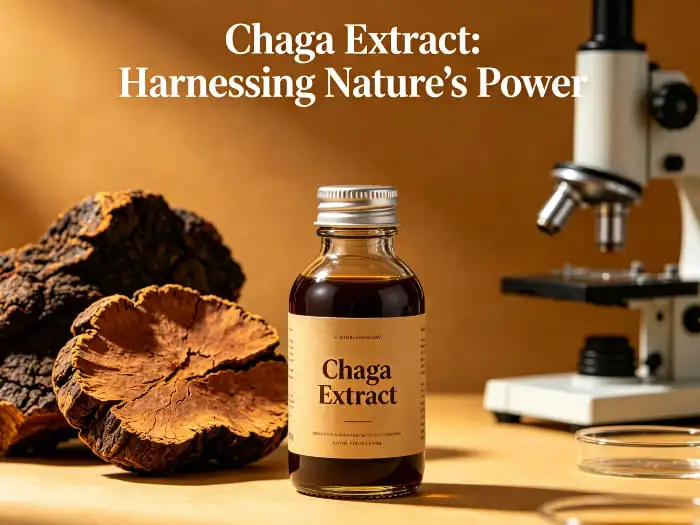
Chaga is known for being therapeutic because it contains a few key types of compounds that set it apart from other medical mushrooms:
Polysaccharides and Beta-Glucans: These are complex sugars that make up 30 to 50 percent of quality extracts. Beta-(1,3)-(1,6)-D-glucans are the main immunomodulating agents. A study in the International Journal of Medicinal Mushrooms shows that they can turn on macrophages and natural killer cells, which helps the defence system work.
For example, betulinic acid is a triterpenoid compound that was transferred from birch bark to the fungus. It has special anti-inflammatory qualities. Studies in pharmaceutical study show that it could help support cellular health, which makes it useful for over-the-counter medicines and functional formulations.
Melanin Complex: Chaga has one of the highest amounts of melanin found in nature, which helps explain why it is such a powerful antioxidant. Because it guards against oxidative stress and UV damage, this compound is showing up more and more in cosmetics.
Trace Minerals: Microorganisms collect minerals from birch sap, like zinc, manganese, and iron, and use them to make supplements more nutritious.
How these compounds are extracted has a big effect on their quantity and concentration. Hot water extraction gets the most polysaccharides, and dual extraction (water and ethanol) gets both polysaccharides that dissolve in water and triterpenoids that dissolve in alcohol. Formulation teams use what they know about these technical factors to help them define products and evaluate suppliers.
Nutritional Profile Comparison
Using ORAC numbers, we can see that chaga has higher antioxidant capacity than reishi or lion's mane mushrooms. Its unique betulinic acid content—most other mushrooms don't have it—allows for unique preparation options. Because of this, product makers can make unique blends that combine chaga with other fungi that work well together, like reishi or cordyceps, to target more than one health route in a single formula.
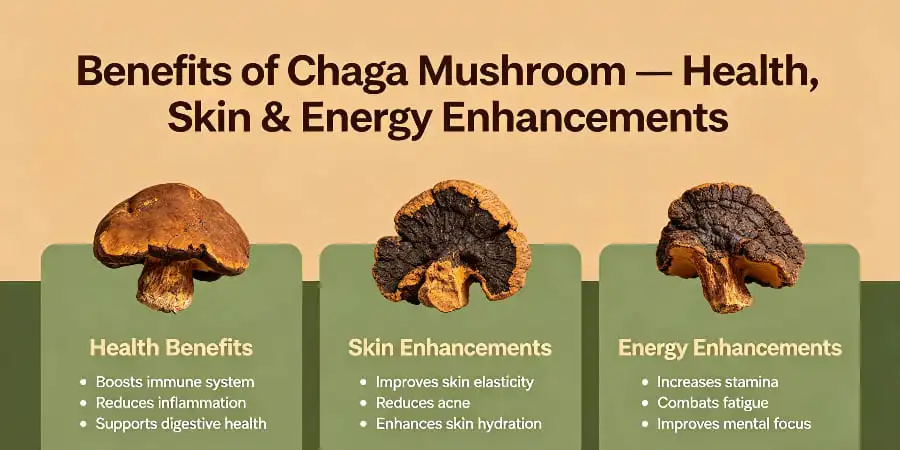
Benefits of Chaga Mushroom — Health, Skin & Energy Enhancements
Immune System Support
Clinical study shows that chaga affects immune function instead of just stimulating it. The beta-glucans connect with certain receptors on immune cells, which helps keep the immune system in balance. A study in Biomolecules & Therapeutics showed that chaga polysaccharides boosted the production of cytokines in test subjects. This suggests that the immune system could be better protected without being overstimulated. Because of this balanced method, chaga can be used as a daily supplement for general health rather than for short-term immune problems.
Chaga mushroom extract has a lot of benefits for nutraceutical companies making immune support formulas. Its standardised polysaccharide content makes sure that the formulas work the same way every time, its water-soluble forms make it easy to mix with other ingredients, and it has a mild flavour profile. These traits help solve common composition problems that come up when making supplements.
Antioxidant and Anti-Aging Properties
Chaga has one of the highest amounts of superoxide dismutase (SOD) found in natural sources. This helps protect cells from damage caused by free radicals. This process explains why it can be used in both supplements and cosmetics that are put on the skin. A study in the Journal of Ethnopharmacology measured how well chaga could lower reactive markers in cellular studies, which backs up its claims that it can slow down the ageing process.
The melanin and polyphenols in chaga are used in serums, creams, and masks that are made to improve skin suppleness and fight photoaging. The natural origin and gentle activity profile are in line with clean beauty trends. Standardised extracts make sure that the results can be repeated between production runs. Beauty brands like that chaga's skin benefits are backed up by science, which helps with marketing claims and educating customers.
Energy and Vitality Enhancement
Unlike energy products that are based on stimulants, chaga supports the metabolism through processes that are called adaptogens. Users say it gives them long-lasting energy without the crash that comes with caffeine, which makes it a good choice for functional beverage uses. Better mitochondrial function and less oxidative stress at the cellular level make the process work. This makes chaga a good addition to energy drinks, protein blends, and morning fitness drinks that are aimed at health-conscious customers.
A comparison with cordyceps, which is another energy-boosting herb, shows that its actions are not duplicated but rather add to each other. Product designers often combine the two in high-end formulations. This creates synergistic effects that allow goods to have higher prices and stand out in crowded markets.
Safety Profile and Considerations
Chaga has a great safety record, with few known side effects in the scientific literature. But procurement workers should be aware of a few things: people who take blood thinners should be careful because of possible drug interactions; people with autoimmune diseases should talk to their doctors before using. These things affect how products must be labelled and how customers are taught about products.
For suppliers who work with pharmaceutical and nutraceutical companies, quality control measures like heavy metal screening and microbiology tests are very important. Wellgreen Technology's GMP-certified manufacturing makes sure that USP and EP standards for botanical ingredients are strictly followed. This meets the needs of regulators in all foreign markets.
How to Use Chaga Mushroom — From Raw to Finished Products
Traditional Preparation Methods
In the past, people in Siberia and Northern Europe made a decoction by simmering chunks of chaga in hot water for a long time. With this old method, you can get polysaccharides that dissolve in water but not many molecules that dissolve in alcohol. Even though this method is real, it has problems with bioavailability that can be fixed with current extraction technology.
To make classic chaga tea, you need to break up dried chaga into small pieces, add them to water in a 1:5 ratio, and let it simmer for a few hours. The dark tea that is made has mild to slightly bitter flavours that go well with natural sweeteners or can be mixed into drinks that aren't coffee. People who want to eat healthier and eat more whole foods still like this way of preparing food.
Modern Extract Forms and Applications
Modern processing turns raw chaga into forms that are highly digestible and can be used in business:
- Hot Water Extract Powder: This form concentrates polysaccharides while getting rid of chitin, which the body can't handle. Standardised to have 30–50% carbohydrate content, it mixes easily in drinks and can be used to make capsules. It's perfect for practical drinks where looks are important because it has a neutral colour and a mild flavour.
- Dual Extraction Powder: Using both hot water and ethanol to separate the powder brings out all of the bioactive compounds, including polysaccharides that dissolve in water and triterpenoids that dissolve in alcohol. This version has the most therapeutic potential and is considered the best in the supplement market. Quality standards usually call for at least 30% carbohydrates and 2% betulinic acid.
- For brands without encapsulation skills, pre-encapsulated chaga extract makes manufacturing easier. These "turnkey" methods make production easier while keeping the stability and shelf life of the ingredients.
- Liquid Extracts: Alcohol-based medicines can be absorbed quickly and come in a range of doses, but they don't last long and are hard to ship in bulk. This style is good for niche markets that value traditional ways of preparing herbs.
Each style has its own benefits when it comes to bioavailability, application flexibility, and cost. When making drinks, formulators look for extracts that dissolve easily in water and spread out well. High-end supplement brands choose two extracts to get full compound profiles. When buying teams understand these technical differences, they can perfectly match raw materials to product needs.
Quality Sourcing Criteria for B2B Buyers
If you want to find good chaga mushroom extract suppliers, you need to look at more than just price:
Source Verification: Chaga that is collected in the wild from birch woods has real compound profiles, while chaga that is grown in a lab gives a consistent supply. Transparent suppliers keep records of where the crops are harvested and how they are collected in a way that doesn't harm the earth and follows the law.
- Analytical Testing: The Certificate of Analysis (COA) should show that the polysaccharide content was measured using UV-Vis spectroscopy, that the amount of heavy metals was below the regulatory limit, and that the microbiology results met supplement industry standards. Using an enzyme-based assay to measure the beta-glucan level is another way to make sure the quality.
- Extraction Methodology: Knowing whether sources use hot water, dual extraction, or other methods helps you guess the profiles of compounds and whether they will work in certain situations. Some companies offer versions that work better in drinks and dissolve more easily, which helps with certain formulation problems.
- Certification Portfolio: Organic certification (USDA, EU), GMP compliance, ISO standards, and Kosher/Halal certifications open up new markets and show that the business is running at a high level. These qualifications lower the risk for buyers and help with strategies for global distribution.
- Supply Chain Stability: Because chaga is a wild harvest and is only collected during certain times of the year, sellers who can show that they have a lot of stock and well-established collection networks are very important for supply security. This is especially important for brands that are expanding into new areas or making more products.
Market Comparison & Procurement Guide for B2B Buyers
Comparative Analysis with Other Medicinal Mushrooms
There are many different kinds of functional mushrooms, and each one has its own benefits. Product creation and market strategy are guided by how well you understand your competitors' positions.
Chaga has a lot of betulinic acid and antioxidants, which makes it a good choice for anti-aging and cell health uses. Reishi (Ganoderma lucidum) has stronger adaptogenic qualities and triterpene profiles that help the body deal with stress. This means that it works better with other ingredients rather than competing with them in a formulation. Lion's mane, or Hericium erinaceus, supports nerve growth factors to improve cognitive performance, making it a unique product in its own right.
Turkey tail (Trametes versicolor) and cordyceps (Cordyceps militaris) both help the immune system and give you energy, which means that they can be combined in ways that work well together. The special qualities of each species are used in these complicated blends, which supports premium positioning and broad wellness claims.
More and more, product makers are choosing mushroom blends that combine three to five species in standard ratios. This method works well for people who want complete answers and lets brands stand out by using special formulas. OEM manufacturers and private-label producers can get a lot of value from suppliers who offer mushroom complexes that have already been mixed or technical help for developing custom ratios.
Best Practices for Bulk Procurement
Through systematic evaluation methods, good chaga procurement strategies find a balance between quality, cost, and supply reliability.
- Qualification of Suppliers: Verifying manufacturing skills and quality systems through facility audits, which can be done in person or by a third-party inspection service. Ask for client references from well-known supplement names to make sure the supplier is reliable and can solve problems.
- Sample Testing Protocol: Before placing a big order, get samples to be tested by a separate lab to confirm the amount of polysaccharides, heavy metals, pesticides, and microbiology parameters. This investment stops quality problems that cost a lot of money and backs up what the provider says.
- Structure of the Contract: Talk about agreements that spell out quality standards, shipping times, and pricing that is based on the number of orders. When you build long-term ties with minimum order commitments, you can often get better prices and faster delivery during shortages.
- Regulatory Documentation: Make sure that sellers provide all the paperwork needed to clear customs and follow the rules in the final market. This could include phytosanitary certificates, organic certifications, and GMP attestations.
- Logistics: Because chaga extract is stable, it can be shipped in normal ways. However, making sure it is properly packaged to protect it from moisture and contamination is important to keep it from going bad during travel. Suppliers who have shipped goods internationally before show that they know what paperwork is needed and the best way to get the goods to their destination.
Industry Trends and Supplier Landscape in 2026
The market for medicinal mushrooms keeps growing thanks to health trends among consumers and science proof of traditional uses. According to market studies, functional mushroom ingredients are growing by 12 to 15 percent each year. Chaga continues to hold a strong position in the premium supplement and functional beverage categories.
There are a few things that all trustworthy suppliers have in common: they are open about where their products come from and how they were harvested; they invest in extraction technology to make sure that the extracts are always the same; they can do a wide range of analytical tests; and they have helpful technical support teams that can help with formulation problems. Companies that keep a lot of inventory on hand protect buyers from the yearly changes that come with getting wild-harvested ingredients.
Wellgreen Technology is a good example of these best practices because they use GMP-certified manufacturing, standardised polysaccharide control, well-established supply chain systems, and help for OEM customisation. Our forms of chaga extract that are optimised for drinks solve problems that formulation teams often have with solubility and colour stability. To help clients make unique goods that meet the needs of specific markets, the technical team helps with the development of mushroom combination formulations.
Conclusion
Chaga mushroom is a widely available, scientifically proven ingredient that can be used in a wide range of nutraceutical, functional food, and cosmetic products. Its high polysaccharide content, unique betulinic acid profile, and high antioxidant capacity support immune health, slow down ageing, and boost energy, all of which are supported by study. For procurement workers to successfully source chaga, they need to know about the different ways that botanical ingredients are extracted, the quality standards used in analysis, and how the supply chain works when they are wild-harvested. The standard extract forms we have now solve problems with bioavailability from the past and make sure that commercial formulations always have the same amount of potency. As the need for natural ingredients backed by proof keeps growing, chaga extract puts brands at the meeting point of ancient wisdom and modern science. This gives brands compelling ways to set their products apart in competitive wellness markets.
FAQ
What distinguishes chaga extract powder from regular chaga powder?
Raw chaga powder consists of ground fungal material containing indigestible chitin cell walls that limit bioavailability. Chaga extract powder undergoes hot water or dual solvent extraction processes breaking down these cell walls and concentrating bioactive compounds—primarily polysaccharides and triterpenoids. Quality extracts standardize specific compound concentrations (typically 30-50% polysaccharides), ensuring consistent efficacy across production batches. This standardization addresses the primary concern procurement teams face: reliable, reproducible potency supporting product claims and consumer expectations.
How can buyers verify authentic wild-harvested chaga quality?
Reputable suppliers provide comprehensive documentation including harvest location details, organic certifications (where applicable), and detailed analytical testing results. Certificate of Analysis should confirm polysaccharide content, beta-glucan levels, heavy metal screening, pesticide residues, and microbiology parameters. Third-party laboratory verification adds additional assurance. Betulinic acid presence indicates genuine birch-sourced material, as this compound transfers from host trees. Requesting supplier references from established brands and conducting periodic independent testing maintains quality assurance throughout long-term supply relationships.
Partner with a Trusted Chaga Extract Supplier
Wellgreen Technology delivers premium standardized chaga extract for nutraceutical, functional beverage, and cosmetic applications. Our GMP-certified facility ensures consistent polysaccharide content, rigorous heavy metal screening, and microbiology compliance meeting international regulatory standards. We maintain substantial inventory supporting both established production schedules and rapid scale-up requirements. Our technical team provides formulation consulting for mushroom blend development and beverage application optimization. Whether you need research quantities or commercial-scale supply, we offer flexible minimum order quantities and OEM customization capabilities. Contact our team at wgt@allwellcn.com to discuss your specific requirements, request product specifications, or arrange sample testing. As a reliable chaga extract manufacturer, we're committed to supporting your product development success through quality ingredients and responsive technical partnership.
References
Glamočlija, J., Ćirić, A., Nikolić, M., Fernandes, Â., Barros, L., Calhelha, R. C., ... & Soković, M. (2015). Chemical characterization and biological activity of Chaga (Inonotus obliquus), a medicinal "mushroom". Journal of Ethnopharmacology, 162, 323-332.
Szychowski, K. A., Skóra, B., Pomianek, T., & Gmiński, J. (2021). Inonotus obliquus – from folk medicine to clinical use. Journal of Traditional and Complementary Medicine, 11(4), 293-302.
Lee, I. K., Kim, Y. S., Jang, Y. W., Jung, J. Y., & Yun, B. S. (2007). New antioxidant polyphenols from the medicinal mushroom Inonotus obliquus. Bioorganic & Medicinal Chemistry Letters, 17(24), 6678-6681.
Shashkina, M. Y., Shashkin, P. N., & Sergeev, A. V. (2006). Chemical and medicobiological properties of chaga. Pharmaceutical Chemistry Journal, 40(10), 560-568.
Balandaykin, M. E., & Zmitrovich, I. V. (2015). Review on Chaga medicinal mushroom, Inonotus obliquus (higher Basidiomycetes): Realm of medicinal applications and approaches on estimating its resource potential. International Journal of Medicinal Mushrooms, 17(2), 95-104.
Zhao, F., Mai, Q., Ma, J., Xu, M., Wang, X., Cui, T., ... & Han, G. (2015). Triterpenoids from Inonotus obliquus and their antitumor activities. Fitoterapia, 101, 34-40.