Lion's Mane Mushroom Benefits, Usage, and Side Effects
2026-05-09 13:58:09
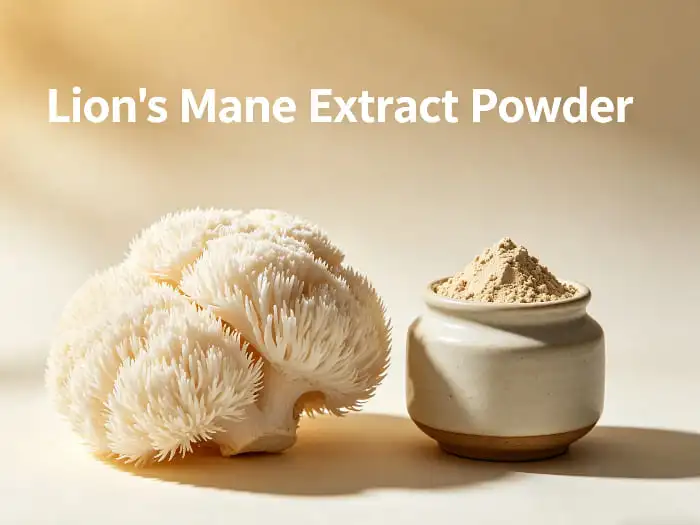
Lion's mane extract is a new functional mushroom ingredient that is changing how brain health products are made in the nutraceutical and functional food industries. This medicinal powder comes from the fruiting bodies of Hericium erinaceus. It has polysaccharides and hericenones that help make nerve growth factors, which clears the mind and helps you concentrate. More and more clinical evidence supports its neuroprotective qualities, which makes it a key ingredient in brain health supplements, functional beverages, and mushroom blends that help people remember things and focus better in the competitive wellness market.
Understanding Lion's Mane Mushroom Extract
Lion's mane mushroom extract is a concentrated form of Hericium erinaceus. It is made by using two different extraction methods to separate polysaccharides, beta-glucans, erinacines, and hericenones. Professional-grade extracts are different from raw mushroom powders because they go through hot water and ethanol extraction to make the active ingredients more bioavailable and consistent. This complex processing gets rid of variations, giving constant potency that is needed for large-scale formulation.
What Sets Premium Extracts Apart?
The extraction method has a direct effect on how well the ingredient works. The best lion's mane extract comes from growing bodies instead of mycelium, which means it has higher levels of polysaccharides. Fruiting body extracts usually have 30 to 50 percent polysaccharides, while goods made from mycelium have less active compounds. Modern methods of extraction keep heat-sensitive hericenones and concentrate water-soluble polysaccharides. This makes ingredients that can be used in pills, tablets, and drinks that need specific solubility profiles.
Standardization and Quality Markers
Standardised standards that allow for repeatable product claims are important to industrial buyers. Premium extracts have well-defined polysaccharide ratios, controlled microbial counts, and heavy metal testing that proves they are safe. GMP-certified manufacturing makes sure that each batch is the same, which meets regulatory standards for both supplements and functional foods. Pharmaceutical and nutraceutical brands need to be able to track their raw material suppliers, and transparent sourcing paperwork and third-party testing certificates give them that.
Key Benefits of Lion's Mane Extract for Brain Health
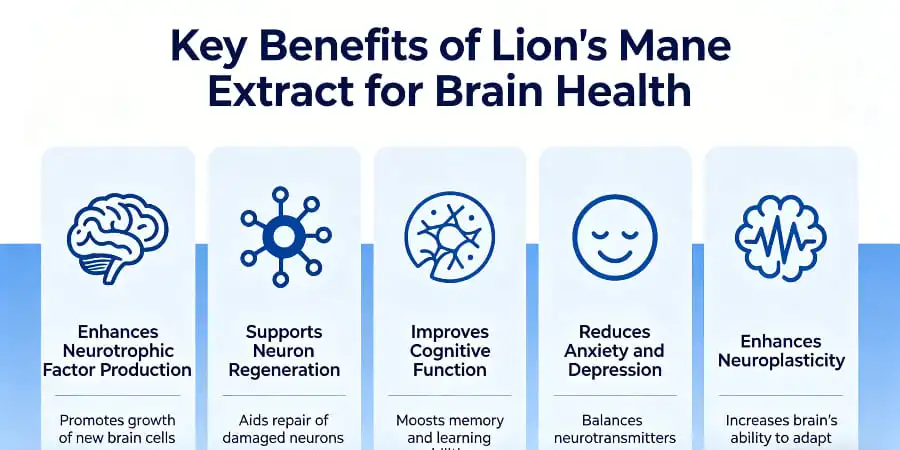
The main reason for the high demand for lion's mane extract in food supplement forms is to improve cognitive function. Researchers have found that this useful mushroom increases the production of nerve growth factors. This helps neurones grow and synapses change, which are important for learning and remembering.
Neurogenesis and Cognitive Function
Lion's mane polysaccharides help neurones differentiate and axons grow, according to clinical tests. In one randomised controlled study, people who ate 3 grammes of it every day had better cognitive function scores than people who were given a placebo. These results support product positioning for older people who are worried about memory loss and younger people who want to improve their mental performance. Brain-derived neurotrophic factor pathways are stimulated, which helps keep neurones healthy and improves the speed at which information is processed.
Mood Regulation and Mental Wellness
New study is looking into how lion's mane affects emotional balance. A 2019 study found that people who took Hericium erinaceus extract supplements for eight weeks had less anxiousness and irritability. The extract seems to change inflammatory markers that are linked to mood problems, which could lead to new ways of making supplements that help with stress. This dual action—improving cognitive function while also providing emotional support—makes product descriptions for holistic brain health solutions that aim for mental clarity without the side effects of stimulants more appealing.
Neuroprotection and Long-Term Brain Health
Oxidative stress and inflammation play a big role in how neurological diseases get worse. Lion's mane extract is an antioxidant that keeps neurones from getting hurt by free radicals. Studies in the lab show that these bioactive substances may stop the formation of beta-amyloid plaques, which are linked to memory loss. While human studies remain preliminary, these protective mechanisms position the ingredient as a proactive brain health solution. Lion's mane is being used more and more in products that aim to make people live longer, along with other nootropics like phosphatidylserine and citicoline, which work together to protect neurones.
Proper Usage and Dosage Guidelines for Lion's Mane Extract
To use supplements effectively, you need to know the right amount to take, when to take it, and how to give it. The best dose varies on the concentration of the extract, how it will be used, and the health results that are wanted.
Recommended Intake Levels
A standard lion's mane extract dose of 500 to 3000 mg per day is often used in clinical studies. Most formulations for cognitive enhancement have between 750 mg and 1500 mg of polysaccharides per serving, which is enough to support nerve growth factor action. The higher end of this range may be used in mood-supporting apps, while general health apps use maintenance doses of 500 to 750 mg. Standardisation of the extract is very important. For example, a 30% polysaccharide extract needs a different dose than a 10% specification to give the same amount of bioactive compounds.
Delivery Format Considerations
Capsules and pills are good for supplement brands that want to make sure their products last a long time and follow the rules. Because lion's mane has a neutral flavour, these solid forms work well with it, so there are no problems with hiding tastes. Powder forms are versatile for using in healthy drinks and mixing with protein blends. To keep from settling in liquid mixtures, beverage-grade extracts need to have the right particle size distribution and absorption properties. Using advanced spray-drying methods, water-dispersible forms are made that can be used in ready-to-drink cognitive health drinks and mushroom coffee alternatives that are becoming more popular.
Integration and Synergistic Combinations
Timing suggestions suggest taking it every day instead of randomly, because the benefits to the brain build up over weeks. Many formulators mix lion's mane with ingredients that work well together. For example, Rhodiola rosea and Bacopa monnieri work well together to help with stress and memory, and together they make full nootropic stacks. Because the mushroom extract is mild, it can be mixed with cordyceps to boost energy or reishi to change the immune system in multi-mushroom complexes. These approaches work together to improve many areas of health, making the product more valuable for picky customers looking for all-around brain health options.
Potential Side Effects and Safety Considerations
Even if a product is usually thought to be safe, it is still important to know about any possible side effects and quality issues. Lion's mane mushroom extract's place in standard supplement formulas is backed up by a lot of safety data.
Common Side Effects and Mitigation
Reports of side effects are still small and rare. About 5% of users experience mild digestive discomfort, usually when they first start taking supplements or when they take higher amounts. Tolerance adaptation can happen by starting with lower input levels and slowly raising them. People who are sensitive to mushrooms have had very rare allergic responses. To keep customer risks to a minimum, product labels should include allergen warnings and directions on how to use the product. Long-term safety studies that last between 12 and 16 weeks show that there are no major side effects, which supports the use of long-term supplementation plans that are popular in cognitive health plans.
Quality Control and Sourcing Integrity
The biggest safety worry with mushroom extracts is the chance of contamination. Heavy metals, herbicide residues, and microbial contamination can make a product less safe if controls during production and growth aren't good enough. Reliable sellers give full testing records that include levels of lead, arsenic, cadmium, and mercury, as well as microbial analysis for moulds, yeasts, and pathogens. Organic approval means that the growers follow rules that limit the use of chemicals. By working with suppliers who have open quality systems that include batch tracking, weather monitoring, and tested methods that have been proven to work, you can be sure that the safety profiles will always meet pharmaceutical-grade standards.
Regulatory and Population-Specific Considerations
Women who are pregnant or nursing should talk to their doctors before taking supplements because there isn't a lot of safety information for these groups yet. Although no major drug interactions have been found, there are some worries about blood-thinning medicines because mushroom polysaccharides have mild anticoagulant properties. Formulators that want to sell medical nutrition products benefit when sellers keep track of GRAS status paperwork and follow FDA rules for dietary supplements. International markets may need extra certifications. For example, EU clients often ask for Novel Food approvals, and some Asian markets need proof of traditional use to support regulatory submissions.
Choosing the Right Lion's Mane Extract Supplement – A B2B Decision-Making Guide
In order to choose the right extract specifications, the properties of the raw materials must be in line with the manufacturing capabilities, goal applications, and marketing strategies. Decision frameworks help teams in charge of buying things look at their options in a structured way.
Format Selection for Manufacturing Needs
Manufacturers of capsules and tablets try to keep the particle sizes uniform, the bulk density just right, and the moisture content fixed. For direct compression or encapsulation methods, lion's mane mushroom extract powders should have good flow properties and be easy to compress. Liquid formulators need to know how to dissolve ingredients. Standard extracts might need emulsifiers or dispersing agents, while spray-dried forms can mix better with water, which is important for clear beverage uses. Cost factors weigh the concentration of the extract against the amount that needs to be taken. An extract with higher potency may offer better value, even if it costs more per unit, because it lowers the number of capsules or dose sizes that need to be used.
Organic Versus Conventional Specifications
More and more, consumers, especially those who buy high-end supplements, want products that are certified organic. Organic lion's mane extracts command higher prices on the market, but they also help businesses stand out and fit with the clean-label positioning. The certification limits what can be used for growing and processing, which could affect output and production times. Conventional extracts are good for value-oriented product lines because they are cost-effective and meet quality standards through strict testing methods. This choice should be based on a study of the market. Brands that are aimed at natural food channels and health-conscious consumers usually put an emphasis on organic sourcing, while mass-market formulations may focus on competitive pricing made possible by conventional specs.
Customization and Private Label Opportunities
Forward-thinking providers do more than just sell basic ingredients; they also help with formulations. With custom blending services, brands can make their own mushroom blends by adding lion's mane with reishi, cordyceps, or turkey tail, which are all good for you. These mixes of different mushrooms give you intellectual property rights and a unique place in the market. Private labelling goes even further, with contract makers developing finished products, helping with regulatory paperwork, and coming up with ways to package them. OEM partnerships help brands that don't have their own manufacturing facilities get into the market quickly. Successful collaborations find a balance between minimum order amounts and inventory risk. This is especially important for new brands that want to see how well the market responds to them before they start making more.
Brands that carefully use lion's mane extract can make a lot of money in the growing nootropic market segment. Market research shows that sales of brain health supplements grow by more than 12% every year. This is because the population is getting older and millennials are focused on getting things done. Marketing works better when goods are positioned around specific benefits, like helping seniors remember things, helping professionals focus, or balancing moods to deal with stress. More and more, buying choices are based on ingredient transparency, scientific support, and quality certifications. This makes supplier partnerships with strong documentation and technical support capabilities important strategic assets.
Conclusion
Lion's mane extract has proven to be a scientifically valid functional ingredient that meets the needs of many market groups for cognitive health. Its polysaccharide-rich makeup helps with neurogenesis, neuroprotection, and mood control, which makes it easy to mix with other ingredients to make dietary supplements, functional drinks, and combination nootropics. Quality factors, such as where the growing bodies come from, how they are extracted, and how thoroughly they are tested, have a direct effect on how well and safely the product works. Understanding dosage guidelines, the benefits of different delivery formats, and the ability to customise products helps businesses make smart purchasing decisions that match the choice of raw materials with their brand positioning and production capabilities. This lets them take advantage of growing brain health market opportunities.
FAQ
What is the recommended daily dosage for cognitive support?
Clinical research supports 750-1500 mg daily of standardized lion's mane extract containing 30% or higher polysaccharide content for cognitive enhancement applications. Lower maintenance doses around 500 mg suit general wellness formulations, while mood support products may incorporate up to 3000 mg daily based on published studies. Dosage adjustments depend on extract standardization levels and combination with complementary nootropic ingredients.
Can lion's mane extract interact with medications?
Current evidence shows minimal drug interaction risks. Theoretical concerns exist regarding anticoagulant medications due to polysaccharides' mild blood-thinning properties, though clinical significance remains unestablished. Individuals taking immunosuppressants should consult healthcare providers, as beta-glucans may modulate immune function. These precautions should appear in appropriate product labeling and consumer guidance materials.
How do I verify quality during bulk procurement?
Request comprehensive certificates of analysis documenting polysaccharide content via validated HPLC methods, heavy metal testing meeting USP standards, microbial analysis including total plate counts and pathogen screens, and pesticide residue testing. Reputable suppliers provide batch traceability, stability studies, and third-party verification. Site audits or GMP certifications offer additional assurance of manufacturing controls and quality systems supporting consistent product integrity across supply chains.
Partner with Wellgreen for Premium Lion's Mane Extract Supply
Wellgreen Technology stands ready to support your cognitive health formulation initiatives with pharmaceutical-grade lion's mane extract sourced from certified fruiting bodies. Our GMP-certified manufacturing facilities produce standardized extracts featuring verified polysaccharide concentrations up to 50%, meeting the exacting specifications nutraceutical and pharmaceutical applications demand. We maintain substantial inventory enabling rapid fulfillment, while our technical team provides formulation consultation for beverage-grade solubility optimization and multi-mushroom complex development. As an experienced lion's mane extract supplier, we offer flexible minimum order quantities supporting both emerging brands and established manufacturers, complete with batch-specific certificates of analysis, stability data, and regulatory documentation. Contact our expert team at wgt@allwellcn.com to request samples, discuss custom specifications, or explore OEM partnership opportunities that accelerate your product development timelines.
References
Mori K, Inatomi S, Ouchi K, Azumi Y, Tuchida T. Improving effects of the mushroom Yamabushitake (Hericium erinaceus) on mild cognitive impairment: a double-blind placebo-controlled clinical trial. Phytotherapy Research. 2009;23(3):367-372.
Nagano M, Shimizu K, Kondo R, Hayashi C, Sato D, Kitagawa K, Ohnuki K. Reduction of depression and anxiety by 4 weeks Hericium erinaceus intake. Biomedical Research. 2010;31(4):231-237.
Friedman M. Chemistry, Nutrition, and Health-Promoting Properties of Hericium erinaceus (Lion's Mane) Mushroom Fruiting Bodies and Mycelia and Their Bioactive Compounds. Journal of Agricultural and Food Chemistry. 2015;63(32):7108-7123.
Lai PL, Naidu M, Sabaratnam V, Wong KH, David RP, Kuppusamy UR, Abdullah N, Malek SN. Neurotrophic properties of the Lion's mane medicinal mushroom, Hericium erinaceus. International Journal of Medicinal Mushrooms. 2013;15(6):539-554.
Li IC, Lee LY, Tzeng TT, Chen WP, Chen YP, Shiao YJ, Chen CC. Neurohealth Properties of Hericium erinaceus Mycelia Enriched with Erinacines. Behavioural Neurology. 2018;2018:5802634.
Zhang J, An S, Hu W, Teng M, Wang X, Qu Y, Liu Y, Yuan Y, Wang D. The Neuroprotective Properties of Hericium erinaceus in Glutamate-Damaged Differentiated PC12 Cells and an Alzheimer's Disease Mouse Model. International Journal of Molecular Sciences. 2016;17(11):1810.