Exploring the Detoxifying Properties of Red Clover Extract
2026-04-15 15:40:56
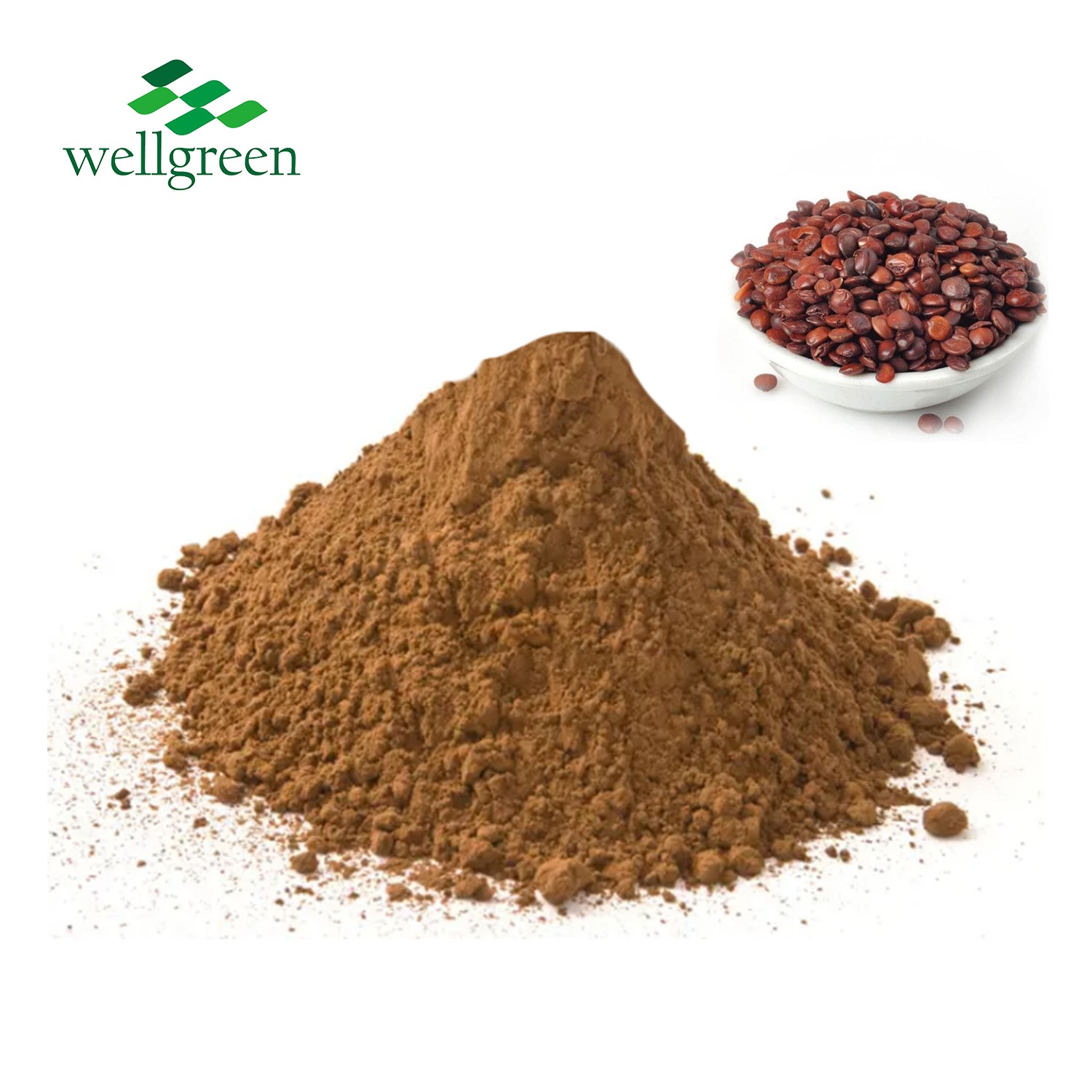
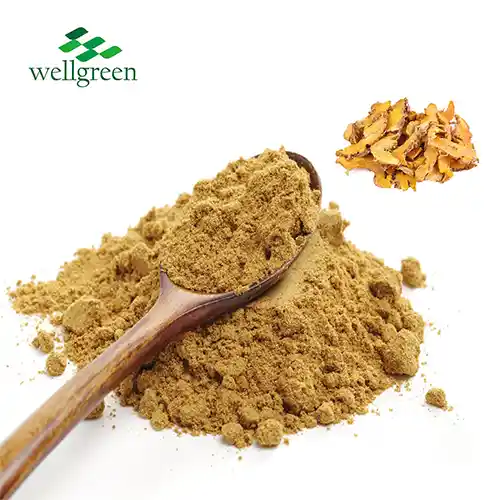
It comes from the flowering tops and aerial parts of Trifolium pratense. Red clover extract powder is a powerful plant ingredient that is known for its ability to detoxify. This tan-yellow to greenish powder is standardized to contain 8% to 40% isoflavones, which include daidzein, genistein, biochanin A, and formononetin. It is a natural antioxidant that fights free radicals and helps the liver's detoxification processes. The isoflavone profile helps clean the body's systems by increasing the activity of liver enzymes and making it easier for cellular waste to leave the body. For people who buy things for other people in the nutraceuticals, medicines, and functional foods industries, knowing how red clover detoxifies is important for making effective formulas that deal with oxidative stress and metabolic health problems in today's wellness market.
Understanding Red Clover Extract Powder and Its Detoxifying Benefits
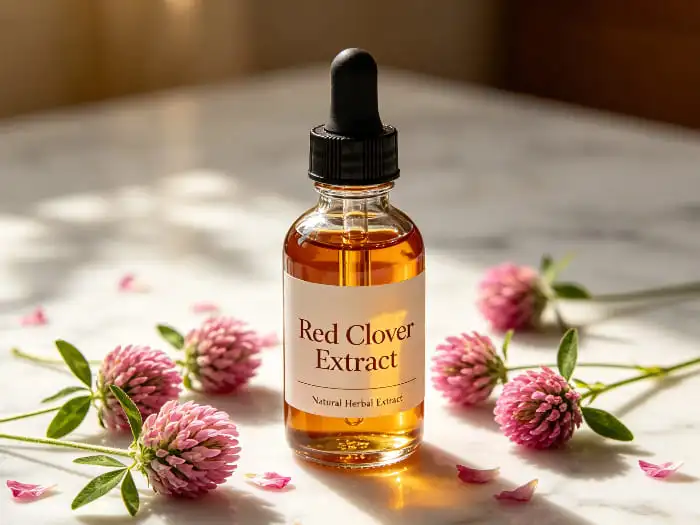
The legume family includes red clover, which grows in large amounts in cold areas. Bioactive isoflavones from the plant's blooming heads are concentrated during the extraction process, which makes a standard powder that can be used in industry. Red clover extract powder, in contrast to whole herb products, has constant potency and reproducible biological activity, which is necessary for commercial formulation.
The Botanical Origin and Active Composition
There are four main isoflavones in Trifolium pratense that add to its therapeutic properties. Of the chemicals found in fresh plants, biochanin A and formononetin are the most common. Daidzein and genistein are found in smaller amounts but have big effects on the body. Manufacturers use solvent extraction and spray-drying methods during processing to reach specific isoflavone concentrations that range from 8% for basic uses to 40% for high-end formulations that aim to improve clinical results.
Flavonoids, phenolic acids, and coumarins are also part of the phytochemical matrix. They work together with isoflavones to make them more powerful antioxidants. This profile of multiple components sets red clover apart from single-compound isolates by offering a wider range of biological action across a number of detoxification pathways.
Mechanisms of Detoxification Support
Red clover extract powder has a number of interconnected processes that work together to detoxify the body. DPPH and ORAC tests show that isoflavones have strong free radical scavenging action, which protects cell structures from oxidative damage. This antioxidant action helps Phase II detoxification enzymes like glutathione S-transferase and UDP-glucuronosyltransferase do their job and saves hepatocytes from damage caused by toxins.
Biomarkers of the liver got better after taking red clover supplements, according to clinical study. After twelve weeks of taking isoflavone, a study of perimenopausal women found lower amounts of inflammatory cytokines in their blood and better lipid profiles. It looks like the extract changes Nrf2, which is a master driver of antioxidant response elements that raises the levels of detoxifying enzymes all over the body.
In addition to helping the liver work, red clover isoflavones also help the kidneys get rid of waste products from metabolism and improve lymphatic flow. The phytoestrogens attach to the estrogen receptor beta (ERβ), which changes the patterns of gene expression that control how cells heal and get rid of toxins. Because of these chemical interactions, red clover is especially useful for formulas that help with hormone-related detoxification problems.
Scientific Evidence Supporting Detox Claims
Several tests in vitro and on animals have shown that parts of red clover can help the body get rid of toxins. Biochanin A stops lipid breakdown and malondialdehyde formation, which are both signs of oxidative stress, according to research published in phytotherapy journals. Additionally, more research shows that formononetin protects the liver from acetaminophen-induced damage by keeping mitochondrial function and lowering cellular death.
Even though the number of human studies is small, they show that there may be benefits for the whole system. When people took standardized isoflavone extracts, they had better measures of oxidative balance, such as more total antioxidant capacity and less DNA damage. These results show that red clover can be used in supplement forms to help keep metabolisms healthy and cells safe.
While regulatory bodies have not yet cleared specific detox claims, more and more scientific evidence points to red clover as a reliable ingredient for products that claim to promote health and vitality. To stay within the rules for advertising, B2B clients should focus on antioxidant support and cellular health instead of making direct detoxification promises.
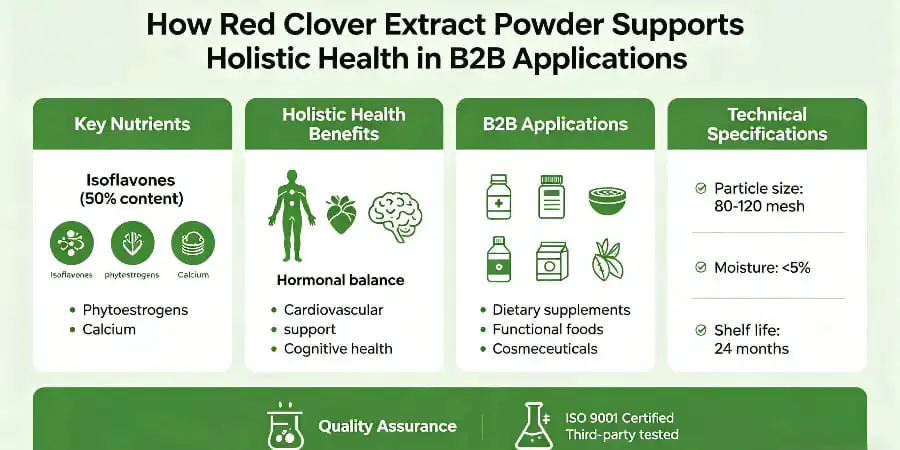
How Red Clover Extract Powder Supports Holistic Health in B2B Applications?
While cleansing is one of the main benefits, red clover extract powder offers many other health benefits that make it valuable in a wide range of product categories. Isoflavones help keep hormones in balance, keep the heart healthy, and keep the skin healthy through different biological processes.
Phytoestrogen Activity and Hormonal Balance
Isoflavones from red clover work as selective estrogen receptor modulators (SERMs), which means they bind to ERβ receptors all over the body. This selective action makes estrogenic effects happen in tissues where ERβ is most common, like the brain, heart, and bones, while only slightly stimulating ERα receptors that are mostly found in reproductive tissues. Compared to synthetic hormone treatments, biochemical selectivity has a better safety profile.
Red clover products are mostly aimed at women who have gone through menopause. By keeping thermoregulatory centers in the brain stable, isoflavones help ease vasomotor symptoms like hot flashes and night sweats. People who took 40 to 80 mg of standardized isoflavones every day for eight to twelve weeks in clinical studies had symptoms go down by 30% to 50%.
Product designers like that red clover gives people who want phytoestrogen support without common allergens an option to soy. Clean label programs like the plant source, and people who like natural herbal ingredients more than processed soy derivatives will like it.
Cardiovascular and Metabolic Health Support
Red clover isoflavones are good for your heart in more ways than one. They are antioxidants that protect cells. According to research, these chemicals make the arteries more flexible and improve the function of the endothelium. This makes the arteries less stiff, which can happen with age and metabolic problems. The methods involve making more nitric oxide available in the body and lowering the expression of molecules that help form atherosclerotic plaques.
Taking red clover supplements can also help your digestion of lipids. Meta-analyses of clinical studies show that HDL cholesterol goes up while LDL cholesterol and triglycerides go down in small but meaningful ways. These effects on lipids work with cleansing benefits by lowering the amount of oxidized lipids that the liver has to get rid of.
New evidence shows that isoflavones from red clover affect how glucose is used and how sensitive the body is to insulin by turning on AMP-activated protein kinase (AMPK) pathways. This change in metabolism helps weight management formulas and products that target metabolic syndrome, so the ingredient can be used for more than just menopause vitamins.
Dermal Health and Cosmetic Applications
Toxin buildup shows up in the skin as early age, inflammation, and poor barrier function. The skin is a major organ for getting rid of toxins. Red clover isoflavones are interesting to people who make cosmetics and personal care products because they help the skin in a number of different ways.
Red clover has been shown to improve the suppleness, hydration, and collagen density of skin when applied topically or eaten. Isoflavones make fibroblasts work harder and stop matrix metalloproteinases from breaking down structural proteins. A scientific study of middle-aged women found that taking supplements for twelve weeks made their skin feel and look better, and it also made fine lines less noticeable.
Anti-inflammatory features also help clear up skin by decreasing the activity of sebaceous glands and stopping the growth of bacteria that cause acne. Cosmetic companies use red clover extracts in masks, serums, and anti-aging products. The ingredient works as both an active ingredient and a way to sell products that are different by focusing on natural botanicals.
Safety Parameters and Dosage Considerations for Bulk Formulation
Setting up the right dosing instructions is important for both product safety and following the rules. Most clinical studies use daily amounts of isoflavone that are between 40 mg and 80 mg, usually spread out over two doses to keep plasma concentrations steady. Higher doses up to 120 mg have been tested and found to have no major side effects. However, dose-response relationships show that benefits decrease after 80 mg.
Isoflavones' estrogenic properties are the main cause of safety worries. Formulators need to think about people who can't use the drug because they have hormone-sensitive diseases, like some types of breast or endometrial cancer. The labels on products should have the right warnings and suggestions for seeing a doctor. Toxicology and safety tests done by a third party give markets that are afraid of taking risks even more confidence.
Consistency from batch to batch is an important quality measure for manufacturers. Suppliers should give Certificates of Analysis (COA) that show the amount of isoflavone in the product based on HPLC analysis. The COA should also include tests for heavy metals, chemical residues, and microbial contamination. GMP certification makes sure that the methods used in production keep the integrity and purity needed for pharmaceutical-grade uses.
Procurement Guide for Bulk Purchasing Red Clover Extract Powder
To successfully buy red clover powder, you need to carefully consider providers, quality standards, and business terms. The following framework helps business-to-business buyers make choices about where to get supplies and how to build reliable supply partnerships.
Evaluating Supplier Credentials and Capabilities
The first step in evaluating a supplier is to make sure that their factory certifications and compliance with regulations are valid. GMP approval shows that a company follows the quality standards needed for pharmaceutical and dietary supplement uses. More certifications, like ISO standards, organic awards, and kosher or halal approvals, make it easier for finished goods to get sold in more markets. Buyers should ask for pictures of current certificates and check with the organizations that issued them to make sure they are real.
How well a seller fits into certain partnership models depends on their manufacturing capacity and technical skills. Large producers can save you money and make sure you always have enough for large orders, but they might not be able to meet your unique needs. Smaller, more specialized manufacturers offer more customization options, such as proprietary extraction methods and unique standardization profiles. However, they may pose a risk to supply continuity during times of high demand.
Buyers can look at more than just paper paperwork when they visit factories and take part in audit programs. When you look at production sites, quality control labs, and how raw materials are handled, you can see what works well and what could go wrong. Building direct connections with technical staff makes it easier to solve problems and speeds up the process of making new products.
Key Quality Specifications and Testing Requirements
Setting clear quality standards helps make sure that the material bought meets the needs of the recipe and the rules set by the government. The main specification measure is the amount of isoflavones present. This is usually given as the sum of all the isoflavones and each compound's profile is shown by HPLC analysis. Buyers should set acceptance ranges that balance performance needs with cost concerns. Tougher standards command higher prices but lower variation from batch to batch.
As a quality standard, contaminant testing can't be skipped. Lead, cadmium, mercury, and arsenic should all be part of heavy metal measurement, and the limits should match the rules in the target markets. Testing for pesticide residues depends on whether the food is organic or not, but it should look for compounds that are widely used in legume farming. Total plate counts, yeast and mold, and pathogenic organisms must meet food safety guidelines for microbes.
Specification is also needed for physical and functional traits. The flowability and dissolution properties are very important for tableting and encapsulation methods. Particle size distribution affects these properties. Its stability and shelf life are affected by how much moisture it has. When buyers are making their own specifications, they should work closely with providers to come up with reasonable parameters that take into account normal process variation while still meeting quality goals.
Private Labeling and Customization Services
Value-added services like private labeling, custom blending, and encapsulation give brands that don't have their own production facilities more ways to run their businesses. Private label relationships make it easy to get into new markets quickly with tried-and-true formulas, which cuts down on development costs and time to market. Suppliers who offer these services offer a wide range of help, such as designing packaging, giving advice on regulations, and managing the processes of fulfillment.
Custom formulation development lets you stand out by using your own unique combinations of ingredients and delivery methods. Suppliers with a lot of experience keep technical teams that can turn marketing ideas into goods that can be sold, do stability studies, and find the best ways to make things. When sharing secret formulas with manufacturing partners, it's important to have intellectual property deals and protect the formulas' privacy.
Minimum order amounts (MOQ) are very different between service providers and suppliers. Buying raw materials may require commitments of 25 kg to 500 kg, based on how hard it is to standardize and how big the supplier is. Private name finished goods usually need higher MOQs to cover the costs of setting up packaging lines and quality control tests. To get good terms, you need to know how much the supplier charges and make sure that the amount you order matches how much the market really wants.
Cost Optimization and Negotiation Strategies
Red clover extract prices depend on a number of factors, such as the amount of isoflavones in it, whether it is certified organic, the number of orders, and the state of the market at the time. Understanding what makes prices go up or down is important for negotiating and managing costs well. When agricultural yields and processing capacity utilization change, so do the costs of raw materials. This makes it possible to time big purchases so that they are made when there are plenty of them.
Price structures are affected by volume promises and contract lengths. When suppliers are short on supplies, they give customers with long-term relationships and regular order trends better prices and faster service. Contracts that last more than one year and include ways to change the prices protect both parties from extreme market volatility and set stable planning foundations.
The total cost of ownership includes more than just the unit price. It also includes things like consistent quality, technical help, and a reliable supply chain. The cheapest seller might have hidden costs like poor quality, late shipments, or not enough paperwork that makes it harder to follow the rules. Smart buyers look at providers as a whole, not just comparing prices. They also look at how they create value.
Conclusion
Because it is high in isoflavones and antioxidants, red clover extract powder is scientifically proven to help with cleansing and health. The ingredient meets important manufacturing needs in dietary supplements, functional foods, and cosmetics. It also has strong benefits, such as supporting cardiovascular health, promoting non-soy phytoestrogens, and rejuvenating the skin. For procurement to go smoothly, suppliers' quality systems, analytical paperwork, and business terms must all be carefully looked over to make sure that products always work well and follow the rules. Red clover's market potential in the natural products business keeps growing as more research is done to learn more about how it works biologically and as new uses are found for it.
FAQ
What is the recommended dosage of red clover extract powder for detoxification support?
Clinical research supports daily isoflavone intake between 40 and 80 mg for systemic antioxidant and metabolic health benefits. Most commercial formulations provide this range through capsules or tablets containing standardized red clover extract. Individual needs vary based on health status and concurrent supplements, so consultation with healthcare providers ensures appropriate dosing for specific applications.
How does red clover extract compare to black cohosh for women's health formulations?
Red clover provides phytoestrogenic activity through isoflavones while offering additional cardiovascular and antioxidant benefits not associated with black cohosh. Black cohosh works through different neurological mechanisms and may provide faster symptom relief for some users. Many premium formulations combine both botanicals to deliver complementary benefits addressing multiple aspects of menopausal transition.
What quality certifications should B2B buyers prioritize when sourcing red clover extract powder?
GMP certification is essential for pharmaceutical and dietary supplement applications, ensuring manufacturing quality systems meet regulatory standards. Organic certification appeals to premium market segments despite higher costs. ISO 9001 and ISO 22000 demonstrate comprehensive quality management. Third-party testing verification by independent laboratories provides additional assurance regarding purity and potency claims.
Partner with Wellgreen for Premium Red Clover Extract Powder
Wellgreen Technology stands as a trusted red clover extract powder supplier with comprehensive capabilities serving nutraceutical, pharmaceutical, and cosmetic manufacturers worldwide. Our GMP-certified production facility delivers standardized extracts at 8%, 20%, and 40% isoflavone concentrations, verified through HPLC analysis with complete COA documentation for every batch. We maintain substantial inventory ensuring rapid fulfillment and supply continuity critical for production planning. Complete testing protocols cover heavy metals, pesticide residues, and microbial contamination, meeting international regulatory requirements including FDA and EU standards.
Our technical team provides formulation support, stability data, and regulatory guidance accelerating your product development timelines. Private labeling and custom blending services offer turnkey solutions for brands seeking rapid market entry. Contact our specialists at wgt@allwellcn.com to discuss your specific requirements and discover how our red clover extract powder manufacturer capabilities can enhance your product portfolio with scientifically-validated botanical ingredients that resonate with today's health-conscious consumers.
References
Chen, M. & Wang, L. (2019). Isoflavones from Red Clover: Extraction, Biological Activity and Clinical Applications. Journal of Functional Foods, 52, 687-699.
Lambert, M., Thorup, A. & Birkler, R. (2017). Phytoestrogens and Cardiovascular Health: Red Clover Isoflavones in Clinical Practice. Phytotherapy Research, 31(8), 1163-1170.
Pawlowski, J., Martin, B. & Burdette, J. (2018). Safety and Toxicology of Red Clover Extract Standardized to Isoflavones: A Comprehensive Review. Regulatory Toxicology and Pharmacology, 94, 83-92.
Shafaei, A., Vaezi, G. & Shahnazi, M. (2020). Effects of Red Clover on Menopausal Symptoms: A Systematic Review and Meta-analysis. Journal of Menopausal Medicine, 26(2), 89-98.
Thompson, L. & Boucher, B. (2021). Comparative Analysis of Phytoestrogenic Botanicals: Red Clover, Soy and Black Cohosh in Women's Health Applications. Evidence-Based Complementary Medicine, 2021, Article ID 6623985.
Wyse Jackson, D. & Turner, N. (2018). Detoxification Mechanisms of Botanical Isoflavones: Molecular Pathways and Clinical Evidence. Current Medicinal Chemistry, 25(31), 3749-3768.