Fennel seed extract: A Good Source of Fiber and Antioxidants
2026-05-26 14:59:16
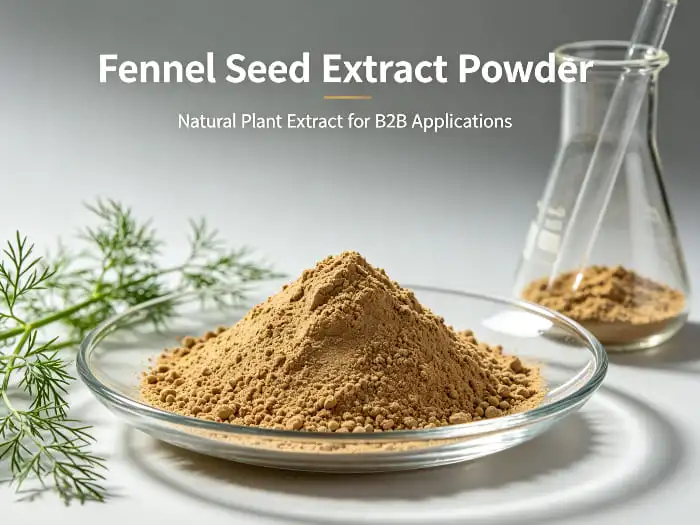
Fennel seed extract is a properly standardized botanical concentrate that comes from Foeniculum vulgare Mill. It is unique because it has a high concentration of flavonoids and trans-anethole, two powerful antioxidants. Instead of raw, ground seeds that don't always work, this extract gives B2B makers a reliable ingredient for digestive health products, functional drinks, and cosmetics. The solvent-based production method of the extract makes sure that each batch is the same and gets rid of the bacteria variability that comes with farming crops. This makes it an important part for companies that need to control formulations precisely and follow regulations.
Recognizing the Functional and Nutritious Advantages of Fennel Seed Extract
High Fiber Content for Digestive Health Formulations
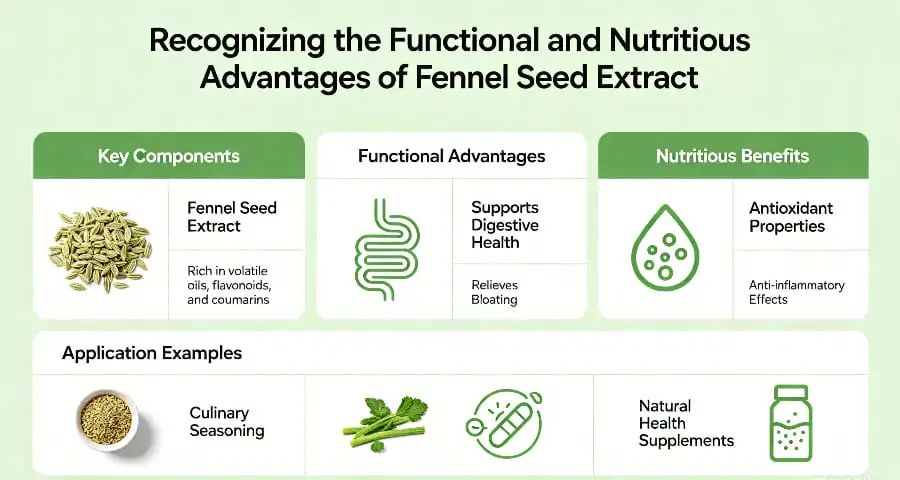
Additionally, fennel extract powder has higher amounts of dietary fiber than raw seeds because it is more concentrated. This fiber part helps the digestive system move, and it gives formulators an ingredient they can use in digestive support pills and meal replacements. When we work with nutraceutical clients, they always say that adding this botanical to their capsule formulations makes their products stand out in the crowded digestive health market. In functional food applications, the fiber matrix also helps improve satiety profiles, meeting customer demand for ingredients that help with weight management and metabolic health.
Antioxidant Compounds and Bioactive Markers
The phenolic compounds and flavonoids in fennel seed extract have been well studied and shown to have measurable antioxidant action through ORAC (Oxygen Radical Absorbance Capacity) testing. The main bioactive ingredient, trans-anethole, which is usually found in concentrations above 1% in good products, has been shown to help with gas and spasms in clinical studies. Several industries can benefit from these chemicals, ranging from cosmetics that target oxidative skin stress to systems that need to support natural preservation. According to studies published in phytochemistry journals, fennel's volatile oil part has anethole, fenchone, and estragole. Together, they form a strong antioxidant system that stays stable when stored in a controlled environment.
Cross-Industry Applications and Formulation Versatility
The extract can be used for more than just supplements; it can also be used in new types of products. Chemists who work in cosmetics use fennel powder's gentle but effective bioactive profile to make anti-aging serums and hair care products. The water-soluble grades are used by beverage designers in herbal tea mixes and functional energy drinks. The ingredient adds both health benefits and a mild aroma. Functional food companies like the extract because it has a clean label and works well with protein mixes and health snacks. The extract is flexible because its particle size can be controlled (95% through 80-mesh) and its solubility profiles are clear, so they can be used in a wide range of industrial settings.
Comparing Fennel Seed Extract: Making Informed Procurement Decisions
Extract Forms and Concentration Ratios
Purchasing managers come across fennel parts in a number of different forms, each of which meets a different production need. Standardized extract powder with set concentration ratios (4:1, 10:1, or 20:1) makes dosing for encapsulation lines and dry blending processes more reliable. Based on these numbers, four to twenty kilograms of raw seed material can make one kilogram of concentrated extract, which is more powerful than ground seed powder. Spray-dried extracts usually lose less water (≤5.0% loss on drying) than liquid concentrates, which makes them more stable in storage and lowers the risk of microbes. When choosing between formats, you should think about the capabilities of your production tools and the dosage levels you want to reach. This is because higher concentration ratios require smaller inclusion percentages in finished formulations.
Liquid extracts and tinctures are used in specific ways when making drinks and fast dispersion is more important than shelf stability. Powder formats, on the other hand, are most popular for B2B purchases because they are easy to ship, last longer, and work with automatic encapsulation systems. When sellers understand these trade-offs, they can choose ingredients that meet the needs of downstream processing and follow quality control rules.
Organic Certification and Regulatory Compliance
The difference between organic and regular fennel extract powder has a big effect on both how much it costs and where it stands in the market. Extracts that are organic are closely watched by farmers, so they don't contain any manmade pesticides and are in line with USDA NOP (National Organic Program) standards or EU organic rules. People with these certificates can charge more, but they also give you access to natural product stores and health-conscious customers. While GMP manufacturing ensures strong quality controls, conventional extracts are cheaper for high-volume uses where organic claims aren't what set them apart in the market.
Regulatory compliance includes more than just organic certification. It also includes food-grade documentation for drinks, cosmetic-grade specs for personal care products, and pharmaceutical-grade controls for over-the-counter medicines. Buyers need to make sure that suppliers give full Certificates of Analysis that show heavy metal screening (Lead <3ppm, Arsenic <1ppm), pesticide residue testing that meets EC 396/2005 standards, and microbiological purity (Total Plate Count <10,000 cfu/g, with no Salmonella or E. coli). These quality factors have a direct effect on how quickly and easily customs clearance goes and on the safety of the product that comes after.
Differentiating Quality Through Analytical Testing
High-Performance Liquid Chromatography (HPLC) and Gas Chromatography (GC) are the only ways to make sure that professional-grade foeniculum vulgare extract is of high quality. HPLC measures the amount of trans-anethole in the extract to make sure it meets the stated requirements and hasn't been tampered with with cheaper herbs like star anise. GC analysis gives a full record of the volatile oil, finding off-notes or degradation products that show bad storage or processing. Thin Layer Chromatography (TLC) is a quick way to identify things during incoming review. It lets quality teams check shipments before they go through a full lab workup.
Buyers should ask for full analytical reports that include solvent residue testing in line with ICH Q3C guidelines. This will show that the levels of ethanol or methanol are still below the safety limits that have been set. Long-term supply reliability and regulatory defensibility are directly linked to how open suppliers are about extraction methods, standardization processes, and testing results that are specific to each batch.
Buying Fennel Seed Extract in Bulk: What B2B Buyers Should Know?
Supplier Evaluation and Certification Requirements
To find trustworthy companies that make fennel seed extract, you need to carefully look at their quality control methods and production capabilities. GMP (Good Manufacturing Practices) certification shows that a supplier keeps controlled manufacturing environments with trained staff, documented batch records, and cleaning methods that have been tested and proven to work. More proof of regular quality checks is given by ISO licenses, especially ISO 9001 for quality management and ISO 22000 for food safety. When we look at possible suppliers, we give more weight to those who offer facility audits, third-party testing verification, and clear communication about where their products come from.
Traceability is an important factor in buying things, especially for pharmaceutical and nutraceutical uses that need full proof of the chain of custody. Reliable sources give lot-specific paperwork that links extract batches back to where the seeds came from, when they were harvested, and the processing conditions used for the extraction. This traceability helps with regulatory filings, lets you respond quickly to quality investigations, and shows that the provider is technically advanced, which means the relationship will last for a long time.
Negotiation Strategies and Cost Optimization
When you buy a lot of fennel extract powder, the market goes through changes that are caused by harvest times and patterns of world demand. Cost optimization is done by purchasing managers strategically timing orders to coincide with times after harvest when raw materials are most readily available. Multi-year supply deals that promise a certain amount of goods keep prices stable and make sure that supplies are distributed evenly during times when supplies are low. To find places to negotiate, buyers should ask for specific price breakdowns that separate the costs of raw materials, processing, testing, and certification premiums.
Minimum Order Quantities (MOQ) are very different between suppliers. Well-known companies usually need at least 25 to 100 kg, but smaller, more specialized companies are more open to working with new names. A more true way to compare prices than just looking at the price per kilogram is to look at the total landed cost, which includes shipping, customs duties, storage, and quality checks. Logistics issues like choosing between fiber drums and multi-layer bags for packing, incoterms (FOB versus CIF), and paperwork needs have a direct effect on how efficiently the supply chain works and how much working capital is allocated.
Private Label and OEM Partnership Opportunities
Contract manufacturers and private label developers gain when suppliers offer more than just raw materials. They also offer full formulation support. OEM partnerships let companies get finished dosage forms like pills, tablets, and sachets, so they don't have to build their own production facilities. These agreements shorten the time it takes to get a product to market while still making sure that all labeling and finished product standards are met. Buyers should judge possible partners based on their knowledge of formulation, knowledge of regulations that apply to target markets, and ability to increase production volumes in a way that fits with the growth plans of the business.
How to Use and Dose Fennel Seed Extract: Guidelines for Formulators and Buyers
Recommended Dosage Ranges Across Applications
Usually, 100 to 500 mg of fennel extract is found in one serving of supplements. Higher concentrations (300 to 500 mg) are used for digestive comfort, while smaller amounts (100 to 200 mg) are added to multi-herb wellness blends. These ranges come from both traditional use records and clinical study that proves the effectiveness of the thresholds. Functional beverage uses use 50 to 150 mg per serving, which strikes a balance between health claims and sensory appeal. In cosmetic formulations, inclusion rates range from 0.5 to 2.0% in finished goods. This gives antioxidant support without overpowering other active ingredients.
When formulators figure out how much raw material they need, they have to take extract concentration ratios into account. A 10:1 extract at 300 mg per serving is bioactively equivalent to 3,000 mg of raw seed material. This makes it possible to make smaller doses that are easier for people to take as prescribed. Knowing these equivalencies helps make sure that label claims are correct and that formulations meet customer expectations for how well they work and how potent they are.
Safety Considerations and Contraindications
While fennel extract powder is generally safe in properly made goods, there are some groups that need extra care. Due to its history as an emmenagogue, fennel should not be taken by pregnant women in therapeutic doses. However, small amounts used in cooking offer little risk. Due to the plant's weak estrogenic properties, people who are sensitive to hormones should talk to their doctors before taking supplements that contain fennel. The chance of a drug combination is still low, but because fennel may affect clotting factors, it's important to watch out for people who take it at the same time as anticoagulants.
The people who make products need to put the right information on the labels and keep records to back up the safe use suggestions. Quality suppliers give formulators technical data sheets with known side effects that help them make the right buyer warnings and follow FDA rules for dietary supplement labels.
Storage and Stability Optimization
To keep the quality of the extract from the time it is bought until it is used by a customer, environmental controls and the choice of packaging must be carefully considered. The best way to keep fennel extract powder stable is to keep it cool (below 25°C), dry, and out of direct sunlight. Sealing vessels keeps volatile oil parts from oxidizing too much, so the aromatic properties and bioactive chemical concentrations stay the same. For storage longer than six months, buyers should select the right packaging materials, such as moisture barriers and inert atmospheres.
As part of the monitoring process, the moisture content, volatile oil retention, and microbiological state should be checked on a regular basis while the product is being stored for a long time. These quality maintenance steps make sure that finished goods give customers the same experience throughout their shelf life and protect the reputation of the brand in competitive markets.
Building Trust: Why Choose Our Fennel Seed Extract Supply Solutions?
Comprehensive Quality Assurance Systems
Wellgreen Technology uses proven analytical methods that go above and beyond what the industry requires as a minimum to keep pharmaceutical-grade quality controls on our fennel seed extract production chain. Our quality assurance program includes checking the authenticity of raw materials using different methods (HPLC, GC, and TLC), finding all kinds of contaminants using ICP-MS technology to find heavy metals, and analyzing over 500 different pesticide residues using GC-MS/LC-MS platforms. Before being sent to the warehouse, each output batch is tested for microbes using AOAC-approved methods to make sure there are no pathogens and that the Total Plate Count meets the requirements.
Our GMP-certified factory uses ISO 9001 quality management systems, and third-party checks are done on a regular basis to make sure that procedures are followed and that documents are correct. We give our customers full Certificates of Analysis, allergen declarations, GMO-free attestations, and BSE/TSE compliance statements that meet a wide range of regulatory needs in global markets. This set of paperwork makes it easier to clear customs, speeds up the internal quality approval process, and lays the technical groundwork for registering finished goods in controlled categories.
Customization Capabilities and Technical Support
In addition to giving standard extracts, our technical team works with clients to create custom specifications that solve specific formulation problems. We can handle requests for different concentration ratios, different standardization markers, unique particle size distributions, and improvements to the carrier system that make the solubility or stability profiles better. Our application scientists help clients with formulation consultations by guiding them through how ingredients interact with each other, how to optimize processing parameters, and how to test for stability in a way that keeps product development timelines safe.
Our private label manufacturing skills add to the value of our partnership by providing turnkey solutions that cover everything from designing the formula to delivering the finished product. This all-inclusive support approach works especially well for brands that want to get into the market quickly without having to spend a lot of money on their own infrastructure. We keep our MOQ structures flexible so that they can work for both new brands testing market ideas and established brands expanding tried-and-true goods across distribution networks.
Reliable Supply and Long-Term Partnership Value
Our smart partnerships with fennel seed growers in a number of different regions ensure a steady supply, even when regional crop changes happen or there are problems with logistics. By using a variety of sources and keeping a lot of finished extract in stock, this approach protects clients from having trouble getting what they need during times of high demand. We use complex systems to predict demand and plan output. These systems make sure that our manufacturing capacity is in line with how our clients' businesses grow, so there are no supply problems as they grow.
Our commitment to open communication, consistent quality delivery, and quick problem-solving when problems come up is what makes our partnerships last. Our client success stories include nutraceutical brands expanding their retail distribution, functional beverage companies putting out products that are sold all over the country, and cosmetic makers using botanical innovation to set their high-end skincare lines apart. These partnerships show that we know how well a supplier does directly affects how well a client's business does and how well their brand is known in competitive customer markets.
Conclusion
Fennel seed extract is a great option for business buyers who want to use botanical ingredients that are known to be healthy, have stable quality profiles, and can be used in a lot of different ways. The concentrated fiber content and antioxidant compounds in the extract meet the strict quality standards needed by controlled industries while meeting the needs of formulations in the nutraceutical, functional food, beverage, and cosmetics sectors. To be a good buyer, you need to look at more than just prices when comparing suppliers. You need to look at their certifications, analytical skills, customization options, and supply stability. Long-term product success and brand differentiation in health-focused consumer markets depend on strategic relationships with manufacturers that offer full technical support, clear quality documentation, and scalable production capacity.
FAQ
Is fennel seed extract safe for daily supplement use?
Fennel extract demonstrates excellent safety profiles when formulated at recommended dosages (100-500mg daily in supplements). Clinical research and traditional use documentation support long-term consumption for digestive wellness applications. However, pregnant women and individuals with hormone-sensitive conditions should consult healthcare providers before use. Quality products from GMP-certified manufacturers undergo rigorous microbial testing and contaminant screening, ensuring safety for consumer consumption.
What distinguishes organic from conventional fennel extract powder?
Organic certification requires agricultural production without synthetic pesticides, validated through comprehensive residue testing and audit verification. This results in cleaner environmental profiles and access to natural product markets, though at premium pricing. Conventional extracts maintain strict quality controls including pesticide screening and heavy metal testing but lack organic marketing claims. Both formats deliver comparable bioactive content when sourced from reputable manufacturers with robust quality systems.
Can fennel extract be used in cosmetic hair care formulations?
Fennel extract powder functions effectively in hair care applications at 0.5-2.0% inclusion rates, providing antioxidant protection and traditional scalp wellness support. The extract's gentle bioactive profile suits leave-on formulations including serums and conditioning treatments. Cosmetic-grade extracts must meet specific microbiological standards and undergo stability testing in finished product matrices to ensure efficacy retention and sensory attribute maintenance throughout shelf life.
Partner With a Trusted Fennel Seed Extract Supplier
Wellgreen Technology specializes in premium fennel seed extract powder production, serving nutraceutical manufacturers, functional beverage developers, and cosmetic formulators throughout the United States market. Our GMP-certified facility maintains extensive inventory of standardized extracts with complete analytical documentation supporting your regulatory compliance needs. We offer competitive bulk pricing, flexible MOQ options for emerging brands, and comprehensive OEM capabilities delivering finished dosage forms aligned with your product specifications. Contact our technical team at wgt@allwellcn.com to discuss your specific fennel extract requirements, request samples with full Certificates of Analysis, or explore private label development opportunities. Discover why leading brands trust Wellgreen as their botanical ingredient partner for quality, reliability, and innovation.
References
Badgujar, S.B., Patel, V.V., Bandivdekar, A.H. (2014). Foeniculum vulgare Mill: A Review of Its Botany, Phytochemistry, Pharmacology, Contemporary Application, and Toxicology. BioMed Research International, Article ID 842674.
Shahat, A.A., Ibrahim, A.Y., Hendawy, S.F., Omer, E.A., Hammouda, F.M., Abdel-Rahman, F.H., Saleh, M.A. (2011). Chemical Composition, Antimicrobial and Antioxidant Activities of Essential Oils from Organically Cultivated Fennel Cultivars. Molecules, 16(2), 1366-1377.
Kooti, W., Moradi, M., Ali-Akbari, S., Sharafi-Ahvazi, N., Asadi-Samani, M., Ashtary-Larky, D. (2015). Therapeutic and Pharmacological Potential of Foeniculum vulgare Mill: A Review. Journal of HerbMed Pharmacology, 4(1), 1-9.
Rahimi, R., Ardekani, M.R.S. (2013). Medicinal Properties of Foeniculum vulgare Mill in Traditional Iranian Medicine and Modern Phytotherapy. Chinese Journal of Integrative Medicine, 19(1), 73-79.
Rather, M.A., Dar, B.A., Sofi, S.N., Bhat, B.A., Qurishi, M.A. (2012). Foeniculum vulgare: A Comprehensive Review of Its Traditional Use, Phytochemistry, Pharmacology, and Safety. Arabian Journal of Chemistry, 9(Supplement 2), S1574-S1583.
Malini, T., Vanithakumari, G., Megala, N., Anusya, S., Devi, K., Elango, V. (1985). Effect of Foeniculum vulgare Mill Seed Extract on the Genital Organs of Male and Female Rats. Indian Journal of Physiology and Pharmacology, 29(1), 21-26.