What is the Benefit of Turmeric Extract?
2026-05-26 14:59:21
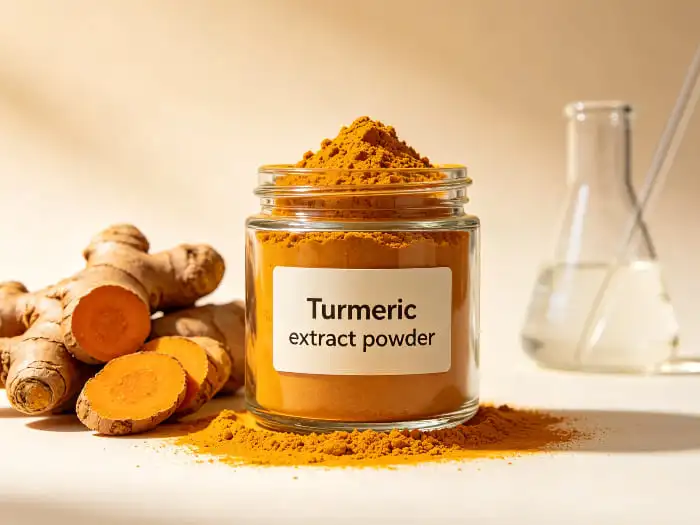
Turmeric extract is a concentrated form of bioactive chemicals that come from Curcuma longa rhizomes. It is mostly known for having high amounts of curcuminoids, especially curcumin. Professional-grade extracts have concentrations of up to 95% active ingredients, while raw turmeric powder only has 2 to 5%. This means that they have strong anti-inflammatory and antioxidant qualities. Turmeric extract is very useful in nutraceuticals, functional foods, cosmetics, and pharmaceuticals because it helps with oxidative stress and inflammatory pathways and can be easily mixed into capsules, drinks, and skin care. With this concentration, producers can make medicines that work without using bulky and inconsistent raw materials.
Understanding Turmeric Extract: An Overview
What Makes Turmeric Extract Different from Turmeric Powder?
The main difference is between bioactive density and concentration. Even though raw turmeric powder is good for you as a spice, it doesn't have much curcuminoid in it. Standardized extracts that ensure consistent potency across production batches are needed by manufacturers who want to track health outcomes. Advanced extraction methods use ethanol or ethyl acetate as solvents to separate and concentrate curcuminoids, getting 20:1 or 25:1 ratios compared to the raw material. This process gets rid of variation, making sure that every batch meets the required test levels. This is important for following the rules and building trust with customers.
Extraction Methods That Define Quality
There are two main extraction methods that determine the quality and purity of a product. Food-grade ethanol is still used for solvent extraction, which is the usual way to get curcuminoids while keeping the cost of bulk production low. Supercritical CO2 extraction is a better option because it completely gets rid of solvent leftovers and makes cleaner extracts that are perfect for organic certifications. Under high pressure and temperature, this method carefully extracts target compounds without contaminating them with other chemicals. Manufacturers aiming for pharmaceutical-grade or clean-label markets are using CO2 ways more and more, even though they are more expensive, because the extracts they make meet strict safety standards for heavy metals and pesticide residues.
The Curcuminoid Complex: Beyond Simple Curcumin
Professional recipes know that curcuminoids are made up of three different molecular analogs. Most of the time, curcumin makes up 70–80% of the overall curcuminoid fraction. Demethoxycurcumin makes up 15–20%, and bisdemethoxycurcumin makes up 2–5%. This working together makes the biological action stronger than curcumin alone, giving more benefits overall. Researchers have found that whole curcuminoid complexes are better at cellular uptake and antioxidant activity than synthetic curcumin isolates. This helps formulators make decisions about how to make products that work best without using chemical spiking methods that damage the integrity of the ingredients.
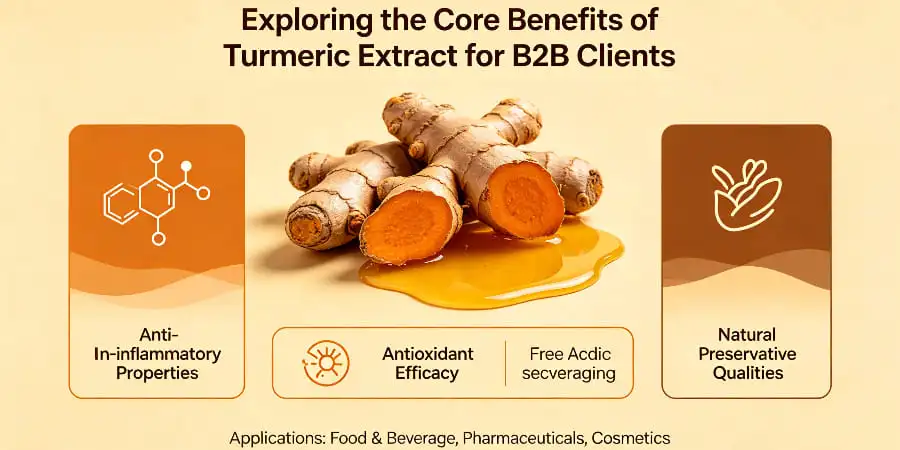
Exploring the Core Benefits of Turmeric Extract for B2B Clients
Anti-Inflammatory Properties Backed by Clinical Evidence
Curcuminoids change inflammatory processes by stopping NF-κB activity. NF-κB is a group of proteins that controls the expression of genes that cause inflammation. This process explains why it has been shown to be good for joint health, recovery after exercise, and managing inflammatory conditions. Supplement companies that make joint relief products use standardized extracts that contain 95% curcuminoids to make sure that the doses are always the same, which in finished products is usually between 500 mg and 1000 mg per day. To make sure that botanical drug candidates are consistent from batch to batch, pharmaceutical developers need to use tested methods that have been proven to work. This means that high-purity extracts with full certificates of analysis are needed for regulatory submissions and clinical trial procedures.
Antioxidant Capacity Addressing Oxidative Stress
Curcuminoids are very good at getting rid of free radicals, which protects cell structures from oxidative damage that can lead to the development of chronic diseases. This antioxidant potential can be used in a wide range of products, including those that help the heart, those that improve brain health, and those that promote general wellness. Functional food companies use water-dispersible grades in ready-to-drink wellness shots and golden milk mixes because health-conscious people really like the antioxidant claims that come with these products. The hard part is keeping the curcuminoids stable during processing. Heat and changes in pH can break them down, so microencapsulation technologies or CWS (cold water soluble) forms are needed to keep their activity through pasteurization and long shelf life needs.
Skin Health Applications Driving Cosmetic Innovation
More and more, anti-aging and brightening products in the beauty and personal care industries use curcumin powders. The anti-inflammatory profile calms down skin conditions that are reacting, and the antioxidant qualities fight environmental stressors that speed up the aging process of the dermis. Curcumin's strong yellow-orange color can stain finished goods and make them look bad, which is a problem for cosmetic chemists. This problem can be fixed by using decolorized extracts or low-staining parts, which don't lose any of their bioactivity and can be added to serums, creams, and masks for people with sensitive skin. The move toward organic certification increases the need for botanical actives that are free of pesticides and meet clean beauty standards. This creates high-end market segments where quality transparency commands brand loyalty.
Practical Guidelines for Dosage, Usage, and Safety
Industry-Standard Dosage Recommendations
Clinical research typically employs curcuminoid dosages between 500-2000mg daily, with most efficacy data clustered around 1000-1500mg for inflammatory conditions. When research is turned into market goods, extract standardization needs to be thought about. For example, a 95% curcuminoid extract gives you 950 mg of curcuminoids per gram, while lower standardizations require higher overall dosing. Quality assurance teams establish specifications ensuring label claims match actual content, with typical acceptance criteria allowing ±10% variance. Regulatory frameworks vary from place to place. For example, dietary supplements in the US must follow FDA guidelines under DSHEA, while in Europe they must follow Novel Foods regulations and specific curcumin intake advisories issued by EFSA.
Bioavailability Enhancement Strategies
Native curcumin is not well absorbed by the body because it breaks down quickly and doesn't mix well with water. This problem with absorption drives new developments in delivery methods. Combining turmeric extracts with black pepper extract (standardized to 95% piperine) is the most well-known method. This stops the liver from breaking down nutrients and boosts absorption by up to 2000%. Liposomal encapsulation, phytosome complexes with phospholipids, and nanoparticle formulations that improve cell entry are some other methods that can be used. Each technology has its own formulation issues. For example, piperine combinations change flavor profiles, and advanced delivery methods raise the costs of ingredients but allow lower doses to have the same effect. Product designers have to weigh these technical and economic factors against what the target market wants and how they want to place themselves in the market.
Safety Considerations and Contraindications
Turmeric extracts are usually thought to be safe (GRAS) for use in food, and side effects are very rare at the recommended doses. Some things that could go wrong are stomach pain at very high doses and a possible risk of bleeding when mixed with blood thinners because it has mild antiplatelet activity. Responsible makers put in the right warnings for people who are pregnant, taking blood-thinning drugs, or have problems with their gallbladder. Quality control checks more than just the active ingredients. It also checks for microbial pollution, heavy metals (like lead, arsenic, cadmium, and mercury), and pesticide residues according to USP standards. These detailed safety profiles protect end users and lower the risk of liability for brands and dealers.
Delivery Format Optimization
Even though curcumin is hard to absorb, capsules and pills are the most popular supplement form because they offer accurate dosing and ease of use for consumers. Powder forms are useful for functional foods and allow for flexible dosing, but they need special preparation to be able to be mixed with drinks. This is because regular curcumin powders are very lipophilic and settle quickly in water-based systems. Liquid extracts and tinctures are other ways to deliver the medicine, but their widespread use is limited by their high alcohol level and instability. New forms include candies and chewables that use microencapsulated extracts to hide the bitterness and make the texture better. Formulation teams have to figure out how to make each format work with the equipment they use, the ingredients they use, and the testing methods for stability so that the product can be sold.
Procurement Guide: Sourcing High-Quality Turmeric Powder
Supplier Selection Criteria for Quality Assurance
Finding trustworthy production partners requires a thorough evaluation that goes beyond price. Leading providers keep GMP-certified facilities with well-documented quality management systems. They give out batch-specific certificates of analysis that show the amount of curcuminoid in the product based on validated HPLC methods, microbial testing results, heavy metal screening, and pesticide residue analysis. Supply chain transparency is important. Reputable manufacturers can track raw materials back to specific growing areas, which shows they have control over the inputs used in agriculture and the conditions under which they are processed. Being ready for an audit shows that operations are mature, and suppliers who welcome third-party inspections and keep detailed batch records build trust in regulatory compliance and quality consistency, which is important for long-term relationships.
There are well-known botanical extract providers in the United States who work with the food, medicine, and nutraceutical industries. Most of the time, these businesses offer more than one standardization grade, organic options, and technical help for formulating. Diversifying supplier bases is good for procurement workers because it lowers the risk of relying on a single source while keeping quality standards high across the supply network. By asking for samples along with analytical paperwork, you can compare them before deciding to buy in bulk. In competitive markets where ingredient shortages can throw off production schedules, operational stability is improved by building relationships with suppliers who provide responsive customer service, reliable lead times, and proactive communication about supply conditions or quality issues.
Bulk Purchasing Economics and MOQ Considerations
Prices for commercial extracts are affected by many factors that affect costs, such as where the raw materials come from, the extraction method used, the level of standardization, the state of certification, and the number of orders. Most of the time, buying in bulk unlocks tiered price structures, where the cost per unit drops significantly as more volume is committed. Minimum order quantities (MOQs) for different suppliers and products range from 25 to 100 kilograms for normal 95% curcuminoid extracts, but higher initial commitments may be needed for special grades or organic certifications. Strategies for buying things balance the costs of keeping inventory with discounts for buying in bulk, taking into account expected output and shelf life limits. Extracts that are stored properly at controlled temperatures and humidity levels stay stable for 24 to 36 months, which means that they can be kept in stock without worrying about going bad.
Private Label and OEM Collaboration Models
Brands can get into new markets without having to spend a lot of money on production facilities through contract manufacturing partnerships. OEM providers offer complete packages that include formulating, buying raw materials, making, packing, and shipping the goods. This model works especially well for new brands trying ideas in the market or for established businesses adding new products without having to worry about their own capacity. Some important things that are looked at are manufacturing certifications (like GMP and organic handling), output capacity and flexibility, intellectual property protection for proprietary formulations, and minimum run quantities that match market testing needs versus full-scale launches. For partnerships to work, there needs to be clear communication about quality standards, regulatory compliance requirements, and how to work together to solve problems that come up during the product creation process.
Conclusion
Turmeric extract delivers measurable value across diverse B2B applications, from high-potency supplements addressing inflammatory conditions to functional beverages capturing wellness trends and cosmetic formulations targeting skin health. The concentration of bioactive curcuminoids compared to raw materials solves formulation challenges around dosing efficacy and product consistency. Quality differentiation through extraction methods, organic certification, and rigorous testing protocols determines competitive positioning in markets where authenticity and transparency increasingly influence purchasing decisions. Successful product development requires understanding bioavailability enhancement strategies, regulatory compliance frameworks, and supplier evaluation criteria that ensure reliable sourcing partnerships. These considerations enable brands to capitalize on growing consumer interest in botanical ingredients backed by scientific validation, positioning turmeric-based products for sustained market growth.
FAQ
What distinguishes turmeric extract from regular curcumin supplements?
Turmeric extract contains the full spectrum of naturally occurring curcuminoids—curcumin, demethoxycurcumin, and bisdemethoxycurcumin—along with supporting plant compounds. Pure curcumin supplements isolate a single molecule, sometimes synthetically produced. The natural curcuminoid complex found in quality extracts often demonstrates superior biological activity and represents authentic botanical sourcing rather than synthetic alternatives that may involve undisclosed chemical synthesis.
How does black pepper extract improve turmeric absorption?
Piperine, the active compound in black pepper extract standardized to 95%, inhibits glucuronidation—a liver process that rapidly metabolizes and eliminates curcumin from the bloodstream. Co-administration with piperine can increase curcumin bioavailability by up to 2000%, allowing much lower doses to achieve therapeutic blood levels. This combination has become standard in high-quality supplements targeting maximum efficacy.
What should buyers check when evaluating turmeric extract quality?
Request comprehensive certificates of analysis showing HPLC-verified curcuminoid content, microbial testing, heavy metal screening (lead, arsenic, cadmium, mercury), and pesticide residue analysis. Verify GMP certification and organic credentials if applicable. Ask about extraction methods—ethanol or CO2 extraction indicates quality processing, while hexane residues suggest inferior manufacturing practices. Batch traceability and supplier audit readiness indicate reliable quality systems.
Partner with Wellgreen for Premium Turmeric Extract Solutions
Wellgreen Technology stands as a trusted turmeric extract manufacturer delivering standardized botanical ingredients that meet the exacting demands of nutraceutical, functional food, pharmaceutical, and cosmetic applications. Our GMP-certified facility produces extracts standardized to 95% curcuminoids with rigorous quality control addressing heavy metal content and pesticide residues. We maintain substantial inventory enabling rapid fulfillment, while our technical team provides formulation support for absorption enhancement systems combining turmeric with piperine or advanced delivery technologies. Whether you require organic-certified materials, custom specifications, or private label manufacturing services, our flexible approach accommodates projects from initial product development through scaled commercial production. Contact our B2B team at wgt@allwellcn.com to discuss your specific requirements and request samples demonstrating our commitment to quality, consistency, and partnership excellence.
References
Hewlings, S.J., & Kalman, D.S. (2017). Curcumin: A Review of Its Effects on Human Health. Foods, 6(10), 92.
Prasad, S., Gupta, S.C., Tyagi, A.K., & Aggarwal, B.B. (2014). Curcumin, a component of golden spice: From bedside to bench and back. Biotechnology Advances, 32(6), 1053-1064.
Shoba, G., Joy, D., Joseph, T., Majeed, M., Rajendran, R., & Srinivas, P.S. (1998). Influence of piperine on the pharmacokinetics of curcumin in animals and human volunteers. Planta Medica, 64(4), 353-356.
Jurenka, J.S. (2009). Anti-inflammatory properties of curcumin, a major constituent of Curcuma longa: a review of preclinical and clinical research. Alternative Medicine Review, 14(2), 141-153.
Kocaadam, B., & Şanlier, N. (2017). Curcumin, an active component of turmeric (Curcuma longa), and its effects on health. Critical Reviews in Food Science and Nutrition, 57(13), 2889-2895.
Tayyem, R.F., Heath, D.D., Al-Delaimy, W.K., & Rock, C.L. (2006). Curcumin content of turmeric and curry powders. Nutrition and Cancer, 55(2), 126-131.