Valerian Root Extract: The Herbal Extract Health Supplement for Anxiety and Insomnia
2026-05-27 16:40:22
Valerian extract has become a well-known and accepted botanical ingredient in health supplements, especially for helping with sleep and anxiety. This plant extract, which comes from the root of Valeriana officinalis, helps you relax and sleep well without the side effects and addiction risks that come with synthetic drugs. Our standardized valerian extract powder has a consistent level of potency because it was extracted using precise methods that keep active compounds like valerenic acids and sesquiterpenes. This makes it a great main ingredient for nutraceutical formulations that aim to reduce stress and improve sleep quality.
Understanding Valerian Root Extract: Nature, Benefits, and Safety
Botanical Origins and Extraction Methods
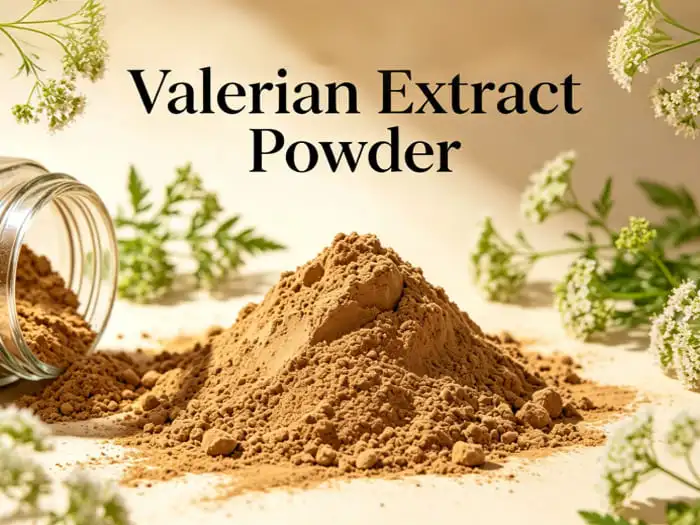
Valerian root extract comes from Valeriana officinalis, an annual flowering plant that grows in parts of Asia and Europe. In the extraction process, hydro-alcoholic solvents are carefully set at ratios between 3:1 and 7:1 to get the most bioactive sesquiterpenes out of the plant while leaving behind as few solvents as possible (below 5000ppm, as required by USP/EP standards). High-quality extracts keep a tight grip on particle size, making sure that 95% of them can pass through an 80-mesh sieve. This makes them very easy to flow through for packaging processes.
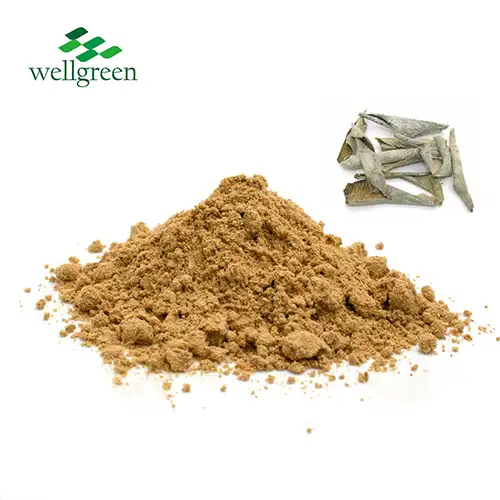
The powder that is made is fine, brown to tan, and hygroscopic. It has a strong smell because it contains isovaleric acid. This strong smell is actually a sign of authenticity and potency, though there are deodorized forms for liquid uses where the smell of the substance needs to be hidden.
Biochemical Mechanisms for Anxiety and Sleep Support
The primary component of valerian powder, valerenic acids, interacts with GABA receptors in the brain and spinal cord to produce its medicinal effects. This interaction lowers neural excitability, which makes you feel calmer. It works in a way that is similar to how some drugs for anxiety do it, but it is less harsh. Standardized extracts usually promise at least 0.8% total valerenic acids through HPLC testing, which sets the standard for how well they work in the business.
Along with valerenic acids, the phytochemical matrix also contains valepotriates and fragrant oils, which work together to make the extract relaxing. This action of multiple compounds is what makes valerian useful for both short-term anxiety attacks and long-term sleep problems.
Key Health Benefits and Clinical Research
Clinical tests have shown that taking valerian root supplements can help with a number of mental health issues and sleep problems. Regular use may help shorten the time it takes to fall asleep, improve the quality of sleep, and cut down on waking up during the night. For managing anxiety, the extract seems to work by lowering stress responses without making people very sleepy during the day or hurting their ability to think clearly.
Valerian works in a different way than melatonin. Melatonin controls the circadian rhythm, while valerian directly helps you relax by changing neurotransmitters. Passionflower and valerian both have some GABAergic activity, but passionflower's affects are usually not as strong. This difference helps formulators make targeted or synergistic blends, based on what they want to happen.
Safety Profile and Usage Guidelines
Valerian is usually thought to be safe when used correctly. Short-term use of 300–600 mg every day for up to six weeks has been proven to work in clinical situations. The most common side effects are still mild. Sensitive people may experience dizziness, headaches, or stomach upset. Compared to prescription sleep aids, which can make you sleepy the next day or make you dependent on them, the extract is generally well tolerated.
Long-term safety data is still scarce, so it is best to slowly lower the dose after long-term use to prevent withdrawal symptoms. People who are pregnant, nursing, or taking CNS depressants should talk to their doctors before using. The valerian root extract might have an effect on sedatives, anesthetics, and some antidepressants, so it needs to be carefully thought out when making the medicine and putting it on the label.
Comparing Valerian Extract to Other Natural and Pharmaceutical Solutions
Natural Remedies Comparison
There are a lot of different plant sleep aids on the market, and each one has its own benefits. Chamomile can help with mild nervousness by calming you down gently, but it's not strong enough to help with chronic insomnia. Through different biochemical pathways, magnesium helps muscles relax and the nervous system work. This makes it a great addition to other ingredients rather than a straight replacement. Passionflower has similar effects on reducing anxiety, but there isn't as much scientific evidence that it can help with sleep problems.
Valerian extract stands out because it has been studied a lot and has better evidence that it can help reduce sleep latency. The way it works by targeting GABA receptors makes its calming effects stronger than those of most herbal options. This makes it a top choice for sleep aids.
Dosage Forms and Manufacturing Considerations
Manufacturers can put valerian in a number of different delivery forms, and each one has its own set of technical issues to consider:
Capsules and Tablets: The normal extract powder works well in solid dosage forms that people are used to. The bulk density is usually between 0.40 and 0.60 g/ml, which means it flows well enough for high-speed sealing equipment. However, because it is hygroscopic, it needs to be kept in settings with controlled humidity below 25°C and relative humidity below 60% while it is being made and stored.
For liquid mixtures, special water-soluble grades are needed for beverage uses because regular hydro-alcoholic extracts only partially dissolve in water and can cause sediment. To get around the strong earthy, musk-like taste while keeping the clarity and stability of these specialized versions, they often use carrier systems or micro-encapsulation.
Functional Gummies: Sleep gummies are a growing market niche where valerian is one of the main plant ingredients, along with melatonin or L-theanine. Hide the smell that makes valepotriates unique and keep them stable at high temperatures during production processes that can hit temperatures that are too high for them.
Organic Versus Conventional Sourcing
Quality standards have a big effect on both how well something works and how easy it is to sell. Organic certification is desirable for people who like clean labels and wants to be positioned higher, but it needs supply lines to be checked and audits to be done every year. When bought from reputable companies, conventional extracts can give the same level of potency at more reasonable prices for mid-market formulations.
The most important thing is not just the organic state, but also full quality control that checks for heavy metals using ICP-MS, microbial contamination, and solvent residue. These factors are more important for following the rules and keeping people safe than the organic label itself.
Sourcing and Procurement Guide for Valerian Root Extract
Critical Quality Parameters for B2B Buyers
When reviewing suppliers, procurement teams should put a number of technical requirements in order of importance. Standardization to a certain amount of valerenic acid makes sure that each batch is the same, which is important for clinical effectiveness and legal compliance. Manufacturers of good products give Certificates of Analysis that show the dry matter content is less than 5%, the total ash content is less than 5%, and the heavy metal levels are within the limits set by Prop 65 and international pharmacopeia standards.
Extraction solvent ratios and tests for residual solvents prove that the manufacturing process is correct. For safety and GRAS compliance in food-grade uses, ethanol/water extractions are better than methanol-based ones. The way particles are spread out affects how well a product is made, especially when it comes to encapsulation, where even flow stops bridging and tools sticking.
Evaluating Supplier Credentials
Leading suppliers of valerian powder set themselves apart by having a wide range of certificates, such as GMP manufacturing, ISO quality management systems, and, if necessary, organic certifications. Documentation that keeps track of plant materials from harvesting to processing makes sure that the supply chain is transparent, which is something that big brands are asking for more and more.
Quality of customer service is just as important—quick technical support, flexible minimum order quantities, and the ability to work together quickly in R&D all make product creation go faster. Differentiated formulations can benefit from suppliers who offer custom specs, such as specific valerenic acid concentrations or changes to particle size.
Logistics and Regulatory Compliance
Because valerian is hygroscopic, the way it is packaged has a big effect on how stable the product is. When stored properly, high-barrier aluminized bags with nitrogen cleaning can last up to 24 months. Options for bulk packing should strike a balance between how quickly they can be shipped and how easily they can be handled in factories.
Regulatory paperwork like allergen statements, BSE/TSE certificates, and country-specific safety attestations make the import process easier and speed up market entry. Having stock on hand in key markets cuts down on wait times and shipping costs, and it also protects against problems in the supply chain.
How to Integrate Valerian Root Extract Into Your Product Line or Wellness Offering?
Target Applications and Market Positioning
Valerian extract serves as a versatile functional ingredient across multiple product categories:
Sleep aid supplements represent the primary application, where the extract functions as the efficacy driver in capsules, softgels, or tablet formulations. Combining valerian with complementary ingredients like melatonin, GABA, or 5-HTP creates synergistic effects that enhance overall performance and allow for broader label claims.
Stress management products targeting daytime anxiety benefit from moderate valerian dosing that promotes relaxation without sedation. These formulations often incorporate adaptogenic herbs like ashwagandha or rhodiola to address both immediate stress responses and long-term resilience.
Functional beverage applications continue expanding, particularly in nighttime relaxation drinks and sleep shots. These require specialized water-soluble grades and robust flavor masking strategies to overcome the extract's naturally strong taste profile. Carbonated and ready-to-drink formats demand additional stability testing to ensure consistent performance throughout shelf life.
Formulation Best Practices
Validated dosage levels are the first step in making a good product. Clinical study supports daily doses of 300 to 600 mg for sleep, but formulations may change depending on target groups and ingredients that work well together. Standardization to a certain amount of valerenic acid makes sure that effects are predictable and helps back up marketing promises.
The choice of delivery format should be based on what the target customer wants and what bioavailability issues need to be addressed. Softgel packaging is great for keeping smells in and releasing drugs quickly. Tablets are a cost-effective and dose-flexible option, but they need to be carefully chosen excipients to control how the extract flows. Liquid forms allow for faster absorption, but they require advanced formulation skills.
Third-party testing of quality establishes the credibility of the business and makes sure it follows the rules. Testing the finished product should confirm the amount of active ingredients, make sure there are no impurities, and make sure it stays stable under accelerated circumstances. These actions are in line with what customers expect from businesses: they are honest and back up their claims with facts.
Conclusion
As the need for natural ways to deal with worry and sleep problems grows, valerian extract is a botanical ingredient that has been proven to work by science. Its well-studied mechanisms, good safety profile, and ability to be delivered in a variety of ways make it an important ingredient for supplement brands, functional food makers, and personal care companies that want to make health products that stand out. To integrate well, you need to pay attention to quality sourcing, the right level of standardization, and smart partnerships with suppliers who know both the technical needs and the way the market works. As more study is done on valerian's health benefits and more people choose plant-based alternatives, this traditional herb is becoming an important part of modern wellness products that help with stress relief and getting a good night's sleep.
FAQ
What causes the strong odor in valerian root powder, and can formulations overcome this challenge?
The characteristic smell stems from isovaleric acid, a natural breakdown product that actually indicates authenticity and potency. Aggressive chemical deodorization risks degrading therapeutic volatile terpenes. Better approaches include high-barrier packaging, softgel encapsulation, or using specialized deodorized grades developed specifically for sensitive applications. Beverage formulators typically employ micro-encapsulation technology or strong flavor-masking agents to maintain palatability.
How do ratio extracts differ from standardized extracts in procurement decisions?
A 10:1 ratio extract indicates that ten kilograms of raw root produced one kilogram of powder but provides no potency guarantee. Standardized extracts specify exact percentages of active compounds—typically 0.8% valerenic acids—ensuring consistent biological effects across batches. Professional supplement manufacturers prefer standardized versions for predictable efficacy and regulatory substantiation.
What technical considerations affect valerian extract stability during manufacturing?
The powder's hygroscopic nature demands strict environmental controls. Storage requires temperatures below 25°C and relative humidity under 60% to prevent caking. During production, minimize exposure time during weighing and mixing operations. Aluminized barrier packaging with desiccants extends shelf life by protecting against moisture absorption that compromises flowability and microbial stability.
Partner with Wellgreen for Premium Valerian Extract Solutions
Wellgreen Technology specializes in manufacturing pharmaceutical-grade botanical extracts with comprehensive quality assurance systems designed for demanding B2B applications. Our GMP-certified facility produces valerian extract powder standardized to precise valerenic acid specifications, backed by complete COA documentation including heavy metal testing, microbial screening, and solvent residue verification. We maintain substantial inventory levels ensuring reliable supply continuity for supplement manufacturers, beverage formulators, and OEM partners.
Our technical team provides formulation support tailored to specific delivery formats, whether you need standard powder for encapsulation, specialized water-soluble grades for beverages, or custom particle size specifications for unique applications. We offer flexible minimum order quantities supporting both established brands and emerging companies developing innovative wellness products. Contact our procurement specialists at wgt@allwellcn.com to discuss your valerian extract requirements and discover how Wellgreen's manufacturing expertise and responsive customer service can strengthen your supply chain reliability while meeting the highest quality standards expected in today's competitive marketplace.
References
Bent, S., et al. (2006). Valerian for Sleep: A Systematic Review and Meta-Analysis. American Journal of Medicine, 119(12), 1005-1012.
Fernández, S., et al. (2004). Sedative and Sleep-Enhancing Properties of Linarin, a Flavonoid-Isolated from Valeriana officinalis. Pharmacology Biochemistry and Behavior, 77(2), 399-404.
Hadley, S., & Petry, J.J. (2003). Valerian. American Family Physician, 67(8), 1755-1758.
Leathwood, P.D., et al. (1982). Aqueous Extract of Valerian Root Improves Sleep Quality in Man. Pharmacology Biochemistry and Behavior, 17(1), 65-71.
Müller, S.F., & Klement, S. (2006). A Combination of Valerian and Lemon Balm is Effective in the Treatment of Restlessness and Dyssomnia in Children. Phytomedicine, 13(6), 383-387.
Stevinson, C., & Ernst, E. (2000). Valerian for Insomnia: A Systematic Review of Randomized Clinical Trials. Sleep Medicine, 1(2), 91-99.