Green Tea Extract: The Secret to Healthy Aging
2026-05-21 14:38:10
Green tea extract is one of nature's best anti-aging weapons because it contains a lot of polyphenols and catechins, which have been proven to work by study in cellular biology. This bioactive ingredient comes from Camellia sinensis leaves and is a powerful antioxidant that is much stronger than what you'd get from drinking regular tea. This makes it an essential ingredient for companies making new healthy aging products. As health markets around the world put more emphasis on botanicals backed by science, green tea extract has gone from being a niche supplement ingredient to a key part of nutraceuticals, functional beverages, cosmetics, and pharmaceuticals. In the competitive healthy aging industry, procurement professionals need to know about the technical specifications, quality standards, and sourcing strategies in order to meet regulatory requirements and meet customer expectations.
Understanding Green Tea Extract and Its Role in Healthy Aging
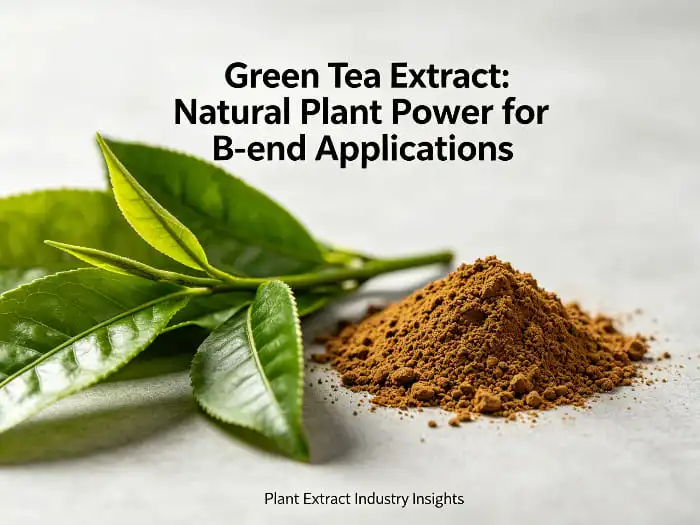
An advanced plant product called green tea extract is made by carefully using water or hydro-ethanolic extraction methods on Camellia sinensis leaves. Unlike the drink version, this standardized powder combines polyphenolic compounds, especially epigallocatechin gallate, or EGCG, into potencies that can be measured and repeated that range from 38% to 98% total polyphenols. Standardization solves a major problem in manufacturing: changes in yearly variations in raw tea leaves that would otherwise make it hard to be consistent from batch to batch.
The Science Behind Catechins and Cellular Protection
Because of how their molecules are structured, catechins can eliminate free radicals at several metabolic sites at the same time. EGCG has the unique ability to bind to and remove transition metal ions, stop oxidative enzyme cascades, and change the production of inflammatory cytokines. Researchers who wrote papers in journals about aging biology have shown how these processes lead to observable effects, such as lower lipid peroxidation in heart tissues, higher dermal collagen production, and better mitochondrial efficiency in metabolic pathways. Not just some random lab results—these are the biological basis that makes it possible for your finished goods to give real anti-aging benefits to people.
Dispelling Common Misconceptions About Caffeine Content
Formulators often worry about how much caffeine is in green tea products. Standard extracts usually have between 1% and 5% caffeine by weight. However, there are special decaffeinated forms that have less than 1% caffeine by weight. This controlled caffeine profile is very different from the variable caffeine level of brewed tea, which lets precise changes be made to the formulation. For products aimed at people who like to drink in the evening or who are sensitive to caffeine, selecting low-caffeine grades during procurement avoids formulation problems later on. Knowing this technical difference will save you time on unnecessary re-formulations and help you place your products more accurately in your marketing materials.
Comparing Popular Green Tea Extract Forms and Brands for Procurement
To choose the best physical form, you need to look at how each format works with your working environment and the architecture of the finished product. Choosing between powder and other delivery methods has a big effect on everything, from how much space is needed for storage to how stable the finished product is.
Powder Versus Capsule-Ready Formats
As a single bulk ingredient, green tea extract powder can be used to make pills, capsules, drinks, and topical treatments. This gives formulators the most options. Its fine, free-flowing particles, which can be light yellow to dark brown depending on the amount of polyphenols present, make it easy for them to spread out evenly in both water-based and fat-based mixtures. The powder form works best for mass production where automated capsule filling machines need a uniform bulk density and a moisture content of less than 5%. On the other hand, contract makers who work with smaller batch sizes or who want to streamline their production steps can use pre-encapsulated formats, but they don't let you customize the formulation as much.
Organic Certification and Supply Chain Implications
The choice between organic and conventional farming has more to do with the supply chain than just marketing value. Organic-certified extracts are more expensive, but they need to be able to be tracked from cultivation to processing, which could make wait times longer and limit your supplier choices. Conventional extracts meet the same purity standards by going through strict testing for pesticide residues. They give you more options for where to get them and often better supply consistency. When making a choice, you should think about what your customers want and how to handle your inventory. For example, luxury supplement brands may require organic certification, while functional beverage manufacturers put a high priority on consistent availability at scale.
Comparative Analysis of Extraction Sources
Even though green tea extract is the most popular catechin product, knowing about other plants that contain catechins can help you understand what makes it special. Even though matcha powder is famous in consumer goods, it doesn't have the standardized EGCG concentrations that are needed for therapeutic dosing in pharmaceutical supplements. Coffee bean products have chlorogenic acids that work as antioxidants in their own way, but they can't copy green tea's specific benefits for reducing inflammation and speeding up metabolism. This makes a difference when comparing goods to others on the market. For example, green tea extract has been used in many studies and is well-known by consumers, which makes it easier to market than botanicals that aren't as well-known.
Effective Dosage, Usage, and Safety Guidelines for Green Tea Extract
To turn biochemical potential into safe products for consumers, dosing guidelines set by human clinical trials and regulatory guidance papers must be followed. On average, two hundred to five hundred milligrams of standardized extract per serving are thought to be beneficial. This amount is equal to one hundred to two hundred milligrams of EGCG. These parameters find the right mix between effectiveness and safety, especially when it comes to monitoring liver function during long-term supplementation plans.
Optimizing Delivery Forms for Target Demographics
Tablets and capsules are good for daily supplement routines where following depends on how easy they are to take and how good they taste. For functional beverage uses, you need grades that dissolve in water and are made to stay clear in acidic pH environments like those found in ready-to-drink drinks. Some of these special types use co-processing with carrier matrices or enzymatic modification to stop the polyphenol precipitation that causes turbidity, which is a major quality problem in high-end drinks. When used for weight loss, mixing high-EGCG extracts with absorption boosters like piperine or phospholipid complexes gets around the problems that polyphenolic compounds have with being bioavailable. This makes the metabolic benefits your customers want even stronger.
Addressing Safety Concerns and Contraindications
Responsible product creation knows that concentrated botanical extracts have different risks than whole food sources. People who are sensitive to caffeine may feel jittery or have trouble sleeping when they use standard extracts. This is why labels need to be clear or decaffeinated grades need to be specified. More importantly, taking a lot of EGCG supplements, especially when they are taken on an empty stomach, has been linked to some users having higher levels of liver enzymes. Regulatory advisors and procurement teams should work together to create clear warnings and usage directions that include these precautions based on evidence. This will protect both end users and your company's liability exposure.
Sourcing and Buying Green Tea Extract: A B2B Procurement Guide
Checking out possible providers is more than just looking at their specification sheets and unit costs. When making important sourcing choices, you need to look at the supplier's manufacturing skills, the maturity of their quality systems, and their infrastructure for regulatory compliance. This will help you decide if the relationship with the supplier will help your market position or hurt it.
Critical Certification and Quality Benchmarks
General Manufacturing Procedure (GMP) certification is the minimum standard. It shows that factories use tested methods to prevent contamination, keep records on batches, and handle deviations. ISO certifications show that methods for quality management and environmental controls are more advanced. In addition to the certificates shown in sales presentations, you should also ask for recent third-party audit reports. These should include heavy metal screening processes, microbiological testing frequency, and methods for analyzing pesticide residues. Suppliers who use approved HPLC methods for catechin profiling and keep certificates of analysis that can be traced back to reference standards show that their analyses are accurate enough for pharmaceutical-grade uses.
Understanding Polyphenol Specification Ranges
There is a huge range in the strength of commercial extracts, from 38% to 98% total polyphenols and 15% to 50% EGCG. This variety has a direct effect on your label claims and design economics. Smaller serving amounts and cleaner supplement facts panels are possible with a 90% polyphenol extract compared to lower-potency options, but the cost of production goes up as a result. When making purchasing choices, you should make sure that the level of specifications matches your product positioning strategy. For example, high-end anti-aging supplements should use high-potency extracts, while mass-market functional foods may do best with mid-range specifications that balance cost and claims of effectiveness.
Private Label and OEM Partnership Opportunities
Forward-thinking providers offer more than just supply of basic ingredients; they also help with formulation development. When making complicated mixtures where green tea extract powder interacts with other plants, vitamins, or minerals, these partnerships are very helpful. When formulas with a lot of polyphenols have problems with oxidation stability, technical teams that know how to fix them can suggest encapsulation technologies, antioxidant synergist blends, or packaging specs that make the products last longer. For brands with tight development schedules, providers who offer regulatory documentation packages and turnkey formulation templates can speed up time-to-market and lower R&D costs.
Harnessing the Future of Green Tea Extract in the Healthy Aging Market
According to market research, green tea extract is being used for a lot more than just supplements. It is also being used in new types of products that smart makers can use to set their products apart from the competition. By understanding these changes in direction, buying strategies can plan ahead for market changes instead of reacting to them.
Emerging Applications in Functional Foods and Cosmetics
More and more, companies that make functional drinks are adding green tea extract to energy drinks, protein shakes, and wellness waters. They do this to take advantage of the fact that consumers like these drinks and because it has measurable antioxidant effects. The technical challenge is to keep the color stable and the taste neutral. Common recipe mistakes include oxidation browning and astringency. These problems are being solved by new processing methods, such as microencapsulation and complexation with cyclodextrins. These methods also make it possible to make new products. The cosmetics industry also knows that green tea extract can protect against UV rays and reduce inflammation. This has led to a need for special types that are better at staying stable in serum and cream bases. Because these uses are so varied, they open up buying options beyond supplement-focused sellers. By combining volume across product lines, these options could lead to better terms.
Innovation in Extraction Technology and Sustainability
New extraction methods that focus on supercritical CO2 and enzyme-assisted techniques are improving both the amount of catechins that are extracted and the environmental profiles. These technologies lower the amount of organic solvents needed while increasing the recovery of polyphenols that are sensitive to temperature. This leads to better bioactivity profiles. As brands try to meet customer expectations about ethical sourcing, sustainability factors are becoming more and more important in buying choices. If your suppliers can show that they use renewable energy, recycle water, and work with farmers in a way that is consistent with fair trade principles, your goods will do better in markets where environmental credentials are important. When purchasing managers look at long-term relationships with suppliers, they should consider sustainability metrics along with quality and cost factors. This is because customer preferences and regulatory trends show that these will become necessary differentiators in the competitive market rather than optional ones.
Conclusion
Green tea extract powder has matured from a traditional botanical into a scientifically validated, industrially scalable ingredient essential for competitive healthy aging product portfolios. Its concentrated catechin profile delivers documented benefits across cardiovascular health, metabolic function, and dermal protection—outcomes increasingly demanded by aging demographics worldwide. Strategic procurement requires balancing technical specifications like polyphenol potency and caffeine control against supply chain realities including certification requirements, minimum order considerations, and formulation support capabilities. As applications expand into functional foods, beverages, and cosmetics, manufacturers who establish relationships with suppliers offering customization flexibility, robust quality systems, and innovation partnership models will capture disproportionate market opportunities in this growing sector.
FAQ
How does green tea extract differ from regular brewed green tea?
Green tea extract undergoes controlled extraction processes that concentrate polyphenolic compounds into standardized potencies, typically containing fifty to ninety-eight percent total polyphenols. Brewed tea delivers variable catechin levels influenced by steeping time, water temperature, and leaf quality—making it unsuitable for applications requiring consistent therapeutic dosing. The extract format provides measurable, reproducible EGCG content essential for supplement manufacturing and clinical validation.
What are the potential side effects of high-dose green tea extract?
Concentrated catechin supplementation, particularly above eight hundred milligrams EGCG daily, has been associated with elevated liver enzymes in sensitive individuals. Caffeine content in standard extracts may cause sleep disturbances or jitteriness. Responsible formulation includes appropriate dosing guidance and consideration of decaffeinated grades for caffeine-sensitive populations. Procurement teams should ensure suppliers provide safety data supporting recommended usage levels.
How can I verify the quality of a green tea extract supplier?
Request comprehensive certificates of analysis demonstrating polyphenol profiling via validated HPLC methods, heavy metal screening results, microbiological testing, and pesticide residue analysis. Evaluate GMP and ISO certifications through third-party audit reports rather than certificates alone. Assess production capacity, lead time consistency, and technical support capabilities through reference checks with existing customers operating in your target application category.
Partner with Wellgreen for Premium Green Tea Extract Supply
Wellgreen Technology operates as a specialized green tea extract manufacturer with the infrastructure and expertise to support your healthy aging product development initiatives. Our GMP-certified production facility maintains a comprehensive inventory across polyphenol specifications from thirty to ninety-eight percent, with customizable caffeine control to match your exact formulation requirements. We provide detailed certificates of analysis documenting catechin profiles, solubility characteristics, and oxidation stability data essential for beverage system applications and long-term shelf-life validation. Whether you need water-soluble grades for functional drinks, high-EGCG concentrations for metabolic support capsules, or customized OEM formulations with flexible minimum orders, our technical team collaborates throughout development to solve complex formulation challenges. Contact us at wgt@allwellcn.com to request samples, discuss your specific application requirements, or explore how our green tea extract for sale can elevate your product portfolio in the competitive healthy aging market.
References
Chacko SM, Thambi PT, Kuttan R, Nishigaki I. "Beneficial effects of green tea: A literature review." Chinese Medicine, 2010.
Nomura M, Ma W, Chen N, Bode AM, Dong Z. "Inhibition of 12-O-tetradecanoylphorbol-13-acetate-induced NF-kappaB activation by tea polyphenols, epigallocatechin gallate and theaflavins." Carcinogenesis, 2000.
Singh BN, Shankar S, Srivastava RK. "Green tea catechin, epigallocatechin-3-gallate: inflammation and arthritis." Life Sciences, 2011.
Balentine DA, Wiseman SA, Bouwens LC. "The chemistry of tea flavonoids." Critical Reviews in Food Science and Nutrition, 1997.
Henning SM, Niu Y, Lee NH, Thames GD, Minutti RR, Wang H, Go VL, Heber D. "Bioavailability and antioxidant activity of tea flavanols after consumption of green tea, black tea, or a green tea extract supplement." American Journal of Clinical Nutrition, 2004.
Lambert JD, Yang CS. "Mechanisms of cancer prevention by tea constituents." Journal of Nutrition, 2003.