How Curcumin Fights Chronic Inflammation?
2026-05-15 14:00:00
Curcumin powder, which is made from turmeric rhizomes, stops key molecular processes like NF-κB and lowers pro-inflammatory cytokines like IL-6 and TNF-α. This directly targets chronic inflammation. Natural extract that has been tested and found to be safe provides concentrated curcuminoids that change the immune response without the harsh side effects that are common in man-made drugs. Turmeric extract powder is an important ingredient for B2B companies making joint health supplements, functional drinks, and wellness formulations because it is a natural anti-inflammatory ingredient with strong scientific support and market-proven effectiveness.

Understanding Chronic Inflammation and Its Challenges
Chronic inflammation is a silent health disaster that affects a lot of people around the world. Acute inflammation is the body's first reaction to an injury or infection. Chronic inflammation, on the other hand, lasts for months or even years and damages tissues and organs slowly over time. Heart disease, type 2 diabetes, rheumatoid arthritis, and metabolic syndrome have all been linked to this low-level immune activity. According to research, almost 60% of Americans have at least one disease that is linked to chronic inflammatory processes.
The Root Causes of Persistent Inflammation
Chronic inflammation is caused in large part by the way people live today. Inflammatory responses are started and kept going by a diet high in processed foods, being inactive, long-term worry, environmental toxins, and not getting enough sleep. Free radicals are made by oxidative stress and damage DNA. They also start inflammatory signaling pathways. This makes a vicious loop where inflammation leads to more oxidative damage, which then causes more inflammation.
Limitations of Conventional Anti-Inflammatory Treatments
NSAIDs and corticosteroids are often used in traditional drug treatments for inflammation. These medicines help with symptoms right away, but using them for a long time comes with a lot of risks. NSAIDs can lead to bleeding in the gut, damage to the kidneys, and heart problems. It is possible for corticosteroids to make you gain weight, lose bone structure, and weaken your immune system. Tolerance and drug resistance also make them less effective over long stretches of time. The global pharmaceutical market is becoming more and more aware that safer options are needed for long-term control of inflammation.
Market Demand for Natural Anti-Inflammatory Solutions
A huge shift in consumer understanding has happened toward natural health solutions. In 2023, the botanical supplements market in the US alone was worth $11.3 billion. Anti-inflammatory products were a big part of this rise. Regulatory bodies now support study into plant-based medicines, and more and more doctors are recommending integrative approaches that mix conventional medicine with natural ingredients that have been shown to work. This coming together opens up a lot of possibilities for business-to-business sellers of standardized botanical extracts with proven safety and effectiveness.
The Science Behind Curcumin Powder and Its Anti-Inflammatory Properties
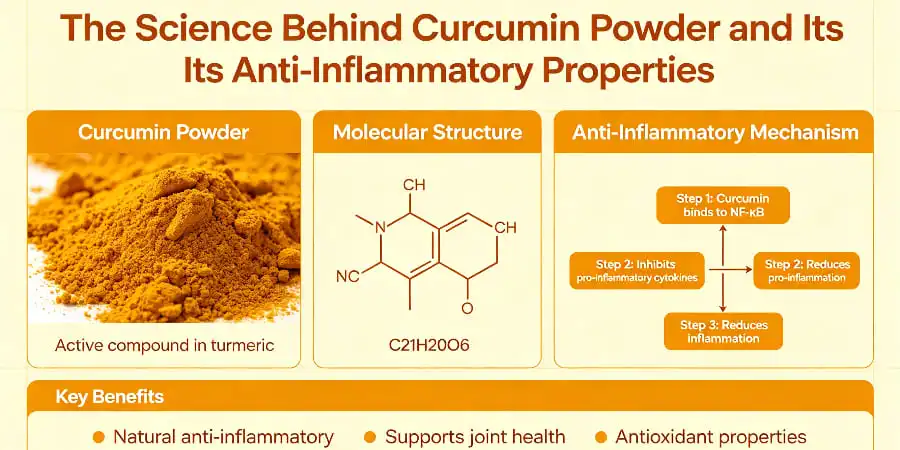
Curcumin, which makes up about 2 to 8 percent of raw turmeric powder, is the main bioactive ingredient in turmeric. Standardized curcumin powders get these curcuminoids as pure as 95% by using ethanol extraction methods that keep the molecules' shape while getting rid of unwanted plant material. This process greatly increases the potency compared to whole turmeric, which lets you precisely dose and predict therapeutic benefits.
Molecular Mechanisms of Anti-Inflammatory Action
Curcumin works through several molecular routes at the same time. The chemical directly stops NF-κB from working, which is a transcription factor that turns on genes that make proteins that cause inflammation. Inflammatory chemicals like COX-2, TNF-α, IL-1β, and IL-6 are made less by cells when NF-κB activity goes down. Studies in the lab show that curcumin can stop NF-κB from activating by stopping the breakdown of IκB proteins, which usually stops NF-κB from being active. This approach has more anti-inflammatory benefits than medicines that only work on one pathway.
Antioxidant Properties Supporting Immune Balance
Curcumin does more than just reduce inflammation; it is also a powerful antioxidant. The molecular structure of the substance is made up of phenolic groups and a β-diketone moiety that remove reactive oxygen species and reactive nitrogen species. Curcumin also increases the activity of antioxidant enzymes found naturally in the body, such as superoxide dismutase, catalase, and glutathione peroxidase. By directly blocking free radicals and making the body's own antioxidant defenses stronger, this two-pronged approach targets inflammation at its reactive source.
Distinguishing Curcumin Extract from Raw Turmeric
People who work in procurement need to know that whole turmeric powder and standardized curcumin extract are very different. Turmeric in its raw form only has about 2 to 5 percent curcuminoids. It also has fiber, starches, and other phytochemicals. About 30 to 40 times more curcumin is in a gram of a 95% pure extract. For formulation predictability, dosage accuracy, and regulation compliance, this concentration is very important. Standardized extracts are also put through strict tests to make sure they are pure. This makes sure that the quality is the same from batch to batch, which is important for medicinal and nutraceutical uses but not possible with raw materials.
Benefits, Usage, and Safety Considerations of Curcumin Powder
Clinical studies have shown that curcumin is useful for a number of health issues. Curcuminoids have been studied in more than 150 human clinical trials, and there is strong proof that they can help with inflammatory conditions. The scientific basis that B2B buyers need to back up product claims and understand legal requirements is provided by these studies.
Joint Health and Mobility Support
Products made from curcumin are mostly used to treat osteoarthritis and joint pain. A review of multiple randomized controlled trials found that giving osteoarthritis patients curcumin supplements greatly reduced their pain scores and helped their ability to do physical activities. Curcumin extract standardized to 95% curcuminoids should be taken every day in doses between 500 mg and 2000 mg. These mixtures are the main ingredients in joint health supplements. They are often mixed with glucosamine, chondroitin, or MSM to make full-spectrum goods that help joints.
Cardiovascular and Metabolic Health Applications
Through a number of different pathways, curcumin protects cardiovascular function. The chemical enhances the function of endothelial cells, lowers the oxidation of LDL, and changes the levels of inflammatory markers linked to atherosclerosis. Studies in humans have shown that taking curcumin supplements can raise flow-mediated dilation by up to 45% in just eight weeks. This is a key sign of good vascular health. Because it is good for the heart, curcumin is a useful ingredient in products for heart health and metabolic wellness that help control blood sugar and keep you at a healthy weight.
Enhancing Bioavailability with Piperine
Native curcumin is not very bioavailable when taken by mouth because it is quickly broken down and not absorbed well by the intestines. Because of this problem, bioavailability enhancement devices have come a long way. Piperine, a product from black pepper, blocks glucuronidation in the liver and intestines, which makes it easier for the body to absorb curcumin by about 2000%. A lot of commercially effective formulas have 5 mg of piperine and 95% curcumin in each dose. Nanoparticle formulations, phospholipid complexes, and water-dispersible forms are some other ways to solve the problem of not being soluble in beverages.
Safety Profile and Regulatory Compliance
Curcumin's use in consumer goods is supported by a lot of safety statistics. In clinical trials where people took up to 12 grams of it every day for three months, there were no major side effects. Some people did experience mild stomach problems. Curcumin is generally thought to be safe (GRAS) for use in food in the US and is on good lists in most major markets around the world. Quality providers give full safety reports with heavy metal analysis, microbial tests, and residual solvent verification. This information is very important for regulatory submissions and due diligence processes.
Evaluating Curcumin Powder Suppliers and Products for B2B Procurement
To choose the right sources for turmeric extract, you need to carefully look at them across a number of quality factors. Buying decisions have a direct effect on how well a product works, how well it meets regulations, how consistently it is made, and eventually, the brand's reputation. The following factors give a framework for judging suppliers.
Purity Standards and Analytical Verification
Premium curcumin products keep 95% of the total curcuminoids, which can be proven by HPLC analysis. The three main curcuminoids—curcumin, demethoxycurcumin, and bisdemethoxycurcumin—should be listed in the Certificates of Analysis. Heavy metals (lead, arsenic, mercury, cadmium), herbicide residues, aflatoxins, and microbial contamination should be tested for each batch by the supplier. For pharmaceutical uses, products must comply with USP or EP monographs. Dietary supplement manufacturers, on the other hand, usually use American Herbal Products Association standards.
Certification Requirements and Quality Systems
Certifications for manufacturing show that the business is mature and committed to quality. GMP certification shows that factories follow the latest Good Manufacturing Practices for methods that are used in pharmaceuticals. A company with ISO 9001 certification has strong quality management systems, and an organization with ISO 22000 certification manages food safety. Organic certifications from the USDA or EU governing bodies show that the farming and processing do not use pesticides. These credentials make it easier for regulators to give permission in target areas and lower the risk of noncompliance all along the supply chain.
Extraction Methods and Processing Technologies
The standard way to make curcumin in the business is to use food-grade ethanol for solvent extraction. This method effectively collects curcuminoids while keeping the chemicals stable. The best providers use closed-loop extraction systems that reuse solvents. This has a minimal effect on the environment and lowers the amount of solvent that is left over below the detection level. Particle size can be controlled through micronization or spray drying in advanced processes. This makes powders that are best for different uses, such as direct compression in tablets or dispersion in beverage systems.
Bioavailability-Enhanced Formulations
The market for curcumin has grown beyond simple extracts to include forms that are better at absorption. In addition to making membranes more permeable, phospholipid complexes make lipids more soluble. Nanoparticle formulas make particles 400 nanometers or smaller, which makes dissolution rates a lot faster. Curcumin that dissolves in water is mixed with food-grade surfactants or polysaccharide carriers to make stable water-based solutions that can be used in liquid supplements and ready-to-drink drinks. When purchasing these technologies, teams should think about how they will be used, whether they will be accepted by regulators in the final markets, and any intellectual property issues that might come up.
Supply Chain Reliability and Business Terms
For industrial production, a steady supply is very important. Qualified suppliers keep a lot of stock on hand and show that their products come from clear, verified cultivation areas. Minimum order amounts that are flexible can be used for both product development and full-scale production. In order to be competitive, business arrangements should take into account order volume, payment terms, and the length of the partnership, all while keeping quality standards high. Reliable logistics skills make sure that the right temperature is maintained during shipping and that all the paperwork is done so that customs can clear the goods. Technical support services, such as help with formulation and stability tests, are very valuable in addition to providing raw materials.
Practical Applications and Case Studies: How Curcumin Powder Enhances Product Portfolios?
Because standardized curcumin extract is so flexible, it can be used in a wide range of products in many different market areas. B2B buyers can improve their own product development efforts by learning about successful implementation methods.
Dietary Supplement Formulations
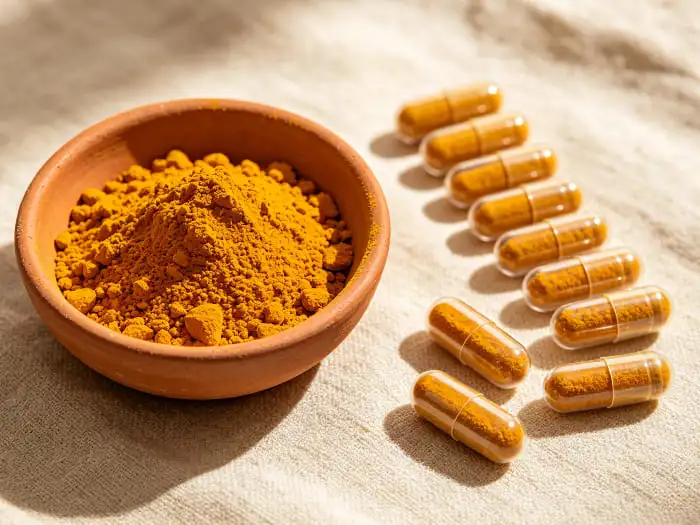
Supplements for joint health make up the biggest market for goods with curcumin in them. Leading brands have created their own combinations that contain 95% curcumin extract, piperine, and other ingredients that work well together, such as boswellia, ginger extract, and type II collagen. These formulations with multiple ingredients work together to create synergistic effects while still allowing for distinct placement. This category is mostly made up of capsules, but there are also tablet and softgel forms for people who prefer those. To build customer trust, successful products put information about standardized potency, third-party testing confirmation, and clinical research references on the packaging.
Functional Food and Beverage Integration
More and more beverage companies are adding curcumin to their products, like in health shots, golden milk blends, and functional teas. Curcumin preparations that dissolve in water solve the problems that come with these uses. Curcumin gives drinks a unique earthy smell and bright yellow color, so drink makers have to think about both technical stability (keeping the dispersion over the course of the shelf life) and sensory qualities. When a product does well, it uses these traits as signs of authenticity instead of flaws. When you mix curcumin with flavors that go well together, like ginger, lemon, and honey, you get a tasty treat that also reinforces the health message.
Pharmaceutical and Nutraceutical Development
Curcumin has been looked at by drug makers as an active ingredient in both prescription and over-the-counter medicines that treat inflammation. For these uses, the purest grades are needed, along with full impurity analysis and tested analytical methods. In clinical studies, a number of new drugs are using curcumin or synthetic curcuminoid analogues to treat conditions like metabolic syndrome, ulcerative colitis, and neurodegenerative diseases. The large safety database and understanding of how things work make it easier to set up regulatory routes for new therapeutic uses.
Cosmetic and Personal Care Applications
Curcumin is used more and more in skin care products because it reduces inflammation and protects cells from damage. The compound reduces redness on the face, helps the barrier function, and protects against UV-induced damage. Curcumin is often used by cosmetic makers in serums, creams, and masks at concentrations ranging from 0.5 to 2%. To keep the color stable and avoid stains, careful formulation work is needed. This is usually done by using encapsulation technologies or mixing with plant turmeric extracts that work well together. Curcumin's gentle but effective bioactive profile makes it a great ingredient for anti-aging products and skin care items for sensitive skin.
Conclusion
Curcumin extract powder stands as a scientifically validated, market-proven ingredient for addressing chronic inflammation across multiple product categories. The compound's multi-pathway molecular action, extensive clinical evidence, and excellent safety profile make it an essential component for brands developing differentiated wellness products. Quality curcumin extract sourcing directly impacts product efficacy, regulatory compliance, and commercial success. Partnering with suppliers who provide standardized potency, comprehensive testing, bioavailability-enhanced formulations, and reliable supply chains enables B2B buyers to confidently develop competitive products meeting rigorous quality standards and evolving consumer expectations in the natural health marketplace.
FAQ
What makes curcumin effective for long-term inflammation management?
Curcumin modulates fundamental inflammatory pathways including NF-κB inhibition and cytokine regulation rather than simply masking symptoms. This mechanism-based approach addresses inflammation's root causes. Long-term safety studies demonstrate that continuous use for up to 18 months produces no serious adverse effects, unlike synthetic anti-inflammatory medications that carry cumulative toxicity risks.
How does piperine enhance curcumin absorption?
Piperine inhibits hepatic and intestinal glucuronidation enzymes that rapidly metabolize curcumin. This inhibition allows more curcumin to enter systemic circulation before breakdown. Research shows piperine increases curcumin bioavailability by 2000% at doses as low as 5-20 mg, making it an essential co-ingredient in oral supplement formulations.
Which certifications matter most when sourcing curcumin extract?
GMP certification verifies pharmaceutical-grade manufacturing processes. Organic certifications from USDA or EU authorities confirm pesticide-free cultivation. ISO standards demonstrate quality management systems. Complete analytical testing for heavy metals, pesticides, and microbial contamination provides batch-specific quality assurance. These credentials collectively ensure regulatory compliance and product safety.
Partner with Wellgreen for Premium Curcumin Powder Supply
Wellgreen Technology serves as your trusted curcumin powder supplier, delivering standardized turmeric extract with 95% curcuminoid content verified through HPLC analysis. Our GMP-certified manufacturing facility maintains rigorous quality control protocols, providing comprehensive testing for heavy metals, pesticide residues, and microbial safety with every batch. We offer flexible specifications including bioavailability-enhanced formulations co-processed with piperine, water-dispersible grades for beverage applications, and customized particle sizes optimized for your production requirements. Our technical team provides formulation support addressing stability considerations, absorption enhancement strategies, and application-specific recommendations for capsules, tablets, and functional beverages. With substantial inventory reserves ensuring consistent supply and competitive commercial terms for bulk orders, Wellgreen enables your product development success. Contact our procurement specialists at wgt@allwellcn.com to discuss your curcumin powder requirements and receive detailed technical specifications tailored to your manufacturing needs.
References
Hewlings S.J., Kalman D.S. (2017). Curcumin: A Review of Its Effects on Human Health. Foods, 6(10), 92.
Aggarwal B.B., Harikumar K.B. (2009). Potential therapeutic effects of curcumin, the anti-inflammatory agent, against neurodegenerative, cardiovascular, pulmonary, metabolic, autoimmune and neoplastic diseases. The International Journal of Biochemistry & Cell Biology, 41(1), 40-59.
Gupta S.C., Patchva S., Aggarwal B.B. (2013). Therapeutic roles of curcumin: lessons learned from clinical trials. The AAPS Journal, 15(1), 195-218.
Daily J.W., Yang M., Park S. (2016). Efficacy of Turmeric Extracts and Curcumin for Alleviating the Symptoms of Joint Arthritis: A Systematic Review and Meta-Analysis of Randomized Clinical Trials. Journal of Medicinal Food, 19(8), 717-729.
Shoba G., Joy D., Joseph T., et al. (1998). Influence of piperine on the pharmacokinetics of curcumin in animals and human volunteers. Planta Medica, 64(4), 353-356.
Prasad S., Gupta S.C., Tyagi A.K., Aggarwal B.B. (2014). Curcumin, a component of golden spice: From bedside to bench and back. Biotechnology Advances, 32(6), 1053-1064.