How does Reishi work? Discover the properties of the Reishi mushroom
2026-05-01 14:00:00
The concentrated bioactive compounds in reishi extract work by interacting with immune cells and inflammatory processes in the body. These compounds are mostly polysaccharides and triterpenes. This standardised extract, which comes from the growing body of Ganoderma lucidum, is more bioavailable than raw mushroom forms. The polysaccharides turn on natural killer cells and macrophages, and the triterpenes help reduce inflammation and protect cells from damage. Because it works in two ways, reishi extract is an important part of immune support formulas and functional health goods in the nutraceutical market.
Understanding Reishi Extract: Nature and Benefits
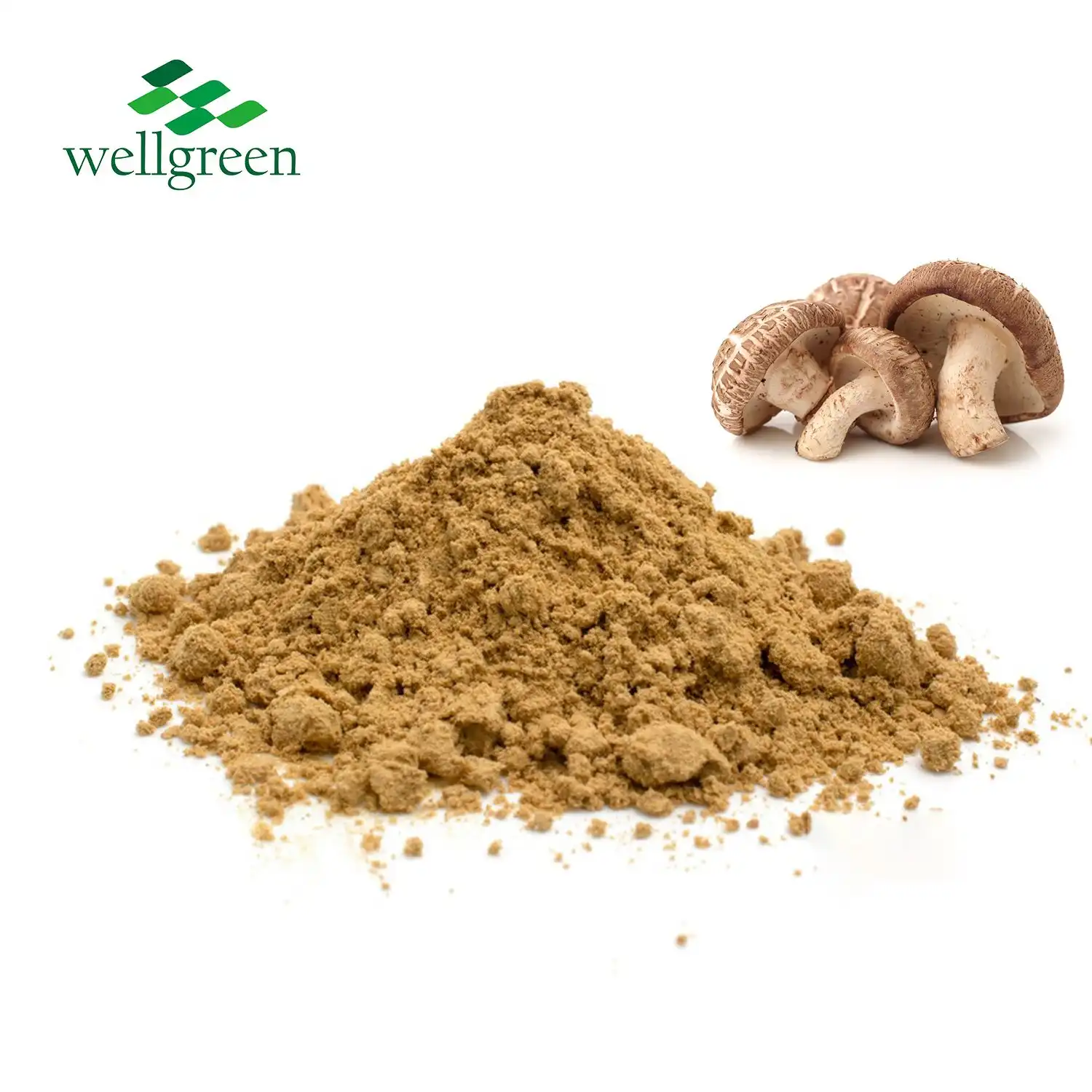
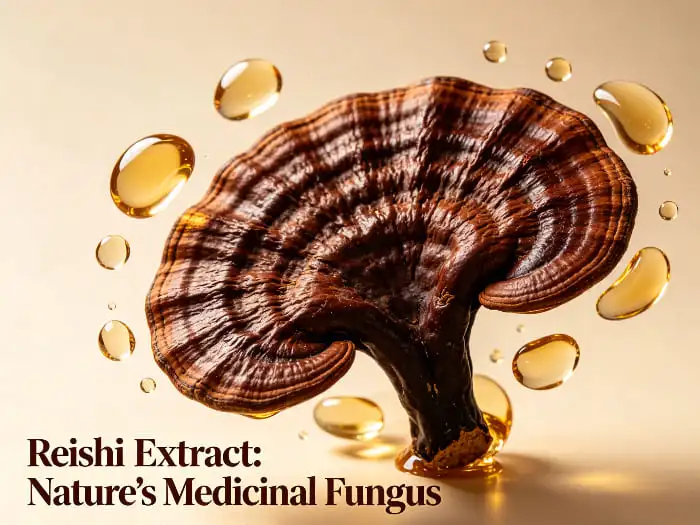
Reishi mushroom extract is a concentrated plant-based ingredient that comes from the fruiting body of Ganoderma lucidum, a species that is long valued in Asian health practices. Instead of using whole mushrooms or products made from mycelium, the extraction process separates key bioactive molecules, mainly beta-glucan polysaccharides and ganoderic acid triterpenes. This makes a consistent, measurable product that can be used in commercial formulation.
The Science Behind Reishi's Active Compounds
The healing power of reishi comes from two main groups of compounds that work together. Polysaccharides, which make up 10–40% of good extracts, have traits that change the immune system by attaching to immune cells' cell surface receptors. According to a study in the Journal of Ethnopharmacology, these polysaccharides make more interleukin-2 and interferon-gamma, which are important molecules for the immune reaction. Triterpenes, which make up 2-6% of high-quality extracts, have strong anti-inflammatory benefits by stopping the release of histamine and changing the expression of cytokines.
Product makers can see real benefits from this biochemical profile. Supporting the immune system is still the most well-studied use, with regular supplementation leading to higher activity of natural killer cells in clinical trials. Oxidative stress, a contributor to ageing and the onset of chronic diseases, is addressed by the antioxidant capacity of reishi products, as indicated by ORAC values that frequently exceed 20,000 mol TE/g. Pharmaceutical-grade extracts can also protect the liver, which makes them useful in formulas that aim to improve liver health and detoxification routes.
Why Extracts Outperform Raw Materials in Formulation?
People who work in procurement like how extraction technology solves important problems that come up with raw plant materials. The concentration process gets rid of the indigestible chitin fibres that make up the cell walls of mushrooms. This makes absorption a lot better. A 10:1 extraction ratio means that 10 kg of raw fruiting bodies make 1 kg of concentrated powder. This makes sure that each dose has the right amount of active chemicals without needing big capsules or serving sizes.
A clear benefit is also provided by standardisation. Whole mushrooms vary a lot in how strong they are depending on how they were grown and when they were harvested. But good reishi extracts keep the same amounts of polysaccharides and triterpenes from one production batch to the next. This consistency backs up the label claims, makes dosing calculations easier, and makes sure the product works the way customers expect it to—all of which are important for building a brand's image and following the rules.
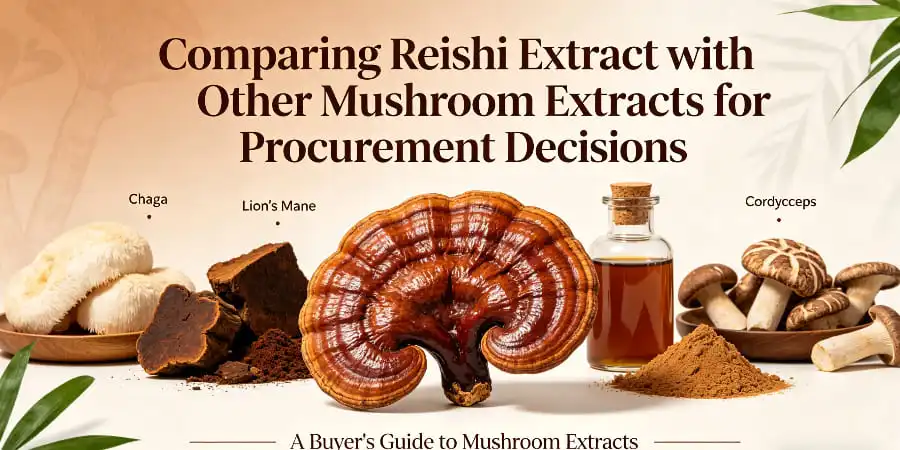
Comparing Reishi Extract with Other Mushroom Extracts for Procurement Decisions
There are many kinds of useful mushrooms, and each one has its own unique set of bioactive compounds that are good for different health needs. Knowing these differences helps you choose ingredients in a way that fits your recipe goals and target market positioning.
Active Ingredient Profiles Across Species
Reishi is known as the main ingredient that supports the immune system because it has a balanced polysaccharide-triterpene makeup that helps the immune system right away and in the long term to keep cells healthy. Chaga (Inonotus obliquus) ingredients are great for anti-aging and skin health products because they have a lot of melanin and superoxide dismutase, which are antioxidants. Lion's Mane (Hericium erinaceus) is unique because it contains erinacines and hericenones that can cross the blood-brain barrier. This makes it useful for cognitive wellness, a market area that has grown 23% annually.
Cordyceps extracts have cordycepin and adenosine in them, which help the body's energy metabolism and improve athletic ability. Turkey Tail (Trametes versicolor) has protein-bound sugars that have been used in cancer support formulations before. Each species fills a different need, but reishi is the most flexible choice for multifunctional formulations and brand baseline goods because it has the widest range of benefits and is known to be safe.
Form Factor Considerations for Different Applications
The shape has a direct effect on how it is made, how stable it is, and how easy it is to use in the end. Spray-dried powders with 80-mesh particles are very easy to flow for packaging and tabletting, which keeps machines from getting stuck during fast production runs. When reishi extracts are treated with enzymes or ultrasonic waves, they become water-soluble and mix fully with drinks without settling to the bottom. This is important for functional coffee blends and ready-to-drink formats where clarity is important.
While liquid extracts are useful for making tinctures and drinks that need to dissolve quickly, they need to be packaged in a certain way and shipped in a cold chain. Which type to use depends on the end goal. For example, powder extracts are most common in the dietary supplement industry because they last longer and are cheaper to ship. More and more, beverage makers want grades that are water-dispersible and stay clear at different temperatures and pH levels.
Organic Certification and Market Access
Certification needs have a big impact on sourcing choices, especially when going after markets in North America and Europe. Organic certifications from the USDA and the EU get you better placement and access to natural shopping channels where certification is often required. These certificates show that the whole production process—from the growing medium to the extraction and packaging—meets strict rules that don't allow synthetic pesticides, irradiation, or genetic modification.
When they come from GMP-certified makers, non-organic grades are still very pure, but they can't say they are organic on the label. The type of certification affects the prices. For example, organic reishi mushroom extracts usually cost 20–35 percent more than other types because they have to follow tighter production rules and grow fewer plants. It's important for procurement teams to know how to balance the need for certification with budget limits and the needs of the target channel. They should also keep in mind that mainstream supplement brands can sell non-organic functional mushroom products as long as the documentation for quality testing is clear.
How to Use Reishi Extract: Dosage, Timing, and Safety Considerations
Effective application protocols depend on the type of formulation, the health claims that are being made, and how the customer usually uses the product. When making choices about what to buy, these application factors should be taken into account to make sure that the materials support end-user compliance and satisfaction.
Clinical Dosage Guidelines for Product Development
According to published clinical studies, the best daily dose is between 1,500 mg and 9,000 mg of dried fruiting body equivalent, which is equal to 150 mg to 900 mg of 10:1 concentrated extract. Most commercial formulations aim for 500 mg per serving, which gives therapeutic amounts of polysaccharides while keeping capsule counts manageable. A lot of immune support products say to take them twice a day to keep the amount of active substances in your blood steady throughout the day.
In beverage uses, 250 to 500 mg per serving is usually used to balance taste with health benefits, since higher triterpene concentrations add bitter notes. It is usually suggested to take these supplements in the morning for energy-boosting formulas or in the evening for better sleep and stress management. Product developers should be aware that reishi has effects that build over time. According to data from clinical trials, the best results usually show up after 8 to 12 weeks of regular use.
Safety Profile and Quality Assurance Requirements
In many clinical tests, reishi extracts have been shown to be very safe. Adverse effects are very rare and usually only cause mild digestive discomfort in people who are sensitive. Indications not to use include taking immunosuppressant drugs at the same time, taking anticoagulant drugs, or right before surgery because triterpene chemicals may thin the blood. Heavy metals (lead <3 ppm, arsenic <1 ppm, mercury <0.1 ppm) and microbial contamination (total plate count <10,000 cfu/g, yeast/mold <1,000 cfu/g) should be checked for in quality assurance processes.
The extraction method has a big impact on the quality and consistency of the end product. It is possible to separate polysaccharides with hot water extraction, but triterpenes stay in the material. Triterpenes are well captured by alcohol extraction, but water-soluble molecules are missed. Dual extraction, which involves processing with hot water and alcohol in a certain order, gives you full-spectrum bioactivity, but it costs more and needs more advanced equipment to make. To make sure the material meets the standards for formulation, the purchase specifications should clearly state the extraction method and ask for certificates of analysis that show both the polysaccharide percentages (usually shown as beta-glucans) and the triterpene content.
Making Informed Purchasing Decisions: Evaluating Reishi Extract Suppliers
Supplier choice has a direct effect on the quality of the product, compliance with regulations, and the long-term image of the brand. A methodical evaluation process helps purchasing teams find manufacturing partners that can keep up with growing product lines and provide uniform, documented quality.
Certification and Manufacturing Infrastructure
GMP certification is the minimum standard for dietary supplement applications. It makes sure that manufacturers keep controlled production environments, approved cleaning methods for equipment, and well-documented quality systems. Getting ISO 9001 certification shows that you are committed to quality control in all of your business processes. When going after high-end customers or certain retail outlets, organic certifications (USDA, EU, JAS) need extra checks.
An evaluation of the manufacturing infrastructure should look at the reishi mushroom extract equipment's power, the lab's testing abilities, and the openness of the raw material sources. Trading companies that outsource production don't have as much control over quality parameters as suppliers who run their own extraction facilities and have HPLC testing tools on-site. Batch size is important for scaling goods from launch to growth. Suppliers that can handle both small development batches (50–100 kg) and commercial volumes (1,000 kg or more) keep brands running smoothly as they grow.
Quality Documentation and Traceability Systems
Certificates of analysis showing polysaccharide content, triterpene levels, heavy metal screening, microbiological testing, and pesticide residue analysis should all be included in complete paperwork packages. Testing each batch separately instead of once a year gives more confidence in the product being consistent. Traceability systems that connect finished extracts to specific fruiting body harvest lots allow for quick action if quality problems arise and show the supply chain openness that regulators and smart consumers are increasingly calling for.
Manufacturers who have been in the functional mushroom business for a while have built their names on providing consistent quality and quick technical support. Specific brand suggestions depend on the needs of the application. However, suppliers who stick to published quality standards, help with formulation, and have fair minimum order quantities make product development easier. Before committing to large orders, procurement teams should get samples from more than one source and test them side by side to see how well they dissolve, how they taste, and how analytical they are.
Integrating Reishi Extract into Your Product Line
For product integration to go well, formulation creativity needs to be balanced with regulatory compliance and a plan for positioning the product in the market. The fast growth of the functional mushroom area opens up chances for new brands with unique products to enter the market.
Application Opportunities Across Product Categories
Dietary supplements are still the most common use for reishi. It can be found in immune support formulas with just one ingredient and in mushroom matrix mixes that combine multiple species for added benefits. Capsules and tablets are most popular in this market area because they are easy for customers to use and give the right dose. Powder supplements that can be mixed with drinks have become popular among younger people who want to make their own health practices.
Functional beverage uses offer big growth potential, especially mushroom coffee blends where reishi's earthy flavour goes well with dark roast characteristics. For ready-to-drink products, you need ingredients that dissolve in water, stay stable during pasteurisation, and stay clear for the whole shelf life. Adaptogenic mushrooms are being used more and more as a way for energy drinks and protein recovery drinks to stand out from other goods in the same category.
Antioxidant and anti-inflammatory qualities of reishi are used in cosmetics to make anti-aging serums, skin barrier repair formulas, and soothing treatments. The extract has to be pure enough for cosmetic use, with extra care paid to making sure it doesn't contain any microbes or particles that could make the emulsion less stable or irritate the skin.
Regulatory Frameworks Governing Market Entry
To get into the US market, you have to follow the FDA's dietary supplement rules under DSHEA. This includes registering your business correctly, following cGMP standards, and putting on correct labels. Structure-function claims about reishi's role in overall health can be made without pre-market approval. However, disease treatment claims are still not allowed. The Supplement Facts panel needs to be clear about dose sizes and use the right terminology when listing reishi extract.
To get into the European showcase, you have to take after more complicated rules. Ganoderma lucidum items have been utilized for a long time in a few part states, but unused nourishment laws may apply to how they are prepared or how much they are utilized. Merchants ought to check the administrative circumstance in the regions they need to offer to and make beyond any doubt that the equations they utilize meet the naming and most extreme levels permitted in each region. The European Nourishment Security Specialist has rules around how to demonstrate wellbeing claims. Any on-pack advantage explanations must be supported up by solid logical proof.
Being open almost where the items come from, how they're handled, and the science behind them builds believe in the company and its validity with clients. Premium products stand out in a advertise where buyers are getting to be more learned and carefully look at fixing quality and fabricating measures by advertising third-party testing certificates, clearly clarifying extraction proportions, and instructing clients around quality markers.
Conclusion
Reishi mushroom extract is a broadly valuable fixing that has been demonstrated to back safe wellbeing, secure against free radicals, and decrease irritation in a assortment of item sorts. Reishi is an vital portion of cutting edge utilitarian wellbeing details since it contains polysaccharides and triterpenes that work in two diverse ways. It is too known to be secure and shopper information is developing. The victory of obtainment rests on choosing providers that offer institutionalized extracts, clear documentation on where the tests came from, and fabricating capabilities that can develop with the item. Item engineers can make special items that meet administrative measures and client objectives in the developing wellness showcase by learning around extraction strategies, certification prerequisites, and application-specific details.
FAQ
What makes reishi extract more effective than consuming whole mushrooms?
Extraction concentrates bioactive polysaccharides and triterpenes while removing indigestible chitin fibers that limit nutrient absorption. A quality 10:1 extract delivers therapeutic compound levels in smaller doses compared to whole mushrooms, improving bioavailability and enabling precise formulation control. Standardization ensures consistent potency across batches, which raw mushrooms cannot guarantee due to natural growing variation.
How do I verify polysaccharide content in reishi extract?
Request certificates of analysis showing beta-glucan content measured through enzymatic-gravimetric methods or HPLC testing. Reputable suppliers provide batch-specific documentation rather than generic specifications. Polysaccharide content typically ranges from 10-40% in quality extracts, with higher percentages indicating more concentrated material. Independent third-party laboratory verification adds credibility to supplier claims.
Can reishi extract be combined with other functional mushroom species?
Multi-mushroom formulations leverage complementary benefits from different species. Reishi combines effectively with Lion's Mane for cognitive-immune support, with Cordyceps for energy-immunity blends, or with Turkey Tail in comprehensive immune formulas. Ensure each species contributes therapeutic dosage levels rather than including trace amounts for label appeal. Combined extracts should maintain individual species identity through separate sourcing and blending rather than co-extraction.
What extraction ratio should I specify for dietary supplement applications?
A 10:1 extraction ratio balances concentrated bioactivity with practical dosing, allowing 500 mg servings to deliver equivalent benefits of 5,000 mg dried mushrooms. Higher ratios (20:1 or 30:1) enable smaller capsule sizes but increase costs. Specify extraction method (hot water, alcohol, or dual extraction) alongside ratio, as methodology impacts which compounds remain in the final product.
Partner with Wellgreen for Premium Reishi Extract Supply
Wellgreen Technology delivers pharmaceutical-grade reishi mushroom extract powder sourced exclusively from fruiting bodies, ensuring maximum polysaccharide and triterpene concentrations. Our GMP-certified manufacturing facility maintains strict quality protocols, providing standardized specifications with batch-to-batch consistency essential for long-term brand partnerships. Whether you're formulating immune support capsules, functional beverage blends, or complex mushroom matrix products, our technical team offers customized solutions including organic and conventional grades, water-soluble formats, and synergistic mushroom combinations.
We understand procurement managers require reliable supply chains and transparent documentation. Our comprehensive certificates of analysis verify polysaccharide content stability, confirm fruiting body sourcing, and document complete testing for contaminants. Flexible minimum order quantities support both emerging brands and established manufacturers scaling production. Contact our team at wgt@allwellcn.com to discuss your reishi extract requirements and discover why leading nutraceutical brands trust Wellgreen as their preferred reishi extract supplier for innovative health formulations.
References
Batra P, Sharma AK, Khajuria R. Probing Lingzhi or Reishi medicinal mushroom Ganoderma lucidum (higher Basidiomycetes): a bitter mushroom with amazing health benefits. International Journal of Medicinal Mushrooms. 2013;15(2):127-143.
Wachtel-Galor S, Yuen J, Buswell JA, Benzie IFF. Ganoderma lucidum (Lingzhi or Reishi): A Medicinal Mushroom. In: Herbal Medicine: Biomolecular and Clinical Aspects. 2nd edition. CRC Press; 2011.
Sanodiya BS, Thakur GS, Baghel RK, Prasad GB, Bisen PS. Ganoderma lucidum: a potent pharmacological macrofungus. Current Pharmaceutical Biotechnology. 2009;10(8):717-742.
Bishop KS, Kao CH, Xu Y, Glucina MP, Paterson RR, Ferguson LR. From 2000 years of Ganoderma lucidum to recent developments in nutraceuticals. Phytochemistry. 2015;114:56-65.
Ahmad MF. Ganoderma lucidum: Persuasive biologically active constituents and their health endorsement. Biomedicine & Pharmacotherapy. 2018;107:507-519.
Cör Andrejč D, Knez Ž, Knez Marevci M. Antioxidant, antibacterial, antitumor, antifungal, antiviral, anti-inflammatory, and neuroprotective activity of Ganoderma lucidum: An overview. Frontiers in Pharmacology. 2022;13:934982.