How Does Silymarin Standardization Affect Milk Thistle Extract Powder Procurement?
2026-10-08 15:35:49
Choosing a standardisation level for Milk Thistle Extract Powder shapes every term that follows. The figure a supplier prints next to the word silymarin — 40%, 60%, 80%, or a ratio such as 10:1 — describes a test as much as a material. Teams that treat the percentage as a single, portable specification end up comparing offers that were never comparable, agreeing a price against an unstated assay basis, and finding the gap only when a certificate lands against a purchase order that never defined that basis. Our Milk Thistle Extract Powder specification shows the structure to look for: a declared content, a stated test method and a named plant part, each carried into the contract as its own line.
What the Standardisation Figure Actually Describes
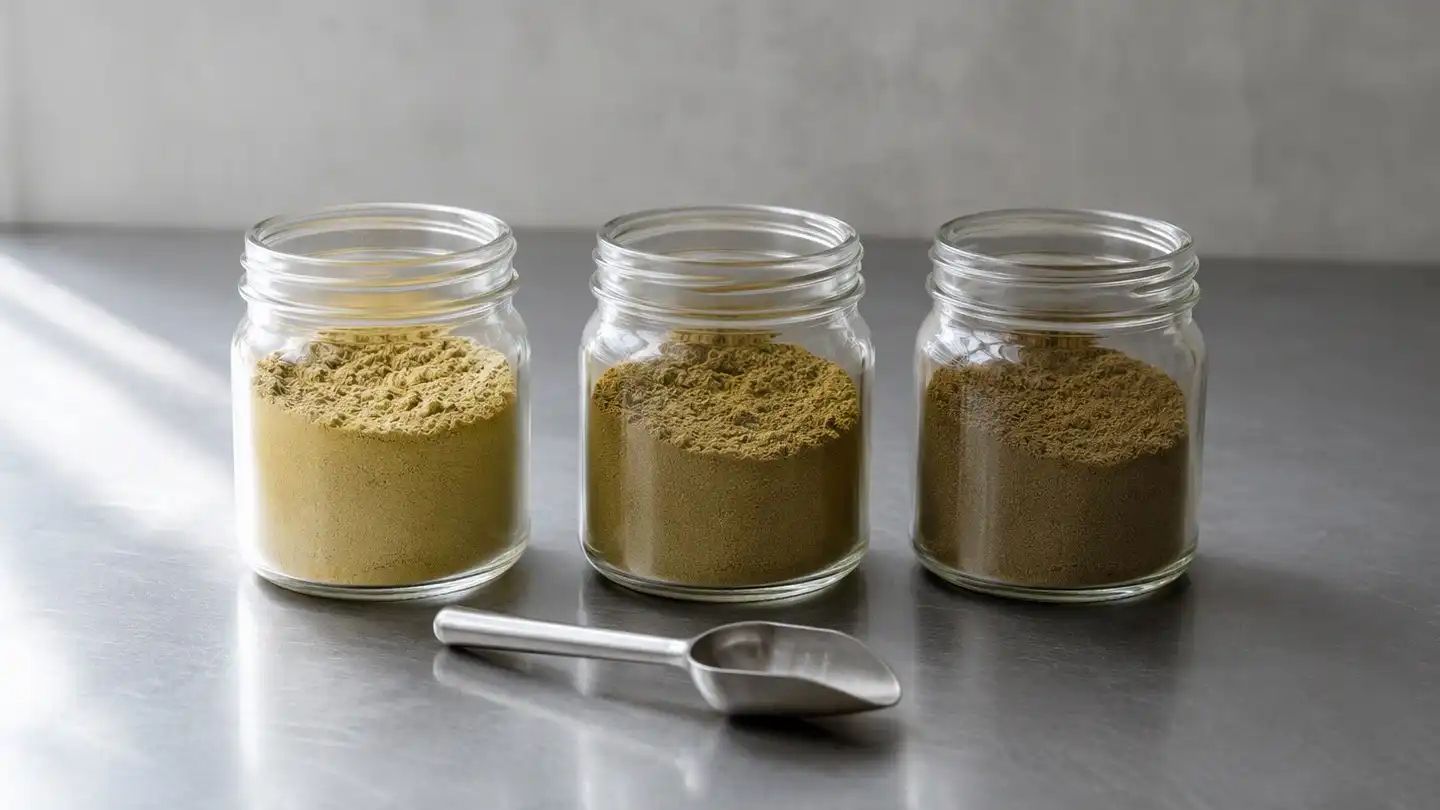
A defensible standardised figure has three parts: the named marker or marker group, the value with the direction of the claim (not less than, typical, or a range), and the analytical basis for that value. Remove any one and the figure cannot be contracted against.
A declared content on a stated assay basis
A declared content is a promise about a measurement, which is why a legitimate offer reads as “not less than 80% total flavonolignans by UV against a stated reference standard” rather than simply “80%”. The marker set matters as much as the number. A validated UHPLC-MS/MS study of five commercial silymarin preparations from three manufacturers measured the eight principal flavonolignans individually and found total measured content ranging from 47% to 70% across the set, while the same category of material is routinely traded against one headline percentage. Both figures are honest; they answer different questions.
An extraction ratio is not a content claim
A statement such as 10:1 is a process descriptor: the ratio of dried starting material to finished extract, not the concentration of any marker. Two suppliers can ship a 10:1 material that differs several-fold in declared silymarin content. A specification sheet may carry both, which is why the warranted parameter should be named in writing rather than inferred from whichever number is more prominent.
Why the Assay Basis Changes the Number
UV and HPLC do not return the same figure for the same lot
A spectrophotometric (UV) determination returns an aggregate for total flavonolignans against a reference standard; an HPLC determination separates and quantifies individual flavonolignans. The difference is not a rounding error. The certificate published alongside the Silymarin 80% specification reports one lot as not less than 80% silymarin by UV, with a result of 80.08%, then reports the same lot by HPLC as silychristin plus silydianin at 14.85%, silybin A plus silybin B at 8.23%, and isosilybin A plus isosilybin B at 6.38% — components that sum to a substantially lower aggregate than the UV figure. Both numbers are correct, and neither substitutes for the other.
Even inside chromatography, method choices shift individual results: a published UHPLC-MS/MS standardisation method needed a standard-addition approach to compensate for the absence of a blank matrix, and found that silydianin and one dehydrosilybin analyte showed significant peak enhancement from botanical matrix effects while the other analytes did not. Conventions differ as well: an independent laboratory notes that silymarin content is usually expressed as the sum of silybin A and silybin B with reference to total silymarin, and that the nominal content of the pharmacopoeial dry extract runs from 30% to 65% m/m on the anhydrous basis — a different convention from the 80% aggregate circulating in the supplement trade. The conclusion for procurement is blunt: “80%” is not a specification; “not less than 80% total flavonolignans by UV against a named reference standard” is, and it is comparable only to an offer written the same way.
The silymarin complex against the silibinin framing
Silymarin is an extract of the seeds, or achenes, and comprises the flavonoid taxifolin together with at least seven flavonolignans: isosilychristin, silychristin, silydianin, silybin A, silybin B, isosilybin A and isosilybin B. Silibinin, also called silybin, is a different article of commerce: a partially purified preparation that is largely a one-to-one mixture of silybin A and silybin B. The two are related but not interchangeable, and their figures share no denominator. An offer stated as 30% silibinin and an offer stated as 80% silymarin cannot be ranked against each other, and neither converts into the other without an assay measuring both on the same material. Single-marker HPLC methods add a further denominator, so a comparison between different markers has to be rebuilt from a common analysis. Our guide to what silymarin actually is sets out the distinction between the complex and its principal constituents.
How the Standardisation Level Propagates into Cost
Cost per unit of delivered silymarin
Price per kilogram is a property of the bag; cost per unit of declared silymarin is a property of the purchase. If a material declares content C and is quoted at price P, the cost index per unit of declared silymarin is P divided by C, which makes two offers on the same basis directly comparable. The arithmetic fails the moment the declarations rest on different bases, because the denominators are no longer the same unit — and fails again when one figure describes a total flavonolignan content and the other a single constituent.
Overage to protect a label declaration
Declared content is not a survival guarantee. Blending, handling and analytical variation all consume margin between the certificate and the finished declaration, so buyers apply an overage. Treat it as a negotiated commercial term whose size is traceable to a stated analytical allowance, not as a substitute for a method-matched specification. An overage applied to a figure whose basis was never defined simply buys more of an unknown denominator.
Blend-dilution arithmetic before you agree a price
Before a price is agreed, the formulator has to convert an extract content into a blend requirement. In illustrative indices rather than quotations: if the extract declares 100 index units of silymarin per unit of mass and the blend must declare 20 index units per unit of mass, each unit of blend requires 0.2 units of extract before overage. A ten percent overage raises that requirement to 0.22 units of extract per unit of blend, and the material cost component of the blend scales with it. Two conclusions follow. The requirement must be calculated on the same basis at both ends: a UV total at the extract end will not resolve against a single-constituent target at the blend end. And the extract content and the dilution ratio are two levers on one cost position, which is why a supplier conversation that starts and ends at price per kilogram has skipped the only arithmetic that matters.
These figures are illustrative indices, not quotations; no live commercial figure is implied.
| Offer as written | What the figure describes | Basis it depends on | What it does not tell you | Procurement consequence |
|---|---|---|---|---|
| “Silymarin 80%” | A declared aggregate content, direction of claim unstated | Not stated — could be UV or an HPLC summation | Marker set, reference standard, tolerance | Not contractible as written; the basis must be added before quoting |
| “Not less than 80% silymarin, UV, stated reference standard” | An aggregate spectrophotometric determination of total flavonolignans | UV against a named reference standard | Individual flavonolignan distribution; comparability with an HPLC offer | Comparable only against another UV-based declaration |
| HPLC summation of named flavonolignans | Individual constituents, each with its own tolerance | Chromatographic separation of named analytes | Whether the aggregate reaches any particular figure | The strongest basis for a declaration written against a specific constituent |
| Silibinin or silybin content | A partially purified preparation, largely silybin A and B | Marker-specific HPLC | Total silymarin content of the material | A different denominator; not rankable against a silymarin figure |
| Extraction ratio, e.g. 10:1 | Mass of dried starting material per unit of finished extract | Process record, not analysis | Any marker concentration | Cannot be used as a content warranty or as a price comparison basis |
What Belongs in the Purchase Order, and What the COA Must Match
The purchase order is where a specification acquires legal weight. Under 21 CFR 111.70 a dietary supplement manufacturer must establish component specifications for identity, purity, strength and composition, together with limits on the types of contamination that may adulterate the finished batch, and must establish specifications sufficient to confirm that a product received from a supplier is consistent with the purchase order. Under 111.75(a)(2), reliance on a supplier certificate of analysis is permitted only where that supplier has been qualified for the purpose and the qualification is documented. The practical reading is that the order line and the certificate line have to be written to meet each other.
Five clauses carry most of the commercial risk: the declared content with the direction of the claim; the analytical basis and method reference; the plant part; the carrier or diluent declaration; and the contaminant panel with its limits. A useful test is to read the certificate against the order line by line and ask which line would survive a dispute.
| Purchase-order clause | What to state | Certificate line that must match it | Mismatch to watch for |
|---|---|---|---|
| Declared content and direction | Not less than, typical, or a numeric range, on a named basis | Assay value with the same wording and the same comparator | A result reported above what the order requires when the order never set a floor |
| Analytical method | Method family and reference standard, or the pharmacopoeial monograph | Method column identifying how the assay value was produced | A UV figure on the certificate against an order written for individual constituents |
| Plant part | The part from which the extract is derived, by name | Botanical identification and plant part | A specification pack that names the species but leaves the plant part to inference |
| Particle size | Mesh range with the passing requirement and the test method | Sieve result, for example not less than 95% through 80 mesh | A mesh figure stated without the percentage passing |
| Moisture | Loss on drying limit and method | Loss-on-drying result against the stated limit | A result reported without the limit it is compared to |
| Carrier or diluent | Named carrier, or an explicit statement that none is present | Composition line confirming the same position | Silence on both documents, which is not the same as an absence of carrier |
| Contaminant panel | Heavy metals, residual solvents, pesticide residues and microbiology, each with limits | Every parameter with its own limit and result | An aggregate heavy-metals figure standing in for the individual elements |
| Packaging and net mass | Pack format, net mass and inner liner specification | Packaging statement and net mass on the label | A pack description matching the marketing sheet but not the shipping documents |
| Date and traceability | Batch or lot number, production date, retest or expiry date | The same identifiers, printed on the certificate | An undated certificate attached to a dated delivery |
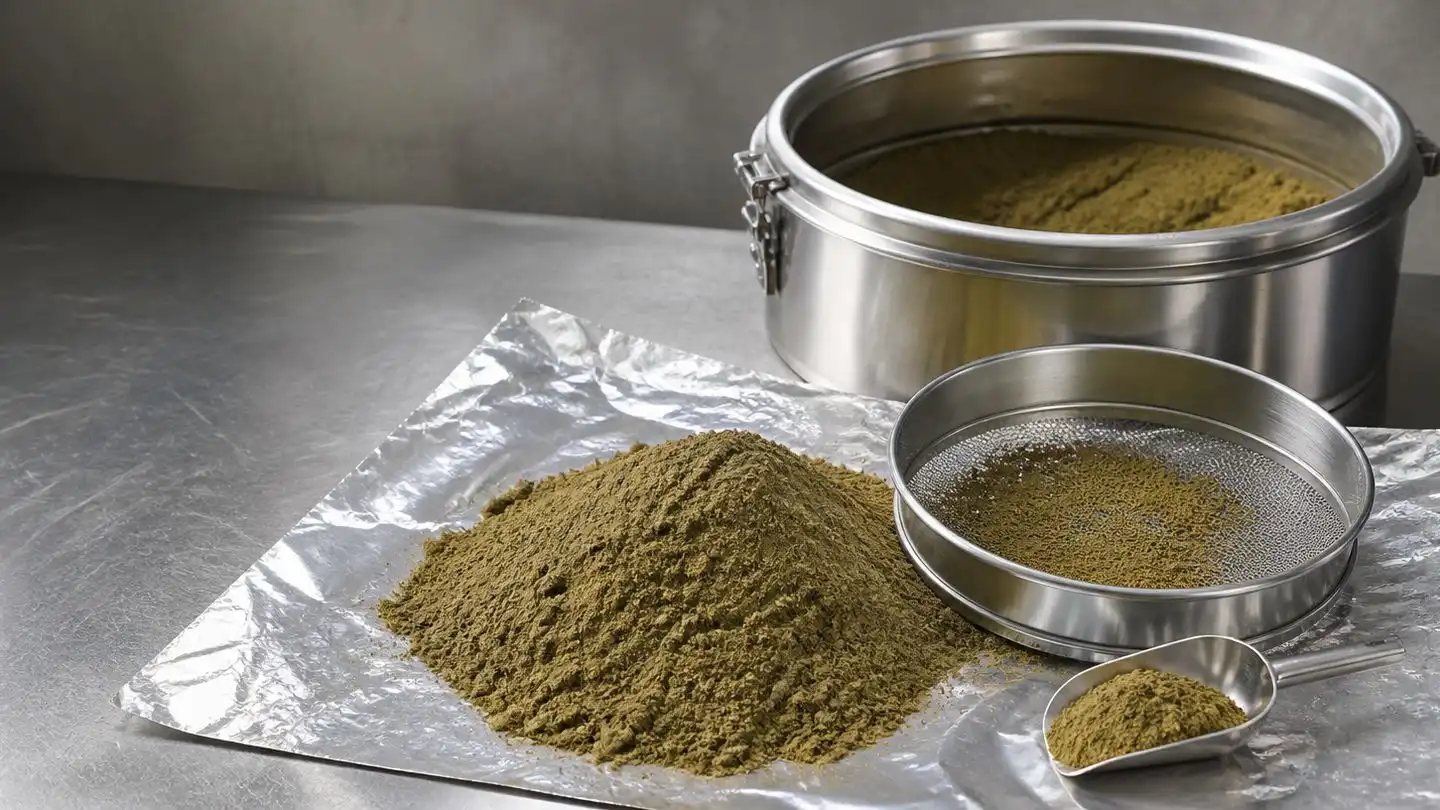
The certificate format itself shows how disciplined a supplier is: a well-built one states limits and results side by side for every parameter instead of conforming in prose. The certificate published for the Silymarin 80% specification follows that structure: particle size as not less than 95% through 80 mesh, loss on drying at 2.33% against a limit of not more than 5.0%, sulphated ash at 0.29%, heavy metals at not more than 20 ppm with lead, arsenic, mercury and cadmium listed individually, residual solvents for n-hexane, acetone, ethanol and ethyl acetate, a USP pesticide-residue screen, and a microbiological panel covering total plate count, yeast and mould, and the absence of E. coli, Salmonella and Staphylococcus. Elemental-impurity limits are increasingly set on a risk basis along the lines of the ICH Q3D approach, which assesses elemental impurities against a permitted exposure level rather than a fixed list. Our overview of quality and purity verification covers how those parameters are checked in practice.
Supplier Selection: Two Quotes at the Same Headline Percentage Are Not Comparable
Two quotations that both say 80% can describe materials differing in plant part, marker set, assay basis, particle size, carrier content and documentation depth. Comparing them on price before those variables are resolved produces a decision that will be renegotiated later, usually at the buyer’s cost. Before a comparison is run, ask each supplier for the certificate covering the quoted lot with the method named, the written specification rather than the marketing sheet, the reference standard, the plant part, the carrier position, the passing requirement at the stated mesh, the pack format, and a sample for your own testing. If two suppliers cannot both produce a certificate naming the method and the basis, the comparison has not started.
Spec-Negotiation Levers When the Standard Offer Misses Your Target
When a standard offer does not match the target declaration, price is rarely the only variable. Re-base rather than re-price: ask for the same article quoted against your basis. Split the specification: parameters that do not touch your declaration, such as a mesh range or pack format, can be relaxed to protect the content you need. Shift the marker: if the offer is stated as an aggregate and your declaration is written against a specific constituent, request both on one certificate and negotiate on the pair. Trade overage instead of content: a slightly lower declared floor with a documented overage can serve a declaration as well as a higher floor traded at a premium. Move the dilution point: with blending capability and the controls to support it, a higher-content extract diluted in-house can beat a pre-diluted blend on cost per unit of delivered silymarin. Finally, trade the terms around the specification — lead time, pack size, documentation support, change-notification commitments. What should not be negotiable is the basis: a discrepancy explained verbally and left unrecorded returns at the next audit.
Working with Wellgreen
Wellgreen supplies Milk Thistle Extract Powder against specifications that name the declared content, test method and plant part, with lot-specific analytical documentation and a contaminant panel. The product specification lists ISO 9001:2015, ISO 22000, Halal, Kosher and HACCP, and packaging in aluminium foil bags and drums with OEM formats available. If you are reconciling a target declaration against a supplier offer, send us the target and the basis you need and we will return the matching specification package. Write to wgt@allwellcn.com.
This article provides technical and commercial information for industry professionals, not medical advice; declared content, use levels, regulatory status and label claims must be confirmed against the requirements of your target market and your own product data.
References
- Electronic Code of Federal Regulations. 21 CFR Part 111 — Current Good Manufacturing Practice in Manufacturing, Packaging, Labeling, or Holding Operations for Dietary Supplements, including § 111.70 (specifications) and § 111.75 (determining whether specifications are met). https://www.ecfr.gov/current/title-21/chapter-I/subchapter-B/part-111
- European Parliament and Council. Directive 2002/46/EC on the approximation of the laws of the Member States relating to food supplements, consolidated text (EUR-Lex). https://eur-lex.europa.eu/legal-content/EN/TXT/?uri=CELEX:32002L0046
- European Medicines Agency. ICH Q3D Elemental impurities — scientific guideline (risk-based assessment and control of elemental impurities; Q3D(R2) effective 24 September 2022). https://www.ema.europa.eu/en/ich-q3d-elemental-impurities
- A validated UHPLC-tandem mass spectrometry method for quantitative analysis of flavonolignans in milk thistle (Silybum marianum) extracts. PMC4893890. https://pmc.ncbi.nlm.nih.gov/articles/PMC4893890/
- Linus Pauling Institute, Oregon State University. Chemical standardization of milk thistle (Silybum marianum L.) extract using UHPLC-MS/MS (publication record). https://lpi.oregonstate.edu/publications/chemical-standardization-milk-thistle-silybum-marianum-l-extract-using-uhplc-msms-and
- INSLAB. Analysis of silymarin in milk thistle extracts (testing-laboratory technical note on pharmacopoeial conventions for expressing silymarin content). 18 May 2023. https://inslab.si/2023/05/18/analysis-of-silymarin-in-milk-thistle-extracts/
- World Health Organization. Quality control methods for herbal materials. Geneva: WHO, 2011. ISBN 9789241500739. https://www.who.int/publications/i/item/9789241500739
- Wellgreen. Silymarin 80% — product specification and certificate of analysis. https://www.wellgreenherb.com/standardized-extract/silymarin-80-