Lion's Mane Extracts: Beginner's Guide & Benefits
2026-05-11 13:58:21
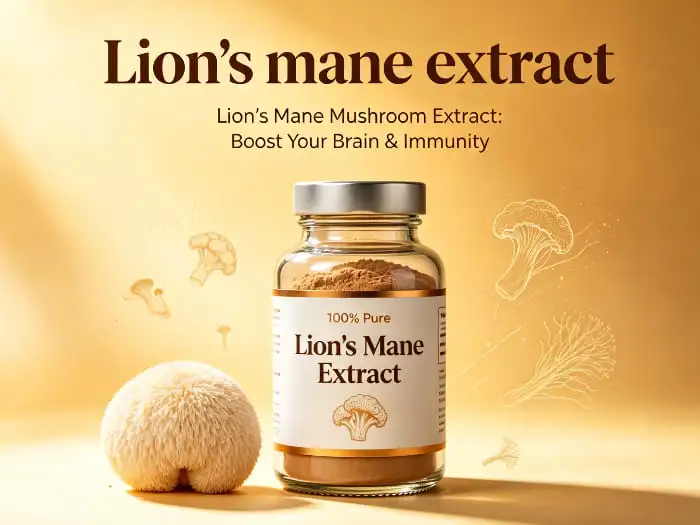
Lion's mane extract is a functional mushroom ingredient that comes from Hericium erinaceus. It is widely used in the nutraceutical and functional food industries to help with brain health and focus. This extract has become very popular very quickly as a top ingredient in brain health supplements, functional drinks, and complicated mushroom blends. It is full of polysaccharides and bioactive compounds like hericenones and erinacines. People are becoming more interested in natural nootropics and wellness solutions that are backed by proof.
Understanding Lion's Mane Extract: Origins, Composition, and Benefits
Botanical Background and Historical Significance
Lion's Mane mushroom, Hericium erinaceus, has been used in traditional Chinese and Japanese healing for hundreds of years. This unique white, fuzzy mushroom grows naturally on trees in North America, Europe, and Asia that are made of hardwood. Long before modern science proved that it could protect neurones, traditional healers knew that it could help with digestive health and general health.
Bioactive Compounds and Mechanisms
This fungus ingredient has healing properties based on two main groups of compounds: hericenones, which are found in the fruiting body, and erinacines, which are mostly found in the mycelium. These low-molecular-weight compounds have the special ability to get across the blood-brain barrier and increase the production of Nerve Growth Factor (NGF). According to a study released in the International Journal of Medicinal Mushrooms, NGF is very important for the survival, differentiation, and maintenance of neurones. The polysaccharide content, especially beta-glucans, helps the immune system work better and facilitates communication between the gut and brain through prebiotic action.
Cognitive and Neuroprotective Benefits
In clinical studies, adults who took standardised Hericium erinaceus extracts did better on tests of their mental abilities. People with mild cognitive impairment who took part in a study saw changes in their cognitive function scores after 16 weeks of supplementation. Researchers think that this mushroom material can help people who are anxious by affecting the growth of new neurones in the hippocampus and lowering levels of inflammation markers. Because of these processes, it is especially useful for formulas that aim to improve memory, mental clarity, and stress resilience, which are all important selling points for companies that make nutritional products.
Optimizing Usage: Dosage, Forms, and Side Effects
Dosage Protocols for Different Applications
To make effective formulations, procurement teams need to know about dosage standards. Doses of standardised lion’s mane mushroom extract used in clinical research usually range from 500 mg to 3,000 mg per day, based on the amount of polysaccharides present and the extraction ratio. To keep bioactive levels steady, cognitive enhancement products often use 1,000 to 1,500 mg per day, split into two doses. Mood-supporting formulas may have slightly higher doses, between 1,500 mg and 3,000 mg. These parameters give product developers some freedom while still staying in line with public data on how well the product works.
Product Form Comparison and Bioavailability
The extract can be bought in a number of different forms, each of which has its own benefits for different uses. Powder extracts give you the most options for encapsulation, pill compression, and mixing with drinks. Dual-extraction powders, which use both hot water and alcohol to remove the ingredients, give complete profiles of polysaccharides and terpenes. Water-soluble spray-dried forms meet the needs of companies that make functional drinks that need to dissolve quickly in cold liquids. Granulations that are ready to be put into capsules make it easier for automated filling tools to work. Fruiting body extracts usually have a higher hericenone content than mycelium-based goods, but both can be useful for some people depending on the bioactives they are trying to find.
Safety Considerations and Contraindications
According to the research that has been done, Hericium erinaceus powder is still safe. In clinical trials, the few side effects that were recorded were mostly mild digestive problems during the first few days of use. People who are sensitive to mushrooms can still have allergic reactions, which is why allergy labels need to be very clear. There have been no reports of any major drug interactions, but there are possible worries about anticoagulant drugs because they might cause platelets to stick together. For business-to-business clients, these safety standards allow for wide-ranging uses with few regulatory hurdles, as long as the right manufacturing controls and labelling rules are followed.
Formulation teams can make goods that are effective, safe, and consumer-friendly if they know these usage parameters. This ingredient is quickly being used in a wide range of products because it can be used in different dosages and delivery forms.
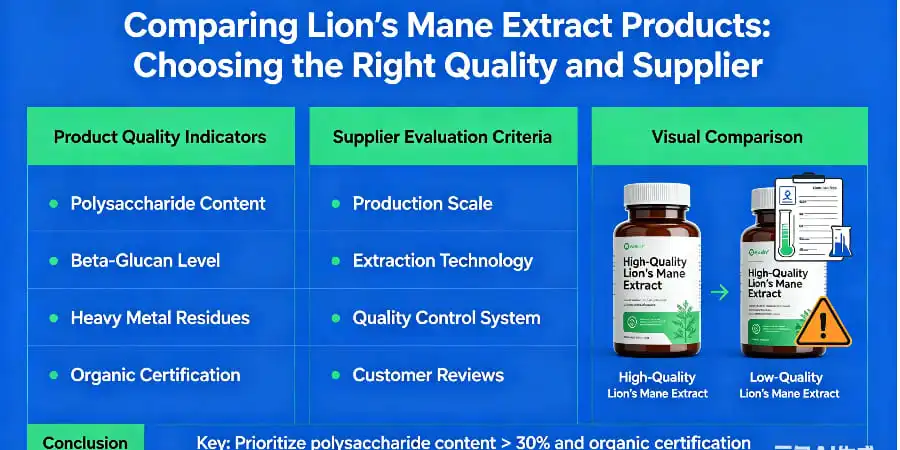
Comparing Lion's Mane Extract Products: Choosing the Right Quality and Supplier
Quality Differentiation in the Market
There are big differences in the quality of extracts available in the market, which has a direct effect on how well formulations work and where they stand in the market. The amount of polysaccharides is used as a main indicator for standardisation, and concentrations are usually between 10% and 50%. Premium specifications have more than 30% polysaccharides, which means they have a better bioactivity potential. In general, fruiting body source material has better hericenone profiles than mycelium on grain surfaces. However, mycelium extracts may be cheaper in some situations. Reliable suppliers can be told apart from commodity providers by third-party tests for heavy metals, pesticide residues, and microbial contaminants.
Extraction Technology Impact on Bioactive Profiles
By breaking down the indigestible chitin cell walls, hot water extraction effectively extracts polysaccharides and beta-glucans. This produces active chemicals that dissolve in water. Terpenoid compounds, such as hericenones and erinacines, are targeted by alcohol extraction. These compounds help protect neurones. Dual-extraction processes that use both ways give full-spectrum profiles, but they also raise the cost of production. Supercritical CO2 extraction is a new technology that lets you handle things without using solvents, which makes it appealing to clean-label positioning strategies. To get the best cost-benefit ratios, procurement professionals should make sure that the lion's mane mushroom extract method matches the goal bioactives and the claims that the product is supposed to make.
Supplier Evaluation Framework
To find trusted manufacturing partners, you need to look at things from a lot of different angles. GMP certification shows dedication to quality systems for pharmaceuticals, which include approved testing methods and records of traceability. ISO certifications (9001, 22000) show that frameworks for quality management and food safety have been created. Even though they cost more, organic certifications (USDA, EU) let you get into premium market groups. Supply consistency, or being able to keep specs the same across production batches, is very important in regulated markets where changes to the formulation lead to the need for re-registration. Strategic partners are different from transactional suppliers because they offer technical support services like helping to build analytical methods and test for stability.
When procurement teams look at possible suppliers, these are the main benefits they should focus on. GMP-certified facilities make sure that there is no contamination and that the testing methods used are reliable. Well-established inventory systems help keep supply lines stable so that production doesn't have to wait. Full certificate portfolios with organic, kosher, and halal choices make it easier for people to get into the market. With OEM support, you can make specs that are specific to your formulation needs. These benefits directly address common problems that come up when buying botanical ingredients, especially for companies that sell in more than one place and have to meet different legal requirements in each one.
With these evaluation factors, procurement professionals can stop buying based on price and start building partnerships with suppliers based on value. In competitive health markets, a product's long-term success depends on how well it meets quality standards, follows regulations, and works with other engineers.
Guide to Bulk Purchasing and Procurement Strategies for Lion's Mane Extract
Sourcing Channels and Platform Selection
Botanical extracts are bought more and more by businesses through specialised ingredient marketplaces, direct relationships with manufacturers, and ingredient distributors that serve specific areas. Digital platforms make specifications and certifications clear, but working directly with makers gives you more options for making your own specifications. Trade shows like SupplySide West and Vitafoods Europe make it easier to build relationships and check the quality of products by letting you look at samples in person. Regional distributors add value by combining shipping, keeping inventory locally, and making customs paperwork easier, but their margins are usually higher than those of direct buying.
Pricing Dynamics and Negotiation Tactics
There are many factors that affect how well a mushroom extract product does in the market. The concentration of polysaccharides is directly related to price, since higher standardisation needs more raw materials and more complicated processes. Organic approval usually brings in extra money that is 20 to 40 percent more than regular grades. Unit economics is affected by order number in a big way, with price breaks usually happening at 50 kg, 200 kg, and 1,000 kg. The way of extraction affects the price, with dual-extraction products being more expensive than single-method options. When compared to spot purchases, long-term supply agreements often get better terms. This is especially true for goods that are made all the time.
Strategies that work in negotiations focus on the total value rather than just talking about prices. Batch-to-batch uniformity can be seen by asking for certificate of analysis (COA) data for more than one production lot. Talking about the flexibility of minimum order numbers (MOQ) shows that the business can grow as product volumes do. Logistics costs can be cut by looking into custom packaging choices, such as large drums or smaller containers that are ready to go to stores. Supply contracts that include clear quality acceptance criteria and dispute resolution processes protect both parties and build trust so that they can work together in the future.
Logistics and Regulatory Considerations
When sending botanical extracts across international borders, it's important to pay attention to the paperwork, storage conditions, and customs classification. Harmonised System (HS) numbers set tariff rates and import requirements. Depending on the form and purpose, mushroom extracts are usually put into HS code 1302.19 or 2106.90. To follow the rules for importing, goods often come with certificates of origin, phytosanitary certificates, and non-GMO statements. Temperature-controlled shipping can be asked for to keep things stable while they're in transit, especially for lion's mane extracts that contain volatile terpenoid compounds. For foreign orders, lead times are usually between 4 and 8 weeks, which means that inventory planning needs to be in sync with production schedules.
By understanding these basics of procurement, buying teams can build strong supply chains that can meet the needs of ongoing manufacturing and meet the launch dates of new products. In the fast-paced wellness market, strategic supplier relationships based on quality alignment, regulatory compliance, and operational reliability give businesses an edge.
Conclusion
The strategic value of Lion's Mane mushroom extract continues expanding across cognitive health, functional beverages, and complex botanical formulations. Quality sourcing demands attention to polysaccharide standardization, extraction methodology, and supplier credentials including GMP and organic certifications. Successful procurement balances bioactive potency with cost efficiency, requiring evaluation of fruiting body versus mycelium sources and single versus dual-extraction processes. Understanding dosage frameworks, product forms, and safety profiles empowers formulation teams to create effective products meeting regulatory standards. The competitive advantage ultimately stems from supplier partnerships offering consistent quality, technical collaboration, and supply chain reliability.
FAQ
What are the primary benefits of Lion's Mane extract for product formulations?
The extract delivers documented cognitive enhancement through NGF stimulation, supporting memory, focus, and neuroprotection. Its anxiolytic properties and gut health benefits expand application potential beyond traditional nootropics into mood support and digestive wellness categories.
How do I determine appropriate dosages for bulk product development?
Clinical research supports 500-3,000 mg daily dosing depending on polysaccharide concentration and intended benefits. Cognitive products typically utilize 1,000-1,500 mg daily, while mood applications may reach 3,000 mg. Standardization levels directly impact effective dosing calculations.
Which quality certifications should I prioritize when selecting suppliers?
GMP certification ensures pharmaceutical-grade quality controls and validated testing protocols. Organic certifications access premium market segments. ISO 9001 and 22000 demonstrate quality management and food safety systems. Third-party testing documentation for heavy metals and microbial contaminants proves essential for regulatory compliance.
What factors most significantly impact pricing in bulk procurement?
Polysaccharide concentration, organic certification status, extraction methodology (single versus dual), order volume, and source material (fruiting body versus mycelium) represent primary cost drivers. Long-term supply agreements typically secure more favorable terms than spot purchases.
Partner with Wellgreen for Premium Lion's Mane Extract Supply
Wellgreen Technology delivers standardized lion's mane extract backed by GMP-certified manufacturing, comprehensive analytical testing, and extensive inventory supporting consistent global supply. Our polysaccharide specifications reach up to 50%, sourced exclusively from premium fruiting bodies through validated dual-extraction processes. We provide beverage-grade water-soluble versions optimized for rapid dissolution, alongside custom mushroom blend formulations combining reishi and cordyceps for differentiated product positioning. OEM development support includes stability testing, formulation guidance, and flexible MOQ arrangements accommodating both emerging brands and established manufacturers. As an experienced lion's mane extract supplier, we maintain complete certification portfolios including ISO, Organic, and Kosher credentials enabling seamless market entry across North America, Europe, and Asia-Pacific regions. Contact our team at wgt@allwellcn.com to discuss your specific requirements and access technical documentation supporting your formulation objectives.
References
Mori, K., Inatomi, S., Ouchi, K., Azumi, Y., & Tuchida, T. (2009). Improving effects of the mushroom Yamabushitake on mild cognitive impairment: a double-blind placebo-controlled clinical trial. Phytotherapy Research, 23(3), 367-372.
Friedman, M. (2015). Chemistry, nutrition, and health-promoting properties of Hericium erinaceus mushroom fruiting bodies and mycelia. Journal of Agricultural and Food Chemistry, 63(32), 7108-7123.
Nagano, M., Shimizu, K., Kondo, R., Hayashi, C., Sato, D., Kitagawa, K., & Ohnuki, K. (2010). Reduction of depression and anxiety by 4 weeks Hericium erinaceus intake. Biomedical Research, 31(4), 231-237.
Lai, P. L., Naidu, M., Sabaratnam, V., Wong, K. H., David, R. P., Kuppusamy, U. R., & Malek, S. N. A. (2013). Neurotrophic properties of the Lion's mane medicinal mushroom in neuronal growth factor synthesis. International Journal of Medicinal Mushrooms, 15(6), 539-554.
Kawagishi, H., & Zhuang, C. (2008). Compounds for dementia from Hericium erinaceum. Drugs of the Future, 33(2), 149-155.
Thongbai, B., Rapior, S., Hyde, K. D., Wittstein, K., & Stadler, M. (2015). Hericium erinaceus, an amazing medicinal mushroom. Mycological Progress, 14(10), 91-98.