The Science of Milk Thistle Extract in Skin Care
2026-05-11 13:58:17
Because science has shown it to work, milk thistle extract is now used in skin care items. It comes from the seeds of the plant Silybum marianum. silymarin, which is mostly made up of flavonolignans that work great as pain killers and vitamins, is what gives it its bioactive properties. This plant extract is well known for its role in liver-protecting supplements. It is also now being used to treat oxidative stress, UV-induced damage, and inflammatory skin problems. If you are a buyer looking for ingredients with strong scientific support, learning how this extract can be used on the skin can help you make new products and set your business apart in the market.
Understanding Milk Thistle Extract and Its Role in Skin Care
The seeds of the Silybum marianum plant are used to make a herbal extract that is a natural active ingredient. Silymarin is the main chemical in this product that makes it stand out. People all over the world know that this phytochemical is an important part of nutrients that protect the liver. But a new study in dermatology shows that it could be used in skin care items in a lot of interesting ways. The chemical has been shown to support cell health in well-studied ways. This means it can be used on the skin or in food.
Bioactive Composition and Mechanism of Action
It is made up of silybin, silydianin, and silychristin, which are the main flavonolignans. About 65 to 80% of standardised extracts are silymarin. The DPPH and ABTS tests show that these chemicals are very good at getting rid of free radicals. This directly protects against harmful environmental agents. The extract changes the pathways that cause inflammation by stopping NF-κB from turning on and lowering the levels of hormones that cause inflammation. It helps keep the skin barrier strong, speeds up the process of fibroblasts making collagen, and protects keratinocytes from damage caused by UV rays and smog.
Available Forms for Formulation
It comes in a number of different forms that work best for different industrial needs when you buy it from other companies. An HPLC test shows that standardised powder forms generally contain 70–80% silymarin. These are the building blocks for capsules, tablets, and more complex hepatoprotective mixtures. Since silymarin naturally doesn't like water, water-dispersible and microencapsulated forms get around this issue. So, they can be used in skin emulsions and useful drinks. More and more, companies that use silymarin in cosmetics want custom concentrations that run from 40% to 80%. This gives them precise control over the formulation based on their goals for cost and efficiency.
Quality Standards and Verification
The procurement professionals put a lot of value on batch uniformity, especially when it comes to making sure that the amount of silymarin stays the same from one production run to the next. Following the rules set by the USP and EP makes sure that the product is pure enough to be used in medicine. For sale in North America and Europe, careful monitoring of heavy metals, pesticide residues, and microbial contamination is also required. It is helpful to keep track of things to have Certificates of Analysis (COA) and HPLC chromatograms from outside labs. It's especially important to look at the risk of aflatoxins for people who make high-end composites and need to make sure that the ingredients work well together and stay stable through studies that age the materials quickly.
Comprehensive Benefits of Milk Thistle Extract for Skin Care
The benefits of this botanical extract for the skin go beyond just being an antioxidant. They also include systemic detoxification routes and localised anti-inflammatory effects. Understanding these many benefits helps formulation teams place goods well in the competitive skin care market, especially in areas that target visible ageing, sensitive skin, and post-inflammatory hyperpigmentation.
The Liver-Skin Axis and Detoxification
New study shows that liver health and skin health are connected in both directions. This connection is often called the liver-skin axis. When taken by mouth, standardised silymarin helps liver cleansing enzymes like cytochrome P450 and glutathione S-transferase work better. Enhanced liver clearing of metabolic waste and environmental toxins is linked to decreased systemic inflammation, which shows up as clearer skin and fewer breakouts. Studies on people with long-term liver problems have shown that taking silymarin supplements regularly, usually at amounts of 140 to 280 mg per day, can improve the texture of their skin and reduce inflammatory dermatoses.
Anti-Aging and Photoprotection
Silymarin's power to fight reactive oxygen species (ROS) directly targets one of the main causes of skin ageing caused by outside factors. Studies done in a lab show that silybin, the most bioactive part, stops matrix metalloproteinase (MMP) production that is caused by UV light. This protects the extracellular matrix and stops collagen breakdown. Human clinical trials that tested silymarin on the skin and in the mouth over a period of 12 weeks showed statistically significant decreases in the depth of fine lines, increased skin elasticity as measured by cutometry, and lower melanin index scores suggesting lighter hyperpigmentation. Because it can change melanogenesis by blocking tyrosinase, the substance is a useful ingredient in brightening products, and it is often combined with vitamin C and niacinamide to work even better.
Anti-Inflammatory Benefits for Sensitive Skin
The anti-inflammatory effects of the milk thistle powder provide real relief for people with sensitive, reactive, or acne-prone skin. Controlled studies that compare silymarin to other botanical anti-inflammatories, like turmeric extract and dandelion root, show that they are as good as or better at lowering redness and subjective irritation scores. Because the substance is gentle, it can be used for a long time without causing tachyphylaxis, which can happen with some synthetic anti-inflammatory drugs. Formulators who make products for sensitive skin can use it with other calming ingredients like bisabolol, centella asiatica, and colloidal oatmeal to make complete soothing systems that work on multiple inflammatory pathways at the same time.
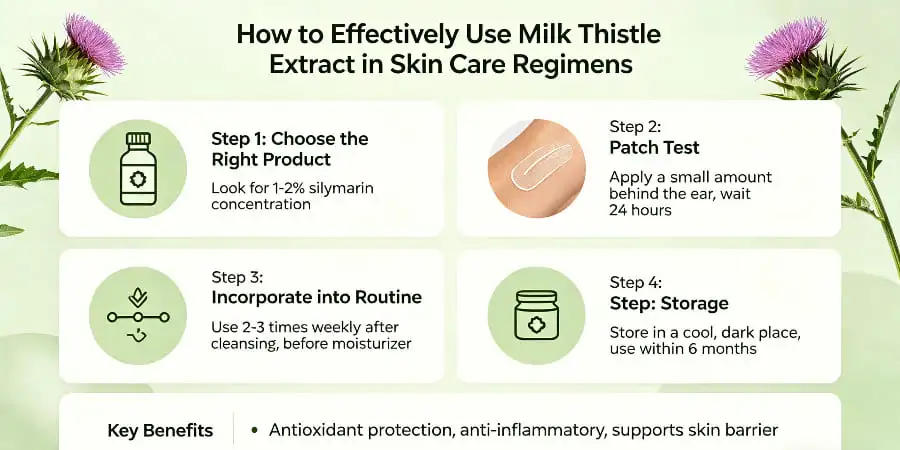
How to Effectively Use Milk Thistle Extract in Skin Care Regimens?
To turn the scientific benefits of this botanical extract into useful formulation strategies, we need to think carefully about dosage, delivery method, and how the ingredients work together. For B2B partners making goods for consumers, knowing the best ways to use them makes sure that the products work and are safe, which are important for getting approval from regulators and the market.
Oral Supplementation Protocols
For systemic benefits, capsules and tablets are still the most common ways to give them. Standard dosing guidelines say that 200–400 mg of standardised extract (equal to 140–280 mg silymarin) should be taken with food once or twice a day to help the body absorb it better. Powder forms are flexible for functional beverage uses, but because the extract is naturally bitter, formulators have to deal with problems that make it hard to mask tastes. Problems with taste can be fixed by using microencapsulation technologies and natural sugar or flavour systems together. Strategies for increasing bioavailability, like combining silymarin with phosphatidylcholine to make phytosome structures, greatly increase absorption in the intestines and plasma concentration. This makes these advanced forms appealing for high-end product lines.
Topical Application Considerations
Amounts of the extract that are added to creams, serums, and masks are usually between 0.5% and 5% by weight. It is important to test silymarin's stability in oil-in-water and water-in-oil emulsions because it can oxidise if it is not properly covered with antioxidant preservative systems. It is easier for the extract to get through the stratum corneum when it is mixed with fat carriers like squalane or caprylic/capric triglycerides. Topical products should be put on clean, toned skin twice a day for best results, and users should wait enough time for the products to absorb before adding more skincare products on top.
Safety Profile and Contraindications
The extract has a great safety record in clinical literature; adverse events were recorded in less than 1% of subjects across multiple studies. The most common side effect of oral supplements is mild stomach pain, which usually goes away when the amount is lowered or food is taken at the same time. Due to the milk thistle extract's effects on liver enzymes, it's important to be aware of any possible drug interactions, especially for people who take substrates of cytochrome P450 enzymes, such as some statins and blood thinners. Women who are pregnant or breastfeeding should talk to their doctors before using because there isn't a lot of information on how safe it is for these groups yet. Topical versions usually don't pose much of a risk, but people who are known to be hypersensitive to plants in the Asteraceae family should do a patch test first.
Synergistic Ingredient Combinations
When you pair active ingredients that work well together, you can get better results and treat more than one skin problem at the same time. Vitamin C and vitamin E work together to make antioxidants stronger and to make collagen. Vitamin E protects the lipid phase, which works with silymarin's antioxidant action in the water phase. Hyaluronic acid works well with botanical extracts in anti-aging products because it helps keep skin moist and supports the barrier function of the botanical extract. When used on acne-prone skin, mixing the milk thistle powder with salicylic acid or niacinamide makes a complete system that targets both the inflammatory and comedogenic pathways. Formulators should make sure that the ingredients are compatible by trying their stability, since pH needs and interactions with preservatives may mean that excipient systems need to be changed.
Milk Thistle Extract in the Global B2B Procurement Market
To find your way through the global supply chain for standardised plant extracts, you need to carefully look at the skills of suppliers, their quality control systems, and their paperwork that shows they follow all the rules. The job of procurement professionals is to find the best balance between cutting costs and meeting the high quality standards needed in North American and European markets, where buyer expectations and government oversight are growing.
Quality Certifications and Testing Standards
Reliable sellers show a lot of proof that their products are certified organic by the USDA or the EU, follow good manufacturing practices (GMPs), and meet ISO quality standards. Testing by a third-party lab, like Eurofins, SGS, or Intertek, makes sure that the product is as effective as it says it is, that it doesn't contain any harmful substances, and that the levels of heavy metals (like lead, arsenic, cadmium, and mercury), pesticide residues, and microbes that are considered okay are met. HPLC chromatography is the best way to measure silymarin levels, and reliable suppliers will give you test results for each batch that show consistency across production lots. Buyers who are making goods for regulated markets should ask for stability data that shows the product will stay effective for the expected shelf life under certain storage conditions, usually 24 to 36 months at a controlled room temperature.
Supplier Evaluation Criteria
Aside from basic quality measures, procurement teams also look at how customisable their products are, how many of them they need to be ordered, and how well they can help with technical issues. Companies that can offer custom silymarin concentrations of 40% to 80% give formulators more freedom to create unique product positions. OEM and ODM relationship models are appealing to brands that want turnkey solutions. Suppliers offer formulation development support for complex hepatoprotective blends that mix the extract with dandelion, artichoke, or turmeric. Scale of production is very important. Suppliers with batch amounts ranging from 100 kg to multiple tonnes can meet the needs of both new brands and established companies that need to buy a lot of products. When it comes to meeting tight development deadlines, responsive technical teams that understand the problems that downstream applications face and can help with formulation troubleshooting are useful partners.
International Trade and Logistics Considerations
When you buy something across borders, you have to figure out how to deal with different customs classifications, phytosanitary standards, and import rules that are different for each market. Shipments to the US must follow FDA botanical guidelines, which include registering the business correctly and following cGMP rules for dietary supplements. For some types of milk thistle extracts, European imports need to go through a Novel Food review process and follow the rules for REACH chemical registration. The Natural Health Products Directorate in Canada and COFEPRIS in Mexico both require more paperwork. When asked, experienced providers can provide certificates of origin, phytosanitary certificates, and kosher/halal certifications. They also keep up with changes in regulations. Lead times for first orders are usually between 4 and 8 weeks, but once a relationship is formed, replenishment cycles can be shortened. Payment terms depend on the size of the supplier and how long the relationship has been going. For new transactions, letter of credit arrangements are popular, and qualified accounts can get net terms.
Conclusion
Standardised plant extracts are now being used in skin care products, which brings together old botanical knowledge and new dermatological science. The compound has scientifically proven benefits for procurement workers choosing ingredients. These benefits include antioxidant protection, anti-inflammatory activity, and systemic detoxification support through the liver-skin axis. Formulation and market positioning success relies on strategic partnerships with suppliers, strict quality checks, and making sure that the requirements for ingredients match the expectations of the target consumers. As rules and regulations change and people want more evidence-based botanicals, finding trusted sources of high-purity, consistently standardised material is becoming more important for nutraceutical and cosmeceutical companies to stay ahead of the competition.
FAQ
When you're pregnant, is milk thistle extract safe to take?
There aren't many written studies that give full safety information for pregnant and nursing women. While traditional use suggests that it is generally safe, modern regulatory advice says that supplements should not be taken during pregnancy unless specifically told to do so by a healthcare provider. Manufacturers who are aiming their products at adults should put warnings on the labels telling pregnant women to talk to a doctor first.
What are the possible effects and combinations between drugs?
Oral supplements are very well tolerated; side effects happened in less than 1% of people who took part in research trials. Mild stomach pain is the most common side effect, and it usually goes away when the amount is changed or food is taken at the same time. Because the extract affects hepatic cytochrome P450 enzymes, it might combine with drugs that are broken down through these pathways, such as some statins, blood thinners, and antiretroviral drugs. People who are taking prescription drugs should talk to their doctors before starting supplements to find out if there is a chance of a reaction.
Should I take the skin-benefiting medicine by mouth or put it on my skin?
Both ways of delivery have their own benefits that make them better for different healing goals. Taking supplements by mouth helps the body's antioxidant defences and works with the liver to clean out the skin, which improves skin health and clarity generally. When applied topically, concentrated actives go straight to the tissues that need help with problems like UV damage, inflammation, and obvious signs of ageing. Many doctors suggest a combined approach that includes both oral supplements to help the body as a whole and topical products to help specific areas. Together, these two methods have synergistic effects that improve skin health in more than one way at the same time.
Partner with a Trusted Milk Thistle Extract Supplier
Wellgreen Technology specializes in delivering pharmaceutical-grade botanical milk thistle extract powders tailored to demanding B2B specifications. Our GMP-certified manufacturing facilities produce standardized silymarin extracts ranging from 40% to 80% concentration, verified through third-party HPLC testing and backed by comprehensive COA documentation. We support OEM and ODM formulation development for hepatoprotective supplements, functional beverages, and cosmeceutical applications, with rigorous heavy metal and pesticide residue control meeting EU and USA export standards. Whether you require small-batch customization or large-scale procurement with consistent batch-to-batch reliability, our technical team provides responsive support throughout development cycles. Contact our procurement specialists at wgt@allwellcn.com to discuss your specific requirements and request detailed product specifications. Discover our complete portfolio of certified botanical ingredients at wellgreenherb.com.
References
Abenavoli, L., Capasso, R., Milic, N., & Capasso, F. (2010). Milk thistle in liver diseases: past, present, future. Phytotherapy Research, 24(10), 1423-1432.
Chambers, C. S., Holečková, V., Petrásková, L., Biedermann, D., Valentová, K., Buchta, M., & Křen, V. (2017). The silymarin composition and why does it matter? Food Research International, 100(Pt 1), 339-353.
Feher, J. & Lengyel, G. (2012). Silymarin in the prevention and treatment of liver diseases and primary liver cancer. Current Pharmaceutical Biotechnology, 13(1), 210-217.
Kren, V. & Walterová, D. (2005). Silybin and silymarin—new effects and applications. Biomedical Papers, 149(1), 29-41.
Pradhan, S. C. & Girish, C. (2006). Hepatoprotective herbal drug, silymarin from experimental pharmacology to clinical medicine. Indian Journal of Medical Research, 124(5), 491-504.
Surai, P. F. (2015). Silymarin as a natural antioxidant: an overview of the current evidence and perspectives. Antioxidants, 4(1), 204-247.