Resveratrol: Anti-Aging Benefits, Uses, And Side Effects
2026-05-11 13:58:23
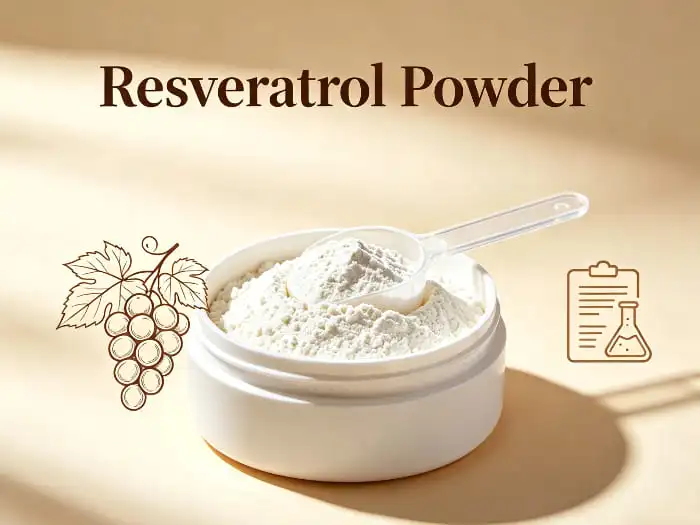
Resveratrol powder is a key ingredient in the global beauty and health products businesses because it has amazing anti-aging and antioxidant properties. This natural polyphenolic substance, which is mostly derived from grape skins, Japanese knotweed, and red wine, helps supplement brands, drug companies, and functional food makers solve important formulation problems. Understanding resveratrol's mechanisms, applications, and sourcing issues is important for procurement professionals looking for high-purity botanical extracts. This is because they need to be able to deliver competitive, scientifically-backed products that meet strict regulatory standards and meet the needs of today's health-conscious consumers.
What Is Resveratrol Powder? Understanding the Basics
Resveratrol, whose full name is 3,5,4'-trihydroxy-trans-stilbene, is a strong phytoalexin chemical that is naturally found in many types of plants as a way to protect themselves. Different forms of the extract exist, called isomeric forms, cis and trans. The trans-isomer has much better bioactivity and stability for industrial uses.
Natural Sources and Extraction Methods
Japanese knotweed root (Polygonum cuspidatum), grape skins (Vitis vinifera), mulberries, and peanuts are the main plant sources. Japanese knotweed usually has the most trans-resveratrol, which is why it is the best raw material for commercial extraction. These days, modern manufacturing methods like enzymatic synthesis, yeast fermentation, and supercritical CO2 extraction are used to make materials that are good for medicine and have purity levels between 50% and 98%. The way the product is made has a direct effect on its legal compliance, bioavailability, and formulation compatibility, all of which are important factors for businesses making decisions about what to buy.
Purity Specifications and Quality Parameters
There are certain technical traits that buying teams must check that high-quality resveratrol powder has. The substance should be a white to off-white crystalline powder that has less than 5% wetness. RP-HPLC testing confirms the purity levels, controlled residual solvent levels, and full heavy metal screening are some of the quality factors. The amount of trans-resveratrol is the main way to tell if something is of good quality. For pharmaceutical uses, it needs to be at least 98% pure, while for nutraceutical uses, it can be anywhere from 50% to 98% pure, based on how the product is positioned and how much it costs.
Formulation teams can choose the right grades for different uses by understanding these basic qualities. This is true whether they are making premium anti-aging supplements, functional beverages, or topical skin care products. Resveratrol powder can be delivered in a variety of different forms, including capsules, tablets, water-soluble powders, and lipid-based methods.
Anti-Aging Benefits and Health Uses of Resveratrol Powder
Scientists have studied resveratrol's effects on extending the life of cells and fighting the ageing process in great detail. It works because it affects oxidative stress, inflammation, and metabolic dysfunction at the molecular level through a number of biochemical processes.
Cellular Aging and Sirtuin Activation
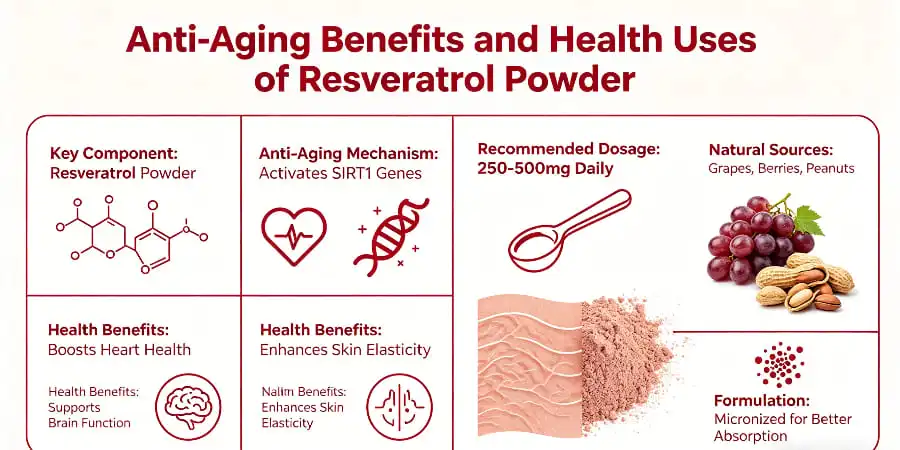
Because resveratrol powder directly turns on SIRT1 deacetylase enzymes, which are also known as "longevity genes," these enzymes control cellular metabolism, DNA repair, and tolerance to stress. This action mimics the health benefits of limiting calories without limiting what you eat. Studies show that regular eating supports the function of mitochondria, improves the production of energy in cells, and encourages autophagy, the body's natural process for cleaning up cells. These processes work together to slow down cellular senescence and improve the body's ability to heal damaged tissues. This makes it a scientifically proven ingredient for anti-aging products aimed at people who want to live longer.
Cardiovascular and Metabolic Support
The substance helps heart health by changing the production of nitric oxide, the function of endothelial cells, and the metabolism of fats. According to clinical study, taking supplements on a regular basis may help keep blood vessels flexible and help keep cholesterol levels in healthy ranges. When resveratrol is mixed with coenzyme Q10 or NAD+ precursors like nicotinamide riboside, it makes products that work better together to improve mitochondrial health and metabolic efficiency. This is an area of premium supplement development that is growing.
Skin Health and Dermatological Applications
For cosmetic pharmacists and personal care brands, resveratrol's benefits for topical formulations are very strong. The compound protects against UV rays by getting rid of free radicals caused by UV light and lowering oxidative damage caused by environmental stresses. It helps the body make more collagen and stops matrix metalloproteinase enzymes from breaking down collagen. This stops wrinkles from forming and skin from losing its flexibility. Because of these qualities, it can be used in anti-aging serums, day creams that protect, and night treatments that heal, especially when mixed in stable delivery systems at amounts between 0.5% and 2%.
Recommended Dosage and Application Methods
The best dose changes a lot depending on the situation and the way the drug is delivered. Nutraceutical products usually use 100 mg to 500 mg daily doses. Purer extracts need smaller amounts because they are more bioavailable. Functional drink makers usually put between 50 mg and 150 mg per dose, weighing the benefits against the cost and the taste. Because the substance doesn't dissolve easily in water, formulators use micronization, liposomal encapsulation, or combination with piperine (black pepper extract) to make it easier for the body to absorb. When procurement teams understand these formulation methods, they can choose the right grades and particle sizes to meet their product development goals.
Comparing Resveratrol Powder with Other Supplements and Formats
Procurement experts often compare resveratrol to other antioxidants and different ways of delivering them in order to make the product work better and the supply chain run more smoothly. This study shows clear benefits that make it worth including in premium formulations.
Powder Versus Capsule Formats for Manufacturing
Contract makers and private label producers have a lot of options when they choose bulk resveratrol powder over pre-encapsulated formats. Powder forms allow for exact dosage customisation, make it easier to mix with ingredients that work well together, like curcumin or grape seed extract, and lower the cost per unit when making a lot of them. The substance works well with many delivery methods, such as stick packs, effervescent tablets, protein blends, and beverage formulas that are ready to mix. This flexibility is especially helpful for OEM clients who are making different SKUs with different amounts of potency from the same raw material stock.
Potency Comparison with Alternative Antioxidants
Comparing resveratrol to other polyphenolic chemicals shows that it has special benefits in certain situations. Resveratrol has a stronger effect on SIRT1 activation and direct effects on pathways that lead to longevity compared to grape seed resveratrol extract, which includes proanthocyanidins. Trans-resveratrol is more bioavailable than curcumin, which needs special delivery technologies to work well. It can be absorbed well even in normal formulations when mixed with the right other ingredients. But, formulators often mix resveratrol with quercetin, green tea catechins, or pterostilbene to make synergistic blends that work better against a wide range of cellular targets.
Blended Versus Pure Formulations
There are both normal single-ingredient powders and proprietary blends on the market that contain resveratrol and other phytonutrients that work well with it. Pure trans-resveratrol (≥98%) is good for pharmaceutical uses that need accurate dosing and little influence from other ingredients. On the other hand, standardised extracts (50%–70%) that contain extra grape polyphenols may make nutraceutical products more bioactive. Knowing the costs and benefits of ingredient purity, formulation complexity, and end-product claims helps procurement teams make sure that material needs are in line with marketing goals and regulatory requirements.
Potential Side Effects and Safety Considerations
Resveratrol has a great safety rating in clinical studies, but buying it responsibly means knowing all of its possible side effects and following the rules set by regulators to protect both end users and brands.
Common Mild Effects and User Sensitivity
Clinical studies show that standard supplement levels have few negative effects. Less than 5% of participants experienced mild digestive discomfort, such as nausea or stomach upset, on occasion, usually at doses higher than 500 mg daily. Some people are sensitive to trans-stilbene compounds, which can show up as small headaches or skin reactions caused by allergies. Because of these things, products need to have clear labels and the right warnings for vulnerable groups. Stability testing should be done by formulation teams to make sure that degradation products or impurities don't cause bad reactions. This is especially important for goods that will be exposed to light or changes in temperature during distribution.
Contraindications and Special Populations
There are some user groups that need extra safety concerns. Because the substance affects how blood platelets work, people who take anticoagulant drugs should be careful, though there isn't a lot of clinical evidence of significant interactions yet. Women who are pregnant or nursing shouldn't take supplements because there isn't enough safety information for these groups. People who are going to have surgery should stop using at least two weeks before the operation because there is a theoretical risk of bleeding. These side effects make it clear how important it is for suppliers to provide complete safety paperwork and for products to have clear labels and professional advice on how to use them.
Regulatory Compliance and Quality Certifications
When making purchases, companies should make sure that the suppliers they work with have strict quality control systems like ISO 9001, GMP certification, and HACCP protocols. FDA dietary supplement rules under 21 CFR Part 111 say that products meant for the US market must follow good production practices, keep contaminants under control, and have correct labels. For international markets, you might need extra certifications like EU Novel Food authorisation, Kosher or Halal proof, and, if necessary, organic certifications. Suppliers who provide full Certificate of Analysis paperwork that includes batch-specific testing for purity, heavy metals (lead, cadmium, mercury, arsenic), microbiological contamination, and residual solvents meet the quality assurance standards needed for safe product development. Brands can do their research and keep customers' trust throughout the lifecycle of a product when the paperwork is clear.
Procuring Resveratrol Powder for B2B: Supplier Insights and Buying Guide
To successfully purchase high-quality botanical resveratrol extracts, you need to carefully look at the skills, technical requirements, and dependability of the supply chain to make sure that the quality of the product stays stable and that you stay ahead of the competition.
Critical Supplier Evaluation Criteria
When choosing manufacturing partners, you need to look at them from a lot of different angles. First, the GMP facility approval and regulatory compliance are checked. Then, the analytical capabilities, such as the HPLC, mass spectrometry, and microbiological testing infrastructure that is housed there, are evaluated. Suppliers should show that they can track their products from where the raw materials come from to where they are packaged at the end, including being clear about the extraction methods and place of origin. For brands that need a steady supply over the long term, being able to offer consistent quality from batch to batch and provide documented stability data is important. Flexibility in lead times, manufacturing capacity, and minimum order quantities all have a direct effect on how growing brands handle their inventory and plan their production.
Technical Specifications for Different Applications
For different end-uses, different material requirements are needed. For pharmaceutical uses, the trans-resveratrol has to be at least 98% pure, and there can't be any other substances or fillers in it. Nutraceutical brands usually say that standardisation should be between 50% and 98%, depending on the price and placement of the product. They also take into account how the particle size distribution affects the flowability of the product when it is encapsulated or tableted. For functional food and drink uses, extra requirements often come up. These can include water-soluble versions made through complexation or nano-emulsion technology, as well as strict tests to make sure the taste, colour stability, and compatibility with food-grade processing conditions are met. When it comes to cosmetics, it's best to use gentle extraction methods that don't use strong solvents. You should also test emulsion systems for skin irritation potential and stability.
Negotiating Bulk Pricing and Supply Agreements
Understanding how markets work is important for coming up with good negotiation tactics. Prices around the world usually go up or down directly with the level of purity. For example, 98% pharmaceutical-grade extracts cost more than 50% standardised extracts. Suppliers usually have different price levels based on how much you buy. For example, if you commit to buying more than 100 kg per year, you can get a big discount. Smart buyers look at more than just the unit price. They also look at the total cost of ownership, which includes transportation, quality control checks, and the possible costs of reformulation due to quality problems. Setting up framework deals with clear quality standards, delivery dates, and ways for prices to change based on the cost of raw materials makes things stable for everyone. Some sellers offer consignment inventory programmes or just-in-time delivery plans that help growing brands save money on working capital while still making sure they have access to materials.
Managing Quality Verification and Supply Chain Risk
Implementing strong quality verification methods protects against changing the material or the specifications without permission. Even if the supplier's COA paperwork looks full, buyers should still check the identity of each batch by HPLC fingerprinting or TLC comparison against reference standards. Third-party lab tests done on a regular basis provide independent confirmation of claims of purity and amounts of contamination. Having ties with several qualified suppliers lowers the risk of supply disruptions caused by things like lack of raw materials, changes to regulations, or stops in production. Geographical diversity among Asian, European, and North American suppliers lowers concentration risk even more and gives you price power through open bidding.
Conclusion
Resveratrol powder speaks to a experimentally approved, commercially flexible fixing tending to developing customer request for evidence-based anti-aging and wellness arrangements. Its recorded benefits over cellular life span, cardiovascular back, and dermatological applications make it vital for brands creating premium nutraceuticals, utilitarian nourishments, and restorative definitions. Effective obtainment requires adjusting specialized details, quality confirmation conventions, and provider unwavering quality to convey steady, compliant items. The material's compatibility with differing conveyance groups and synergistic combinations with rising fixings like NAD+ forerunners positions it deliberately for innovation-focused brands. Understanding immaculateness necessities, security contemplations, and detailing best hones empowers obtainment groups to make educated choices that back item separation and long-term trade victory.
FAQ
Is resveratrol powder safe for daily supplementation in commercial products?
Trans-resveratrol demonstrates excellent safety profiles in clinical studies at doses up to 500mg daily, with minimal adverse effects reported. Products formulated at standard supplementation levels (100-500mg) pose negligible risk for general populations when manufactured under GMP conditions with appropriate purity verification. However, brands should include label warnings for individuals on anticoagulant therapy or scheduled for surgery, and recommend consultation with healthcare professionals for special populations.
How do organic and synthetic resveratrol formulations differ?
Natural resveratrol extracted from botanical sources like Japanese knotweed contains trans-resveratrol alongside complementary polyphenolic compounds that may enhance bioavailability through synergistic effects. Synthetic production via chemical or biotechnological methods yields highly pure trans-resveratrol with consistent specifications ideal for pharmaceutical applications. Regulatory classification, consumer perception, and pricing differ significantly, with organic certifications commanding premium positioning but requiring extensive documentation and typically higher costs.
What factors affect resveratrol bioavailability in finished products?
Trans-resveratrol exhibits relatively low oral bioavailability due to rapid metabolism and limited aqueous solubility. Formulation strategies significantly impact absorption including micronization to enhance surface area, liposomal encapsulation for cellular uptake, combination with piperine to inhibit metabolic enzymes, and complexation with cyclodextrins for improved solubility. Delivery timing with dietary fats further enhances absorption. Procurement teams should specify particle size ranges and consider bioavailability-enhancing technologies aligned with product claims and target efficacy levels.
Partner with Wellgreen for Premium Resveratrol Powder Supply
Wellgreen Technology stands as a trusted resveratrol powder supplier, offering pharmaceutical-grade and nutraceutical-grade extracts with purity specifications from 50% to 98% trans-resveratrol. Our GMP-certified manufacturing facility ensures rigorous quality control with comprehensive testing for purity, heavy metals, microbial contamination, and residual solvents, providing the consistency demanded by leading supplement brands and contract manufacturers. We maintain substantial inventory enabling rapid fulfillment, while our technical team provides formulation consultation for antioxidant complex systems and compatibility guidance for water-soluble and lipid-based delivery formats.
Our OEM/ODM customization capabilities support private label development with flexible minimum order quantities suited to emerging brands and established enterprises alike. Whether you require high-purity powder for capsule formulations, micronized grades for beverage applications, or specialized specifications for cosmetic serums, Wellgreen delivers scientifically validated materials backed by complete documentation including Certificates of Analysis, allergen statements, and regulatory compliance verification for major international markets. Reach out to our team at wgt@allwellcn.com to request samples, discuss custom specifications, or explore how our reliable supply chain partnerships can enhance your product portfolio and accelerate time-to-market for innovative resveratrol-based formulations.
References
Baur JA, Sinclair DA. Therapeutic potential of resveratrol: the in vivo evidence. Nature Reviews Drug Discovery. 2006;5(6):493-506.
Smoliga JM, Baur JA, Hausenblas HA. Resveratrol and health—a comprehensive review of human clinical trials. Molecular Nutrition & Food Research. 2011;55(8):1129-1141.
Walle T. Bioavailability of resveratrol. Annals of the New York Academy of Sciences. 2011;1215(1):9-15.
Cottart CH, Nivet-Antoine V, Beaudeux JL. Review of recent data on the metabolism, biological effects, and toxicity of resveratrol in humans. Molecular Nutrition & Food Research. 2014;58(1):7-21.
Berman AY, Motechin RA, Wiesenfeld MY, Holz MK. The therapeutic potential of resveratrol: a review of clinical trials. NPJ Precision Oncology. 2017;1:35.
Singh CK, Ndiaye MA, Ahmad N. Resveratrol and cancer: Challenges for clinical translation. Biochimica et Biophysica Acta. 2015;1852(6):1178-1185.