Mulberry Leaf Extract for Weight Management Products
2026-06-18 17:49:29
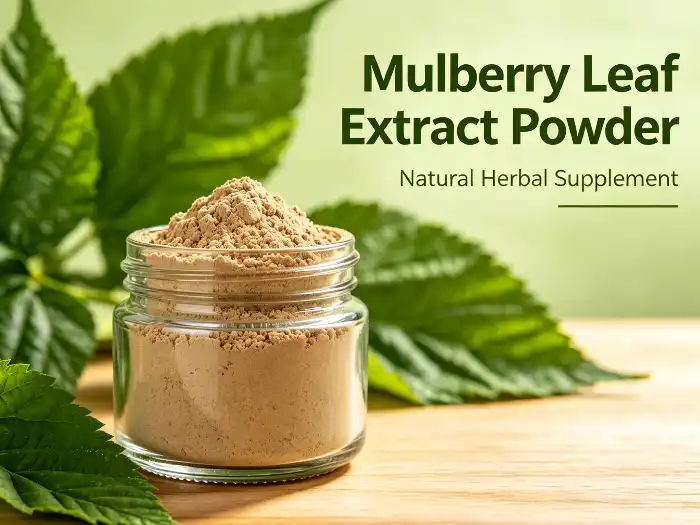
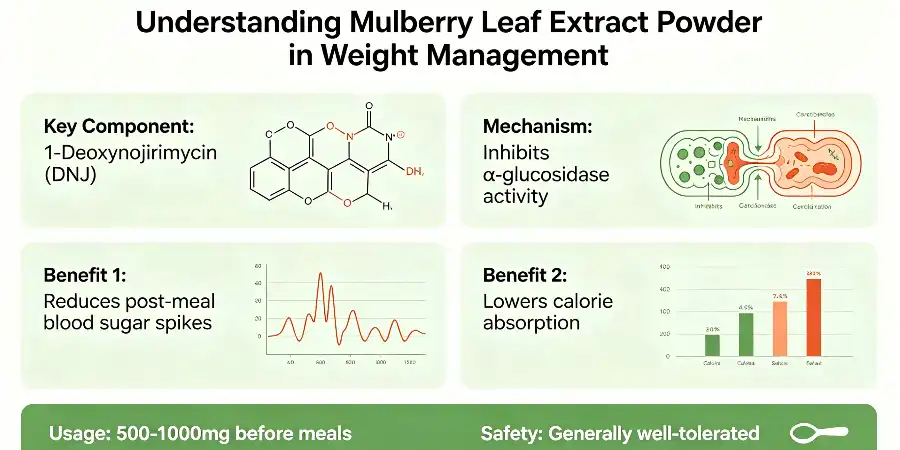
Mulberry leaf extract powder has become an important plant ingredient for B2B companies making weight loss products. This natural substance comes from Morus alba leaves and is made by carefully extracting and ultra-fine milling them. It contains bioactive compounds like 1-deoxynojirimycin (DNJ), flavonoids, polyphenols, and dietary fibre. This ingredient is useful for nutraceutical brands, pharmaceutical developers, and functional food producers who want to make formulations that are backed by science because the market for plant-based metabolic health support is growing. Knowing how it works, what the quality standards are, and how to buy it can help you make smart choices about where to get it that meet regulatory requirements and meet customer expectations.
Understanding Mulberry Leaf Extract Powder in Weight Management
The usefulness of this plant-based ingredient comes from its special mix of phytochemicals and its ability to help the metabolism.
Bioactive Composition and Extraction Standards
Mulberry leaf extract powder goes through a lot of work to turn raw plant material into a standard ingredient that can be used in commercial products. Usually, water or hydro-ethanolic methods are used to extract the substance, and then it is sprayed to dry. This concentrates key bioactive markers while removing fibrous bulk. DNJ content is the main way that standards are set, and commercial specifications range from 1% to 20%, based on how intensely the product is meant to be used. In contrast to whole leaf powder, the extract form is more bioavailable and maintains the same level of potency across production runs. Particle sizes from good producers range from 80 to 300 mesh, which makes them easy to mix into a wide range of delivery formats, from capsules to ready-to-drink drinks. The concentration method also solves common problems with raw materials, like managing taste profiles and changing the levels of phytochemicals based on the season.
Metabolic Mechanisms Supporting Weight Management
The ability of this product to help with weight loss works in several ways that work together. DNJ stops intestinal alpha-glucosidase enzymes from working as well, which limits how carbs are broken down and absorbed. This system helps keep blood sugar levels from rising too high after a meal, which is good for digestive health and controlling hunger. In addition to healthy eating and living a balanced lifestyle, clinical study has shown that taking supplements regularly may help improve glycaemic response. The polyphenol content adds to the antioxidant support that helps fight the oxidative stress that comes with biochemical imbalance. Additionally, the dietary fibre part helps with signals that tell you you're full and keeping your gut healthy, giving weight control products a more complete approach.
Safety Profile and Dosage Considerations
Setting up the right dosage levels is still very important for people who are making consumer-safe formulations. Supplementation methods usually use 250 to 500 mg of standardised extract per serving, with the amount changed depending on the concentration levels of DNJ. Safety studies have mostly shown good tolerance profiles when used within the suggested limits. However, formulation teams should think about possible interactions with drugs that change glucose metabolism. When B2B buyers are making supplements for the US and EU markets, they need to make sure that the formulations follow the regional supplement standards and don't make therapeutic claims that need to go through drug approval pathways. Full toxicology data and allergen testing records help with regulatory applications and quality control procedures.
Market Comparison and Quality Assessment for B2B Buyers
To choose the right grade and provider, you need to carefully look at a number of quality factors that have a direct effect on how well the formulation works.
Organic Versus Conventional Sourcing Options
Botanical extracts' organic approval status affects both how they are positioned in the market and how much they cost to buy. Organic mulberry leaf extract powder costs more because it comes from farming methods that don't use manmade fertilisers and pesticides. This makes it appealing to clean label product lines that are aimed at health-conscious consumers. These products need to be checked by a third party that is certified by a recognised organization, like the USDA or the EU. When it comes to value-oriented product groups, conventional grade extracts are cheaper while still meeting food-grade safety standards. When making a procurement choice, the target market's willingness to pay more should be weighed against the extra cost of materials and the difficulty of getting them certified. Geographic sourcing also affects quality traits. For example, supply lines are more stable and leaf quality is more consistent in areas that have been growing mulberries for a long time.
Comparative Analysis with Alternative Botanical Ingredients
Product makers often test mulberry extract with other metabolic-supporting plant-based ingredients to find the best way to make the product. Moringa powder has a similar profile of nutrients, but it doesn't have the special alpha-glucosidase inhibition that comes with DNJ content. Berberine-containing extracts are better at controlling glucose, but they may not taste good and may be closely watched by regulators in some areas. Because green tea extract and mulberry both have thermogenic traits that work well together, they can help people lose weight more effectively. By knowing these comparative profiles, formulation teams can choose ingredients based on data that balance cost, effectiveness, and market differentiation goals.
Critical Supplier Evaluation Metrics
To build trusting relationships with suppliers, you need to carefully look at their operational capabilities and quality control systems. GMP certification shows that good manufacturing practices are followed, which is important for pharmaceutical-grade uses. ISO certification, on the other hand, shows that quality management is done in a planned way. As part of their analytical paperwork, suppliers should give full Certificates of Analysis that include HPLC validation of DNJ content, heavy metal screening results, microbial contamination testing, and pesticide residue analysis. Things to think about when buying in bulk are the minimum order quantities, typical lead times, packaging choices, and the ability to ship goods internationally. Being open with suppliers about where the raw materials come from and how they are processed lets you figure out the risks in the supply chain and backs up clean label marketing efforts.
Procurement Strategies for Mulberry Leaf Extract Powder
Strategic approaches to sourcing keep risks to a minimum while making sure that the quality of the materials always meets output needs.
Defining Application-Specific Requirements
To avoid problems with material incompatibility, procurement specs should exactly match the ways the goods are meant to be used. OEM companies that are making encapsulated goods need grades with a high bulk density (>0.45g/ml) that can fill standard capsule sizes well without needing too many excipients. Functional beverage makers need grades with better water solubility that keep their clarity in liquids and can handle heat processing without losing their active ingredients. Private label makers may want flexible minimum order quantities (MOQs) and quick turnaround times so they can test market ideas before signing big contracts. Setting clear parameters for particle size, moisture content, and solubility from the start saves time, money, and material that would have been wasted on costly reformulations.
Implementing Third-Party Validation Protocols
Using only the documentation given by the supplier opens up quality assurance holes that can damage the integrity of the product. Adding verification layers that protect brand image and regulatory compliance by using independent third-party testing protocols is a good idea. Accredited analytical labs should be hired by B2B buyers to do batch verification testing, which includes confirming the product's identity, making sure it works, and checking for contaminants. Setting up rules for testing leftover solvents is especially important when testing extracts made using ethanol extraction methods. Building long-term testing relationships with labs that know how to deal with the complex botanical matrix ensures that the analytical methods used are the same from one procurement cycle to the next. Documentation systems that connect testing data for each lot to batches of finished goods allow for quick action if quality problems arise after the products have been shipped.
Total Cost of Ownership Analysis
A good procurement review looks at more than just unit price; it looks at all the factors that affect the value of the goods. When you compare prices, you need to make sure that the levels of potency are the same. For example, a cheaper extract with 1% DNJ might cost more per unit of active compound than a regular 5% material. Logistics issues like shipping terms, help with customs clearance, and storage needs have a big impact on landing costs when buying things internationally. Time-to-market goals and production efficiency are affected by supplier reliability factors like on-time delivery, quick technical help, and consistency from batch to batch. Building ties with suppliers who can help with formulating, giving advice on regulations, and sharing market information is more than just getting raw materials. It's also good for business.
Application Insights: Incorporating Mulberry Leaf Extract Powder into Weight Management Products
Successful product development requires understanding how this ingredient integrates into diverse formulation contexts while maintaining efficacy and consumer appeal.
Synergistic Ingredient Combinations
Pairing mulberry leaf extract powder with complementary bioactive compounds creates comprehensive formulations that address multiple metabolic pathways. Chromium picolinate enhances insulin sensitivity, working synergistically with DNJ's carbohydrate absorption modulation. Soluble fiber sources such as glucomannan amplify satiety effects while supporting gut health benefits. Green coffee bean extract adds thermogenic properties that complement the metabolic regulation provided by mulberry polyphenols. Formulation chemists should evaluate potential interactions through stability testing, ensuring combined ingredients maintain potency throughout product shelf life and do not create undesirable organoleptic changes.
Optimizing Delivery Format Selection
The physical characteristics of mulberry extract influence its suitability for various product formats, requiring format-specific optimization strategies. Capsule and tablet applications benefit from the extract's concentrated form, allowing effective dosing in minimal volume. Functional beverages require careful attention to solubility profiles and potential color contributions, as the natural brownish-yellow pigmentation may affect product appearance. Flavor masking becomes essential in ready-to-drink formats, utilizing natural flavoring systems to manage the characteristic herbal notes. Meal replacement powders and protein blends can incorporate the extract as part of comprehensive nutritional matrices, where the taste profile integrates more seamlessly with other botanical and nutrient components.
Regulatory Compliance and Labeling Considerations
Navigating the regulatory landscape for dietary supplements and functional foods requires precise understanding of permissible claims and disclosure requirements. Products containing mulberry extract must avoid disease treatment claims that would classify them as unauthorized drugs under FDA regulations. Structure-function claims supporting metabolic health or describing the role of nutrients in maintaining normal physiological function remain permissible with appropriate disclaimer language. Accurate ingredient listing using botanical nomenclature (Morus alba) and specification of the plant part (leaf) ensures compliance with labeling standards. European markets require additional considerations regarding novel food status and maximum allowable dosages based on traditional use documentation.
Future Trends and Opportunities in Mulberry Leaf Extract Powder Market
The botanical ingredients sector continues evolving in response to consumer preferences and scientific advancement, creating strategic opportunities for forward-thinking procurement teams.
Scientific Advancement and Product Innovation
Ongoing research continues revealing additional functional properties beyond glucose metabolism support, expanding potential application territories. Recent studies have explored mulberry polyphenols' role in supporting cardiovascular health markers and their potential neuroprotective properties. Extraction technology improvements enable production of standardized extracts with enhanced specific compound profiles, such as rutin-enriched or quercetin-concentrated variants targeting antioxidant applications. Encapsulation technologies including liposomal delivery systems may enhance bioavailability further, enabling lower effective dosages and improved cost efficiency. Product developers monitoring emerging research can identify formulation opportunities ahead of broader market adoption.
Consumer Demand Drivers and Market Expansion
The plant-based metabolic health trend shows sustained growth momentum driven by consumer preferences for natural alternatives to synthetic interventions. Increasing awareness of blood sugar management's role in overall wellness extends the target demographic beyond traditional weight loss seekers to include preventive health consumers. The clean label movement favors ingredients like mulberry extract with straightforward botanical origins and minimal processing requirements. Geographic market expansion particularly in Asia-Pacific regions where mulberry holds cultural familiarity creates opportunities for brands with established supply relationships. B2B buyers positioned with quality suppliers and developed formulation expertise can capitalize on these market dynamics through rapid product development cycles.
Conclusion
Mulberry leaf extract powder represents a scientifically validated ingredient for B2B manufacturers developing weight management and metabolic health products. The standardized bioactive profile centered on DNJ content delivers functional benefits supported by clinical research, while the natural botanical origin aligns with consumer clean label preferences. Successful procurement requires systematic evaluation of supplier quality systems, analytical validation protocols, and application-specific material specifications. Strategic sourcing partnerships that emphasize transparency, regulatory compliance, and technical support enable formulation teams to develop differentiated products that meet market demands while maintaining consistent quality standards across production scales.
FAQ
Is long-term supplementation with mulberry extract safe for consumer products?
Available safety data from clinical studies generally support favorable tolerance profiles when mulberry leaf extract is used within recommended dosage ranges (typically 250-500mg standardized extract per serving). Long-term studies extending several months have not identified significant adverse effects in healthy populations. Product developers should include appropriate label disclaimers advising consumers to consult healthcare providers, particularly for individuals taking glucose-lowering medications due to potential synergistic effects. Comprehensive toxicology documentation from reputable suppliers supports safety substantiation for regulatory submissions.
How can B2B buyers verify authentic DNJ content and overall purity?
Verification requires multi-layered analytical approaches beyond supplier-provided Certificates of Analysis. Engaging independent third-party laboratories to conduct HPLC analysis specifically for DNJ quantification provides unbiased potency confirmation. Identity testing through botanical microscopy or DNA barcoding confirms species authenticity and detects potential adulteration. Comprehensive screening for heavy metals, pesticide residues, and microbial contamination ensures food-grade safety compliance. Establishing testing protocols with consistent analytical methods across procurement cycles enables meaningful batch-to-batch comparison and trend analysis.
What distinguishes extract powder from traditional mulberry leaf tea for formulation purposes?
Extract powder undergoes concentration processes that deliver standardized bioactive levels unsuitable for achievement through simple tea preparation. The extraction methodology removes bulk fibrous material while concentrating DNJ and polyphenols, enabling effective dosing in compact delivery formats like capsules. Tea preparations provide inconsistent phytochemical levels dependent on steeping parameters and raw material quality. Extract forms also offer superior shelf stability and controlled release characteristics essential for commercial product development, whereas tea formats face oxidation and degradation challenges during storage.
Partner with Wellgreen for Premium Mulberry Leaf Extract Powder
Wellgreen Technology stands as a trusted mulberry leaf extract powder manufacturer specializing in standardized botanical ingredients for the nutraceutical, pharmaceutical, and functional food industries. Our GMP-certified facility ensures consistent DNJ content ranging from 1-20% through validated HPLC testing, supported by comprehensive COA documentation for every production batch. We offer flexible particle size specifications (80-300 mesh), OEM/ODM capabilities, and private label support with competitive MOQ arrangements. Our quality control protocols rigorously monitor pesticide residues, heavy metals, and microbial parameters to meet both EU and US food-grade standards. Contact our technical team at wgt@allwellcn.com to discuss your formulation requirements, request samples, or explore custom extract development for your weight management product line.
References
Kimura T, Nakagawa K, Kubota H, et al. Food-grade mulberry powder enriched with 1-deoxynojirimycin suppresses the elevation of postprandial blood glucose in humans. Journal of Agricultural and Food Chemistry. 2007;55(14):5869-5874.
Andallu B, Varadacharyulu NC. Antioxidant role of mulberry (Morus indica L. cv. Anantha) leaves in streptozotocin-diabetic rats. Clinica Chimica Acta. 2003;338(1-2):3-10.
Mudra M, Ercan-Fang N, Zhong L, et al. Influence of mulberry leaf extract on the blood glucose and breath hydrogen response to ingestion of 75 g sucrose by type 2 diabetic and control subjects. Diabetes Care. 2007;30(5):1272-1274.
Hunyadi A, Martins A, Hsieh TJ, et al. Chlorogenic acid and rutin play a major role in the in vivo anti-diabetic activity of Morus alba leaf extract on type II diabetic rats. PLoS ONE. 2012;7(11):e50619.
Lown M, Fuller R, Lightowler H, et al. Mulberry-extract improves glucose tolerance and decreases insulin concentrations in normoglycaemic adults: Results of a randomised double-blind placebo-controlled study. PLoS ONE. 2017;12(2):e0172239.
Naowaboot J, Pannangpetch P, Kukongviriyapan V, et al. Mulberry leaf extract restores arterial pressure in streptozotocin-induced chronic diabetic rats. Nutrition Research. 2009;29(8):602-608.