Top Resveratrol Powder: Discover Its Health Benefits and Uses
2026-05-06 14:20:58
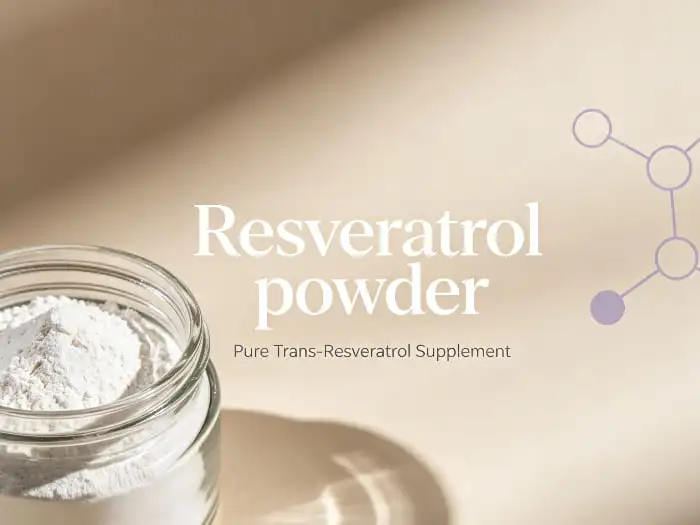
Resveratrol powder is one of the most interesting natural polyphenolic molecules used in functional nutrition today. This trans-3,5,4'-trihydroxystilbene compound is mostly found in Japanese knotweed (Polygonum cuspidatum) and grape skins. It is a strong antioxidant that fights oxidative stress in cells, supports heart health, and encourages healthy ageing. High-purity resveratrol extract is an important ingredient in many nutraceutical formulations, pharmaceutical APIs, and cosmetic actives. Brands that want scientifically-backed ingredients with proven bioactivity and formulation versatility across capsules, tablets, functional beverages, and topical applications can't do without it.
Understanding Resveratrol Powder: Composition, Properties, and Benefits
Chemical Structure and Bioactive Mechanisms
There are two isomeric forms of resveratrol: cis and trans. The trans-isomer has better biological action. Based on stilbenes, this polyphenol turns on SIRT1 deacetylase enzymes, changes NF-κB inflammatory pathways, and affects PI3K/Akt signalling cascades. Resveratrol can get through cell membranes and affect mitochondrial function because of its molecular structure. This makes it useful for formulas that aim to improve metabolic health and cell life. High-purity standards ranging from 50% to 98% are liked by procurement teams because they allow precise dosing control and predictable formulation outcomes.
The compound's antioxidant power comes from its three hydroxyl groups, which neutralise free radicals and protect lipids, proteins, and DNA from oxidative damage. This process is what makes it useful in anti-aging supplements and skin care products that protect against damage. Researchers have found that resveratrol's bioactivity goes beyond its simple antioxidant role to include changing gene expression and controlling enzymes. This means that it helps the body in many ways, which is appealing to people who are health-conscious today.
Core Health Benefits for Product Development
Cardiovascular support is one of the most researched uses of resveratrol. There is clinical proof that it supports healthy blood pressure ranges, helps keep endothelial function healthy, and helps manage lipid profiles. Because of these qualities, it can be used in heart health products for busy adults and older people.
Because resveratrol may slow down the ageing process, there is a lot of interest in both supplements and products that contain it. This compound helps cells age in a good way by turning on sirtuins, which are proteins that help cells repair themselves and live longer. Resveratrol is added to serums and creams by skin care companies to fight the obvious signs of ageing. They do this by using its ability to protect skin from environmental stressors and help it stay flexible.
Resveratrol can be used for metabolic health now that it has been shown to work with NAD+ precursors and coenzyme Q10 in new forms. This synergy is appealing to companies that are making metabolic support goods that help with energy production, cell health, and overall health. The compound's role in supporting good glucose metabolism gives people who make functional foods another thing to think about.
Standardization and Quality Parameters
Understanding standardisation is still important for making choices about procurement. High-quality resveratrol extract goes through a lot of tests to make sure it is pure. RP-HPLC analysis is the standard for checking this. Specifications usually talk about the amount of trans-resveratrol, the amount of moisture (less than 5%), and controls for residual solvents to make sure the mixture stays stable.
Batch uniformity is very important for brands that want to keep their products working well across production runs. Suppliers who give certificates of analysis (COA) with full assay data, microbiology testing, and heavy metal screening make things clear, which is important for following the rules and keeping customers safe. GMP-certified factories use tested extraction and processing methods that keep variations to a minimum and keep contamination at a trace level.
Practical Applications of Resveratrol Powder in Global B2B Markets
Nutraceutical and Dietary Supplement Formulations
It has become normal for all-around wellness formulas to include resveratrol in antioxidant complexes. When this pigment is combined with vitamin C, vitamin E, and selenium, they work together to protect against oxidative stress. People who care about their health and want to support many types of cells every day through supplements like these like these mixes.
Cardiovascular health goods use resveratrol because it is known to help endothelial function and keep the blood flowing well. Resveratrol is often found in combination with omega-3 fatty acids, CoQ10, and plant sterols in products that are meant to improve heart health. This use of multiple ingredients supports claims of effectiveness and sets goods apart in the supplement market, which is very competitive.
Advanced formulas for long life combine resveratrol with NAD+ precursors such as nicotinamide riboside or nicotinamide mononucleotide. This mix targets sirtuin activation and cellular energy metabolism through complementary processes, making it appealing to biohacking communities and wellness segments that focus on ageing. These synergies make sense from a scientific point of view, which supports premium placement and higher prices.
Functional Food and Beverage Integration
For beverage uses, specific resveratrol preparations are needed that can dissolve in water. Powders that are micronized and have particles smaller than 20 microns make ready-to-drink mixes more stable. Using cyclodextrins or liposomal carriers for encapsulation technologies makes resveratrol more dispersible while keeping it from breaking down during processing and storage.
Resveratrol is being added to more and more energy drinks and health shots, along with other plants like turmeric, ginger, and green tea resveratrol extract. These functional drink mixes are made for people with active lives and for people who are recovering. Resveratrol adds antioxidant properties and clean-label botanical credentials. Flavour compatibility testing makes sure that the slightly bitter notes of the substance work well with sweetener systems and flavour profiles.
Resveratrol is added to protein shakes and meal replacements to improve their nutritional profiles beyond just having the right amount of macronutrients. The compound is stable in dry blend forms, which makes it good for long-lasting products. Its anti-inflammatory effects also make it good for recovery after a workout.
Cosmetic and Personal Care Applications
Resveratrol's antioxidant properties are used in skin care products to fight environmental ageing causes. Anti-aging serums usually have between 0.5 and 2% resveratrol in them, along with peptides, hyaluronic acid, and vitamin substitutes. The compound's ability to neutralise free radicals caused by smog backs up claims that urban skincare products protect skin.
Resveratrol's photosensitivity and tendency to oxidise can make it hard to formulate. Packaging that is opaque or UV-protective, antioxidant stabilisation systems, and anhydrous formulas can all help a product last longer and still work well. Cosmetic chemists like it when providers give them application advice and stability data that is specific to topical delivery systems.
Resveratrol is found in hair care products to protect hair follicles and keep the skin healthy. The anti-inflammatory and circulation-boosting qualities of the compound are used in shampoos, conditioners, and leave-in treatments for hair loss or ageing. As more people learn about resveratrol outside of supplements and skin care products, these new uses open up new business possibilities.
Comparing Resveratrol Powder Options for Procurement
Natural Extraction Versus Synthetic Production
Natural resveratrol that comes from Japanese knotweed or grapes has a clean label appeal that appeals to people who like plant ingredients. To get to the desired amount of potency, the extraction process usually starts with ethanol or water extraction and then moves on to purification steps. This way of sourcing fits with ways to get organic certification and non-GMO positioning tactics that help put premium products in the spotlight.
Synthetic and fermentation-based options are cheaper and more reliable in terms of the supply chain. When compared to farming, yeast fermentation technology makes high-purity resveratrol with stable batch profiles and less damage to the environment. Procurement teams compare these factors to how the market sees them, because people may need more information about synthetic sources, even if the chemicals and bioactivity are the same.
The difference in purity has a direct effect on the cost of preparation and claims of effectiveness. A standard resveratrol extract that is 98% effective is good for low doses and complex blends, while specs for an extract that is 50% effective are more cost-effective for mass-market uses. The best way to choose specifications is to know what your target market wants in terms of quality and how sensitive they are to price.
Powder Forms Versus Encapsulated Delivery
Buying powder in bulk gives brands the most formulation freedom, so they can make their own blends, custom dosage forms, and new ways to send their products. It is easy to add raw powder to protein supplements, healthy beverage matrices, and gummy formulations. This format works well for OEM/ODM makers who need ingredients that can be changed to meet the needs of different clients.
Resveratrol is hard to work with as a powder because it doesn't dissolve well in water and is sensitive to light and oxidation. These problems can be fixed with advanced micronization methods and specialised coating technologies that make the dispersibility and stability profiles better. To make sure that manufacturing works the same way every time, procurement requirements should include information about particle size distribution and flow properties.
Pre-encapsulated options make production easier for companies that want to give standard supplements. Even though pills make formulations simpler, they make customisation harder and cost more per unit. Which format gives you the most value depends on your production capabilities and product portfolio plan.
Market Pricing Dynamics and Cost Drivers
Resveratrol prices in B2B markets are affected by a number of things. Organic certification gives you better positioning and usually adds 20 to 40 percent to the base price. It also lets you use natural channels for marketing. Prices are affected by the name and track record of the supplier. For example, established manufacturers with lots of quality documentation can charge higher prices because they pose less risk and regulators trust them.
Different levels of purity create different price structures, with 98% resveratrol extracts fetching much higher prices than 50% standards. When you commit to a certain amount of goods, you can get better prices. For example, if you buy more than 100 kg, you can often get big savings and better payment terms. For locally sourced materials, lead times change with the seasons. To avoid problems, it is important to plan the supply chain and keep track of inventory.
How to Source and Procure Top-Quality Resveratrol Powder?
Evaluating Supplier Credentials and Certifications
Verifying manufacturing certifications is the first step in finding trusted suppliers. GMP compliance shows that production standards for pharmaceuticals are being met, including controlling contamination, making sure equipment works, and making sure paperwork is clear. ISO standards show that a quality management system is mature, which lowers the risk of batch variation and recall.
Ask for detailed information, like manufacturing flow diagrams, cleaning validation procedures, and data from stability studies. Site audits, whether they are done by the company itself or by outside inspectors, show how production really works and how the company values quality. Suppliers who are open about their processes and willing to allow audits show that they are ready for a relationship and have faith in their business.
Beyond certifications, customer comments and case studies give useful information about how well a supplier does their job. Having long-term ties with well-known brands shows that you can be trusted, and joining industry groups shows that you want to raise standards. By asking for reference contacts, claims about expert support, regulatory help, and logistics performance can be directly checked.
Bulk Purchasing Strategies for Optimal Value
Different suppliers have very different minimum order amounts. For speciality wholesalers, it's 25 kg, but for direct manufacturers, it's 500 kg or more. Knowing how much you consume and how much space you have helps you choose the right source. Distributors with lower MOQs and faster turnaround times are good for small businesses. On the other hand, direct sourcing is better for big manufacturers because it saves them money.
Planning for lead times takes into account things like shipping times between countries, production plans, and quality testing cycles. Standard lead times are between two and four weeks for items that are in stock and between six and eight weeks for items that are made to order and need special production runs. Keeping a buffer stock on hand guards against supply problems while taking into account costs and shelf life.
Partners who stick together get better payment terms and bulk discounts. Negotiating net-60 or net-90 terms makes it easier to handle cash flow, and multi-batch commitments let you use tiered pricing. Some sellers offer consignment agreements or vendor-managed inventory programmes that help qualified customers get started with less money up front.
Navigating Online and Traditional Procurement Channels
Digital business-to-business platforms let you find a lot of suppliers and compare prices. Pharmaceutical ingredient platforms give supplier networks that have been checked out, come with verified certifications, and have buyer protection features. Online procurement speeds up quotes and makes contact easier. This is especially helpful when looking for a first supplier and researching the market.
Buying things in the traditional way, by talking to the maker directly, allows for more technical collaboration and customisation. Direct involvement makes it easier to get help with formula optimisation, help with regulatory paperwork, and special treatment when supply is limited. Setting up these ties costs more up front, but they pay off in the long run with strategic benefits.
Hybrid methods use online channels for initial screening and price comparisons. Then, final terms are negotiated directly, and the partnership continues to grow. This approach strikes a good balance between efficiency and relationship depth. It works especially well for growing brands that are moving from starting up to being established.
Conclusion
Resveratrol powder represents a strategic ingredient for brands across nutraceutical, pharmaceutical, functional food, and cosmetic sectors. Its scientifically-supported benefits, formulation versatility, and consumer recognition create compelling value propositions in competitive markets. Successful procurement requires understanding quality parameters, evaluating supplier capabilities, and implementing verification protocols that ensure consistent product performance. Strategic sourcing approaches balancing cost, quality, and supply security enable brands to deliver innovative products that meet regulatory standards and consumer expectations while maintaining healthy margins and operational resilience.
FAQ
Is resveratrol powder safe for daily supplementation?
Resveratrol enjoys a well-established safety profile when consumed at recommended dosages. Clinical studies typically employ 100-500mg daily without significant adverse effects. However, procurement teams should ensure suppliers provide documentation supporting safety claims, including toxicology data and regulatory status in target markets. Proper labeling guidance regarding contraindications for pregnant women and individuals on anticoagulant medications maintains consumer safety and regulatory compliance.
How does resveratrol support cardiovascular health?
Research indicates resveratrol promotes healthy endothelial function by increasing nitric oxide production, which supports proper blood vessel dilation. Its antioxidant properties protect LDL cholesterol from oxidation, a key factor in arterial health. Additionally, resveratrol influences inflammatory pathways that contribute to cardiovascular wellness. These mechanisms make it valuable for heart health formulations targeting multiple physiological pathways simultaneously.
What should I consider when purchasing resveratrol powder in bulk?
Priority considerations include purity verification through third-party testing, supplier certification status (GMP, ISO), batch consistency documentation, and stability data relevant to your application. Evaluate MOQs against your consumption rate and storage capacity. Confirm lead times accommodate production schedules, and review supplier references from companies with similar quality standards. Negotiate terms addressing price protection, supply guarantees, and technical support access.
Partner With Wellgreen for Premium Resveratrol Powder Supply
Wellgreen Technology operates as a specialized resveratrol powder manufacturer with GMP-certified production facilities delivering standardized extracts from 50% to 98% purity. Our comprehensive quality assurance includes batch-specific COAs confirming trans-resveratrol content, heavy metal screening, and microbiology testing that exceeds international standards. We support nutraceutical brands, pharmaceutical developers, and functional food manufacturers with flexible MOQs, stable batch-to-batch consistency, and application-specific formulation guidance for antioxidant complex systems. Our technical team provides customized specifications addressing water-soluble and lipid-soluble delivery requirements, light stability optimization, and active ingredient compatibility assessment. With extensive inventory supporting fast delivery timelines and OEM/ODM capabilities for proprietary blends, Wellgreen enables procurement teams to secure reliable supply chains while maintaining competitive positioning. Contact our team at wgt@allwellcn.com to discuss your specific requirements and receive detailed technical documentation supporting your product development objectives.
References
Baur, J.A., Sinclair, D.A. (2006). "Therapeutic potential of resveratrol: the in vivo evidence." Nature Reviews Drug Discovery, 5(6), 493-506.
Cottart, C.H., Nivet-Antoine, V., Beaudeux, J.L. (2014). "Review of recent data on the metabolism, biological effects, and toxicity of resveratrol in humans." Molecular Nutrition & Food Research, 58(1), 7-21.
Smoliga, J.M., Baur, J.A., Hausman, H.A. (2011). "Resveratrol and health—a comprehensive review of human clinical trials." Molecular Nutrition & Food Research, 55(8), 1129-1141.
Walle, T. (2011). "Bioavailability of resveratrol." Annals of the New York Academy of Sciences, 1215(1), 9-15.
Tomé-Carneiro, J., Larrosa, M., González-Sarrías, A. (2013). "Resveratrol and clinical trials: the crossroad from in vitro studies to human evidence." Current Pharmaceutical Design, 19(34), 6064-6093.
Ndiaye, M., Philippe, C., Mukhtar, H., Ahmad, N. (2011). "The grape antioxidant resveratrol for skin disorders: promise, prospects, and challenges." Archives of Biochemistry and Biophysics, 508(2), 164-170.