Understanding Chaga Mushrooms and Their Benefits for the Skin
2026-05-08 14:00:00
Chaga extract, which comes from the Inonotus obliquus fungus that grows on birch trees in cold northern areas, has become a popular plant-based ingredient for skin health uses. This natural mushroom extract is full of polysaccharides, melanin, and betulinic acid, which are all powerful antioxidants that fight oxidative stress and keep the skin barrier strong. For people who are making skin care supplements or products to put on the skin, chaga offers standard bioactive compounds that help with problems like inflammation, aging too quickly, and protecting cells. Because it comes from natural sources and is well-liked by many people, it's a good ingredient for beauty and health brands that want to offer clean labels and effective products.
What Are Chaga Mushrooms and Their Key Skin Benefits?
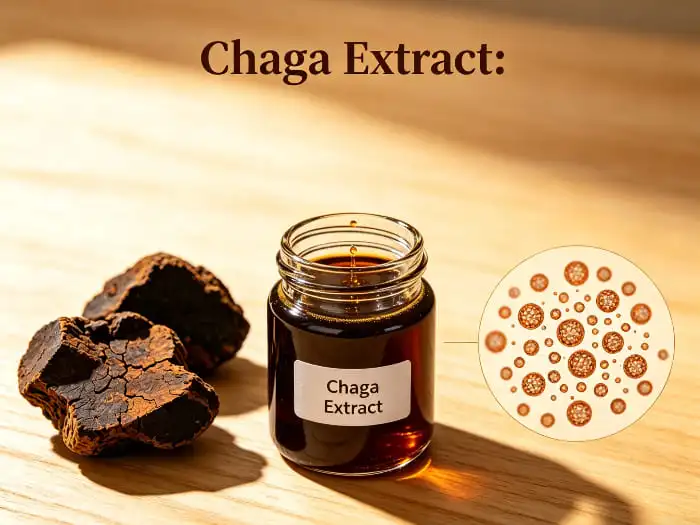
It is only found in Siberia, Northern Canada, and Alaska. Chaga mushrooms are a special kind of parasitic fungus that grows on birch trees. This dark, charcoal-like sclerotium has been used for hundreds of years, but the beauty industry has only recently realized how useful it could be for skin problems.
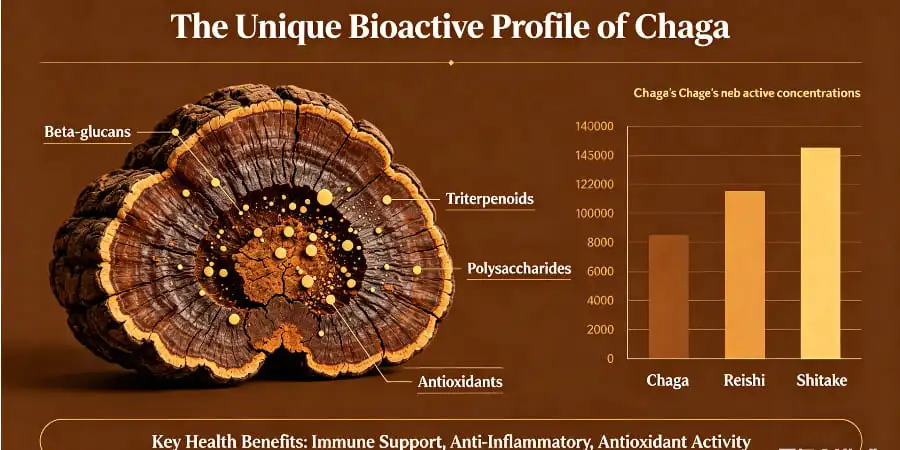
The Unique Bioactive Profile of Chaga
Unlike reishi or turkey tail mushrooms, chaga has very high levels of melanin, the pigment that gives skin its color and protects it from UV light. This melanin content, along with beta-glucans, triterpenes, and betulinic acid, works together to make a result that is especially good for skin resilience. The polysaccharide part helps the immune system work better at the skin level, and the phenolic compounds fight free radicals that cause obvious signs of aging to happen faster. According to research, these bioactives work together to make the skin's natural defenses stronger against things in the world that are bad for it.
Antioxidant Capacity and Skin Protection
There is a lot of evidence that high-quality chaga mushroom extract has one of the highest ORAC values of all natural substances that have been studied. Reactive oxygen species damage collagen fibers and lipid membranes in skin cells. This high antioxidant density protects directly against these harm. This scientifically proven mechanism helps people who are making anti-aging products because it meets consumer desire for ingredients that have measurable protective effects. The part called betulinic acid has anti-inflammatory qualities that make the skin less red and irritated and even out its tone.
Barrier Function Enhancement and Hydration
In addition to being an antioxidant, chaga's polysaccharide content helps the skin keep its wetness by making the stratum corneum structure stronger. These complex carbohydrates create a barrier that lowers transepidermal water loss, an important part of keeping skin soft and moist. This mechanism offers a strong value offering for companies making beauty supplements that can be eaten or functional drinks that are meant to improve skin health. Combining the benefits of internal antioxidant support with barrier enhancement makes for a complete approach to skin health that educated customers like.
How to Use Chaga Mushroom Products for Optimal Skin Health?
How the chaga mushroom ingredients are extracted and how they are delivered have a big impact on how well they work in skin care products. Formulators can improve bioavailability and therapeutic results by understanding these technical issues.
Extraction Methods and Bioavailability
Raw chaga powder has tough chitinous cell walls that human stomach enzymes can't break down. This means that a lot of its nutrients can't be absorbed. These walls are broken down by hot water extraction, which releases water-soluble polysaccharides and beta-glucans into a concentrated form that can be used to make supplements or add to drinks. Two different ways of extracting, using water and alcohol as solvents, can get all the chemicals, even triterpenes that dissolve in fat. When used on the skin, water-soluble extracts work better than whole powder bits at getting absorbed through the epidermis.
Dosage Considerations for Formulation Development
Based on clinical findings, the recommended daily dose for oral supplements that aim to improve skin health is between 500 mg and 3000 mg, though exact amounts may be different depending on the concentration and standardization of the extract. When figuring out serving sizes, product makers need to take the percentage of polysaccharides into account to make sure that bioactives are delivered consistently. Depending on the desired potency and product category, topical formulations usually contain chaga mushroom extract at concentrations between 1% and 5%. Formulators can use these factors to make different lines of products, from entry-level to high-end ones, while still making claims about effectiveness that are backed up by scientific research.
Safety Profiles and Quality Standards
Good chaga mushroom extract has very few bad effects that have been mentioned in studies that have been made public. Some people are worried about how chaga might combine with their medications, especially blood thinners because it naturally thins the blood. Purchasing teams should give more weight to sellers who provide full Certificates of Analysis that show heavy metal screening, microbial testing, and pesticide residue verification. Manufacturing that is GMP-certified guarantees consistency from batch to batch, which is important for staying in line with regulations and building customer trust across multiple production runs.
Comparison of Chaga Extract Forms and Products for Skincare Applications
There are different types of chaga on the market for botanical ingredients, and each has its own benefits for different product development goals and production needs.
Extract Standardization and Potency
Polysaccharide percentages in standardized chaga extracts range from 10% to 50%, with higher amounts providing more concentrated bioactive doses per unit weight. This standardization solves the main problem with wild-harvested plant-based ingredients, which is that the compounds they contain can change naturally depending on where they were collected and the time of year. Pharmaceutical and nutraceutical clients like this consistency the most because it allows for exact formulation control and backs up claims on the label. The extraction ratio, which is usually written as 10:1 or 20:1, tells you how many kilograms of raw material are needed to make one kilogram of finished extract. It has a direct effect on how strong the extract is and how much it costs.
Wild-Harvested Versus Cultivated Sources
Wild-harvested chaga from pristine birch forests has long been considered the best because it is thought to be the purest and have the best bioactive profiles, which are formed through natural environmental stress. When it comes to wild sources, supply chain transparency is very important. This means that harvest areas must be recorded and collection methods must be environmentally friendly and safe for forests. Even though it's not as popular, chaga that has been grown has benefits for large-scale manufacturers in terms of consistency and scalability. When choosing ingredient sources, procurement experts have to weigh these things against the needs of their target market, government rules, and commitments to sustainability.
Powder Versus Liquid Extract Formats
Powdered extracts give supplement makers the most options because they are easy to put into capsules, tablets, or sachets and have good stability ratings. The low moisture level makes the shelf life much longer, which lowers the cost of storage and the risk of running out of stock. Even though liquid extracts aren't used as much in commercial products, they are easier to mix into ready-to-drink drinks and don't need to be reconstituted during production. Solubility properties should be carefully looked at by people who make drinks, because some chaga extracts show small color changes or settling that might need to be fixed by adding emulsifiers or suspension agents to the mix.
How to Procure High-Quality Chaga Mushrooms for Skincare Product Development?
Decisions about where to get products have a big effect on their quality, how well they meet regulations, and the reputation of the company all along the supply chain. When choosing chaga ingredient partners, procurement teams must use strict evaluation criteria.
Supplier Verification and Quality Documentation
Authentic chaga mushroom extract providers have thorough quality control systems that are shown by ISO certifications, GMP facility registration, and audit reports from a third party. Ask for full technical data sheets that explain how the samples were extracted, how the liquid residue was tested, and what the microbiological limits are that are in line with USP or EP monograph standards. Vertically integrated suppliers—those who handle harvesting, extraction, and quality testing on their own—often provide more consistent goods that are easier to track than brokers who get their supplies from different places. Building direct relationships with main manufacturers improves supply security and makes it easier to create custom specifications for unique formulations.
Analytical Testing and Specification Compliance
Ask for more than just basic standards in analytical validation, such as HPLC chromatograms that confirm polysaccharide profiles and mass spectrometry data that confirms molecular identity. Heavy metal testing should show amounts of arsenic, cadmium, lead, and mercury that are much lower than what the FDA recommends for dietary supplements. Pathogen screening for E. coli and Salmonella, as well as a total plate count, yeast and mold counts, are all necessary parts of microbial testing. These thorough testing guidelines protect makers further down the line from formulation problems and possible product recalls that hurt brand reputation and customer relationships.
Building Strategic Supplier Partnerships
Long-term supply deals with chaga extract manufacturers that have been checked out provide stable prices, priority distribution during shortages, and chances to work together on creating new delivery systems. Talk about negotiating a minimum order quantity that is flexible enough to allow for both small-scale production runs and large-scale business production. Reliable suppliers offer technical support services like formulation advice, suggestions for stability tests, and help with regulatory paperwork that shorten the time it takes to get new products on the market. With this partnership method, buying ingredients goes from being a one-time thing to being a strategic way to grow the business.
Addressing Challenges and Considerations in Using Chaga for Skin Products
Even though chaga is very safe and may have therapeutic promise, formulators have to deal with certain issues to make sure the product works well and follows the rules.
Managing Allergic Sensitivity and Contraindications
Even though they don't happen very often, some people can be allergic to ingredients that come from mushrooms, especially people who are already allergic to mushrooms. Chaga mushroom extract should be clearly listed on product labels so that customers can make choices based on their medical history. Chaga includes chemicals that may make the effects of blood-thinning drugs stronger, so it shouldn't be used at the same time as those drugs. Giving clear usage warnings and pushing healthcare providers to talk to you shows that you are a responsible product steward and lowers your risk of being sued.
Optimizing Harvest Timing for Maximum Potency
The amount of beneficial compounds in chaga changes with the seasons. Specimens collected in the winter usually have higher amounts of polysaccharides and melanin than specimens collected in the summer. This timing link comes from the fungus building up protective chemicals during cold periods when birch sap flow stops. To make sure that the quality of the ingredients is the same across multiple orders, the harvest season should be included in the procurement specs. Formulators can plan for possible supply problems during times of high demand by understanding these natural cycles and making changes to their inventory tactics as a result.
Color Stability in Finished Formulations
Chaga extract naturally has a brown-black color that makes it hard to mix with light-colored foods or drinks that are clear. The melanin in chaga that gives it its antioxidant properties also gives it this color, so there is a trade-off between how it looks and how well it works. Because of this, people who make drinks might need to change how they taste their drinks or how they package them. Specialized extraction methods can also make parts that are lighter in color, have less melanin, but still have a lot of polysaccharides. However, these usually cost more because they need to be processed more thoroughly.
Conclusion
Scientists have proven that chaga fungus extract is a good ingredient for skin health. It gives formulators a natural way to deal with problems like oxidative stress and barrier function. The polysaccharide-rich composition helps the skin keep its moisture, reduce inflammation, and protect cells, all of which are benefits that are in line with modern customer tastes for plant-based beauty products. To make a good product, you need to pay close attention to extract standardization, source quality systems, and formulation compatibility to make sure the product is bioavailable and stays stable on the shelf. It's becoming more popular in functional foods and nutraceuticals to focus on beauty-from-within ideas. Chaga's special bioactive profile makes it a great ingredient for brands that want to stand out in the health market.
FAQ
Does chaga tea improve skin appearance?
Regular consumption of properly prepared chaga tea may support skin health through systemic antioxidant delivery, though concentrated extracts provide more consistent bioactive dosing. The brewing process must be sufficiently long and hot to extract water-soluble polysaccharides effectively. Topical application of chaga-infused products complements internal use by delivering compounds directly to dermal tissues.
What distinguishes chaga powder from standardized extract?
Raw chaga powder retains the indigestible chitinous cell walls that limit bioavailability, while extracts use solvent processing to concentrate and isolate therapeutic compounds. Standardized extracts specify polysaccharide percentages, enabling precise formulation control impossible with whole powder. Product developers prioritizing efficacy and regulatory substantiation consistently favor extract formats over raw materials.
Are there safety concerns with long-term chaga supplementation?
Clinical observations indicate chaga extract demonstrates excellent safety profiles at recommended dosages, with minimal adverse effects reported. Individuals taking anticoagulant medications should consult healthcare providers before use. Sourcing from suppliers providing comprehensive contaminant testing ensures products meet safety standards for extended consumption periods.
Partner with a Trusted Chaga Extract Supplier
Wellgreen Technology specializes in delivering pharmaceutical-grade chaga extract powder to nutraceutical brands, cosmetics manufacturers, and functional beverage producers worldwide. Our vertically integrated supply chain ensures consistent polysaccharide content through standardized hot water extraction and rigorous quality control protocols. With GMP-certified facilities, complete documentation including Certificates of Analysis, and flexible OEM customization capabilities, we support your formulation requirements from initial development through commercial-scale production. Our beverage-optimized versions offer enhanced solubility for ready-to-drink applications, while our mushroom complex formulation services enable synergistic ingredient combinations with reishi and lion's mane. Contact our technical team at wgt@allwellcn.com to discuss your specific project needs and request samples from our extensive inventory. Wellgreen stands ready as your reliable chaga extract manufacturer, committed to delivering the quality, consistency, and service excellence your brand deserves.
References
Glamočlija J, Ćirić A, Nikolić M, et al. "Chemical characterization and biological activity of Chaga (Inonotus obliquus), a medicinal mushroom." Journal of Ethnopharmacology, 2015; 162: 323-332.
Balandaykin ME, Zmitrovich IV. "Review on Chaga medicinal mushroom, Inonotus obliquus (higher Basidiomycetes): Realm of medicinal applications and approaches on estimating its resource potential." International Journal of Medicinal Mushrooms, 2015; 17(2): 95-104.
Szychowski KA, Skóra B, Pomianek T, Gmiński J. "Inonotus obliquus – from folk medicine to clinical use." Journal of Traditional and Complementary Medicine, 2021; 11(4): 293-302.
Lee SH, Hwang HS, Yun JW. "Antitumor activity of water extract of a mushroom, Inonotus obliquus, against HT-29 human colon cancer cells." Phytotherapy Research, 2009; 23(12): 1784-1789.
Rhee YH, Jeong SJ, Lee HJ, et al. "Inhibition of STAT3 signaling and induction of SHP1 mediate antiangiogenic and antitumor activities of ergosterol peroxide in U266 multiple myeloma cells." BMC Cancer, 2012; 12: 28.
Géry A, Dubreucq E, Besson F. "Main ways of preparing mushrooms for use in dietary supplements." Journal of Functional Foods, 2018; 47: 457-474.