What is Apigenin Powder?
2026-04-08 13:59:49
Apigenin powder is a naturally occurring flavonoid extracted primarily from plants like chamomile and parsley. This high-purity bioactive compound represents a standardized crystalline form of 4',5,7-trihydroxyflavone, typically achieving ≥98% purity through HPLC analysis. Recognized for its potent antioxidant and anti-inflammatory properties, apigenin has garnered increasing interest in the global B2B procurement sector, especially within pharmaceutical, nutraceutical, cosmetic, and food industries. Its versatility and growing applications emphasize the importance of understanding product quality, sourcing, and market dynamics to meet rising demand and ensure compliance with international standards.
Understanding Apigenin Powder
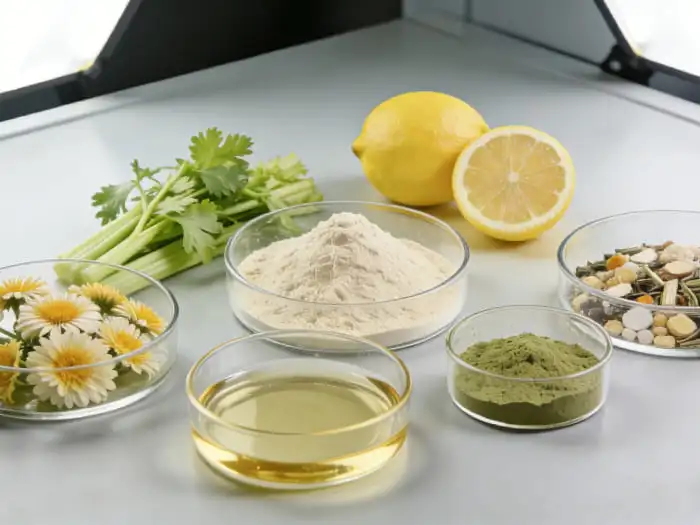
Apigenin powder has the molecular formula C15H10O5 and the chemical name 4′,5,7-trihydroxyflavone. The molecular weight of it is 270.24 g/mol. You can find this chemical in plants like chamomile (Matricaria chamomilla), parsley (Petroselinum crispum), and celery (Apium graveolens). It is very important in the health business because of how it changes biochemistry.
Chemical Properties and Characteristics
The powder is made up of tiny crystals and is light yellow to pale greenish yellow. Between 345°C and 350°C is where it melts, which means it stays solid at high temperatures. The only thing that breaks it down in water at 25°C is about 1.35 µg/mL because it is lipophilic (LogP = 2.58). It does, however, break down a little in organic liquids like hot ethanol or DMSO. So, certain ways of transporting things must be used to make sure they are accessible in the best way possible.
Mechanism of Action
Apigenin does a lot of different things inside cells, but its main job is to positively allosterically regulate GABA-A receptors. As one way to help people calm down and sleep. The chemical also stops CD38 from working. CD38 helps keep NAD+ levels high around the body, which is important for healthy mitochondria and cell repair. New studies have shown that it can protect cells from damage by getting rid of free radicals and reducing inflammation by stopping inflammatory hormones.
Key Benefits and Uses of Apigenin Powder
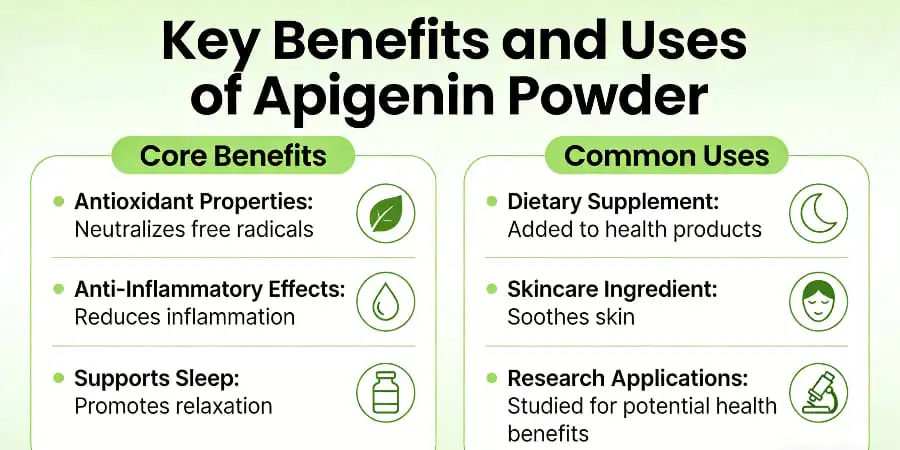
Many different businesses find this flavonoid useful because it can be used in medicine in a number of ways. Several different processes have been shown to make it less inflammatory, less stressful, better for sleep, and better for the health of cells.
Sleep Support and Anxiety Management
Apigenin links to benzodiazepine receptors in the brain and has mild calming effects without the risks of becoming hooked on drugs, according to clinical research. If you take melatonin in the morning, it can make you sleepy. But apigenin helps you fall asleep easily and keeps your sleep structure intact. Most market goods say that between 25 and 50 mg will help with anxiety and between 50 and 100 mg will help with sleep.
Anti-Aging and Cellular Health
The compound's job as a CD38 inhibitor has gotten a lot of notice in the longevity study. By preventing NAD+ poisoning, apigenin aids in the cellular energy production and DNA repair processes. Taking vitamins every day has been shown to help keep mitochondrial function high and reactive stress signs low. Because of this, it can be used in anti-aging goods.
Cosmetic Applications
In dermatological applications, apigenin powder demonstrates efficacy in inhibiting MMP-1 enzymes responsible for collagen breakdown. Because it reduces swelling, it can be used in skin care products for sensitive skin. Plus, as an antioxidant, it keeps UV light damage at bay. Since the chemical doesn't change when the pH level goes from 5.0 to 7.0, it can be used with most makeup bases.
Choosing the Right Apigenin Powder for Your Business
To pick the right grade and specs, you need to think about a lot of things that are important to the product's success. On the market, there are different levels of clarity, particle sizes, and processing methods. Each one works best for a certain purpose or legal requirement.
Purity Standards and Certifications
High-quality apigenin that is sold in stores usually gets HPLC test results of ≥98.0% purity, and the best grades get 99%+ purity. There should be no more than 1% loss on drying and the bulk density should be between 0.3 and 0.5g/ml. These are some of the most important standard factors. Items should meet USP, EP, or other relevant pharmacopeial standards based on what they are going to be used for.
Quality Assurance Requirements
Sellers you can trust will give you full certificates of analysis (COA) that show how much heavy metals, bacteria, chemicals, and poisons are still in the item. Tests done by outside, approved labs make sure that every batch is the same and that all the rules are followed. Manufacturers that are GMP-certified can give extra quality assurance to products used in medicine and nutrition.
Form Considerations
It's easier to add standard powder forms of apigenin to healthy foods, pills, and tablets. Supplements work better when they are in micronized forms, which are bits smaller than 10 microns. Grades that dissolve in water can fix problems with solubility, and grades that are recognized as organic meet clean-label guidelines for high-end product lines.
Procurement Guide: Buying Apigenin Powder Wholesale
A big part of making sure supply lines stay steady is knowing how the market works, what sellers can do, and how processes work in real life. If you plan ahead, you can keep costs low while still providing high standards and effective service.
Market Pricing and Volume Considerations
There is a wide range of wholesale prices that depend on the quality, the size of the order, and the location of the seller. For standard grades, the least amount that can be ordered is generally between 1 and 25 kg. You can get a deal if you promise to buy more. Prices tend to stay the same over the long run, and when supplies are low, certain things get priority.
Supplier Evaluation Criteria
When choosing which partner to work with, procurement teams should look at how much they can make, how well they follow regulations, and how good their customer service is. Sources that have been around for a while can help with things like formal paperwork, analytical methods that have been tried and tested, and special formulas. To put even more faith in the supplier's skills, have a third party do site checks or give awards.
The procurement process typically begins with sample evaluation to confirm specifications meet formulation requirements. You can tell more about the uniformity if you ask for more than one taste from different runs. It's important to look at things like workplace licenses, quality reviews, and records of following rules that are important to the target markets when going through paperwork.
Conclusion
This full guide tells global B2B buyers everything they need to know about apigenin powder, from how it's made chemically to how to find it and the health benefits it offers. By knowing the signs of quality, the needs of the application, and the criteria used to judge the seller, you can make smart purchases that help the pharmaceutical, nutraceutical, beauty, and functional food businesses succeed. Apigenin powder is a useful addition to a variety of goods because there is a growing market for natural ingredients that help with stress and aging. It's best to keep an eye on high standards and work together with providers for the best results.
FAQ
What is the optimal dosage for anxiety and sleep formulations?
Doses between 25 mg and 50 mg have been shown in clinical tests to help people who are worried and people who are having trouble sleeping. Because these numbers are healing and don't have any bad effects, they can be used to make food products that help people sleep and deal with stress.
How does apigenin powder differ from apigenin-7-glucoside?
Pure apigenin works better and is easier for the body to use than apigenin-7-glucoside, which has been sugared. The glucoside form is naturally found in plants and mixes better with water. However, enzymes need to change it into active apigenin, which might make it less useful for some medical uses.
What are the solubility considerations for product formulation?
Apigenin doesn't dissolve well in water (about 1.35 µg/mL), so it needs to be given in a certain way for it to work properly. It can be easier for watery goods to dissolve and be used by the body if they are micronized, cyclodextrin complexated, or liposomally encapsulated.
How can buyers verify powder purity and quality?
Full reports of analysis from reliable suppliers show how clean the HPLC is, how much heavy metal is in it, what microbiological factors are in it, and how much liquid is still in it. Another level of confidence is added by testing by a third party from a well-known lab. They should ask for more than one batch study to see how well they can keep quality and consistency in check.
Partner with Wellgreen for Premium Apigenin Powder Supply
Wellgreen Technology stands as your trusted apigenin powder manufacturer, delivering exceptional quality botanical extracts backed by comprehensive certifications and rigorous testing protocols. Our state-of-the-art GMP facility ensures consistent production of high-purity apigenin meeting international quality standards. With extensive inventory management and flexible OEM support, we provide reliable supply solutions tailored to your specific formulation requirements.
Our expert team can help you with all the paperwork, like special COAs and making sure you're following all the rules, so you can get your product made faster. We make sure that the quality of our products is stable from batch to batch, which is important for business success, whether you need standard medicinal grades or unique specs. You can email our buyers at wgt@allwellcn.com to talk about where you want to get apigenin and how our full-service method can help you improve your supply chain.
References
Salehi, B., et al. "The therapeutic potential of apigenin: A comprehensive review of its pharmacological properties." Phytotherapy Research, vol. 33, no. 8, 2019, pp. 1988-2008.
Zhang, L., and Wang, H. "Apigenin: A promising bioactive flavonoid with multiple health benefits." Food and Chemical Toxicology, vol. 142, 2020, pp. 111456.
Patel, D., et al. "Apigenin and cancer prevention: Molecular mechanisms and clinical applications." Current Pharmaceutical Design, vol. 26, no. 36, 2020, pp. 4721-4734.
Kumar, S., and Pandey, A.K. "Chemistry and biological activities of flavonoids: An overview." Scientific World Journal, vol. 2013, 2013, pp. 162750.
Shankar, E., et al. "Plant flavone apigenin: An emerging anticancer agent." Current Pharmacology Reports, vol. 3, no. 6, 2017, pp. 423-446.
Zhao, L., et al. "The effects of apigenin on anxiety and sleep disorders: A systematic review of preclinical and clinical studies." Nutrients, vol. 12, no. 11, 2020, pp. 3361.