
Broccoli Seed Extract: Key Quality Checks for Bulk Procurement
2026-10-23 10:14:59
Why the Specification, Not the Label, Decides Quality
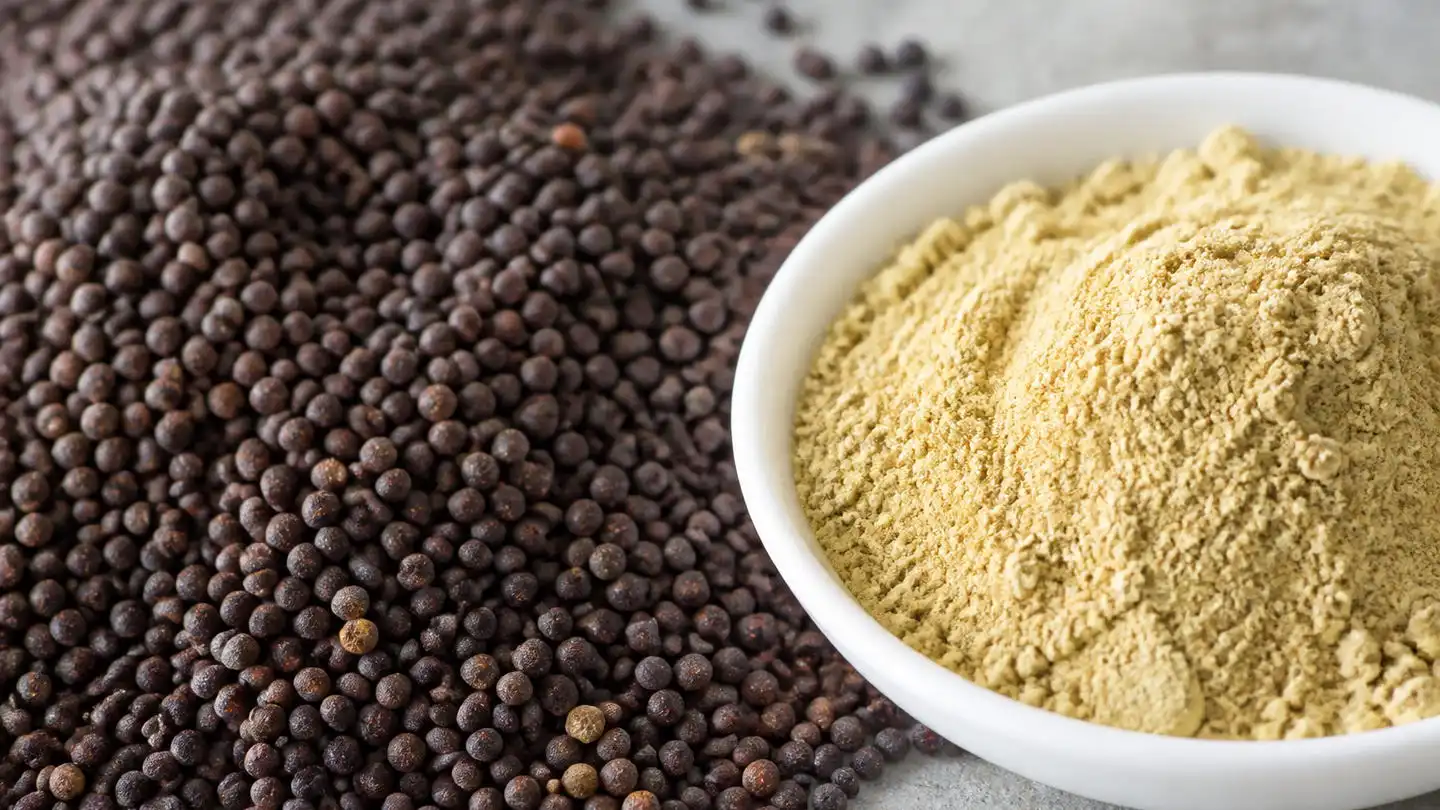
A purchase order for broccoli seed extract is only as strong as the specification attached to it. Two suppliers can quote the same price for a "standardized broccoli seed extract" and ship materials that differ in plant part, extraction route, carrier, residual solvent and declared actives. The category has no single pharmacopoeial monograph that settles these questions for you, so the buyer's own specification, and the test methods written into it, becomes the working standard. The broccoli seed extract that most formulators buy is a seed-derived concentrate, and that is exactly where the checks in this article begin.
What follows is a procurement and QA checklist rather than a product story: identity, analytical panel, sampling, stability, supplier capability, and the clauses that decide what happens when a lot fails.
Material Identity: Seed, Sprout and Whole-Plant Powder Are Different Materials
Under one trade name, suppliers ship at least four different materials: a seed extract standardized to glucoraphanin, a sprout powder, a whole-plant powder milled from florets and stems, and a seed extract diluted on a carrier. They differ in active content, ash and fibre load, colour, bulk density and behaviour in a capsule or a beverage. Identity should therefore be the first clause of the specification, written with the binomial and the plant part: Brassica oleracea var. italica, seed.
Extraction ratio and standardization are also routinely confused in quotation sheets. A ratio claim describes input-to-output mass, not potency: it says nothing about how much glucoraphanin the powder contains or how that figure was measured. A standardized grade declares an active content confirmed by assay, lot by lot. Comparing a ratio-priced offer with a standardized one on price per kilogram is not like for like, and the gap surfaces when the first certificate arrives.
Four identity questions to close before sampling
- Which plant part, and is it declared with the binomial on the specification sheet?
- Is the grade standardized to a declared glucoraphanin content, or sold on a ratio claim?
- Is any carrier, anti-caking agent or diluent present, and at what inclusion level?
- Is myrosinase active, partially inactivated, or fully inactivated by the process?
These answers change the price you should accept, the assays you need and the storage you must plan for. A supplier who cannot answer in writing is describing a category, not a material.
The Core Analytical Panel
A workable specification for bulk procurement covers identity, potency, physical properties, contaminants and microbiology. The panel below is the minimum a QA team should see on every lot, together with the method question that decides whether two certificates are actually comparable. Buyers sourcing a glucoraphanin-standardized broccoli seed extract should read the assay row as the centre of gravity and the rest as the conditions under which that assay can be trusted.
| Indicator | Typical declaration | Method to name in the specification | What procurement should check |
|---|---|---|---|
| Glucoraphanin | Declared content, for example 13.5% | HPLC with UV detection against an external glucoraphanin standard | Column, solvent, standard source and reporting basis; chromatogram released with the COA |
| Sulforaphane | Declared content, for example 1% | HPLC, with the extraction or conversion step written out in full | Measured or calculated; endogenous or added; measured on the same lot as the glucoraphanin figure |
| Appearance | Light yellow to brown powder | Visual comparison against a retained reference sample | Colour drift between lots signals oxidation or a change of carrier |
| Moisture | Buyer-set maximum | Karl Fischer titration, or loss on drying if both parties agree | Name one method only; loss on drying overstates water in hygroscopic powders |
| Ash | Buyer-set maximum | Gravimetric ashing | High ash points to soil, carrier or salt load rather than to potency |
| Particle size | Mesh pass, or median diameter | Sieve analysis, or laser diffraction | The two methods disagree; state which one and name the test sieve |
| Heavy metals: Pb, Cd, As, Hg | Individual limits per element | ICP-MS | Individual values, not a single "conforms" line |
| Pesticide residues | Multi-residue screen | GC-MS/MS and LC-MS/MS on a QuEChERS extract | Scope of the panel and the limit of quantification, not just a pass |
| Microbiology | Total plate count, yeasts and moulds, Salmonella, E. coli | ISO 4833-1, ISO 21527-1, ISO 6579-1, ISO 16649 | Method numbers fixed in the specification, not left to the laboratory |
| Residual solvents | Class 2 and class 3 limits where relevant | Headspace gas chromatography | Which solvents the process actually uses: ethanol, ethyl acetate, hexane |
Individual heavy-metal values and fixed microbiology method numbers belong in the specification, not in the negotiating room.
Glucoraphanin and Sulforaphane Are Not Interchangeable Numbers
Glucoraphanin is the glucosinolate stored in the seed. Sulforaphane is the isothiocyanate formed when myrosinase hydrolyses it. In an intact seed the enzyme and the substrate sit in separate compartments, so both can be present at once without reacting. Once the seed is milled and wetted, conversion starts, and the ratio in the finished powder depends on how the process handled moisture, temperature and enzyme activity. A specification that reads the two figures as one potency will misprice lots and mislead the formulator.
The current Wellgreen grade, for example, is declared as a Glucoraphanin 13.5% + Sulforaphane 1% powder. The first question a buyer should ask about any such pair is whether the sulforaphane figure was measured in the finished powder or calculated from the glucoraphanin value by a conversion factor. The two answers describe different materials at the same label.
Why a "sulforaphane 1%" claim needs a method statement
The same number can describe three different commercial realities. It may be an endogenous value, measured after partial conversion inside the process. It may be a calculated figure, produced by applying a stoichiometric factor to the glucoraphanin assay. Or it may come from adding sulforaphane to a low-conversion powder in order to reach a target. Only the first is a process outcome that will repeat from lot to lot. Ask three questions in writing: is the value measured or calculated, was it measured on the same lot as the glucoraphanin figure, and will the chromatogram be released alongside the certificate of analysis.
Where HPLC methods quietly diverge
Most suppliers assay glucoraphanin by HPLC with UV detection against an external standard. Differences in column chemistry, extraction solvent, conversion step and standard purity all move the result. A laboratory reporting "sulforaphane equivalents" after enzymatic conversion answers a different question from one that assays glucoraphanin directly, and a buyer comparing the two numbers is comparing unlike quantities. Two accredited laboratories can disagree on the same lot by more than either method's repeatability and both be correct. The place to contain that risk is the specification, where the method and the reporting basis are named.
Where conversion behaviour is part of the intended use, the more productive conversation is about what drives sulforaphane content in a seed extract and how the supplier controls it, rather than about the headline percentage alone. Buyers working with a converted grade will also want the detail on the sulforaphane powder page, since sampling and stability questions shift with the grade.
Sampling and Testing Protocol
Most disputes are sampling disputes before they are analytical ones. A composite drawn from the top of one drum cannot represent a lot of forty. Write the plan before the first shipment: how many increments per lot, how they are combined, how the composite is split, and who holds the retain.
Designing a sample plan you can defend
For powder lots, a square-root rule is common practice and easy to audit: take the square root of the number of containers, round up, and add one. Attribute sampling plans such as ISO 2859-1 give a more formal basis when the lot is large. Each increment should be drawn with a probe that reaches the full depth of the container, then combined and reduced by quartering rather than by scooping from the surface, where fines concentrate.
Split the composite into at least three portions: one for the supplier's laboratory, one for your third-party laboratory, and one sealed retain. Once a year, send the same material under two sample identities to your third-party laboratory; one extra assay then measures that laboratory's repeatability on your matrix. Retain samples belong in the original packaging, at recorded conditions, for the shelf life plus a margin.

When your result contradicts the certificate
Approach a mismatch as an out-of-specification investigation, not an argument. Re-test the retain to exclude a sampling or handling error, then ask for the raw data behind the supplier's figure. If the gap survives re-testing, the lot is non-conforming against your specification, and the disposition options are re-sampling, a documented concession with a revised specification for a lower-value use, or rejection. What matters is that the contract already names which applies, and who pays the return freight.
Stability, Packaging and Shipping
Glucosinolates in a dry powder are reasonably robust; the same powder after moisture uptake is not. Water activity, temperature, oxygen and light act at the same time, and the effects accumulate across a two-year shelf life. The table below maps the factors a buyer can control.
| Factor | Risk to the material | Control measure |
|---|---|---|
| Moisture and water activity | Hydrolysis of glucosinolates, caking, microbial growth | Moisture limit in the specification; desiccant where the pack format allows; warehouse humidity control |
| Temperature | Faster loss of the declared assay, colour darkening | Store below the temperature named on the label; temperature logger on every shipment |
| Light | Colour fade and assay drift at the powder surface | Opaque or foil packaging; no clear inspection windows in drums |
| Oxygen | Oxidation of lipids and pigments, off-odour | Nitrogen flush or oxygen absorber; intact inner liner |
| Packaging barrier | Moisture vapour and oxygen ingress over two years | Specify the format and the liner, not just the drum; seal integrity test at goods-in |
| Mechanical load | Compaction and reduced flowability in the hopper | Pallet stacking limits; bulk density reported on the certificate |
A two-year shelf life is a claim about a specific package in specific conditions, not a property of the molecule. When a supplier states two years, ask for the basis: accelerated data, real-time data from a retained lot, or an assumption carried over from another grade. Only real-time data on the same packaging transfers to your warehouse.
Shipping is where the assumption breaks: a container waiting on a summer tarmac will exceed any warehouse temperature written into the specification, so ask for the logger record and make an excursion a reportable event.
Verifying Supplier Capability
Price and a certificate of analysis tell you about a lot. Capability tells you about the next twenty. Three checks separate an extraction house from a trader with a catalogue.
The first is whether the supplier operates its own extraction line. Ask for the process flow, the equipment list and the site address, then compare that address with the one on the certificate. The second is the food-safety system: ISO 22000 or HACCP certification whose scope covers the extracted botanical rather than trading alone. The third is documentation discipline: batch records pullable for a named lot, a deviation log with closure dates, and a change-control procedure that obliges the supplier to notify you before switching a raw-material source, a solvent or a carrier.
Traceability deserves a test of its own. Ask the supplier to run a mock recall on a lot you have already received and report how long it took to reach the seed supplier, the harvest year and the region of origin. An afternoon means a system; a week means a filing cabinet.
The Wellgreen product page for this grade lists ISO 9001:2015, ISO 22000, Halal, Kosher and HACCP, and those certificates are available as documents on request. A certificate is the starting point for an audit, not a substitute for one, and the audit questions above are what turn it into evidence.
Contract Clauses That Decide the Outcome
Most quality failures are contract failures that reappear later as quality failures. Six clauses carry most of the weight.
- Specification annex. Identity, assay, physical properties, contaminants and microbiology, each with a named method and reporting basis, incorporated by reference.
- Sampling and acceptance. Who samples, how many increments, which laboratory tests first, and what constitutes acceptance. Name the referee laboratory before the first dispute rather than during it.
- Non-conforming material. Disposition options, cost allocation for freight and testing, and the time limit for a supplier to respond to a claim.
- Change control. Written notice before any change to plant part, solvent, carrier, process temperature or manufacturing site, with a right to re-qualify the material at the supplier's cost.
- MOQ and lead time. Stated per grade and per packaging format, together with the validity period of the quotation.
- Retain samples and records. A retention period that covers your shelf life plus a margin, and access to batch records during an audit or a regulatory request.
Agree the packaging format, because the format is part of the stability claim, and fix an assay tolerance so a dispute cannot settle at the third decimal place.
Five Procurement Mistakes We See Most Often
- Buying on ratio language. "Concentrated" and "standardized" are not synonyms, and the price gap between them is usually not a saving.
- Accepting a certificate without the method. A number with no method behind it cannot be reproduced, compared or defended to a customer.
- Qualifying on the first lot only. The second and third lots are where a process that is not under control becomes visible.
- Keeping no retain. Without a sealed retain you cannot separate a supplier problem from a warehouse problem.
- Taking a certificate as an audit. Certification covers the system; only the site visit and the batch records tell you what happens on a bad day.
Each is cheap to fix before the purchase order and expensive afterwards.
Next Step: Ask for the Documents Before the Price
If you are qualifying a supplier for a launch, request the documentation pack before the price list. Wellgreen can send the specification sheet for its glucoraphanin powder, a lot certificate with the chromatogram, a sample for your own laboratory, and a formulation-compatibility discussion for your matrix. The current grade is declared as a Glucoraphanin 13.5% + Sulforaphane 1% powder, light yellow to brown, with an MOQ of 1 kg. Write to wgt@allwellcn.com with the specification you need and the market you are supplying.
References
ISO 2859-1. Sampling procedures for inspection by attributes: sampling schemes indexed by acceptance quality limit (AQL) for lot-by-lot inspection. 1999.
ISO 4833-1. Microbiology of the food chain: horizontal method for the enumeration of microorganisms; colony count at 30 degrees C by the pour plate technique. 2013.
ISO 6579-1. Microbiology of the food chain: horizontal method for the detection, enumeration and serotyping of Salmonella; detection of Salmonella spp. 2017.
ISO 21527-1. Microbiology of food and animal feeding stuffs: horizontal method for the enumeration of yeasts and moulds; colony count technique in products with water activity greater than 0.95. 2008.
U.S. FDA. 21 CFR Part 182. Substances Generally Recognized as Safe.
USP-NF. General Chapter 467. Residual Solvents.
Disclaimer
This article is intended for business-to-business ingredient sourcing and formulation discussion. It does not provide medical, nutritional, or regulatory advice for any specific product or market.